GNSS receiver price in Pakistan in 2026 ranges from about PKR 600,000 to 900,000 for an entry-level RTK rover, PKR 900,000 to 1,500,000 for an IMU tilt rover, and PKR 1,200,000 to 3,500,000 for a complete base and rover set with controller, with Sokkia sets at the top of that range. These are indicative market ranges; we quote by WhatsApp.
RTK GNSS has become the standard instrument for control and topographic work in Pakistan over the last decade, and the price of a usable set has fallen from the price of a car to the price of a good motorcycle. This guide explains what RTK is, whether you need a base, what the classes cost, where a total station is still the right tool, and what to check on battery, heat and support before you buy.
What RTK is and how it differs from a handheld GPS
A handheld GPS or a phone computes its position from satellite signals alone and lands within 3 to 10 metres. That is fine for finding a site and useless for surveying it.
RTK, real-time kinematic, uses two receivers. A base sits on a known point and broadcasts corrections for the errors it sees in the satellite signals. A rover receives those corrections by radio or mobile data and applies them to its own measurements. The result is a position accurate to about 8 mm plus 1 ppm horizontally and 15 mm plus 1 ppm vertically, in real time, displayed on a controller.
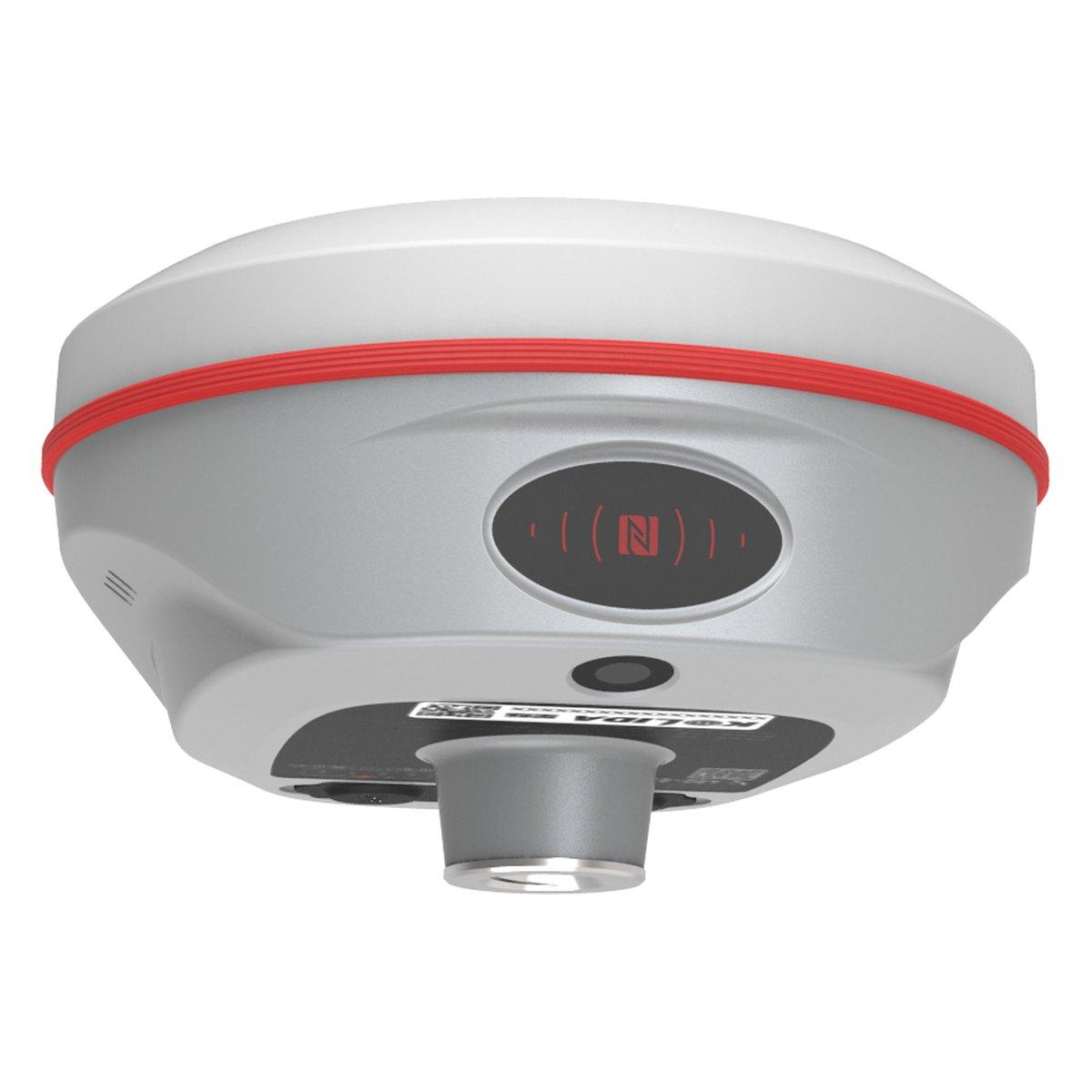
A surveying GNSS receiver also tracks all the constellations, GPS, GLONASS, Galileo, BeiDou and sometimes QZSS, on multiple frequencies. More satellites and more frequencies mean faster initialisation and a fix that holds near buildings and trees. A current Kolida K series or Sokkia GRX receiver tracks over a thousand channels.
DGPS, which older tenders still specify, is the sub-metre version of the same idea. Every RTK receiver does DGPS; the term in a tender usually means they want RTK.
Base and rover vs network RTK in Pakistan
Base and rover. You own two receivers. The base goes on a tripod over a known point, or on an arbitrary point that you later tie in, and transmits corrections by UHF radio with a range of 3 to 10 km depending on terrain and antenna. The rover works anywhere within that range. This is independent of mobile coverage and of any service provider, and it is what most Pakistani survey firms buy.
Network RTK. You own one rover, and the corrections come over mobile data from a CORS network of permanent reference stations. No base to set up, no radio range limit. The limitations in Pakistan in 2026: CORS coverage exists around Islamabad, Lahore, Karachi and parts of Punjab but is thin elsewhere, the subscription cost varies, and mobile data drops in exactly the places surveys happen. A rover-only purchase is right for a firm working within confirmed coverage. For anyone working in KP, Balochistan, interior Sindh or rural Punjab, buy the base.
A middle path: buy a base and rover set, and also enable the rover for network RTK where it exists. The newer Kolida receivers do both.
GNSS receiver price bands in Pakistan
Indicative market ranges in September 2026. Confirm today's price on WhatsApp, rates move with the exchange rate.
| Class | Example | What you get | Indicative market price (PKR) | Who buys it |
|---|---|---|---|---|
| Entry rover, network RTK | Kolida K6 | Multi-constellation rover, 4G modem, no IMU, with Android controller | 600,000 to 900,000 | Firms inside CORS coverage, students |
| IMU tilt rover | Kolida K9s, K30 Pro | Tilt compensation to 60 degrees, 4G and UHF, controller | 900,000 to 1,500,000 | Busy topographic crews |
| Base and rover set, Chinese | Two Kolida K series, UHF radio, controller | Full independence from coverage | 1,200,000 to 2,500,000 | Most Pakistani survey firms and contractors |
| Premium rover with camera or laser | Kolida K60 Pro | IMU, visual stake-out or laser offset | 1,500,000 to 2,200,000 | Consultancies doing detail work |
| Sokkia base and rover | Sokkia GRX1 pair with controller | Japanese tracking, Magnet software | 2,500,000 to 3,500,000 | Consultancies, government, long-term fleets |
The set that most Pakistani firms buy is two Kolida receivers, one as base with an external UHF radio and one as IMU rover, with an Android controller, a rover rod and bipod and a tripod for the base. At market rates that lands around PKR 1,500,000 to 2,000,000.
Accuracy and when a total station is still better
RTK accuracy of about 1 cm horizontal and 1.5 to 2 cm vertical is sufficient for control networks, topographic surveys, boundary work, earthwork volumes, road alignments and most setting out of roads and plots. It is not sufficient for:
- Building layout to millimetres. Column grids and slab levels need a total station.
- Vertical work. GNSS height accuracy is about half as good as horizontal. For levelling runs and precise levels, use an auto level or total station.
- Under trees, inside buildings, in narrow urban streets. The receiver needs open sky to hold a fix. A total station needs line of sight to a prism, which is a different limitation and often the easier one to meet.
- Next to tall structures. Reflected signals, called multipath, degrade the fix. A good receiver mitigates it; nothing removes it.
Most survey firms own both and use the GNSS for control and open topography, then the total station for detail and layout. The combination of a Kolida K series set and a Kolida KTS-442P covers nearly every job in Pakistan, and we compare total stations in total station price in Pakistan.
Data controllers and software
The controller is a rugged Android handheld running survey software. It connects to the rover by Bluetooth, shows the position, stores points, handles stake-out from a design file and exports to CAD. The software is where brands differ most.
Kolida receivers ship with SurvX or similar, which does point survey, stake-out, road alignment and volume calculation and exports DXF and CSV. Sokkia ships with Magnet Field, which is more polished and integrates with Magnet Office in the back office. Both are usable within a day of training.
Export formats to check: DXF for AutoCAD, CSV for spreadsheets, and whatever your consultant asks for. Coordinate systems: the software should handle UTM zones 42 and 43 for Pakistan and allow a local site calibration from known control.
Battery, IP rating, heat
Battery. A rover runs 8 to 12 hours on its internal battery; a base with a UHF radio transmitting draws more and lasts 6 to 8. Buy a second battery for each receiver and an external battery for the base radio. In summer, batteries lose capacity above 45 degrees and should be kept in shade.
IP rating. IP67 is standard on current receivers and means dust-tight and immersion to 1 metre. Insist on it; a survey in Punjab in June is a dust test.
Heat. Receivers are specified to 65 degrees operating on the better models and 55 on the cheaper ones. A black receiver on a pole in afternoon sun in Sukkur reaches 60. Check the specification and prefer a receiver that states 65. Controllers are the weaker link; a screen that goes dark in heat stops the survey.
Training and support
A GNSS set is a system: two receivers, a radio, a controller, software and a coordinate framework. The technical questions on the first week are always the same: the base will not transmit, the rover will not fix, the coordinates are 200 metres off. Every one of those has a two-minute answer if there is someone to call.
We deliver every set with a day of training on site or by video, set up the radio link, configure the coordinate system and do a test survey with the crew. After that we are on WhatsApp. Firmware updates, controller software licences, batteries, radios, cables and poles are on our shelf in Rawalpindi, and receivers are serviced on our own bench. New sets carry a two year warranty.
What we supply
Our receivers are under GPS systems.
- Kolida K6 GNSS receiver: the entry rover for network RTK.
- Kolida K9s GNSS receiver and Kolida K30 Pro GNSS receiver: IMU tilt rovers, the busy crew's instrument.
- Kolida K60 Pro GNSS receiver: the premium rover for consultancies.
- Sokkia GRX1 GNSS receiver: authorised Sokkia supply.
- GNSS rover rod and bipod: carbon fibre pole and bipod for the rover.
We use the same receivers on our own survey jobs; see land survey services in Pakistan.
Ask for today's price
Prices move with the exchange rate and with Kolida and Sokkia's own lists. Tell us where you work, whether CORS coverage exists there, and whether the crew does topographic or layout work, and we will quote a set honestly, including a single rover if that is all you need. Send us a WhatsApp for today's price, stock and delivery across Pakistan.
What we supply
Equipment covered in this guide
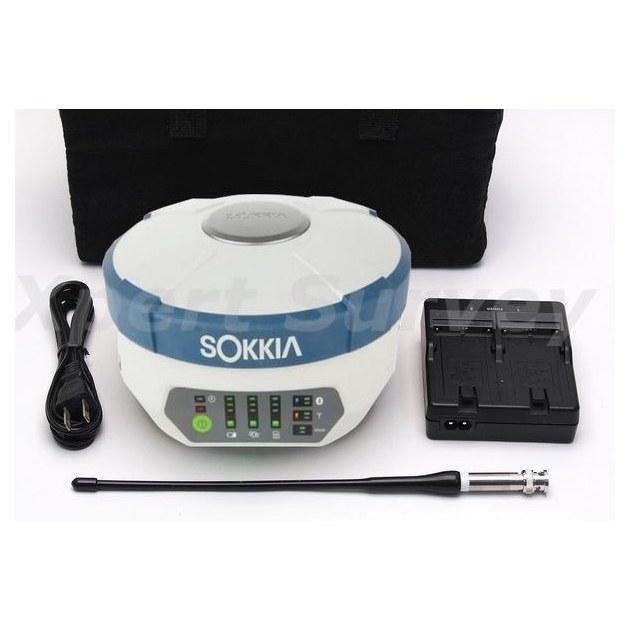 SokkiaGRX1
Sokkia GRX1 GNSS Receiver
Base and rover RTK in a single housing. Topographic pickup and stakeout across a large site without dragging a total station around it.
KolidaK6Kolida K6 GNSS RTK Receiver
1598 channels in an 800 gram housing, with a calibration free IMU that lets you tilt the pole up to sixty degrees and still hit two centimetres.
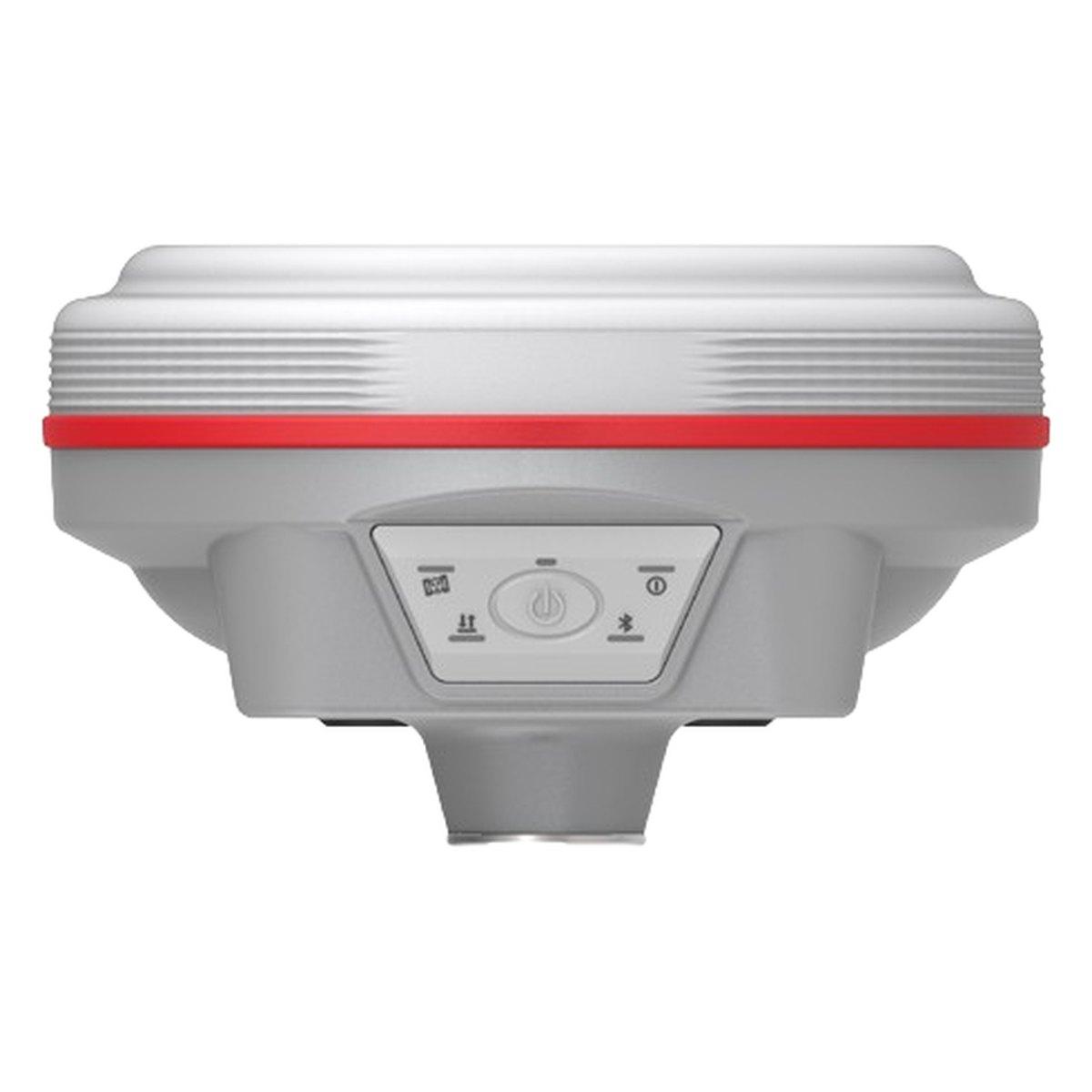 KolidaK9s
Kolida K9s GNSS RTK Receiver
1698 channels, 790 grams and twenty five hours in rover mode. The long day receiver.
FAQ
Questions buyers ask us
What is the price of an RTK GPS in Pakistan?
In 2026 a complete GNSS RTK set of base, rover and controller sells for PKR 1,200,000 to 3,500,000 in the Pakistani market. A single entry-level rover for network RTK runs PKR 600,000 to 900,000, an IMU tilt rover PKR 900,000 to 1,500,000, and Sokkia sets sit at the top of the range. These are market ranges; we quote by WhatsApp.
How accurate is RTK GPS?
A surveying RTK receiver with a fixed solution gives about 8 mm plus 1 ppm horizontally and 15 mm plus 1 ppm vertically. That is centimetre-level positioning in real time. A handheld GPS or a phone gives 3 to 10 metres. The two are not comparable instruments.
Do I need a base station or can I use network RTK in Pakistan?
Network RTK through CORS services is available in parts of Punjab, Islamabad and Sindh but coverage is patchy and depends on mobile data. Most Pakistani surveyors buy a base and rover set so they are independent of coverage. A rover-only purchase is only sensible where you have confirmed a reliable CORS service.
Is Kolida or Sokkia GNSS better?
Sokkia receivers have better tracking in difficult sky and stronger support software, and cost roughly twice as much. Kolida K series receivers deliver the same RTK accuracy with IMU tilt on the newer models, and spares and service are on our bench. Most Pakistani survey firms buy Kolida; consultancies buy Sokkia.
What is IMU tilt compensation on a GNSS rover?
An inertial measurement unit inside the rover lets you measure a point with the pole tilted up to about 60 degrees, so you do not have to level the bubble, and can reach under eaves and into corners. It speeds up topographic work by 20 to 30 percent and is worth the extra PKR 200,000 to 400,000 for a busy crew.
When is a total station better than GNSS?
Under tree cover, in dense urban streets, inside buildings, next to tall structures, and for any work needing better than 1 cm vertical accuracy. GNSS needs open sky. Most survey firms own both and use the GNSS for control and open topography, the total station for detail and layout.