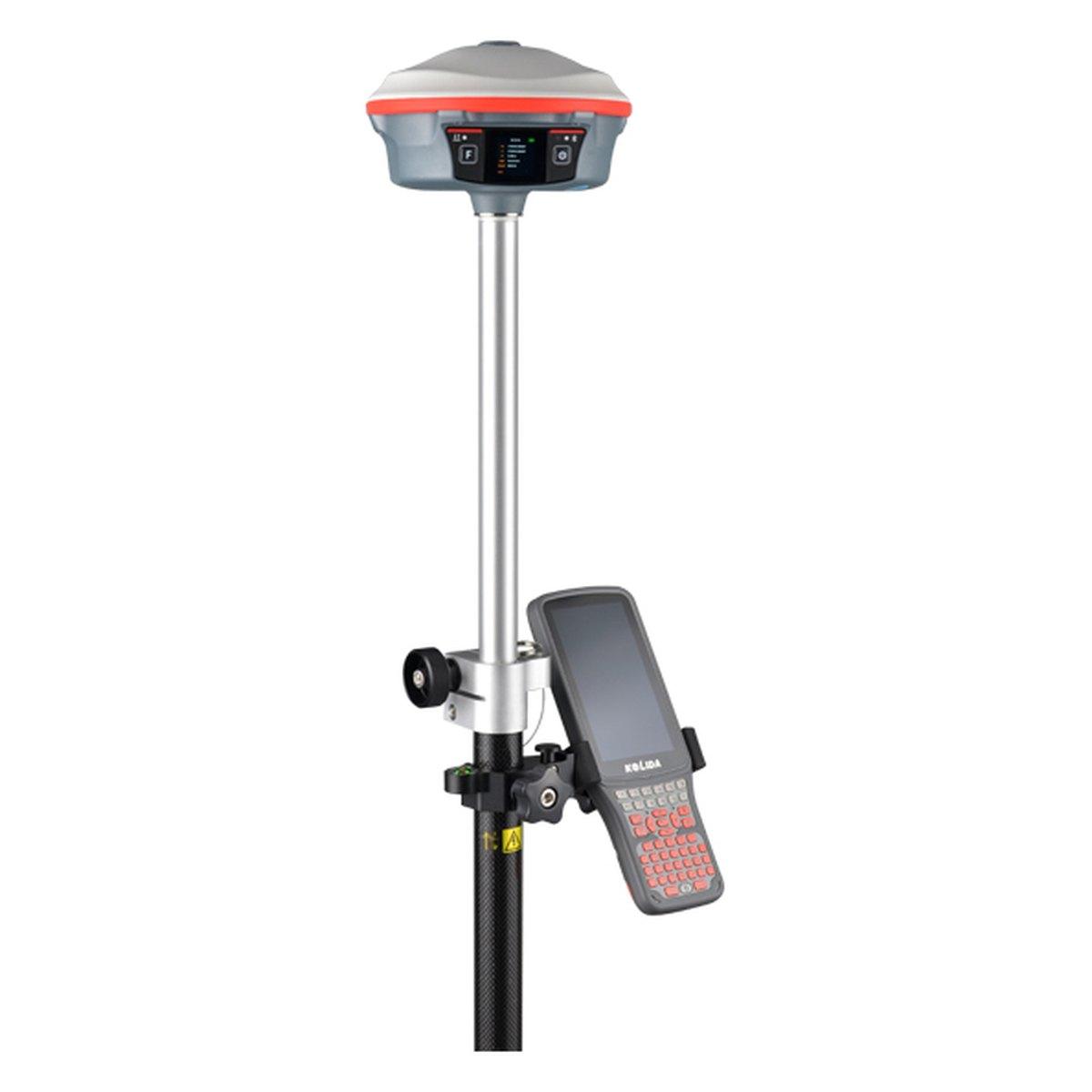
GPS surveying equipment for RTK work means a base receiver, a rover receiver, a field controller with software, and the tripod, tribrach, pole, radio and batteries that make them usable. In Pakistan a complete Chinese-brand kit costs about PKR 1,200,000 to 2,500,000 in 2026, and a single network rover PKR 600,000 to 1,100,000.
The receivers get all the attention, but the jobs we see fail usually fail on an accessory: a bent pole, a tribrach out of adjustment, a dead spare battery, a radio antenna left in the office. This guide lists every part, what it does, and what it costs here.
What equipment is needed for a GPS survey?
| Item | What it does | Indicative price in Pakistan (PKR) | Notes |
|---|---|---|---|
| Base receiver | Sits on a known point, broadcasts corrections | Part of a set | Internal or external UHF radio, static logging |
| Rover receiver | Measures each point | 600,000 to 1,100,000 on its own | IMU tilt adds 200,000 to 400,000 |
| Field controller | Runs survey software, stores points, stake-out | Usually in the set; 150,000 to 350,000 alone | Android, IP67, sunlight-readable |
| Survey software licence | Coordinate systems, stake-out, roads | Usually bundled | Check it is not a trial |
| Base tripod | Holds the base steady over the mark | 15,000 to 45,000 | Aluminium or wooden, with strap |
| Tribrach and carrier | Centres and levels the base over the point | 15,000 to 40,000 | Optical plummet, check adjustment |
| Rover pole and bipod | Holds the rover at a fixed height | 20,000 to 50,000 | 2 m carbon or aluminium, accurate bubble |
| Radio antenna and mast | Extends base radio range | Usually in the set | Height matters more than power |
| Spare batteries and chargers | A full day in summer | 10,000 to 30,000 each | Heat shortens battery life |
| Hard cases | Transport and storage | Usually in the set | Dust is the enemy |
| Office software | Post-processing and CAD export | Often bundled | Static processing for control |
Accessory prices are indicative 2026 market ranges; receiver and set prices follow the exchange rate. Confirm today's price on WhatsApp.
The receivers: base and rover
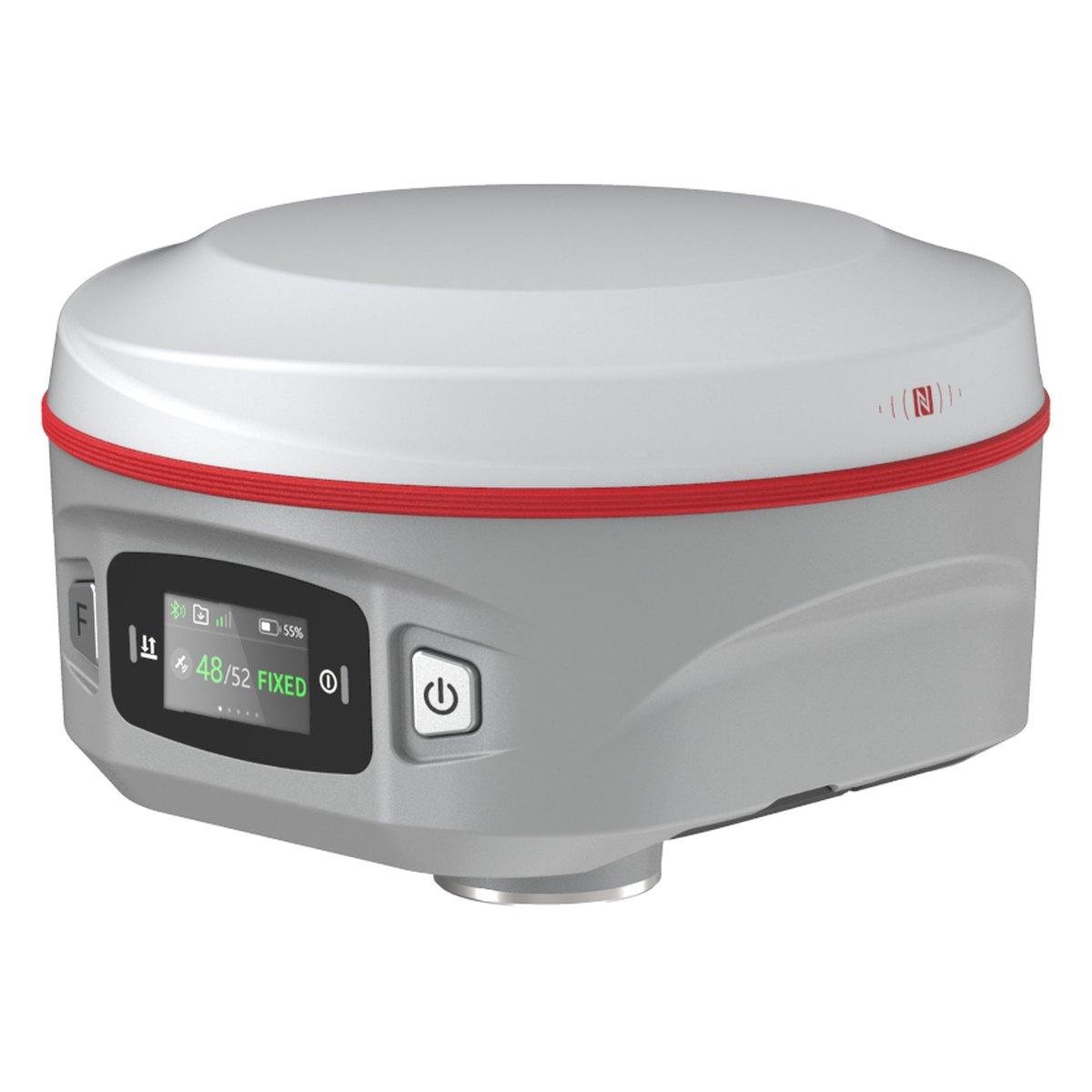
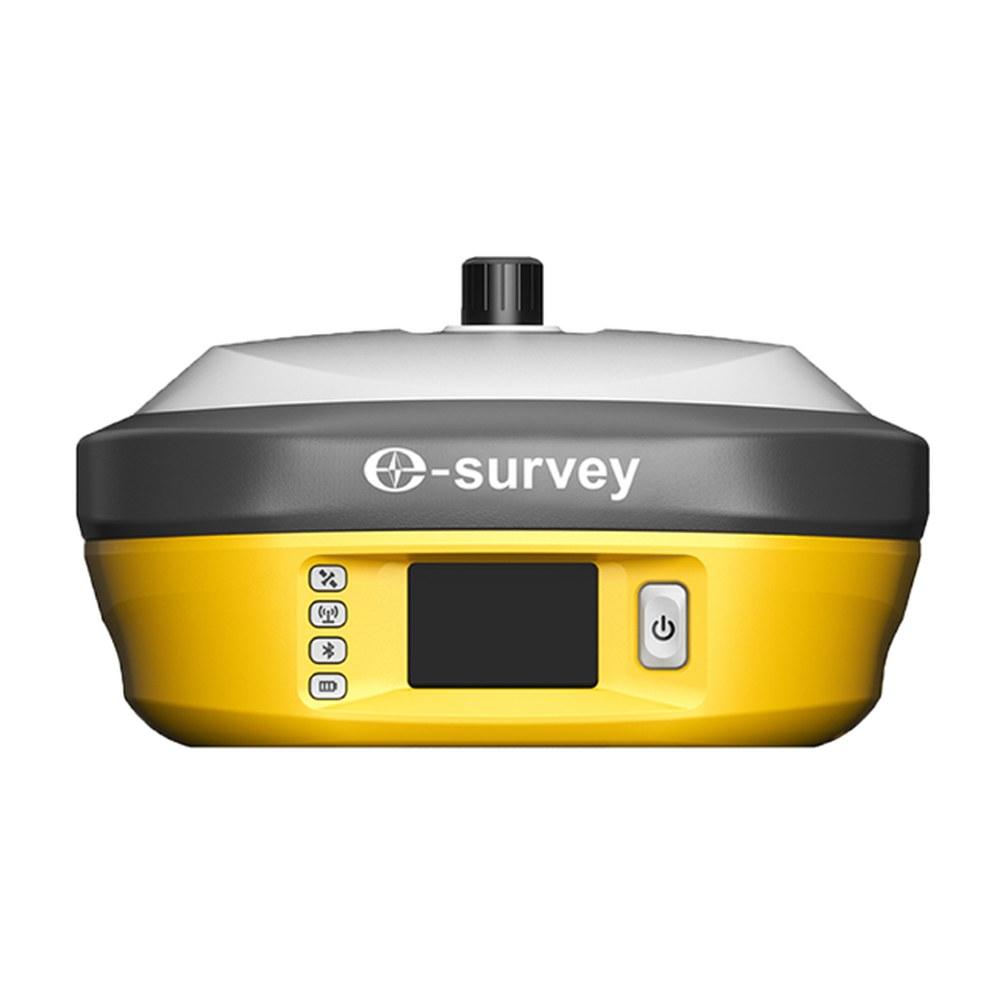
The base and the rover are often the same model, configured differently. Some buyers pair a long-range base such as the Kolida K30 Pro (3 W radio) or the E-Survey E800 (5 W) with a lighter rover such as the Kolida K6 or E-Survey E300 Pro.
What to look for in the specification:
- All four constellations: GPS, GLONASS, Galileo, BeiDou, on at least two frequencies each. See GNSS vs GPS.
- RTK accuracy of about 8 mm + 1 ppm horizontal, 15 mm + 1 ppm vertical.
- IMU tilt on the rover, for corners of buildings and boundary pillars you cannot stand over.
- IP67 sealing and an operating range that covers 50 °C or more.
- Static logging on the base, for control work.
The controller and software
The controller is where the survey actually happens: coordinate system, stake-out, codes, the point list. A rugged Android controller such as the Sokkia SHC250 is easy to read in full sun and survives being dropped on a gravel road.
Check before you pay:
- The survey app is licensed, not a 30-day trial.
- It supports UTM zones 41N to 43N on WGS 84 and localisation; see UTM coordinates in Pakistan.
- It exports DXF and CSV that your CAD operator can open.
- There is a road or alignment module if you do linear work.
The accessories that decide whether the job is right
Tribrach. A tribrach whose optical plummet is out of adjustment puts the base a few millimetres to a couple of centimetres off the mark, and every point follows it. We check plummets on every tribrach we sell, and we recommend checking yours every few months by rotating it over a mark.
Rover pole bubble. A bubble that is out by a degree on a 2 m pole is 3.5 cm of error on every point. It is the cheapest part of the kit and the one least often checked. Put the pole in a doorway, centre the bubble, rotate it half a turn. If the bubble moves, adjust it.
Tripod. An aluminium tripod is light; a wooden one is steadier in wind and does not expand in the sun as much. For a base left for hours, steadiness matters more than weight.
Batteries. A receiver rated for 15 hours at 25 °C will not manage that on a roof in Bahawalpur in June. Carry spares, and keep them out of the sun.
Caring for the kit in Pakistani conditions
Most GNSS faults we repair are not electronic. They are the result of heat, dust and transport:
- Heat. Do not leave receivers, controllers or batteries on a car dashboard or in a closed boot in summer. Interior temperatures pass 70 °C and batteries swell.
- Dust. After a dusty day, wipe connectors and battery contacts before the next charge. Keep rubber covers on unused ports. IP67 protects the body, not an open socket.
- Transport. Carry receivers in their hard case, not loose on the back seat. A rover dropped from a pole onto concrete is the commonest physical repair we see.
- Cables and antennas. Coil them loosely. A radio antenna cable kinked in the case is the usual reason a base loses range months after purchase.
- Firmware. Update receivers and the controller app once or twice a year, with the dealer if you are unsure. Updates add satellite signals and fix bugs.
Store the kit indoors, in its cases, with batteries charged to about half if it will sit unused for more than a month. A short annual service, cleaning, firmware and a check against a known baseline, costs far less than a week without the instrument in the middle of a project.
Is used GPS surveying equipment worth buying?
For total stations, sometimes. For GNSS, rarely. Older receivers may not track BeiDou or Galileo on modern signals, may be registered to a previous owner, and may be on firmware that can no longer be updated. If the brand has no service here, a fault means shipping it abroad.
If you do consider a used set, ask for: the original registration transfer, a firmware update in front of you, and a field test on a known point.
What does a complete kit cost?
Indicative 2026 market ranges:
- Network rover kit (rover, controller, pole): PKR 600,000 to 1,100,000
- Chinese base and rover kit, complete: PKR 1,200,000 to 2,500,000
- Premium rover with camera or laser offset, such as the Kolida K60 Pro: PKR 1,500,000 to 2,200,000 for the rover
- Sokkia base and rover kit: PKR 2,500,000 to 3,500,000
Confirm today's price on WhatsApp. Ask any seller for an itemised list against the table above; a headline price that leaves out the controller, base tripod and tribrach can rise by PKR 150,000 to 300,000.
What we supply
We sell complete kits, not boxes, and set them up for your zone before handover:
- Receivers under GPS and GNSS systems
- Tripods, tribrachs, poles and prisms under tools and accessories
- Sokkia SHC250 field controller
- GNSS rover rod and bipod
Further reading: GNSS base and rover setup and RTK GPS and GNSS receiver price in Pakistan.
Ask for today's price
Tell us whether you need a base and rover or a network rover, and what you already own. We will send an itemised quote so you can compare like with like. Send us a WhatsApp for today's price.
What we supply
Equipment covered in this guide
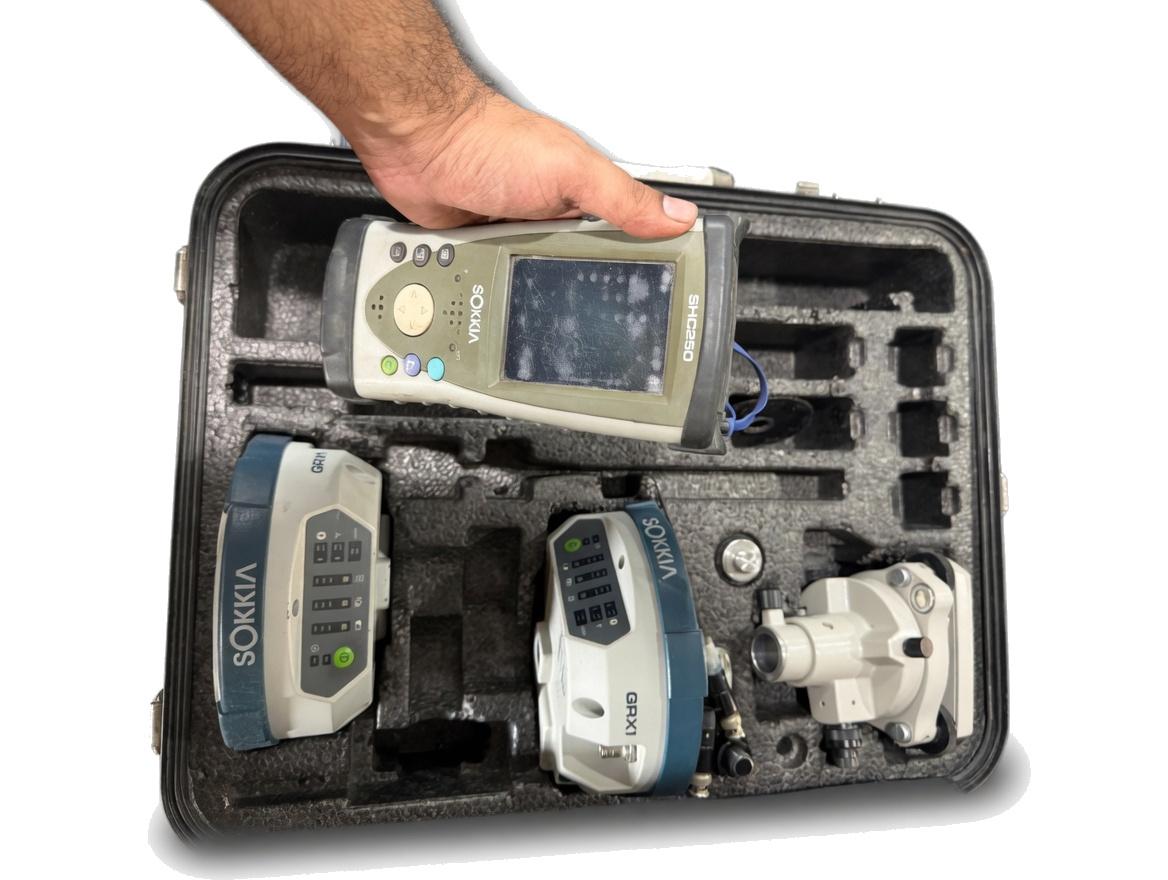 SokkiaSHC250
Sokkia SHC250 Field Controller
The rugged handheld that drives the GRX1. Sunlight readable, sealed, and it survives being dropped off a tailgate.
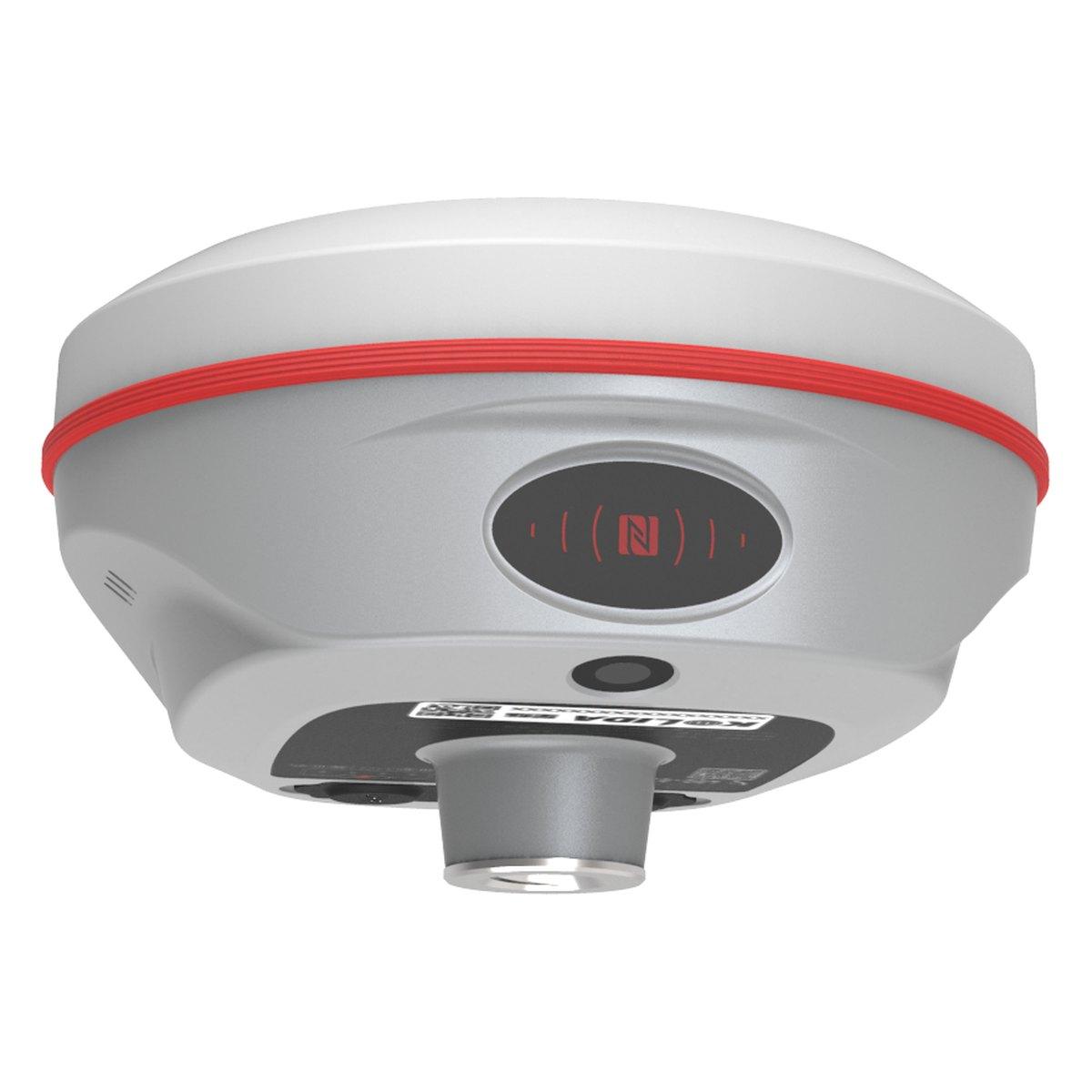 KolidaK6
Kolida K6 GNSS RTK Receiver
1598 channels in an 800 gram housing, with a calibration free IMU that lets you tilt the pole up to sixty degrees and still hit two centimetres.
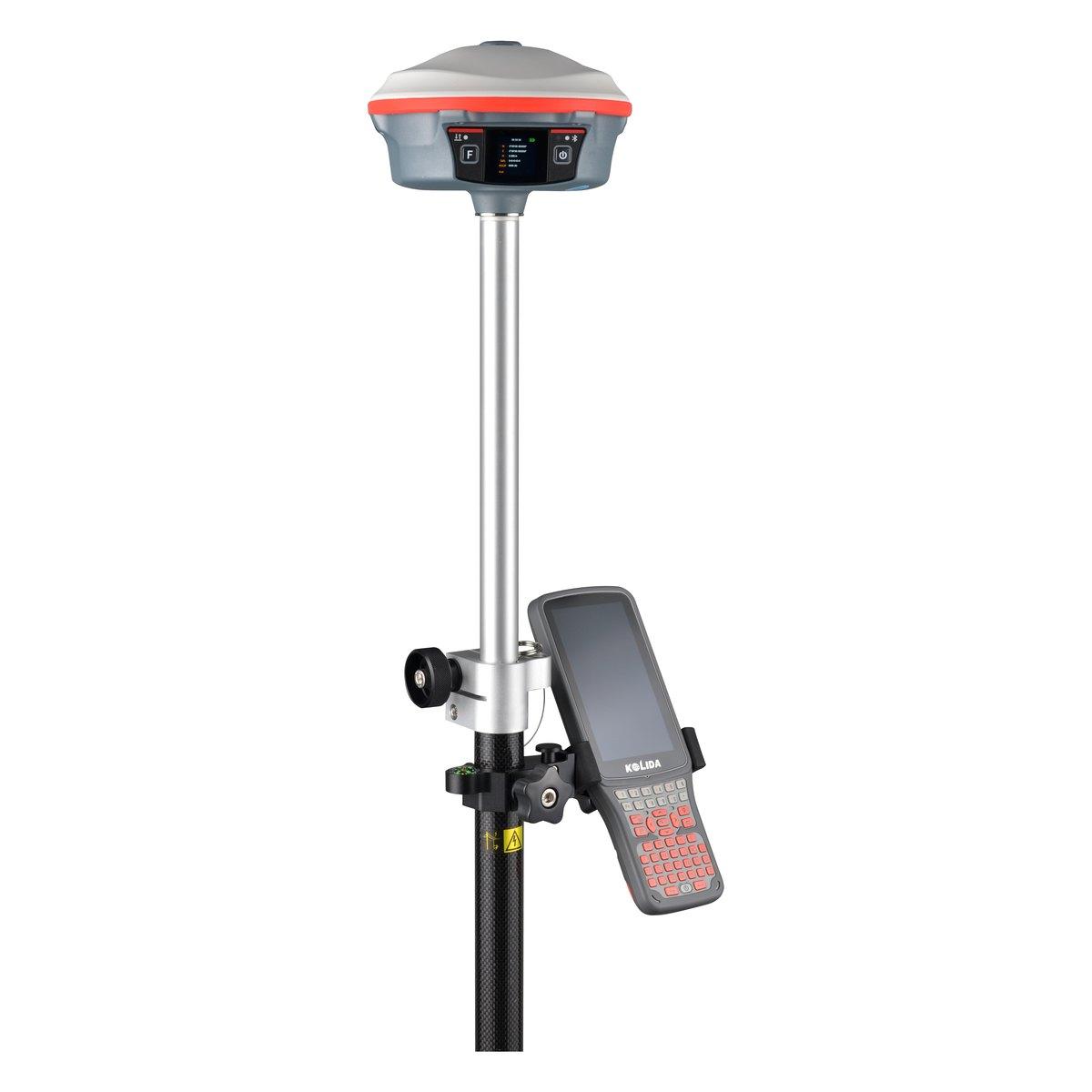 KolidaK30 Pro
Kolida K30 Pro GNSS RTK Receiver
A three watt radio that reaches ten to fifteen kilometres, and Star-Link correction for the sites where there is no base and no network.
FAQ
Questions buyers ask us
What equipment is needed for a GPS survey?
For RTK: a base receiver, a rover receiver, a field controller with survey software, a tripod and tribrach for the base, a rover pole with bipod, radio antennas, batteries and chargers, and office software for processing and CAD export. A network RTK user can skip the base but needs a data subscription.
How much does GPS surveying equipment cost in Pakistan?
In 2026 a complete Chinese-brand RTK kit with base, rover and controller costs about PKR 1,200,000 to 2,500,000. A single rover for network RTK runs PKR 600,000 to 1,100,000. A Sokkia kit is PKR 2,500,000 to 3,500,000. These are market ranges; confirm today's price on WhatsApp.
Is used GPS surveying equipment worth buying?
Rarely, for GNSS. Older receivers often track only GPS and GLONASS, lack BeiDou and Galileo on current frequencies, and may be locked to a previous owner's registration or firmware. A used receiver that cannot be updated or serviced locally is cheap for a reason. Ask for a field test and the registration status.
Do I need a controller as well as the receivers?
Yes. The controller runs the survey software, sets the coordinate system, stores points and drives stake-out. Most sets now include an Android controller. Some receivers can run from a phone app, but a rugged controller with a sunlight-readable screen survives Pakistani site conditions far better.
What is usually missing from a cheap GNSS quote?
The commonest omissions are the controller, survey software licence, the base tripod and tribrach, the radio antenna and mast, a second set of batteries, the hard case and training. Ask for an itemised list. A low headline price can rise by PKR 150,000 to 300,000 once the kit is complete.