A GNSS receiver for surveying should track GPS, GLONASS, Galileo and BeiDou on two or more frequencies, reach about 8 mm + 1 ppm with RTK, survive 50 °C heat and dust, and be serviceable in Pakistan. In 2026 a survey rover costs about PKR 600,000 to 1,100,000 here, and a complete base and rover set PKR 1,200,000 to 2,500,000.
Spec sheets have grown so long that they hide what matters. Every receiver claims centimetre accuracy and over a thousand channels. The differences that decide whether you are still happy with it in three years are elsewhere: how it fixes under partial cover, how far its radio reaches, what the software does, and who repairs it in Rawalpindi when it falls off a pole. This is the checklist we use when customers ask us to choose.
What is a GNSS receiver?
A GNSS receiver takes the signals from navigation satellites and computes position, height and time. "GNSS" covers every system: GPS, GLONASS, Galileo and BeiDou; our GNSS vs GPS guide explains the difference.
There are three broad classes:
- Navigation and phones: 3 to 10 m
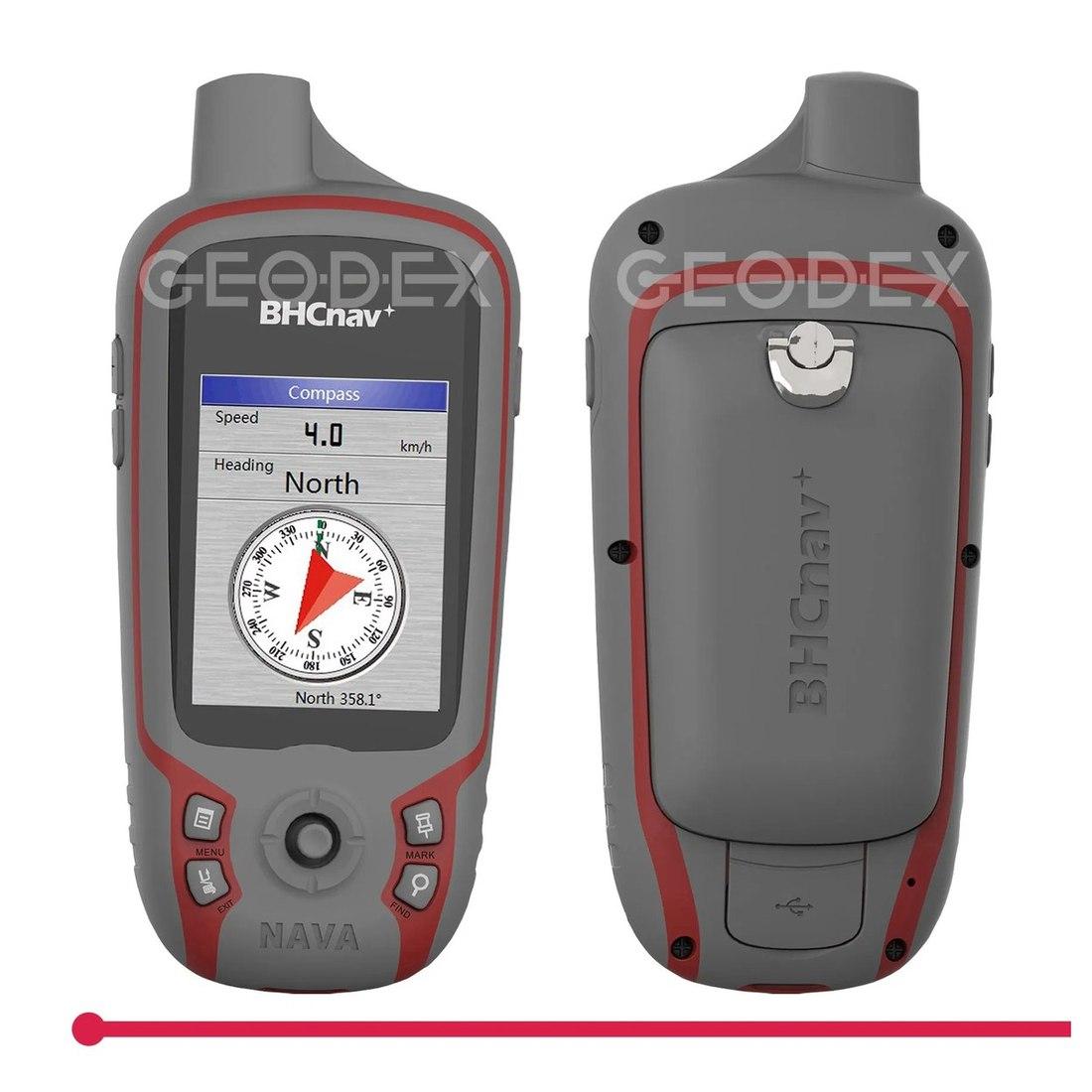
- Mapping and GIS handhelds: 0.5 to 3 m; see handheld GPS price in Pakistan
- Survey receivers: 1 to 2 cm with RTK, millimetres with static processing
This guide is about the third class.
The checklist: what actually matters
| Feature | What to look for | Why it matters on Pakistani sites |
|---|---|---|
| Constellations and frequencies | GPS L1/L2/L5, GLONASS L1/L2, Galileo E1/E5a/E5b, BeiDou B1/B2/B3 | Faster, more reliable fixes in towns and hills; BeiDou is strong over Pakistan |
| RTK accuracy | About 8 mm + 1 ppm H, 15 mm + 1 ppm V | The standard; anything worse is not survey grade |
| IMU tilt | Up to about 60 degrees, no calibration walk | Corners, walls, pillars; removes bubble error |
| Radio | Internal UHF; 2 to 5 W option for the base | Range of 3 to 15 km without mobile signal |
| 4G modem | Built in | Network RTK where CORS coverage exists |
| Sealing and heat | IP67, operating to 65 °C | Dust storms and summer roofs |
| Battery | 10 hours or more, swappable or USB-C charging | Long days, no power on site |
| Software | Licensed Android app, UTM zones, localisation, roads | Daily usability; see below |
| Service | Local repair, loan units, firmware updates | The difference between one day and six weeks off work |
Constellations and frequencies, not channels
Channel counts in the hundreds or thousands are marketing. What matters is which signals the receiver tracks. A receiver that lists all four systems on multiple frequencies will fix faster and hold the fix where a GPS-only or single-frequency unit loses it.
The field test we run before handing over any rover: set it up beside a two storey building or a tree line, switch it off and on, and time the fix. A good receiver reaches RTK FIXED in under 10 seconds there. If it sits in FLOAT for a minute, it will cost you that minute hundreds of times a month.
Do you need IMU tilt compensation?
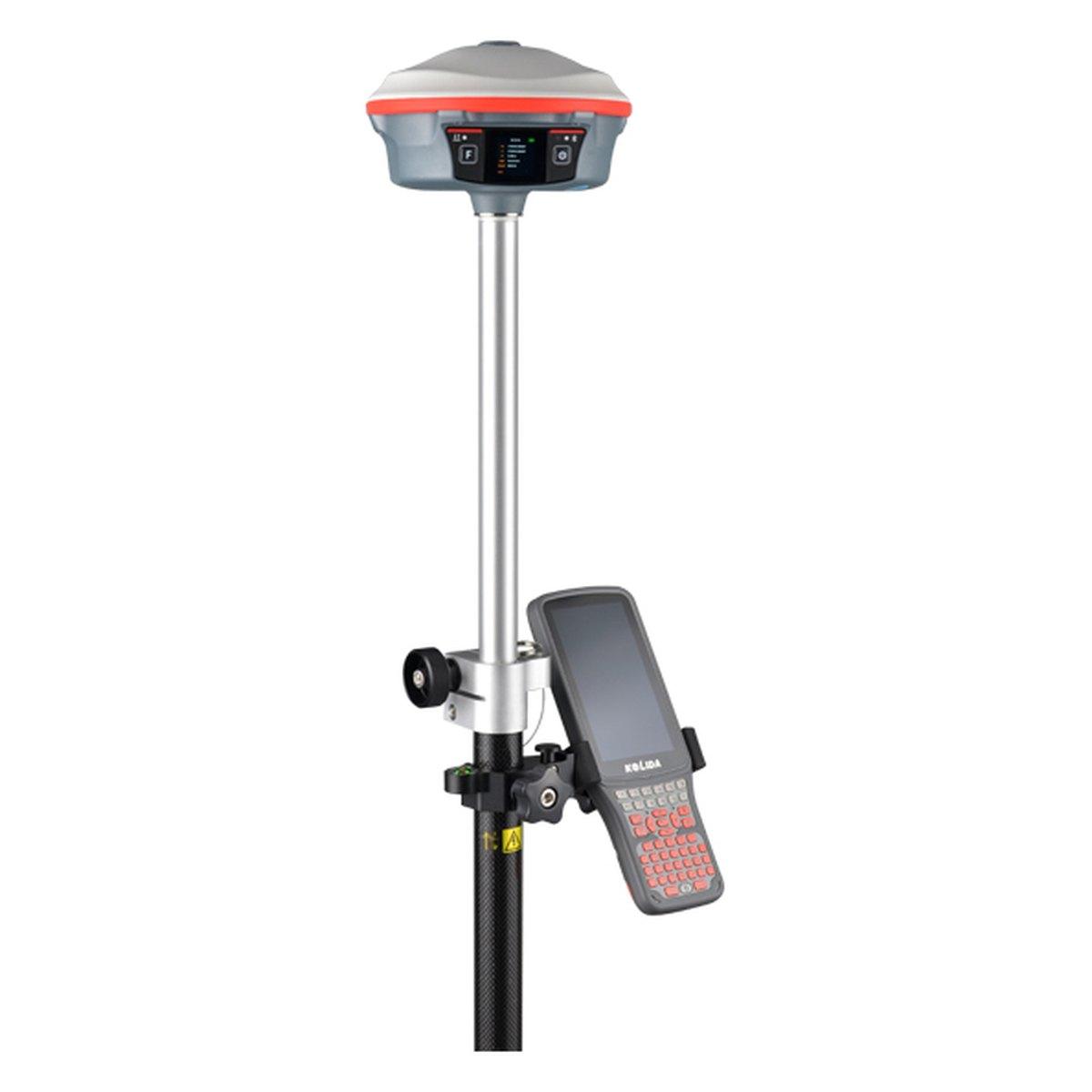
For most Pakistani work, yes. Boundary pillars sit against walls, building corners cannot be occupied, and road edges are full of traffic. An IMU rover such as the Kolida K9s, K6 or K60 Pro measures with the pole leaning, so you stop chasing the bubble.
It also removes bubble error, which is about 3.5 cm for every degree off vertical on a 2 m pole.
Radio: the specification people regret ignoring
Most Pakistani crews work without dependable mobile data, so the base radio decides how far the rover can go. Internal radios reach 3 to 5 km in open country. A long-range base with a 3 to 5 W radio, raised high, covers 8 to 15 km of road, canal or scheme.
Our GNSS base and rover setup guide has a range table.
Software: where you spend your day
The receiver is a box on a pole; the controller app is what you use all day. Check for:
- UTM zones 41N, 42N and 43N on WGS 84, plus localisation to local grids; see UTM coordinates in Pakistan
- Point, line and road stake-out
- Feature codes that draw in CAD
- DXF and CSV export your office can open
- A full licence, not a trial that expires mid-project
Special features worth paying for, sometimes
- Visual stake-out cameras (Kolida K60 Pro, K60 MAX): a camera view guides the rover onto the point. Useful for heavy setting out.
- Laser offset RTK such as RUIDE RAMA2: measures points you cannot reach, such as building corners and poles, by laser from the rover.
- SLAM and scanning (Kolida SLAM RTK ME): RTK plus 3D scanning for façades and interiors.
Each adds cost. Buy them for the work you have, not the brochure.
Is a budget GNSS receiver good enough?
Many budget receivers use the same chipset families as mid-range ones and reach RTK accuracy in open fields. The gaps show up in partial cover, radio range, heat, software and, most of all, repair. A receiver with no service in Pakistan that fails in month 13 is the most expensive one you can buy.
Questions to ask the dealer before you pay
A specification sheet cannot tell you these. Ask them directly, and get the answers in writing:
- Is the receiver registered to me, with a full licence? Some receivers are sold on temporary registration codes that expire.
- Is the survey software licence permanent? And which modules are included: stake-out, roads, static logging?
- Who repairs it in Pakistan, and how long does it take? Ask whether a loan unit is available during repair.
- What is the warranty, and what does it exclude? Drops and water entry are usually excluded; heat damage sometimes is.
- Will you set it up for my zone and give a field handover? A receiver handed over in a box is a week of lost work for a new user.
- Can I test it on a known point before paying? A dealer confident in the instrument will say yes.
- Are firmware updates included, and how are they done?
Write the answers down and compare them across quotes, the same way you compare prices.
We answer all seven before every sale, at our Rawalpindi counter or on site. If a seller cannot answer the third question, the price does not matter.
How much does a GNSS receiver cost in Pakistan?
Indicative 2026 market ranges:
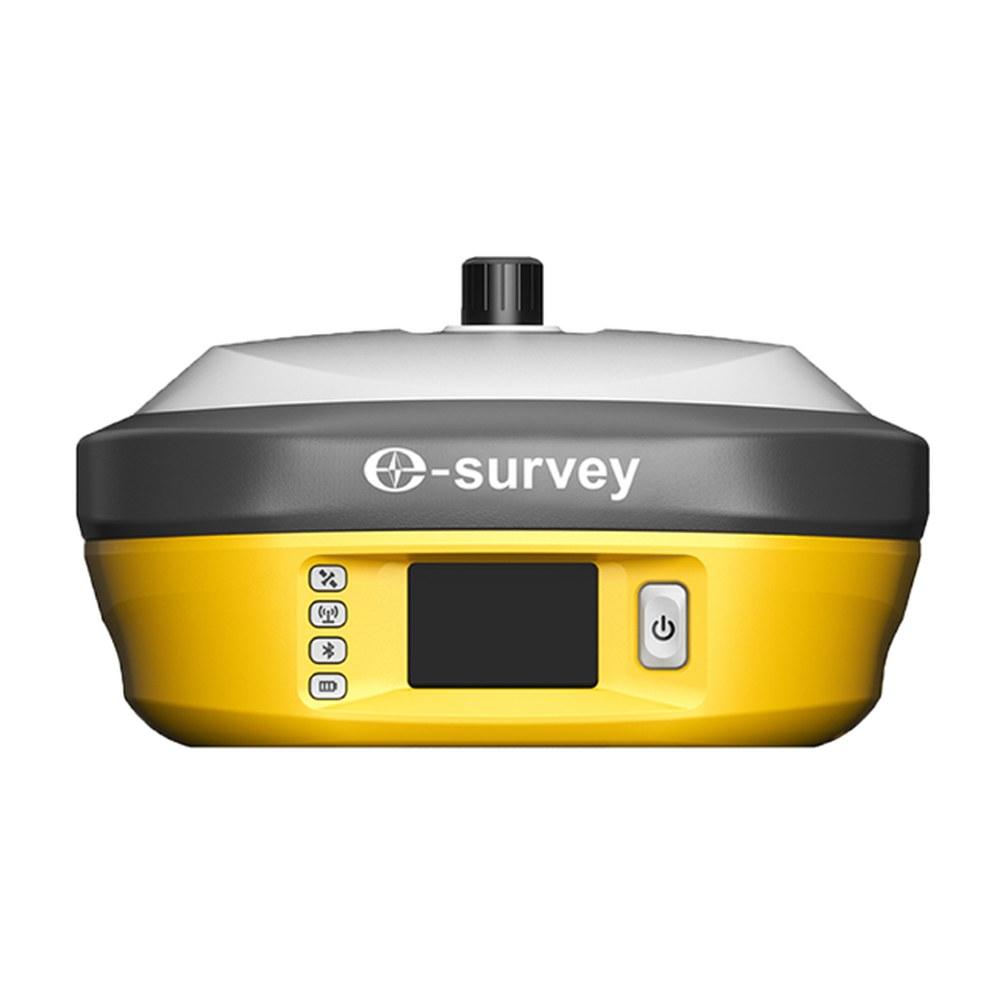
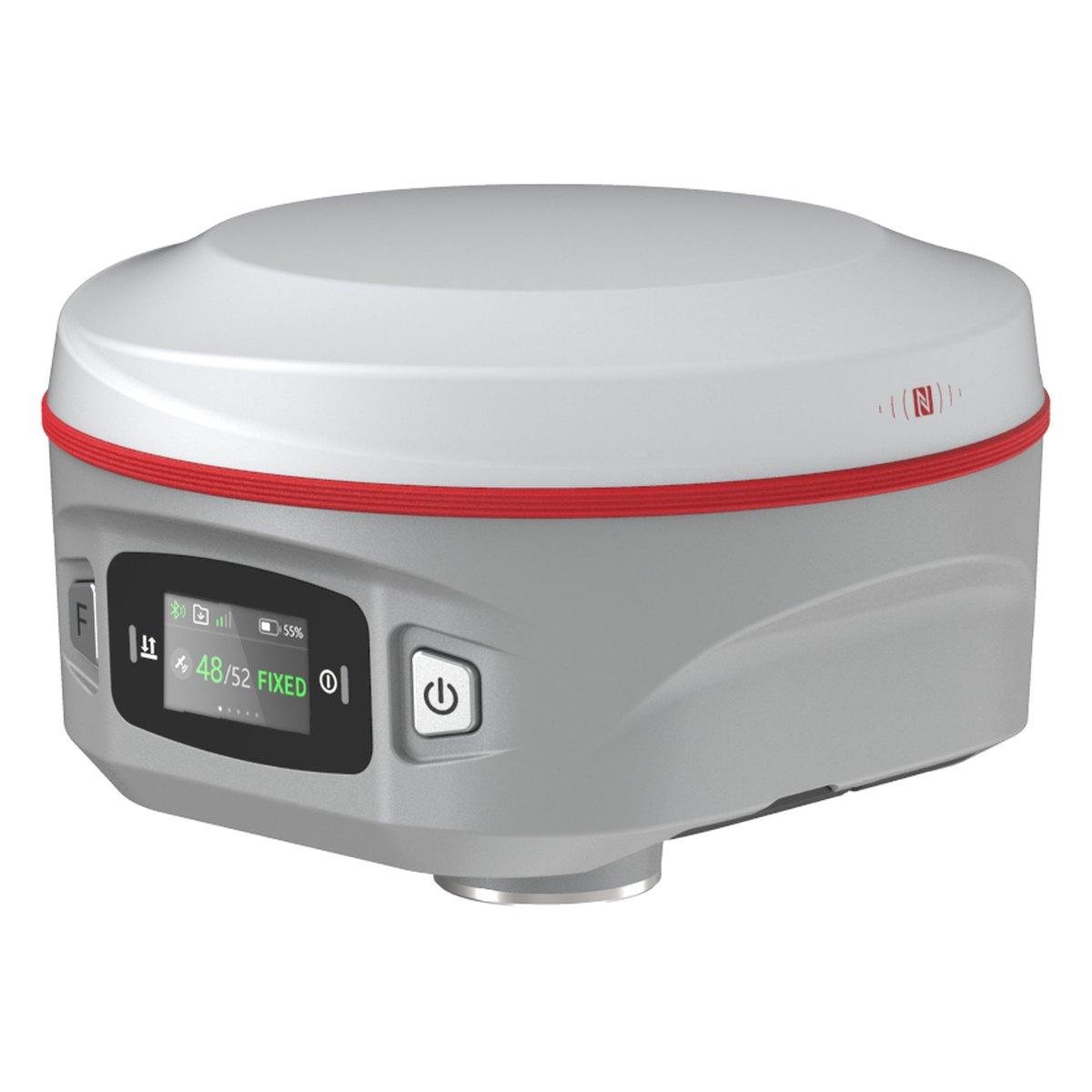
- Network rover (Kolida K6, E-Survey E300 Pro): PKR 600,000 to 1,100,000
- IMU tilt rover (Kolida K9s, K30 Pro): PKR 900,000 to 1,500,000
- Premium rover (Kolida K60 Pro, K60 MAX): PKR 1,300,000 to 2,200,000
- Chinese base and rover set, complete: PKR 1,200,000 to 2,500,000
- Sokkia GRX1 base and rover: PKR 2,500,000 to 3,500,000
Prices follow the exchange rate; confirm today's price on WhatsApp. Model detail: Kolida GNSS receiver price, E-Survey GNSS receiver price and RTK GPS and GNSS receiver price.
What we supply
We are authorised for Kolida and Sokkia, supply E-Survey and RUIDE, and repair what we sell at our Rawalpindi service bench:
- Kolida K60 MAX and K60 Pro
- Kolida K9s and K6
- E-Survey E600
- Sokkia GRX1
- RUIDE RAMA2 laser RTK
- The full range under GPS and GNSS systems
Ask for today's price
Tell us the work you do most, where, and whether you have a base already. We will shortlist two receivers and arrange a field test before you decide. Send us a WhatsApp for today's price.
What we supply
Equipment covered in this guide
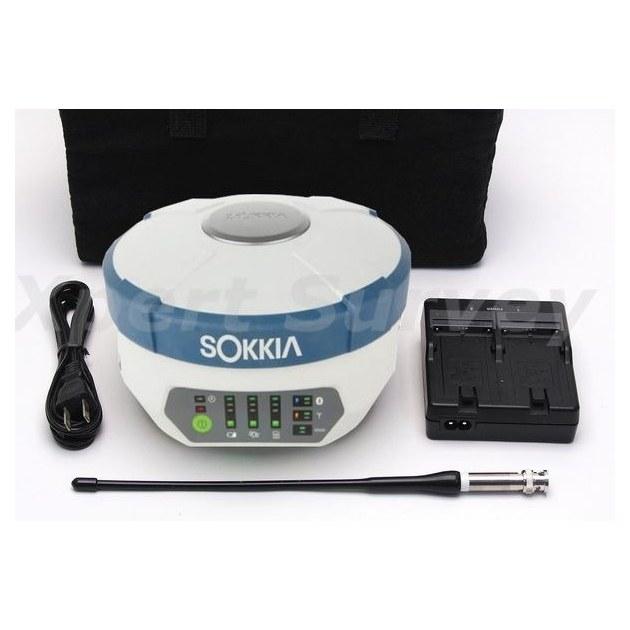 SokkiaGRX1
Sokkia GRX1 GNSS Receiver
Base and rover RTK in a single housing. Topographic pickup and stakeout across a large site without dragging a total station around it.
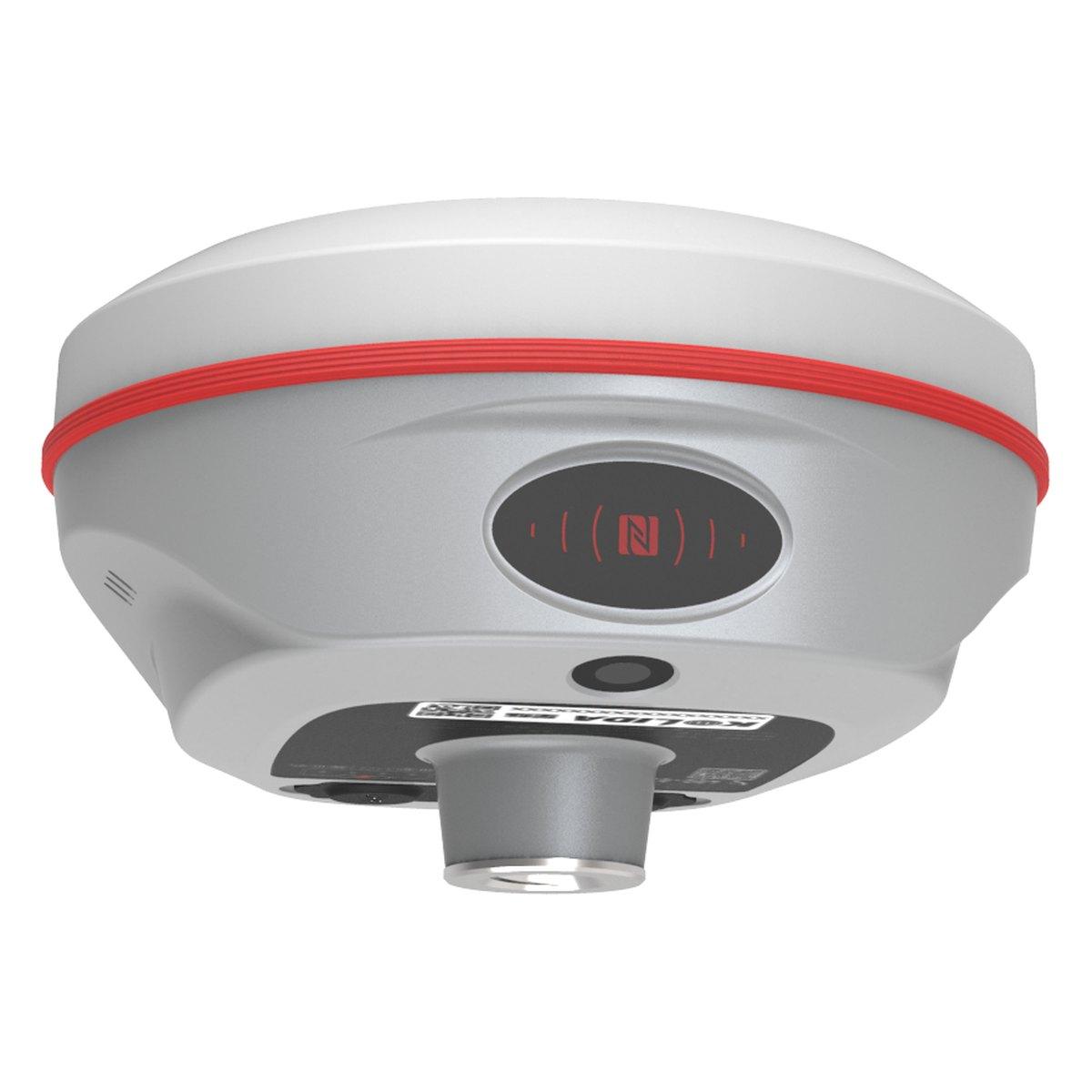 KolidaK6
Kolida K6 GNSS RTK Receiver
1598 channels in an 800 gram housing, with a calibration free IMU that lets you tilt the pole up to sixty degrees and still hit two centimetres.
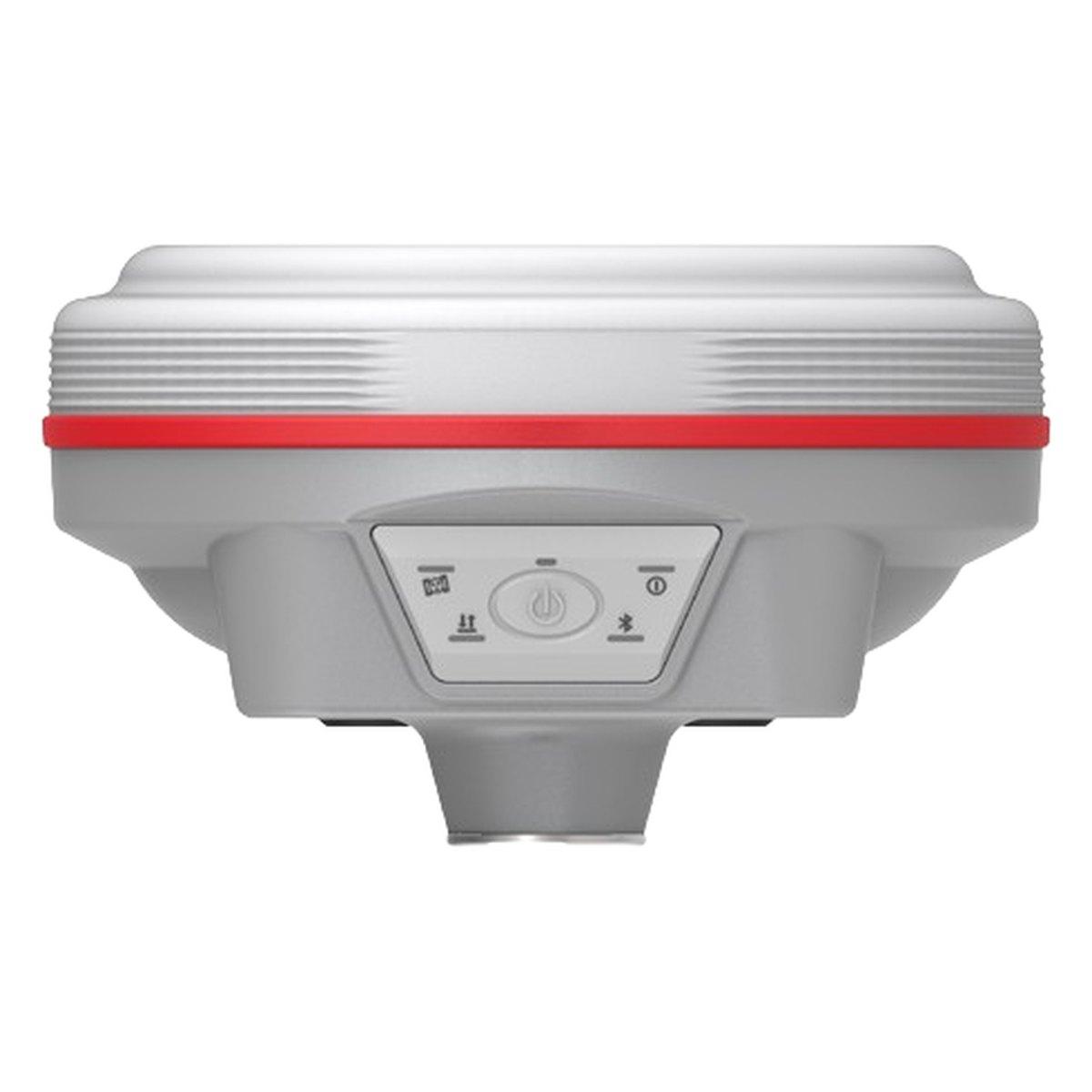 KolidaK9s
Kolida K9s GNSS RTK Receiver
1698 channels, 790 grams and twenty five hours in rover mode. The long day receiver.
FAQ
Questions buyers ask us
What is a GNSS receiver?
A GNSS receiver captures signals from navigation satellites, GPS, GLONASS, Galileo and BeiDou, and computes position, height and time. Survey-grade receivers track several frequencies and use RTK or static corrections to reach 1 to 2 cm, against 3 to 10 m for a phone or handheld.
What is the best GNSS receiver for surveying in Pakistan?
The best one is the one your local dealer can service. For most Pakistani firms that means a four-constellation, multi-frequency receiver with IMU tilt and a strong UHF radio, such as Kolida K6 or K9s, E-Survey E300 Pro or E600, or Sokkia GRX1 for consultancy fleets.
How much does a GNSS receiver cost in Pakistan?
In 2026 a survey GNSS rover costs about PKR 600,000 to 1,100,000, an IMU tilt rover PKR 900,000 to 1,500,000, and a complete Chinese base and rover set PKR 1,200,000 to 2,500,000. Sokkia sets run PKR 2,500,000 to 3,500,000. Market ranges; confirm today's price on WhatsApp.
Do I need IMU tilt compensation?
If you survey building corners, boundary walls, pillars beside obstructions or busy roads, yes. IMU tilt lets you measure with the pole leaning up to about 60 degrees, so you do not have to level the bubble on every point. It saves time and avoids bubble error, which is 3.5 cm per degree on a 2 m pole.
Is a budget GNSS receiver good enough?
Many budget receivers use good chipsets and reach RTK accuracy in open sky. Where they fall short is fixing under partial cover, radio range, heat tolerance, software and, above all, local repair. Check who services it in Pakistan before comparing prices.
How many channels should a GNSS receiver have?
Channel count on its own means little; modern survey receivers list 800 to over 1,500 channels. What matters is which constellations and frequencies are tracked: GPS L1, L2, L5, GLONASS L1, L2, Galileo E1, E5a, E5b and BeiDou B1, B2, B3.