A borehole camera in Pakistan costs about PKR 150,000 to 350,000 for a basic 50 to 100 metre well camera and PKR 500,000 to 950,000 for a 200 metre system with forward and side view and video recording in 2026. It shows why a tube well has silted, sanded up or lost yield before anyone spends on a new bore.
Every week someone at our counter tells us their tube well has "gone". Sometimes the aquifer really has dropped. More often the well is fine and something inside it has failed: a screen, a casing joint, a pump set at the wrong depth. A camera turns that argument into a video with depths on it.
How much does a borehole camera cost in Pakistan?
Prices depend mostly on cable length, whether the head sees sideways as well as down, and whether the system records video with a depth overlay.
| Class | Cable depth | View | Recording | Indicative market price (PKR, 2026) | Typical buyer |
|---|---|---|---|---|---|
| Entry well camera | 30 to 100 m | Forward only | Basic or none | 150,000 to 350,000 | Small drillers, house bores |
| Professional borehole camera, PQWT class | 200 m | 170 degree forward, 360 degree side | Video with depth | 500,000 to 950,000 | Drilling firms, consultants, WASA teams |
| Logging system with motorised winch | 300 to 1,000 m | Panoramic, scanning | Video, logs, software | 1,200,000 to 3,500,000 | Geological survey, mining, deep exploration |
These are 2026 market ranges for Pakistan. Confirm today's price on WhatsApp, rates move with the exchange rate.
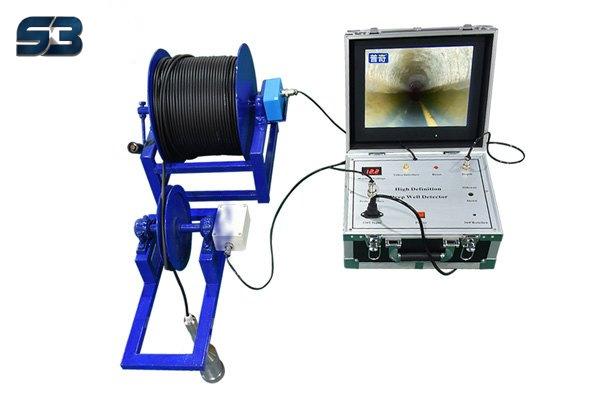
The borehole inspection camera we supply is the PQWT 200 metre system: a waterproof camera on a reeled cable, a 170 degree forward view, a 360 degree side view, and a recorder that saves the run. It is the class most Pakistani drilling contractors actually need.
Why do tube wells fail?
A tube well is a steel or PVC casing with a slotted screen opposite the water bearing layer, surrounded by a gravel pack. Most failures fall into a handful of patterns.
Screen blockage
Iron rich groundwater, common in parts of Punjab and the Potohar, deposits a brown crust on the screen. Carbonate water leaves a white scale. Bacteria add slime. The slots close a little each year and yield falls, even though the water level is unchanged. A camera shows the crust clearly, and whether chemical cleaning is worth trying.
Sand pumping
A well that suddenly delivers sand usually has a torn or corroded screen, a separated joint, or a gravel pack that was never right for the formation. Sand wears the pump impeller, fills the overhead tank and eventually buries the screen. The camera finds the hole and gives its depth.
Casing collapse
PVC casing in deep wells, poorly glued joints and heavy clay formations lead to bent or crushed casing. The first sign is often a pump that will not go back in after a repair. The side view shows the deformation, and the depth counter says exactly where it is.
Falling water table
In Quetta, Lahore, parts of Islamabad and Rawalpindi the static level has dropped many metres in a decade. The well is intact, but the pump now sits above or close to the water. This is a water level problem, not a camera problem. Our guide on how to measure water level in a borewell covers it.
Silting
Fine sand and silt settle at the bottom and slowly cover the lower screen. A weighted tape shows the well is shallower than drilled; the camera shows what is sitting there.
What does a borehole camera show?
A run down a well gives you a continuous video of the casing wall and, with the side view, a close look at any point you stop at. On a typical inspection you will see:
- The water level, as a clear surface line, with the depth on screen
- Casing joints, which should be tight and aligned, and any gaps or offsets
- Cracks, holes and corrosion in steel casing
- Screen condition: open slots, partly closed slots, crust or slime
- Deformation: oval or bent casing, the usual sign of collapse
- The bottom: sand, silt, dropped tools, broken pump parts, rope
The forward view tells you where you are going. The side view is the one that diagnoses, because a defect on the wall is easy to miss looking straight down.
Before you pull a pump: the right order
Pulling a submersible pump from 150 metres in Rawalpindi takes a crew and a day. Do the cheap checks first.
- Measure the static water level with a water level meter. If the level has dropped below the pump, there is your answer.
- Measure the pumping level after an hour of pumping. A large drawdown on a well that used to be steady points to a blocked screen.
- Check the discharge with a bucket and stopwatch or a flow reading, and compare it with the original test.
- Only then pull the pump and run the camera.
Pull the pump the day before and let the well rest overnight. Straight after pumping, the water is full of fines and the camera sees less than 10 cm, so a same day run is usually wasted. We see this on almost every first inspection a new owner tries. If the well has just been air lifted or developed, wait 24 to 48 hours.
Also measure the inside diameter of the casing and note any reducer. Most Pakistani tube wells are 100 to 250 mm (4 to 10 inch) casing, which a borehole camera passes easily, but a dropped pipe section or a reducer can stop the head.
Which depth class do you need?
Match the cable to the deepest well you expect to inspect, plus a margin.
| Region | Typical tube well depth | Camera class |
|---|---|---|
| Central Punjab plains, Sindh canal areas | 30 to 120 m | 100 m camera is enough |
| Islamabad, Rawalpindi, Potohar | 100 to 250 m | 200 m camera |
| Quetta valley, parts of Balochistan | 200 to 400 m | Logging system |
| Mining and exploration holes | 100 to 600 m | Logging system with winch |
For depths by region, see our guide to tube well depth in Pakistan.
A 200 metre system is the sensible choice for a drilling contractor in the north of the country. It covers almost every domestic and housing society bore, and most agricultural wells.
Field notes from Pakistani sites
- Dust and heat: keep the recorder screen shaded. In June the display becomes hard to read and the battery runs hot in a vehicle.
- Cable care: wipe the cable on the way up. Grit on the reel scratches the jacket and, over a season, lets water in.
- Monsoon wells: after heavy rain shallow wells can turn cloudy. Wait for them to clear.
- Records: save each run with the site name, owner and date. In a dispute between an owner and a driller, the dated video settles it.
Who buys a borehole camera?
- Drilling contractors who want to prove a new well is straight and the screen is where the log says it is
- Housing societies in Islamabad and Rawalpindi with a dozen tube wells and falling yields
- WASA and public health engineering teams maintaining municipal wells
- Consultants preparing a report on whether to rehabilitate or replace
- Geologists and mining teams logging fractures and lithology in exploration holes
If you are also locating new wells, an underground water detector helps choose the drilling point, and the camera checks the result.
What we supply
- Borehole inspection camera, 200 m: PQWT, 170 degree forward and 360 degree side view, records video
- Borehole water level meter and 50 m and 100 m water level meter: the first check before any camera run
- Well logging water detector and the full mining and groundwater range
- Instruments from PQWT
Further reading: water level meter prices in Pakistan and pumping tests for tube wells.
Ask for today's price
Tell us the depth and casing size of the wells you inspect, and whether you need recording. We will confirm the right class and today's price. Send us a WhatsApp.
What we supply
Equipment covered in this guide
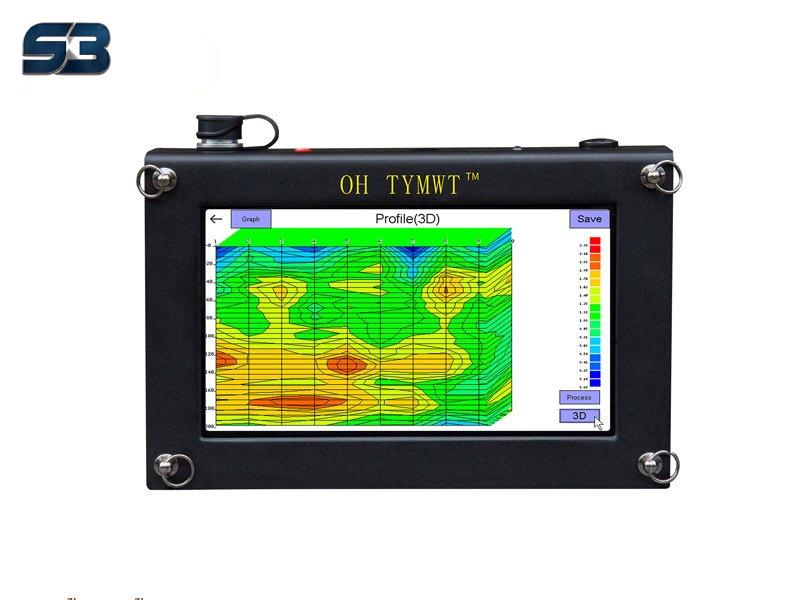
 PQWTPQ225A to PQ225E
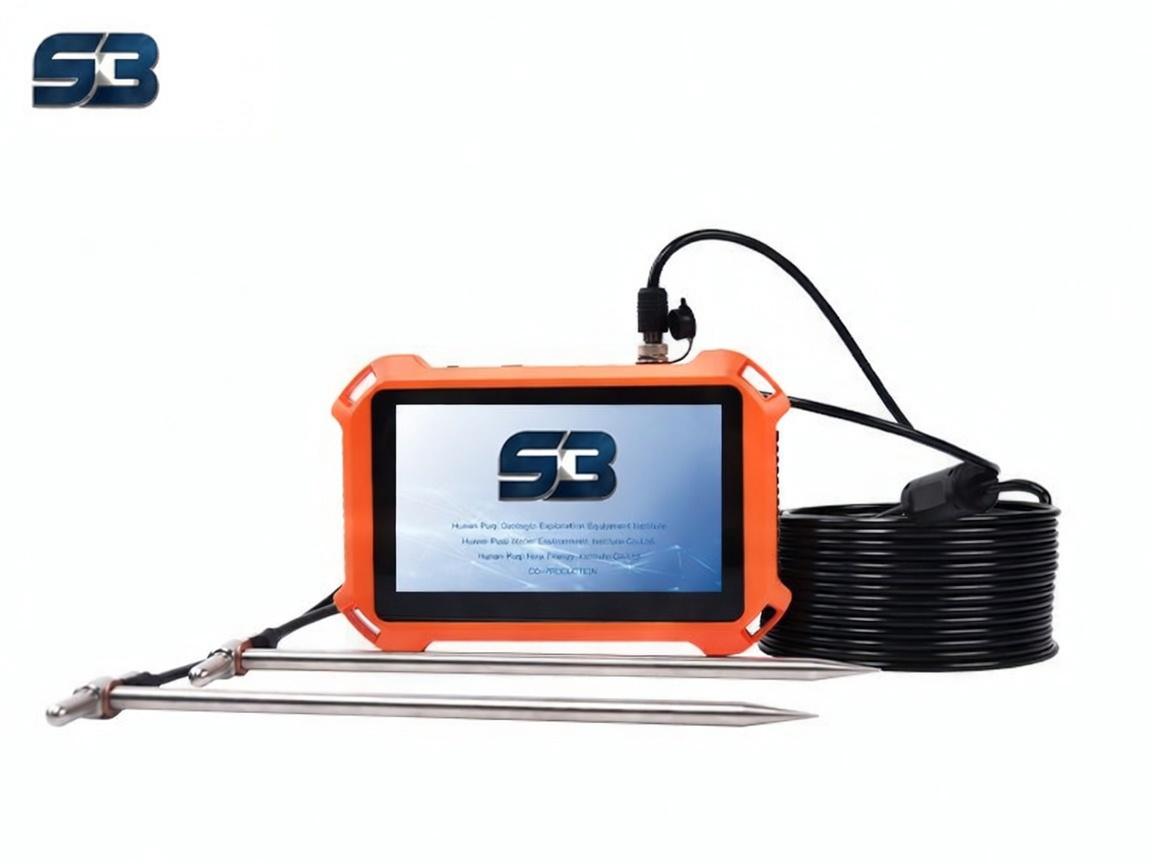
PQ225 Automatic Mapping Water Detector
One button gives you a resistivity section on the screen at the borehole, with no laptop and no office processing between the survey and the decision.
 PQWT200S / 400S / 600S / 800S
Well Logging Water Detector, 8 Channel
Eight channel geophysical well logging at one hundred, two hundred and four hundred metres.
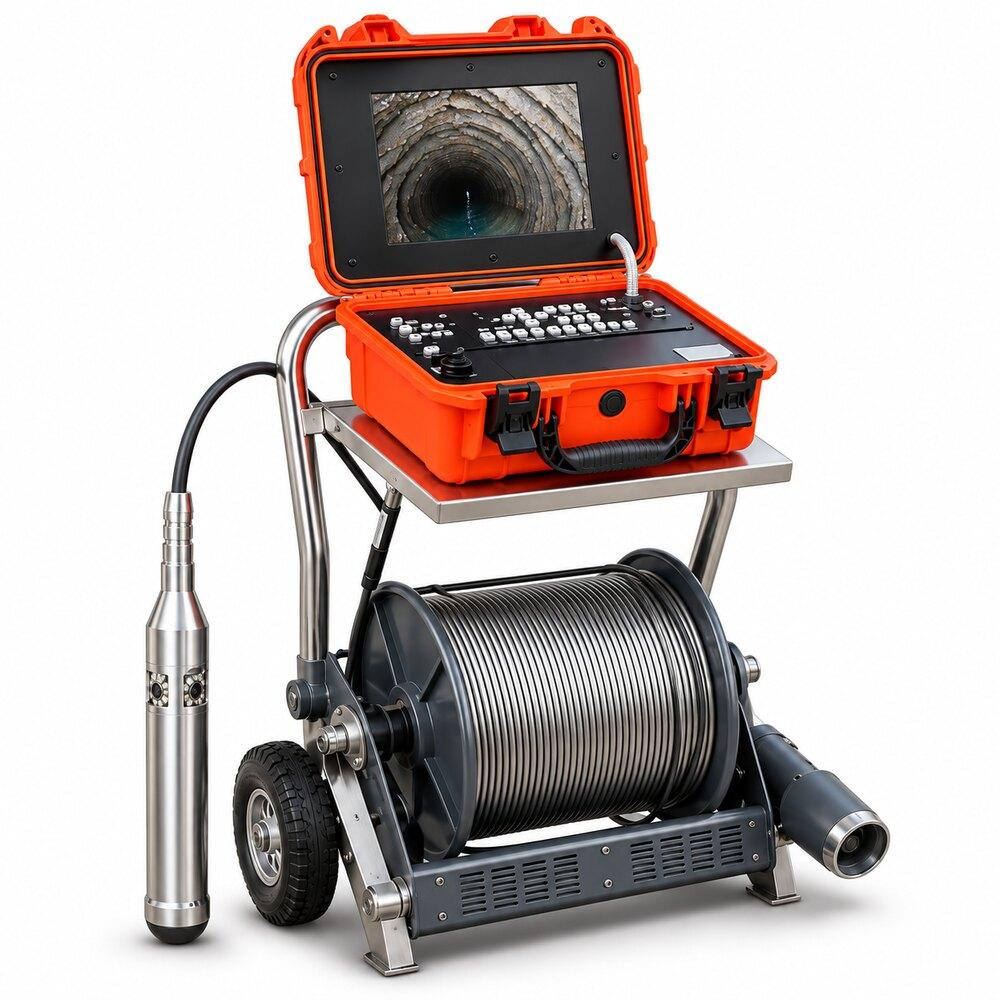
Borehole Inspection Camera System
Live video down a tube well or borehole: a stainless probe on a winch reel, with a monitor and recorder in a rugged field case on a wheeled trolley.
FAQ
Questions buyers ask us
What is the price of a borehole camera in Pakistan?
In 2026 a basic 50 to 100 metre well camera costs about PKR 150,000 to 350,000, a 200 metre system with forward and side view and recording about PKR 500,000 to 950,000, and deep logging systems over PKR 1,200,000. These are market ranges. Confirm today's price on WhatsApp, rates move with the exchange rate.
What does a borehole camera show?
It shows the inside of the casing and screen as live video: joints, cracks, holes, a collapsed or bent section, clogged screen slots, iron or carbonate crust, sand and silt on the bottom, and the water level. A good system also shows the cable depth on screen, so each defect is logged at its depth, for example a split joint at 86 metres.
Why is my tube well giving sand?
Sand usually means the screen is torn or corroded, the gravel pack was too coarse or too thin, or the pump is drawing harder than the well can supply. In Punjab alluvium a well that ran clean for 5 years and then sands up most often has a failed screen joint, which a camera finds in under an hour.
Can a borehole camera see in muddy water?
Not well. In turbid water visibility drops to under 10 cm and the video is useless. Pull the pump at least 12 to 24 hours before the inspection so fines settle, and avoid running the camera straight after development or air lifting. Clear water gives 1 metre or more of view.
How deep can a borehole camera go?
It depends on the cable. Entry cameras carry 30 to 100 metres, the PQWT system we supply carries 200 metres, and logging winches reach 500 metres or more. For most Pakistani tube wells, which are 60 to 250 metres deep, a 200 metre camera covers the full depth.
Should I inspect a tube well before pulling the pump?
Measure the water level first, which takes 5 minutes, then decide. If the level is fine and yield has dropped, pulling the pump and running a camera costs far less than drilling a new bore, which in Islamabad or Quetta can exceed PKR 1,500,000.