A pumping test is a controlled pumping of a well while the water level is measured at fixed intervals, to find how much water it can give without being over-drawn. On a new tube well in Pakistan, a typical test runs a step drawdown of three or four steps, then 24 to 72 hours at a constant rate, then recovery readings.
It is the only honest answer to the question every tube well owner asks: how many litres a second can I take from this bore? Skipping it is how wells get fitted with pumps that are too big, run dry by noon and burn out.
What is a pump test, and why run one?
A pump test answers three questions:
- How much water can the well give? The safe yield, at a drawdown that keeps water above the pump.
- Where should the pump be set? Below the deepest expected pumping level, with margin for the dry season.
- How is the well performing? A baseline that later tests can be compared with to spot clogging or a falling table.
For housing societies, factories and farms with a large tube well, a test is cheap insurance on a well that may have cost a great deal to drill. Consultants on donor-funded water supply projects usually specify it outright.
The three stages of a pumping test
1. Step drawdown test
The well is pumped at three or four increasing rates, each for a fixed period, usually 60 to 100 minutes. The water level is measured throughout each step.
The result shows how drawdown increases with flow. In a good well, doubling the flow roughly doubles the drawdown. If doubling the flow triples or quadruples the drawdown, the well itself is losing efficiency at higher rates, often because of a poorly developed screen or a gravel pack that is too fine.
2. Constant rate test
The well is pumped at one rate, chosen from the step test, for a long period: 24 hours for small wells, 48 to 72 hours for production wells. The flow must be held steady throughout, adjusted on the valve if it drifts.
This is the main test. It shows whether the level stabilises or keeps falling, which tells you whether the aquifer can sustain that rate.
3. Recovery test
The pump is stopped and the level is measured as it rises back. Readings continue until the level is within about 90 percent of the original static level. Recovery readings are often cleaner than pumping readings because there is no flow rate to vary.
The readings schedule
Water level changes fastest in the first minutes, so readings must be frequent at the start of each stage and can stretch out later. A typical schedule after pumping starts or stops:
| Time since start or stop | Reading interval |
|---|---|
| 0 to 10 minutes | Every 1 minute |
| 10 to 30 minutes | Every 2 minutes |
| 30 to 60 minutes | Every 5 minutes |
| 1 to 2 hours | Every 10 minutes |
| 2 to 6 hours | Every 30 minutes |
| 6 hours onwards | Every hour |
Use one watch for the whole test. Write each reading with its exact time, not just "about 15 minutes".
What equipment do you need?
- A submersible pump able to deliver the highest step rate, with a gate valve to control flow. See our guide to submersible pump price in Pakistan.
- A flow measurement. A flow meter, or a drum of known volume and a stopwatch, checked every hour.
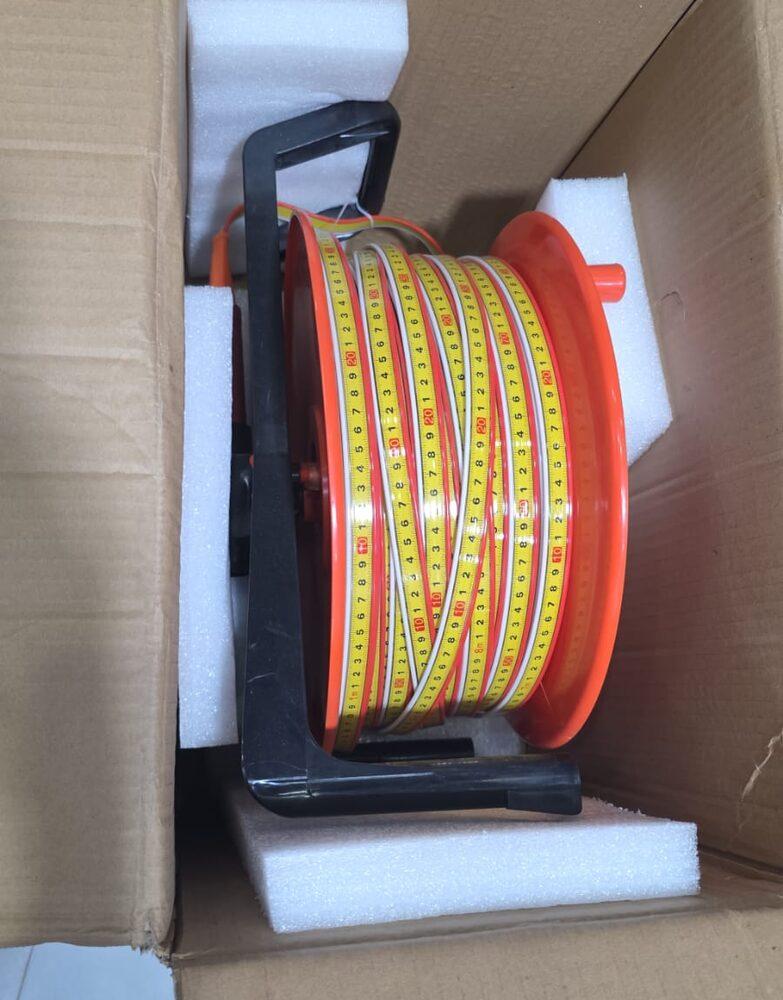
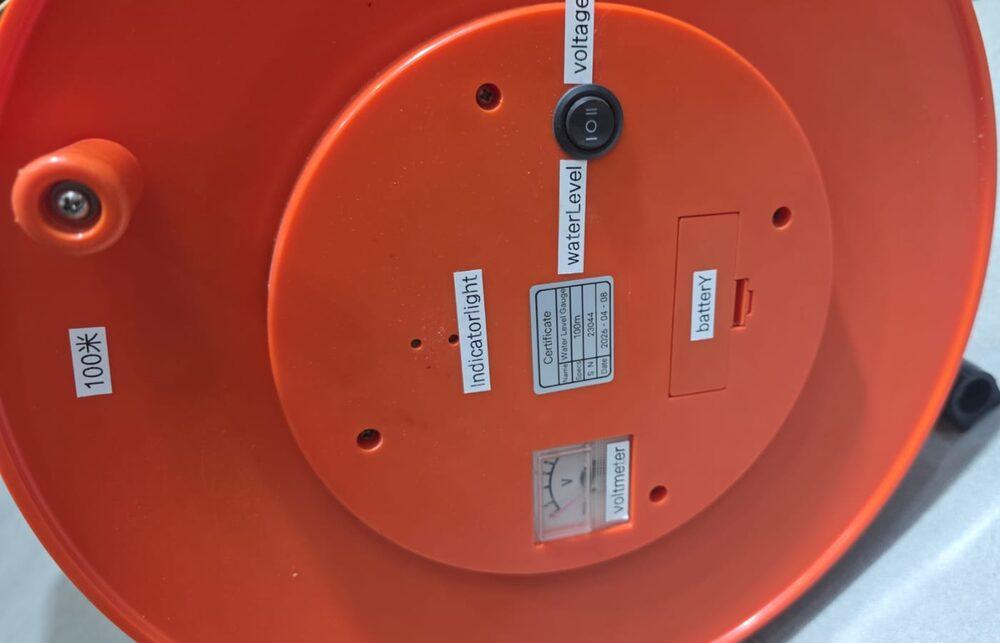
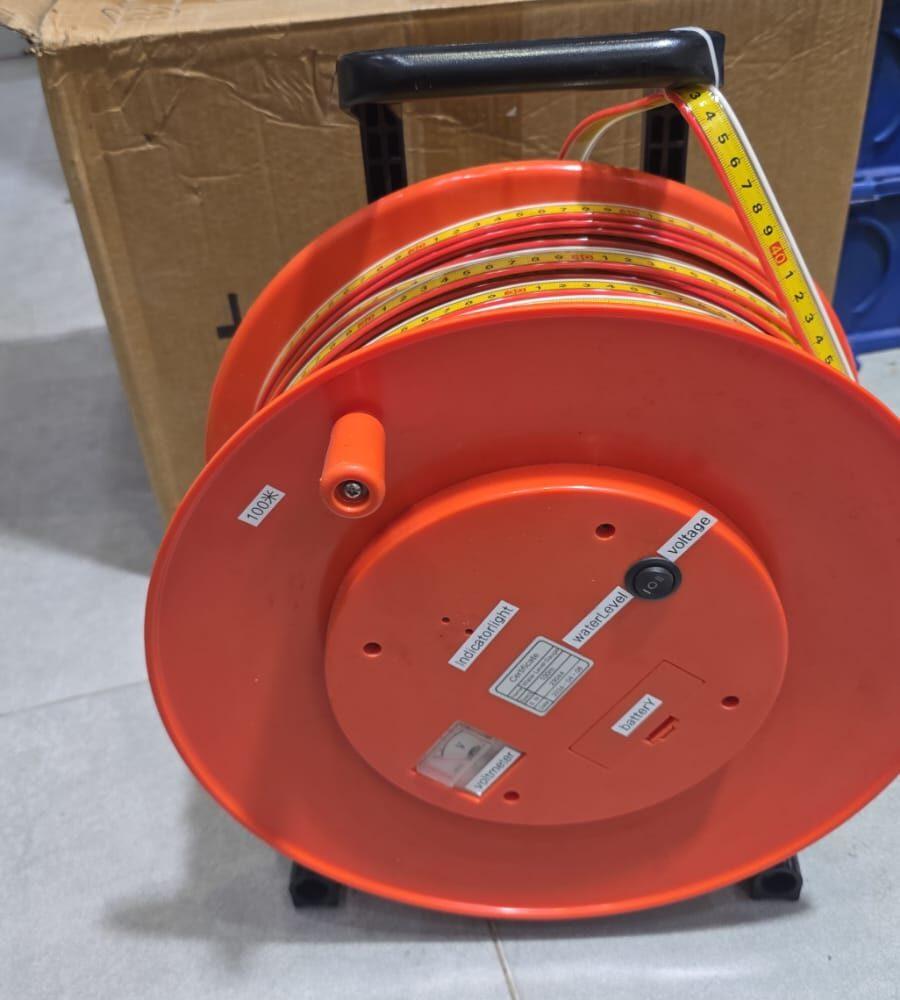
- A water level meter with a tape comfortably longer than the deepest expected pumping level. A 100 m water level meter suits most Pothohar tube wells; in deep Balochistan bores go longer.
- An access pipe beside the pump riser, so the probe can reach the water. Without it, readings during pumping are almost impossible.
- A discharge line long enough to take pumped water well away from the bore, at least 50 to 100 m. Water ponding near the well soaks back in and corrupts the result.
- A generator if mains supply is unreliable. A load-shedding cut in hour 18 of a constant rate test can mean starting again.
How to read the results
Two numbers matter most.
Drawdown. The pumping level minus the static level, in metres.
Specific capacity. Flow divided by drawdown, in litres per second per metre. If a well gives 10 litres a second at 5 m of drawdown, its specific capacity is 2 L/s per m. Record it; it is the number to compare with next year.
A hydrogeologist will plot drawdown against time on log paper and calculate aquifer properties. For a well owner, the practical reading is simpler: did the level stabilise during the constant rate test, and at what depth? Set the pump below that level, with margin for the dry season.
Observation wells during a test
Readings in the pumped well tell you how the well performs. Readings in a nearby well that is not pumped tell you how the aquifer behaves, and they are far cleaner, because there is no pump turbulence or well loss in them.
If a second bore, a disused well or a piezometer exists within about 10 to 100 m of the test well, read it on the same schedule. On larger projects, consultants often specify one or two purpose-drilled observation wells for exactly this. Each observation well needs its own reader or a second meter; trying to run between wells with one meter in the first 30 minutes loses the early readings in both.
Observation readings also answer a question that matters to neighbours: how far does the pumping effect spread? If a society's new tube well draws down a neighbouring farmer's well by several metres, it is better to know at the test than to hear about it at a panchayat.
What to put in the test report
A one-page summary is enough for most owners, with the raw readings attached:
- Well location, depth, casing and screen details from the drilling record.
- Static level before the test, and the reference point used.
- Each step's rate, duration and final drawdown.
- The constant rate, its duration, and the final pumping level.
- Recovery: time taken to return to 90 percent of the static level.
- Specific capacity at the recommended rate.
- Recommended pumping rate and pump setting depth, with the dry season margin stated.
File it with the property documents. It is the baseline for every future comparison, and the first thing a hydrogeologist will ask for if the well weakens.
The mistake that wastes a test
The commonest failure is losing the first ten minutes. The pump is started, the crew sorts out a leaking joint, and by the time someone lowers the meter the fastest-changing part of the curve has gone. Have the probe lowered to just above the static level, the watch running and the reader standing ready before the pump switch is pressed. The same applies when the pump stops for recovery.
How much does a pumping test cost?
The instruments are the small part of the bill. A water level meter, a stopwatch and a flow measurement cost far less than the pump hire, the generator fuel and three days of a crew on site. The cost that most owners do not count is the cost of not testing: a pump sized from a guess, a motor burnt out in the first summer, or a society well that cannot meet demand by the time the houses are occupied. For a production tube well, the test is a small fraction of the drilling cost and should be agreed with the driller before the rig arrives.
What we supply
- Water level meter, 50 m and 100 m for the readings.
- Borehole water level meter for narrow access pipes.
- Submersible pumps for the test and the permanent installation.
For the background, see static water level vs pumping water level and how to measure water level in a borewell.
Ask for today's price
Send us the bore depth, casing size, expected yield and whether you need one meter or a set for observation wells. Send us a WhatsApp for today's price.
What we supply
Equipment covered in this guide
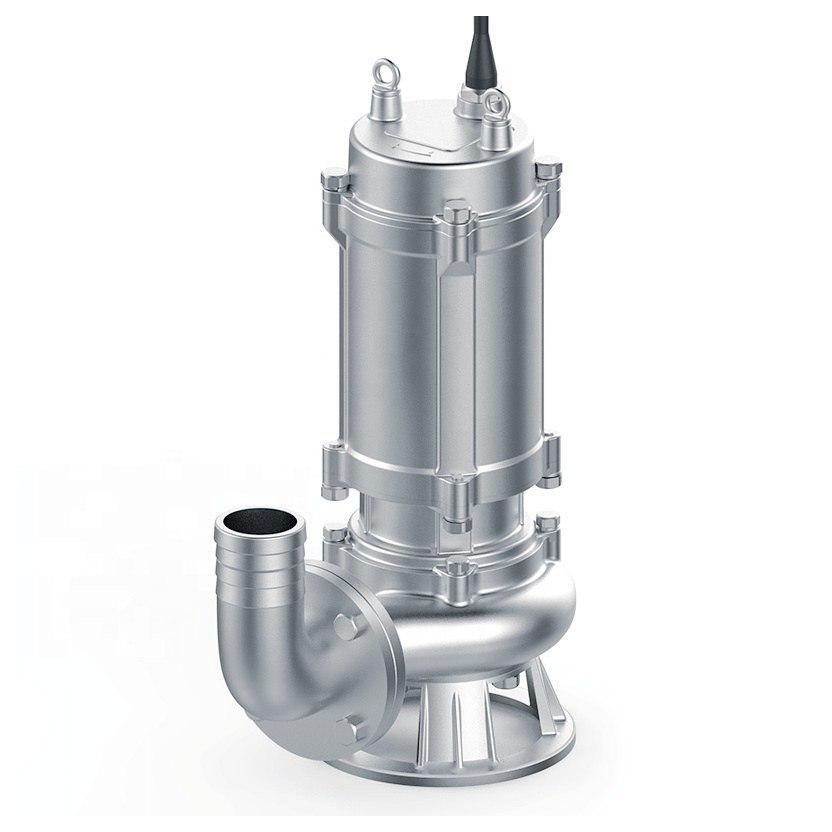
Submersible Pump
Electric submersibles for clean and dirty water, in the sizes a site actually keeps on the shelf.
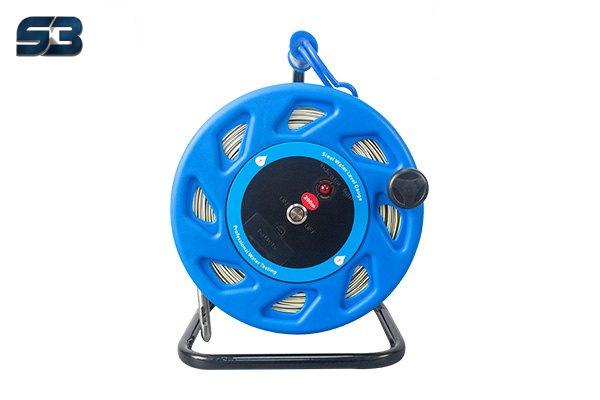 400 m water level indicator
Borehole Water Level Meter
Reeled probe on a marked cable, accurate to a tenth of a millimetre. The standard way to log a rest level and a drawdown.
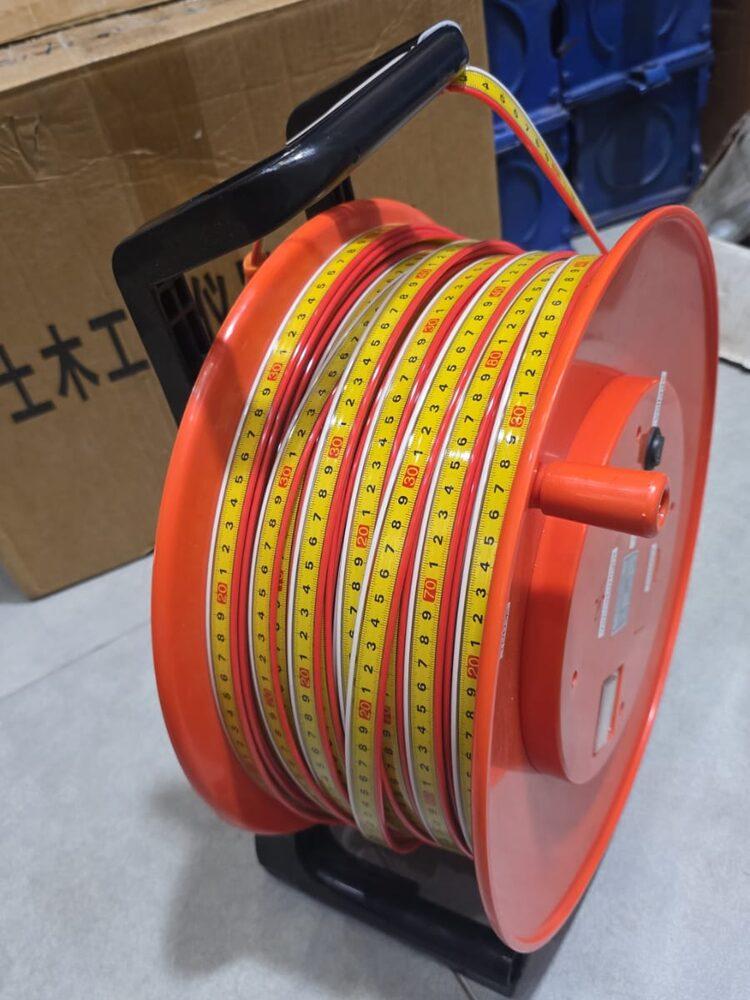 50 m and 100 m reel
Water Level Meter, 50 m & 100 m
A graduated tape on a carry reel with a light and a voltmeter that tell you the moment the probe touches water. In stock in 50 and 100 metre lengths.
FAQ
Questions buyers ask us
What is a pump test?
A pump test pumps a well at a controlled rate while the water level is measured at fixed intervals. The readings show how far the level falls, how quickly it recovers and therefore how much water the well can safely give. A typical test on a new tube well runs 24 to 72 hours.
How long should a pumping test run?
A step drawdown test usually runs three or four steps of 60 to 100 minutes each. A constant rate test on a production tube well commonly runs 24 to 72 hours, followed by recovery readings until the level returns to within about 90 percent of the original static level.
What equipment is needed for a pumping test?
A submersible pump able to run at several rates, a gate valve and a way to measure flow, such as a flow meter or a drum and stopwatch, a water level meter with a tape longer than the expected pumping level, a watch, and a printed reading schedule. A discharge line long enough to keep water away from the well is essential.
What does drawdown tell you?
Drawdown is the fall in water level caused by pumping. Divide the flow by the drawdown to get specific capacity, in litres per second per metre. A well with high specific capacity gives plenty of water for little drawdown; a falling specific capacity between tests often means a clogged screen.
Why measure recovery after pumping stops?
Recovery readings are cleaner than pumping readings because the pump rate no longer varies. How quickly the level returns shows the aquifer's ability to recharge the well. A well that recovers slowly will not sustain a high rate however good the first hour of pumping looked.