Underground water detector prices in Pakistan in 2026 start at about PKR 150,000 for a phone-linked mobile water finder, run PKR 250,000 to 700,000 for a single channel handheld unit rated 150 to 500 metres, and reach PKR 900,000 to 3,000,000 for 16 and 18 channel instruments. These are indicative market ranges, quoted on WhatsApp.
Those figures sound large until they are set against the alternative. A dry 400 foot bore in Rawalpindi, with casing and the drilling crew's days, routinely costs more than the detector that could have moved it forty metres to the left. This guide covers what the instruments cost, what they actually measure, and why an honest seller will never promise you water.
How much does an underground water detector cost in Pakistan?
An underground water detector costs between about PKR 150,000 and PKR 3,000,000 in Pakistan, depending mainly on two things: rated depth and number of channels. The table below groups the instruments we supply by class. Confirm today's price on WhatsApp, rates move with the exchange rate.
| Class | Our models | Rated depth | Channels | Readout | Indicative market price (PKR) |
|---|---|---|---|---|---|
| Mobile water finder | P series 80P, 160P, 320P | 80 to 320 m | Single | Phone or tablet | 150,000 to 350,000 |
| Mobile detector | M series M100, M200, M400 | 100 to 400 m | Single | Phone or tablet | 200,000 to 450,000 |
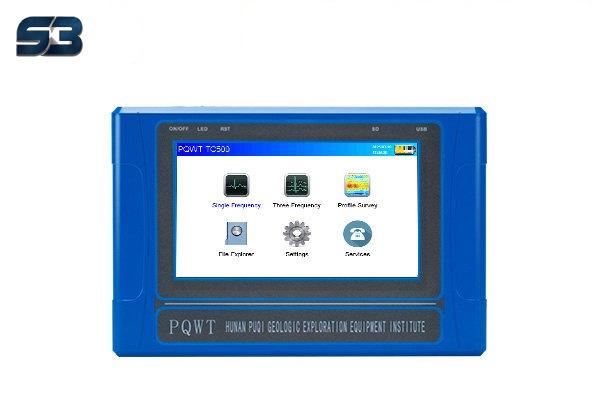
| Handheld profiler | TC series, S series | 150, 300 or 500 m | Single | Handset, section on screen | 250,000 to 700,000 |
| One button mapping | PQ225 A to E | 50 to 1,000 m | Single | Handset, automatic section | 300,000 to 900,000 |
| Long range | TCM, RS series | 150 to 2,000 m | Single | Handset | 500,000 to 1,500,000 |
| Multi channel | D series to 16 ch, GT series 18 ch | Up to 3,000 m | 8 to 18 | Handset, 2D and 3D | 900,000 to 3,000,000 |
| Well logging | Well logging detector 200S to 800S | Series ratings | Up to 8 | Handset | 700,000 to 1,800,000 |
These instruments are imported and priced in US dollars, so a move of a few rupees against the dollar shifts a mid-range quote by thousands. Imported units also carry customs duty and sales tax, which is why a Chinese website price converted at the bank rate is never the landed price in Rawalpindi.
Is there a device to detect water underground?
Yes, there are instruments that detect zones likely to hold groundwater, but they do not see water directly. Every unit in the table above works on the same principle: the earth carries a weak natural electric and magnetotelluric field, and the way that field behaves at different frequencies depends on the resistivity of the ground beneath the electrodes.
Dry sandstone, limestone and unbroken granite resist current. Saturated gravel, fractured rock holding water, and clay conduct it. The detector reads the field at a series of points along a line, converts the readings to apparent resistivity at different depths, and draws a section. A low resistivity band at 90 metres under one stretch of the line is the signature the operator is looking for.
What changes as you move up the price list is speed and detail. A single channel unit such as the TC or S series takes one point at a time; the crew moves the electrodes and reads again. The PQ225 draws the section on the handset with one button, so the decision is made on the plot rather than in an office the next day. The D series and GT series acquire 16 or 18 channels at once, which turns a day of point readings into a dense profile that shows structure: where a fracture dips, where a fault cuts the line.
Which app is used to detect underground water?
No phone app can detect underground water. A smartphone has a magnetometer for the compass and nothing that can measure resistivity 50 metres down. The apps that rank on Google for this search either use that magnetometer, which responds to the steel in your house, or simply play an animation.
The confusion comes from real instruments that use a phone as their screen. Our M series and P series send their data over a wireless link to a phone or tablet, which displays the section. The measurement is made by the sensor box and the electrodes driven into the ground. Without them, the phone is just a phone.
Why no underground water detector guarantees water
Anyone selling a detector or a survey with a guarantee of water is selling optimism. There are three honest reasons a well sited bore can still come up short.
Low resistivity is not always fresh water. Clay reads low. So does brackish water, and in much of Thar and lower Sindh the shallow groundwater is saline. The detector shows a conductive zone; it cannot tell you whether that zone is a gravel aquifer you can drink from, a clay lens that will yield nothing, or water too salty to irrigate with. Local knowledge of nearby bores is what separates them.
Yield is not measured. The section shows where water is likely, not how fast it will flow into a casing. A thin fracture can look convincing and give a few hundred litres an hour.
The water table moves. A zone that was saturated ten years ago may now be dry. This is the problem across the Pothohar plateau, where working bores around Rawalpindi and Islamabad have been chasing a falling table for two decades, and in Quetta valley, where tube wells reaching several hundred metres are now ordinary.
A good survey moves the odds strongly in your favour and tells the driller where to stop. It does not turn geology into a certainty.
The field check we teach on our Rawalpindi bench
Every buyer who collects a detector from us is shown the same check before they go: run the line twice, the second time parallel to the first and about ten metres away. A real water bearing fracture or gravel channel shows on both lines at a similar depth. A low reading that appears on only one line is usually noise: a buried pipe, a steel fence post, a tube well motor running in the next field, or an 11 kV line overhead. Switch off nearby motors and generators if you can, keep 50 metres clear of power lines, and lay the line across the expected direction of the fracture or nullah rather than along it. This single habit removes more failed bores than any upgrade in channel count.
Falling water tables: sizing the depth rating
The rule we give buyers is simple: buy a depth rating at least 1.5 times the deepest working bore in your area. The instrument needs to read the ground below the target, not just to it, to see where the water bearing zone ends.
In practice that means:
- Rawalpindi, Islamabad, Chakwal, Attock. Bores in many parts of the Pothohar now go well past 100 metres. A 150 metre unit is too shallow; the 300 metre TC or S series is the sensible minimum.
- Quetta, Pishin, Mastung and much of Balochistan. Deep bores are common, so a 500 metre rating, or the long range TCM and RS units, are the right class.
- Thar and southern Sindh. Depth is less of a limit than water quality. A mid rated unit plus a TDS check on samples from nearby wells is a better spend than extra depth.
- Northern Punjab canal areas. Shallow water is common; a 100 to 200 metre mobile unit often does the job.
Heat and dust are the practical enemies in the field. Keep the handset out of direct sun at midday in summer, carry the electrodes in a closed bag, and wipe the connectors before every line. The lithium packs on these units are charged from the vehicle or a solar panel, so load-shedding at base does not stop a survey.
How can I detect an underground water leak?
Detecting a leak in a buried pipe is a different job from finding groundwater, and uses a different instrument. A leak detector listens for the sound of escaping water through a ground microphone, while a groundwater detector reads resistivity. We supply leak detectors such as the L30 indoor leak detector alongside the groundwater range, and buyers often confuse the two. If your concern is a lost supply line under a floor or lawn, ask for a leak detector; if you want to drill a new bore, you need the instruments above.
After the bore is drilled, two smaller instruments finish the job. The borehole water level meter carries a 14 mm probe on a 150 metre cable and logs rest level, drawdown and recovery during a pump test. The borehole inspection camera runs to 200 metres with a 170 degree forward view and 360 degree side view, and settles arguments about silting, collapsed casing and blocked screens.
What we supply
The full groundwater range sits under detection and mining instruments, and the detectors carry a two year warranty as each product listing states.
- TC series water detector: 150, 300 and 500 metre ratings, the unit we run on client surveys ourselves.
- PQ225 automatic mapping water detector: five models from 50 to 1,000 metres, one button section on the handset.
- S series water detector: single channel, portable, for one crew covering a lot of ground.
- D series multi channel water detector and GT series: 16 and 18 channels for difficult ground and reports that must stand up.
- P series mobile water finder: the lightest first look, results on a phone.
If you would rather not buy, our underground water detection survey puts our crew and instrument on the site and marks the position and the depth to drill to. For the wider picture of how site investigation fits together, see our guide to land survey services in Pakistan and our overview of drone survey cost in Pakistan.
Ask for today's price
Send us the district, the depth of the deepest working bore nearby, and whether you are siting one bore or many. From that we will tell you whether a survey or an instrument makes more sense, and which depth rating to buy. Send us a WhatsApp for today's price and delivery across Pakistan.
What we supply
Equipment covered in this guide
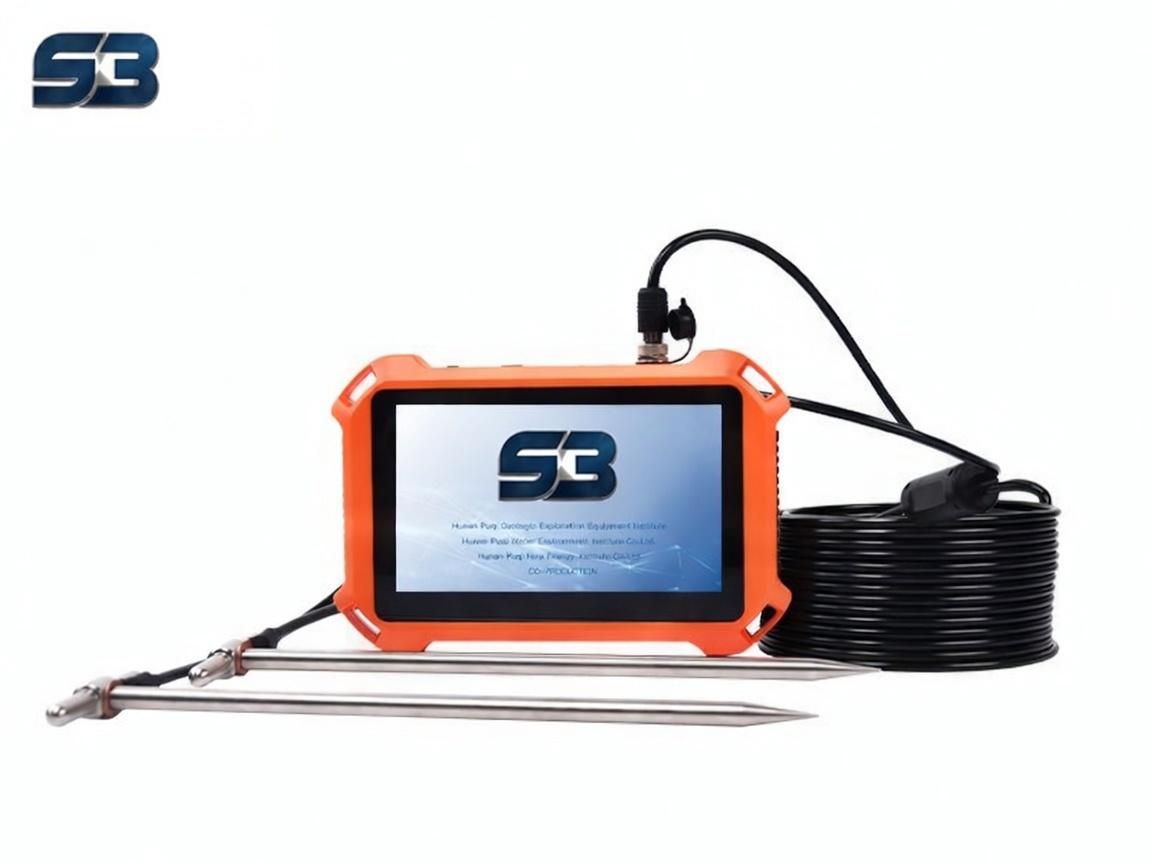 PQ225A to PQ225E
PQ225 Automatic Mapping Water Detector
One button gives you a resistivity section on the screen at the borehole, with no laptop and no office processing between the survey and the decision.
TC150 / TC300 / TC500TC Series Water Detector
The range most of our borehole siting work is done with. Walk the profile, read the section, mark the position and the depth to drill to.
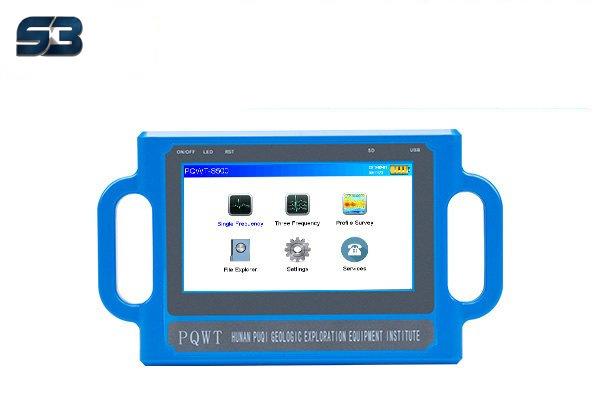 S150 / S300 / S500
S Series Water Detector
Single channel geological exploration detector, the practical choice where one crew is covering a lot of ground on foot.
FAQ
Questions buyers ask us
What is the price of an underground water detector in Pakistan?
In 2026 a phone-linked mobile water finder rated to about 80 to 320 metres sells for roughly PKR 150,000 to 350,000, a single channel handheld unit rated 150 to 500 metres for PKR 250,000 to 700,000, and a 16 or 18 channel instrument for PKR 900,000 to 3,000,000. These are indicative market ranges; we quote by WhatsApp.
Can an underground water detector guarantee water?
No. A detector measures natural electric field or resistivity differences and shows zones likely to hold water, such as fractures and saturated gravel. Clay and brackish water can read the same way. A good survey raises the odds of a productive bore considerably, but no instrument sold anywhere guarantees 100 percent success.
Does a mobile phone app detect underground water?
No. A phone has no sensor that can read ground 50 or 100 metres down. Apps that claim to find water use the magnetometer or simply animate a screen. Our M series and P series use a phone only as a display; the measurement comes from a separate sensor box and electrodes in the ground.
Which depth rating should I buy?
Buy a rating at least 1.5 times the deepest bore drilled in your area. If working bores near Rawalpindi now reach 120 to 150 metres, a 150 metre unit is too shallow to read the zone below them; a 300 metre unit is the sensible minimum. In Quetta valley look at 500 metres or more.
How long does a water detection survey take?
On a typical farm or housing plot, two people walk two or three profile lines of 30 to 60 metres in a morning with a single channel unit. A 16 or 18 channel instrument covers the same ground in about a third of the time and gives a denser section, which matters on difficult rock.
Can you run the survey instead of selling the instrument?
Yes. Our underground water detection service runs natural field profiling across the site and marks the drilling position and target depth. For one or two bores, the survey is usually cheaper than buying a detector. Drillers and contractors siting 20 or more bores a year generally buy their own.