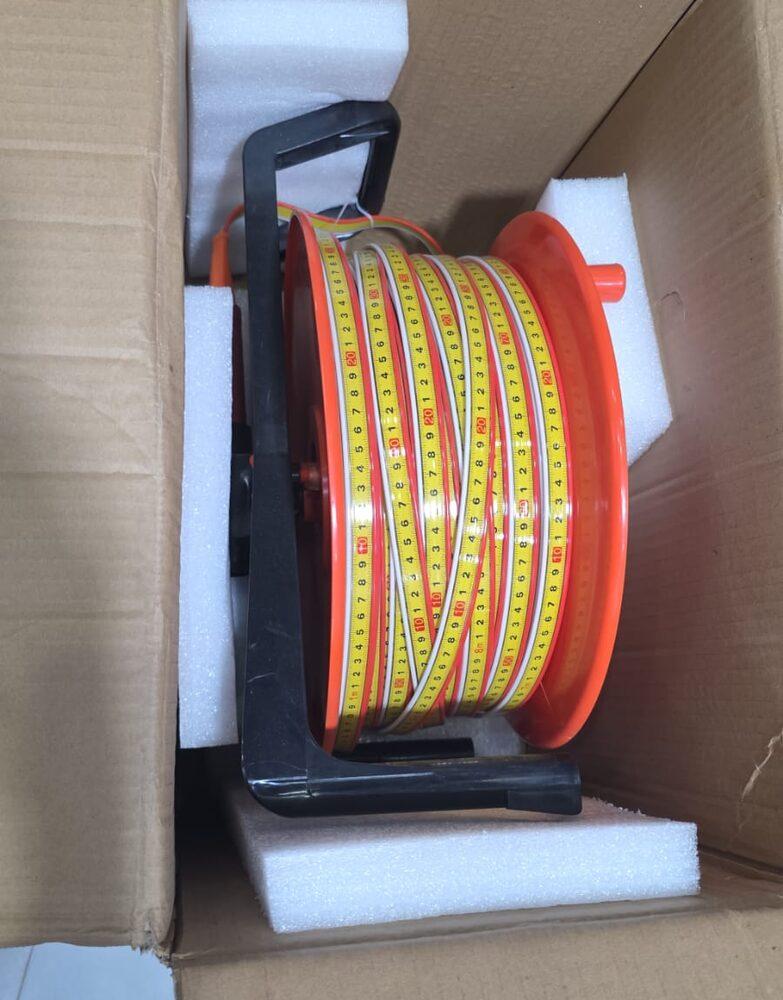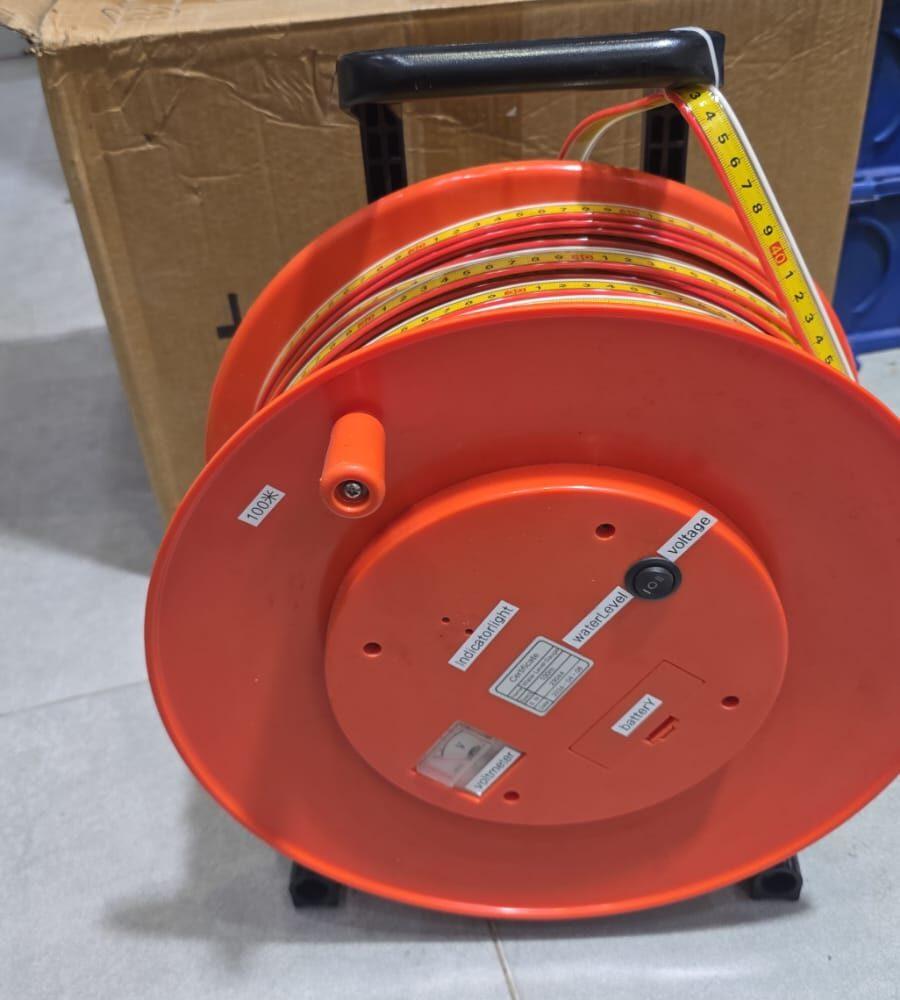
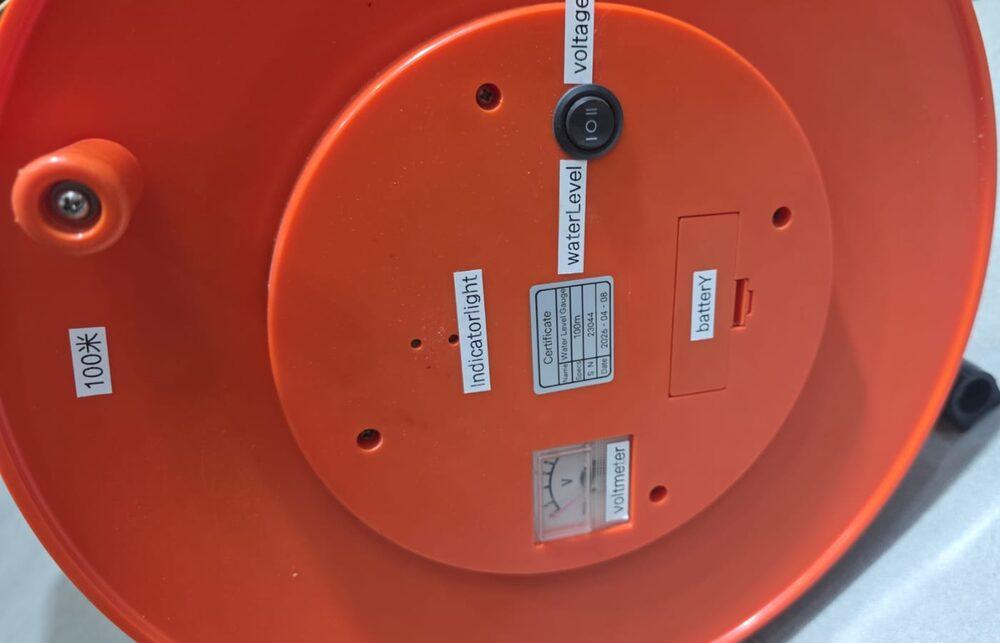
To measure the water level in a borewell, switch the pump off for at least four hours, lower a water level meter down the casing until its light triggers, and read the tape at the top of the casing. In Pakistan that depth is commonly between 10 and 100 m, and the meter reads it to about a centimetre.
That is the whole method. The rest of this guide is about doing it so the number means something, and about the shortcuts people use instead and why they mislead.
How to check the water level in a borewell, step by step
You need a water level meter with a tape longer than the deepest level you expect, a notebook, and access down the casing.
- Stop the pump and wait. At least four hours; overnight is better. A well that has just been pumped is still recovering, and you will read too deep.
- Choose and mark a reference point. Normally the top edge of the casing on the north side. Mark it with paint so every future reading starts from the same place.
- Check the meter. Switch on and dip the probe in a bucket. The light should come on immediately.
- Lower the probe slowly. Feed the tape by hand, keeping it off sharp casing edges. Go slower as you expect water.
- Find the surface. When the light comes on or the voltmeter needle jumps, stop. Lift 20 cm and lower again slowly until it triggers.
- Read the tape exactly at your reference mark.
- Repeat once more. Two readings within 1 to 2 cm are a good measurement.
- Record the depth, date, time and how long the pump had been off.
That reading is the static water level.
Measuring the pumping level and drawdown
The static level tells you where the water sits. The pumping level tells you whether the well can keep up with the pump.
Switch the pump on and measure again after 30 minutes, then after an hour. The level falls, then settles. The settled reading is the pumping water level. The difference between pumping and static levels is the drawdown.
What matters is the gap between the pumping level and the pump intake. If the pumping level is within a few metres of the intake, the well is near its limit at that flow. Our guide to static water level vs pumping water level goes into what drawdown says about a well.
What if the meter cannot get past the pump?
This is the most common problem in Pakistani bores. The riser pipe, power cable and safety rope fill the casing and leave no room for a probe, or the probe snags on cable ties.
The fix is a 20 to 25 mm PVC access pipe taped to the riser and run down to just above the pump. Fit it the next time the pump comes out for service. Until then:
- Try the probe on the opposite side of the casing from the cable.
- Lower very slowly to avoid wrapping the tape around the cable.
- Never force the tape. A probe jammed beside a pump means pulling the pump to retrieve it.
Other methods, and why we do not recommend them
You will find several methods on YouTube and Facebook. Each has a reason it gives the wrong answer.
| Method | How it works | Typical error | Problem |
|---|---|---|---|
| Dropped stone | Time the splash | Several metres | Leaves debris in the bore that can jam the pump |
| Rope with a weight | Lower until it feels wet | 0.5 m or more | Rope stretches, and wet rope is hard to read |
| Torch and mirror | Look for reflection | Unusable past a few metres | Only works in shallow open wells |
| Air line gauge | Pressure in a fixed tube | 0.3 m or more | Needs a permanent tube and a calibrated gauge |
| Phone apps | None that work | Not a measurement | A phone has no sensor that can reach water |
| Water level meter | Probe closes a circuit at the surface | About 1 cm | Needs access past the pump |
The stone method is worth singling out. Every stone dropped into a bore stays there. Several of the jammed pumps that our customers pull out each year come out with gravel wedged in the impeller.
How do I know how much water is left in a well?
You cannot see how much water is in the aquifer, but you can see how close the well is to failing. Three numbers tell you:
- Static level, measured once a year in the same month.
- Pumping level, measured after an hour of normal pumping.
- Pump intake depth, from the installation record or the length of riser pipe.
If the static level falls a few feet each year and the pumping level is creeping towards the intake, you can estimate in how many seasons the pump will start drawing air. Lowering the pump, if the bore is deep enough, buys time far more cheaply than a new bore.
The well that was not dry
A pattern we see often in Rawalpindi: a household says the bore has gone dry, a new pump is bought and the problem stays. When the bore is measured, the static level is fine. The real fault is a split riser, a failing non-return valve, or a pump set too high after the level fell. A five-minute measurement with a water level meter is the first thing to do before spending on a pump or a new bore. If the reading is good and the yield is still poor, a borehole inspection camera shows silting or collapsed casing.
Measuring hand pumps, open wells and new bores
Open dug wells. Still common in villages across Punjab and Khyber Pakhtunkhwa. The meter works the same way; lower it beside the wall rather than down the middle so it does not swing. Read from a painted mark on the well parapet.
Hand pump bores. The pump rod and pipe usually fill the bore. Measure when the pump is removed for repair, or ask the installer to leave a small access pipe beside the riser.
New bores before the pump goes in. This is the best moment to measure. The casing is clear, so take the static level, the total depth and, if the driller is still on site, a short pumping level during development. Write them on the inside of the pump room door. Those three numbers are the baseline every later reading will be compared with.
Bores with a strong smell or oily surface. Some bores near workshops or old fuel stations have a film on the water. The meter may trigger late or weakly. Clean the probe after each reading and report the film; it is a water quality issue that matters more than the level.
How deep is my well?
Total depth is a different measurement from water level. Lower a weighted tape or a weighted water level meter until it goes slack on the bottom, with the pump removed. Compare it with the drilled depth; if it is several metres shallower, the bore has silted. Our guide to tube well depth covers how deep bores need to be by region.
What we supply
- Water level meter, 50 m and 100 m: the instrument for this job, in stock in Rawalpindi.
- Borehole water level meter: slim 14 mm probe on 150 m of cable, for tight bores.
- Borehole inspection camera: when the level reading raises questions.
If you are deciding what to buy, start with our guide to water level meter price in Pakistan.
Ask for today's price
Tell us the approximate depth of your bore, the casing size and whether there is an access pipe. We will tell you which meter fits. Send us a WhatsApp for today's price.
What we supply
Equipment covered in this guide
 200 m borehole camera
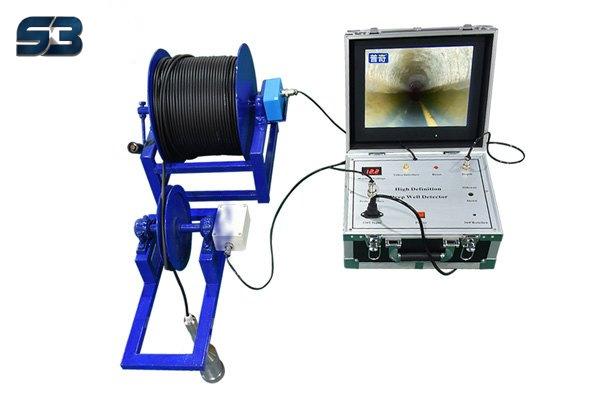
Borehole Inspection Camera, 200 m
Two hundred metres of waterproof cable and a camera that looks sideways as well as down. Stops a borehole dispute becoming an argument.
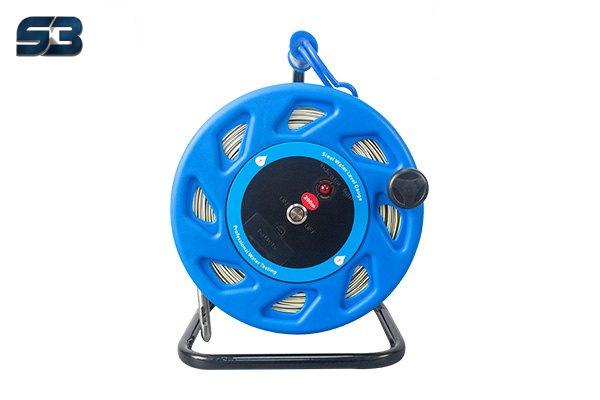 400 m water level indicator
Borehole Water Level Meter
Reeled probe on a marked cable, accurate to a tenth of a millimetre. The standard way to log a rest level and a drawdown.
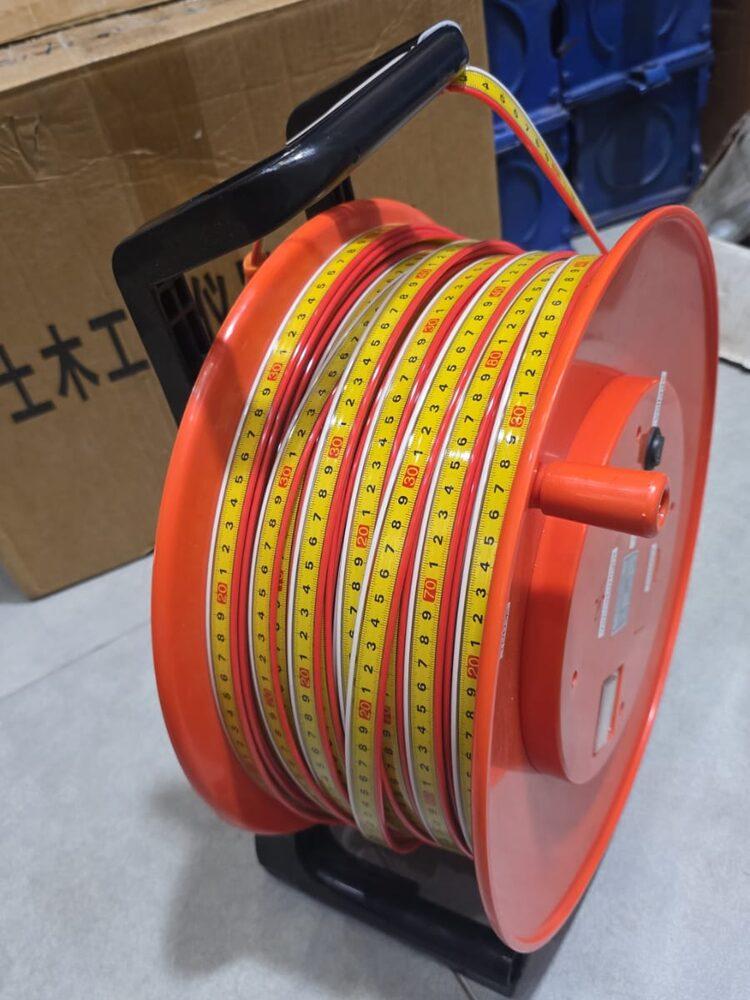 50 m and 100 m reel
Water Level Meter, 50 m & 100 m
A graduated tape on a carry reel with a light and a voltmeter that tell you the moment the probe touches water. In stock in 50 and 100 metre lengths.
FAQ
Questions buyers ask us
How do I check the water level in my borewell?
Switch off the pump for at least four hours, lower a water level meter down the casing or an access pipe until its light or buzzer triggers, then read the tape at the top of the casing. That depth, typically 10 to 100 m in Pakistan, is the static water level.
Can I measure borewell water level with a stone?
Only roughly, and it is not recommended. Timing the splash of a dropped stone gives an estimate that can be wrong by several metres, and the stone stays in the bore where it can jam the pump. A water level meter reads to about 1 cm and leaves nothing behind.
How do I know how much water is left in a well?
Compare the pumping water level with the depth of the pump intake. If the pumping level is within a few metres of the pump, the well is close to running dry at that rate. Measure the static level each year as well; a steady fall shows how many seasons remain.
How do I tell if my well is low on water?
Signs include the pump sputtering or drawing air, discharge dropping after a few minutes of running, and muddy water. The proof is a measurement: if the pumping level is near the pump intake, the well is low. Measure before replacing the pump; the pump is often not the fault.
What if the water level meter cannot get past the pump?
Many bores have no space beside the riser pipe. Fit a 20 to 25 mm PVC access pipe alongside the riser down to just above the pump the next time the pump is pulled. It costs little and makes every future reading quick and safe.