Tripod price in Pakistan for survey work, not cameras, runs from about PKR 8,000 for an aluminium survey tripod to PKR 32,000 for a fibreglass one in 2026, and a total station prism set adds PKR 18,000 to 40,000. This guide covers survey tripods, prisms and prism poles for total stations, auto levels and GNSS, with the 5/8 inch thread.
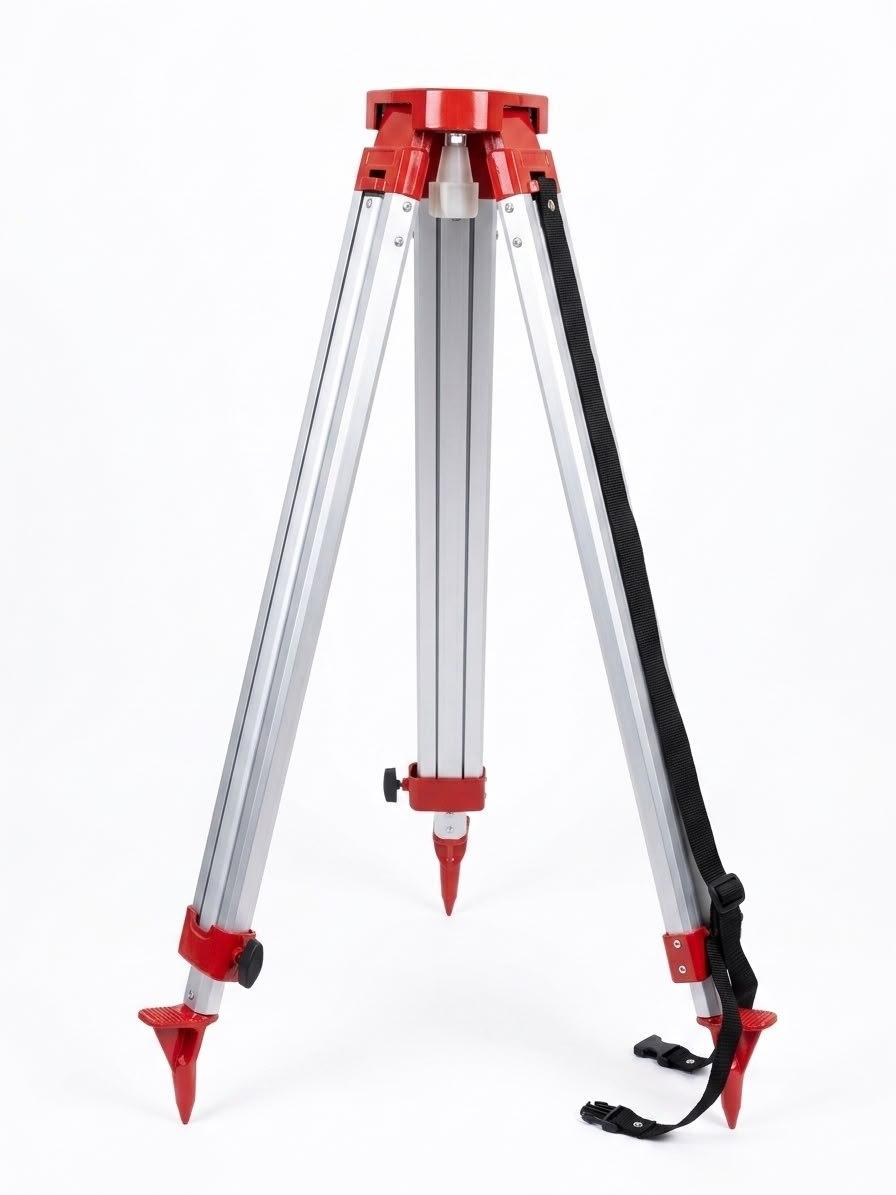
If you searched for a tripod for a phone, a ring light or a DSLR, this is the wrong page, and we will not pretend otherwise. Those tripods cost a few thousand rupees and are sold by camera shops. A survey tripod is a different tool. It has a flat aluminium head with a 5/8 inch x 11 central screw, steel shoes that you push into the ground with your boot, and legs built to hold a 5 kg instrument still to a few seconds of arc for an hour. Nothing else on a survey crew is bought as casually, and nothing else causes as many silent errors.
How much does a survey tripod cost in Pakistan?
These are 2026 market ranges in Pakistan for new tripods and prism items. Confirm today's price on WhatsApp, rates move with the exchange rate.
| Item | Typical spec | Weight | Indicative market price (PKR) | Best for |
|---|---|---|---|---|
| Aluminium survey tripod | Flat head, 5/8 x 11 screw, 1.0 to 1.65 m | 4 to 5 kg | 8,000 to 16,000 | Auto levels, GNSS base, light use |
| Wooden survey tripod | Hardwood legs, aluminium head | 6 to 7 kg | 14,000 to 28,000 | Total stations, long sessions |
| Fibreglass survey tripod | Fibreglass legs, aluminium head | 5 to 6.5 kg | 16,000 to 32,000 | Total stations in heat, near power lines |
| Single prism with tribrach | 62 mm prism, holder, optical plummet tribrach | 1 to 1.5 kg | 18,000 to 40,000 | Traverses, control points |
| Tribrach and carrier | Optical or laser plummet | 0.6 to 0.9 kg | 8,000 to 25,000 | Forced centring, swapping instrument and prism |
| Prism pole | 2.5 to 4.6 m, bubble, 5/8 thread | 1 to 2 kg | 8,000 to 20,000 | Detail and topo shots |
| Mini prism | 25 mm, usually 0 or minus 30 mm constant | 0.2 kg | 6,000 to 15,000 | Stakeout, tight corners |
A Japanese or Swiss branded tripod costs two to three times the generic figure. On most Pakistani sites the generic wooden or fibreglass tripod does the job, provided the head and clamps are good.
Wood vs aluminium vs fibreglass: which survey tripod?
Each leg material solves one problem and creates another.
Wooden
Wood is the surveyor's default for a total station. It damps vibration well, so the image settles faster on a windy day, and it barely changes length with temperature. The downside is weight and moisture. A wooden tripod left in the back of a pickup through a Murree or Swat monsoon swells, and the leg clamps then bind or, after drying, go loose. Wipe it, store it dry and it will outlive the instrument.
Aluminium
Aluminium is light, cheap and does not rot. It is ideal for an auto level on a building site in Rawalpindi or for a GNSS base that sits on a known point. The problem is heat. Aluminium expands about 23 microns per metre per degree. A 1.5 metre aluminium leg that goes from 20 degrees at 7 am to 45 degrees in a Multan or Sukkur afternoon grows nearly 1 mm, and the instrument height you booked at the start of the session is no longer true. On a level line that error goes straight into your reduced levels. Shade the tripod with an umbrella, or re-measure instrument height after lunch.
Fibreglass
Fibreglass behaves more like wood in heat and does not swell in rain. It is also non-conductive, which matters if you survey near WAPDA lines or substations. It costs a little more and is a fraction heavier than aluminium. If you buy one tripod for a total station that will work across Pakistan, fibreglass is the safe choice.
Why not a camera tripod?
People ask this because a "professional tripod" from a camera shop looks solid and costs less. Three reasons it will not work:
- Wrong thread. Cameras use a 1/4 inch or 3/8 inch screw. Survey instruments, tribrachs and GNSS adapters use 5/8 inch x 11. Adapters exist, but you then lose the sliding head that lets you centre over a point.
- No centring. A survey tripod head has a hollow screw that slides across the head so you can put the instrument exactly over a nail or pillar with the optical plummet. A camera head cannot do this.
- Twist. A camera tripod is stiff enough not to blur a photo. It is not stiff enough to hold a horizontal angle to 2 seconds while you turn the instrument by hand.
Leg clamps that slip, and other things that go wrong
The most common fault we see on tripods brought in with a total station is a clamp that slips. The leg shortens by a few millimetres under load during the session, the bubble drifts, and the crew re-levels without noticing why. Every angle measured before the re-level is suspect.
A field check that takes 30 seconds: set the tripod up, clamp the legs, then lean on the head with your palm. If any leg creeps even 1 mm, tighten or replace the clamp before the instrument goes on. Screw clamps can usually be tightened with the hinge bolt. Quick-release lever clamps often have a small adjusting nut under the lever. If the plastic cam is cracked, replace it.
Other faults that cost accuracy:
- Loose hinge bolts at the head. The head rocks on the legs. Tighten them with a spanner every few months.
- Bent shoes. A shoe bent by a hammer or a pickup door will not grip, and the leg rotates in soft ground.
- Damaged head. A dented head means the tribrach does not sit flat. This one cannot be fixed cheaply; replace the tripod.
- Dust in the clamps. In Balochistan and Thar the dust packs into the slide. Wipe and dry-brush, do not oil.
Prisms, prism poles and the prism constant
The prism is the other half of a total station measurement. A single prism with tribrach goes on a tripod over a control point for a traverse or for setting the backsight. A prism pole with a circular bubble is what the chainman walks with for topographic detail. A mini prism suits stakeout on a building site where poles get in the way.
The detail that ruins most surveys is the prism constant. Most Chinese prisms are 0 mm or minus 30 mm, and the total station must be told which. A crew that changes the prism but not the setting will carry a constant 30 mm error in every distance. Write the constant on the prism holder with a paint marker.
Prism poles have their own checks. The bubble on the pole drifts out of adjustment if the pole is dropped, and a 2 metre pole out of plumb by one bubble width puts the point several millimetres off. Check the pole against a plumb line on a wall once a month.
A tribrach is worth checking too. Its optical or laser plummet can go out after a knock, which means your instrument is not over the point even when it looks as if it is. Our bench checks plummets as part of our total station repair and calibration service.
What we supply
Every item here is under tools and accessories.
- Aluminium survey tripod: light, for auto levels and GNSS bases.
- Wooden survey tripod: the steady choice for total stations.
- Fibreglass survey tripod: holds height in heat, non-conductive.
- Single prism with tribrach and a spare tribrach and carrier for forced centring.
- Prism pole and mini prism for detail and stakeout.
- GNSS rover rod and bipod for RTK work.
If you are pricing a whole kit, read total station price in Pakistan: a complete set includes the tripod and prism, and a quote without them is not comparable. For brand choice see Kolida total station price in Pakistan, and for checking your level before a job, the two peg test.
Ask for today's price
Tell us the instrument, whether you work mainly in heat, rain or near power lines, and how many set ups a day your crew does. We will recommend the tripod and prism kit that suits it, and confirm the price for today. Send us a WhatsApp.
What we supply
Equipment covered in this guide
Aluminium Survey Tripod
Heavy duty aluminium tripod with quick release clamps, a flat 5/8 inch head and a carry strap.
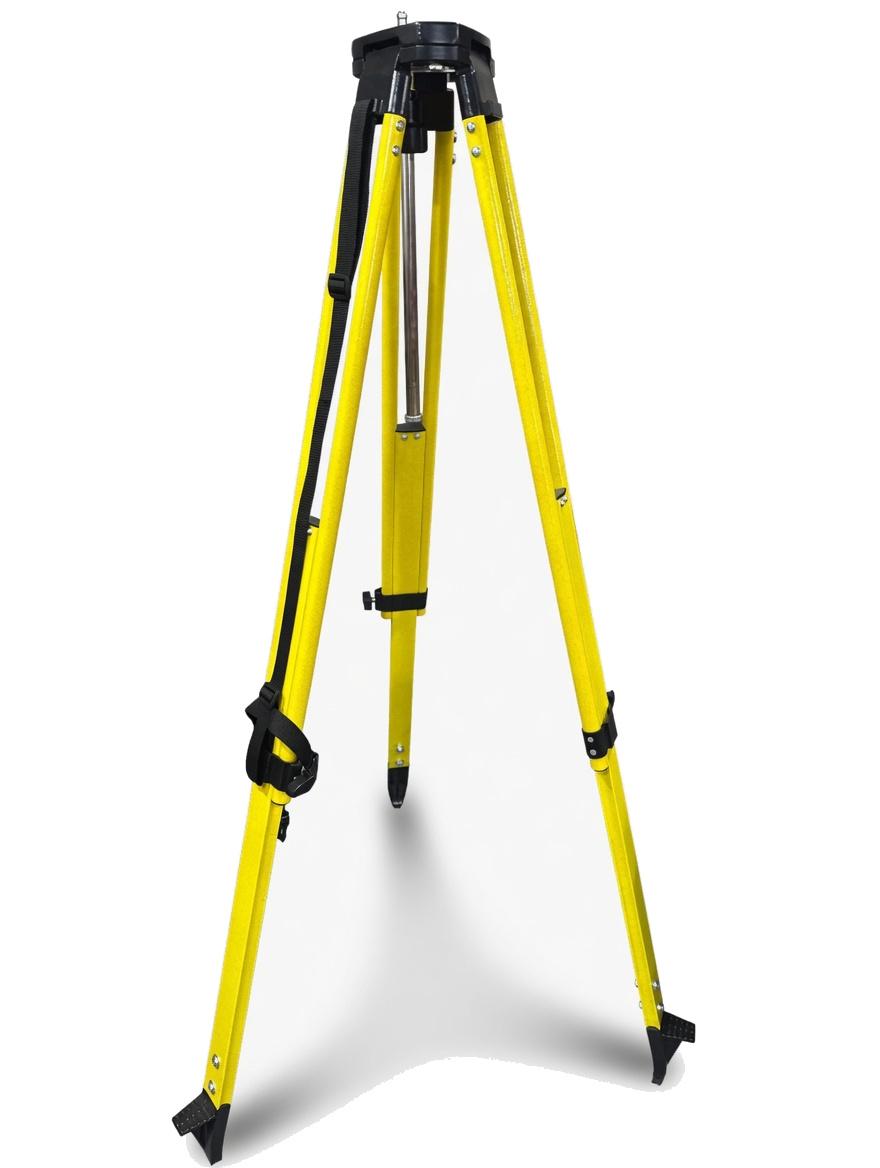
Fibreglass Survey Tripod
Fibreglass legs hold their length through a temperature swing, which is what you want under a total station on a long day.
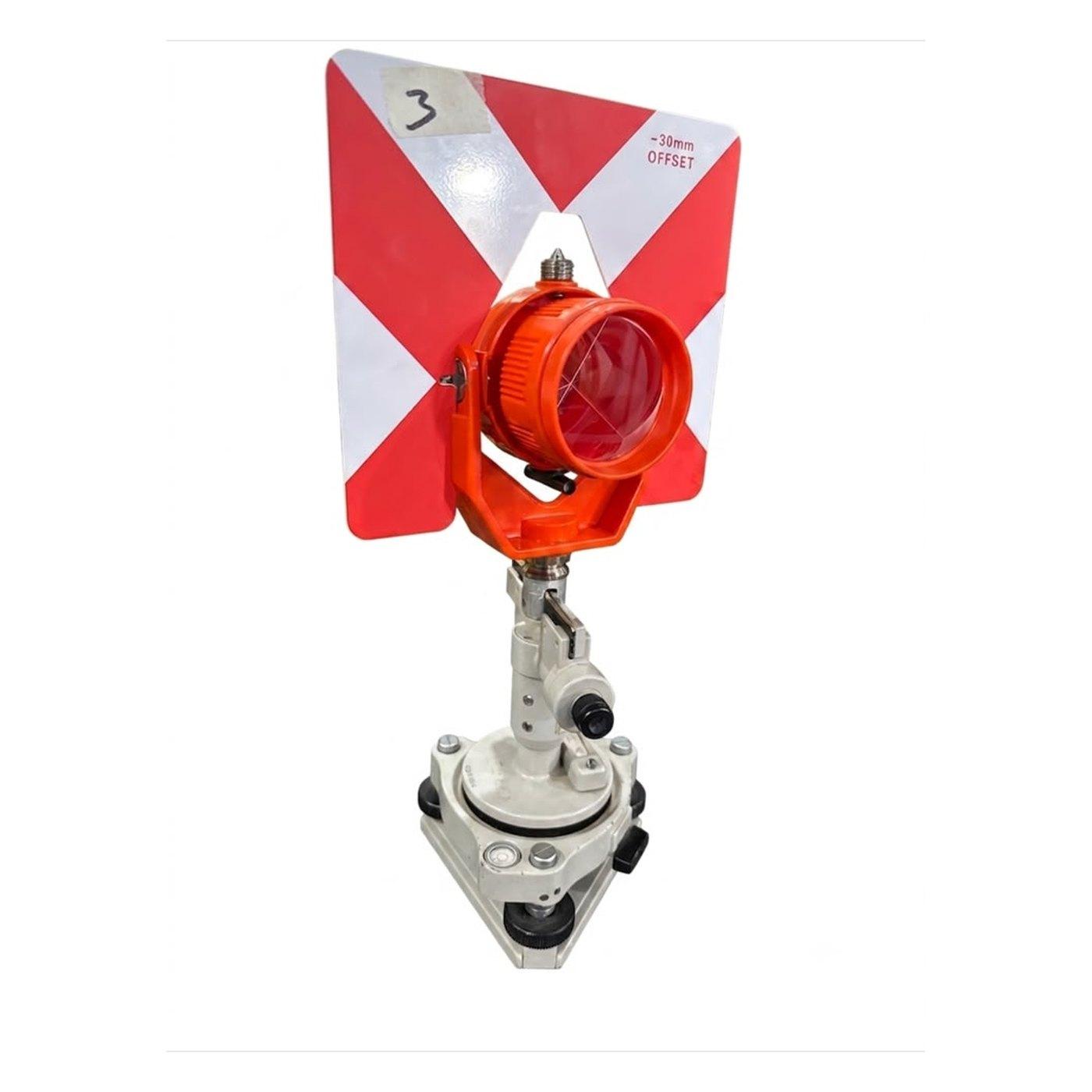
Single Prism with Tribrach
Single prism, target plate and carrier on a levelling tribrach. The standard backsight assembly, set to a 30 mm offset.
FAQ
Questions buyers ask us
How much does a survey tripod cost in Pakistan?
In the 2026 market an aluminium survey tripod costs about PKR 8,000 to 16,000, a wooden survey tripod about PKR 14,000 to 28,000 and a fibreglass tripod about PKR 16,000 to 32,000. Branded Japanese or Swiss tripods cost more. Confirm today's price on WhatsApp, rates move with the exchange rate.
Can I use a camera tripod for a total station or auto level?
No. A camera tripod has a 1/4 inch or 3/8 inch screw and is built to hold 1 to 5 kg without moving under a camera. Survey instruments use a 5/8 inch x 11 thread on a flat head, and a total station of about 5 kg needs legs that will not twist by a few seconds of arc.
Which is better, a wooden or aluminium survey tripod?
Wood is steadier and does not grow in the sun, so it suits total stations and long sessions. Aluminium is about 1 to 2 kg lighter and cheaper, so it suits auto levels and GNSS work. In Sindh and southern Punjab summers above 40 degrees, wood or fibreglass holds height better.
What is the price of a total station prism in Pakistan?
A single prism with holder and tribrach costs about PKR 18,000 to 40,000 in the 2026 market, a mini prism about PKR 6,000 to 15,000, and a prism pole of 2.5 to 4.6 metres about PKR 8,000 to 20,000. Confirm today's price on WhatsApp, rates move with the exchange rate.
What is a prism constant and why does it matter?
The prism constant is the offset, usually 0 mm or minus 30 mm, that the total station adds to every distance for that prism. If the instrument is set to minus 30 and you use a 0 mm prism, every distance is 30 mm wrong. Check it before the first shot of every job.
How long does a survey tripod last?
A good tripod used daily lasts 5 to 10 years if the leg clamps and hinge bolts are tightened every few months. Most tripods we see retired early have a bent shoe, a cracked head or clamps that slip after 2 or 3 years of being thrown into a pickup.