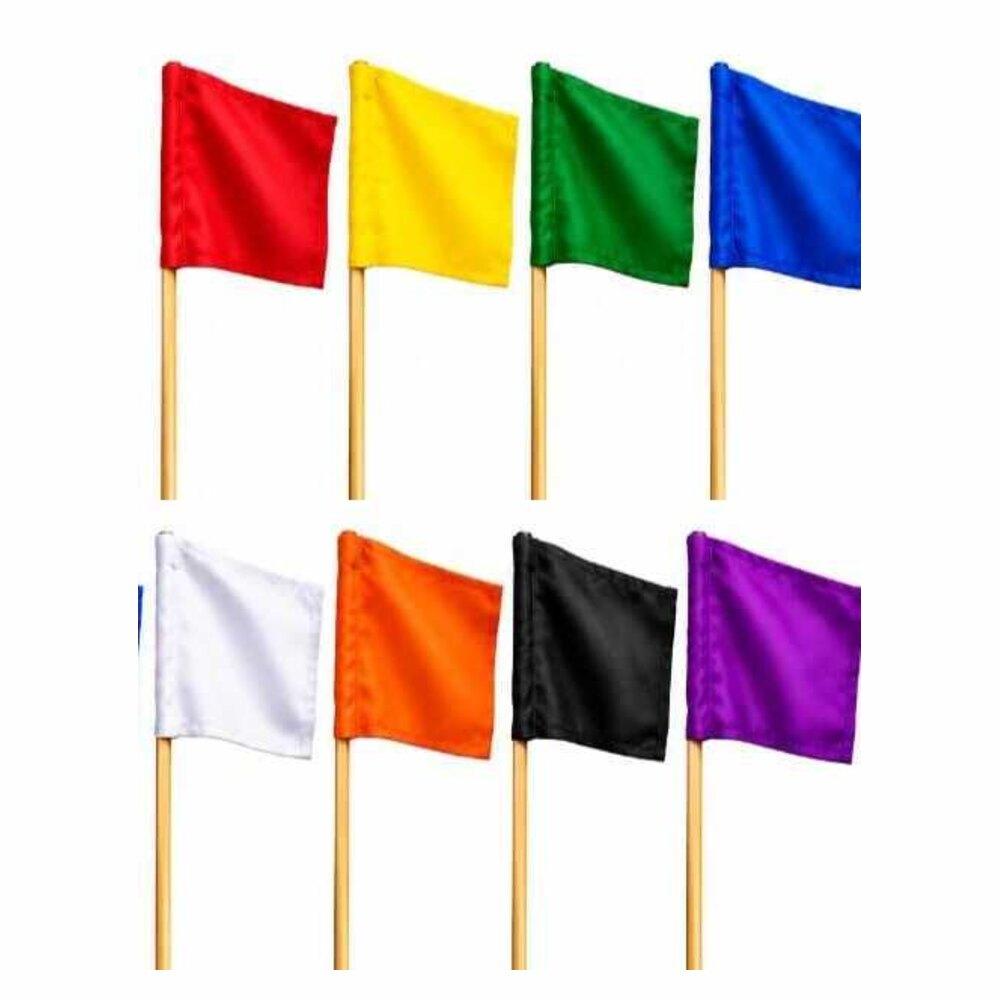
Survey flags are small cloth or plastic flags on stakes, used to mark survey pegs, buried services and hazards so they can be seen from 50 metres or more. In Pakistan in 2026 cloth flags on wooden stakes cost about PKR 40 to 150 each, and a site typically uses one every 5 to 10 metres along a buried line.
They are the cheapest item on a site and among the most ignored. Yet a missing flag is how an excavator finds a gas main, and a flag in the wrong colour is how a crew digs on the wrong side of a cable. This guide covers colour codes, what Pakistani sites actually do, and what to buy.
What are survey flags used for?
Marking flags have three jobs on a site.
- Survey and setting out: making pegs, benchmarks and control points visible so plant does not drive over them and the next crew can find them
- Buried services: showing the line of a cable, pipe or duct that a locator has traced, so the excavator works around it
- Hazards and limits: marking soft ground, an open pit edge, a property line or a no go zone
The flag does not replace the survey mark. The peg, nail or pin is the measured point; the flag is how people see it. On a busy road project the flag is often the only reason a peg survives the week.
What do different colour survey flags mean?
The most widely copied scheme is the American Public Works Association (APWA) uniform colour code, used across the United States and borrowed by many consultants elsewhere.
| Colour | APWA meaning (US) | Common use on Pakistani sites |
|---|---|---|
| Red | Electric power lines, cables | WAPDA and DISCO cables |
| Yellow | Gas, oil, steam | SNGPL gas lines |
| Orange | Communications, telecom, CCTV | PTCL and fibre ducts |
| Blue | Drinking water | WASA and society water mains |
| Purple | Reclaimed water, irrigation | Irrigation or treated effluent |
| Green | Sewers and drain lines | Sewer and storm drain |
| White | Proposed excavation | Limits of digging |
| Pink | Temporary survey markings | Setting out and control |
The APWA code is a US standard. Pakistan has no single national colour code for marking flags that every utility and contractor follows. WAPDA, SNGPL, PTCL and WASA each mark in their own way, and two contractors on the same CDA or housing society site can use red for different things.
Is there a flag colour code in Pakistan?
Not one that you can rely on. So set your own, and make it impossible to misread.
Agree the colour code at the start of the job and print the key on every setting out drawing, in the title block, beside the north arrow. A key that lives only in the site engineer's head disappears the day he goes on leave, and the night shift excavator operator is left guessing. This is the one rule we would put above all the others in this post.
A practical site key, using the eight colours we stock:
- Red: electric cables
- Yellow: gas
- Orange: telecom and fibre
- Blue: water
- Green: sewer and drains
- White: proposed excavation limits
- Purple: survey control points and benchmarks
- Black: boundary lines or no go areas
Black is not part of the APWA scheme, which is exactly why it is useful as a site specific colour. The point is not which colour means what. The point is that everyone on the site uses the same key.
Survey pegs and flags
For setting out, our clients usually tie a pink or purple flag to each control peg and use a different colour for offset pegs. Write the point number and the offset on the stake with a marker. A flag that says "CP 12, 2 m offset" saves a total station crew half an hour of searching.
For more on control and setting out, see how to use a total station.
How much do survey flags cost in Pakistan?
| Type | Description | Indicative market price (PKR, 2026) |
|---|---|---|
| Cloth flag on wooden stake | Cloth flag on a pointed stake, about 450 to 750 mm | 40 to 150 each |
| Bundle of 100, one colour | Wooden stake flags | 4,000 to 12,000 |
| PVC flag on wire stake | Imported pattern, light duty | 20 to 60 each |
| Wooden survey pegs | Plain pegs for marking points | 20 to 80 each |
| Ranging rod | Red and white, 2 to 3 m, for long sight lines | 2,500 to 8,000 |
These are 2026 market ranges for Pakistan. Confirm today's price on WhatsApp, rates move with the exchange rate.
How many flags does a site need?
Allow one flag every 5 to 10 metres along a buried service, one at every corner, bend or change of depth, and one at every control point and benchmark. On a 500 metre housing society road with electricity, gas and water already in the ground, that is 150 to 300 flags before any setting out begins. Add 20 percent for replacements: flags get knocked over, faded and taken.
Hazard marking
For hazards rather than services, keep one colour on its own, black in the key above, and use it only for limits: a soft trench backfill, an open pit edge, a slope crest that must not be loaded. Never reuse a service colour for a hazard.
Cloth on wood suits Pakistani conditions better than light wire stakes. Wire stakes bend in hard Potohar ground and vanish in tall grass; wooden stakes take a mallet and stay put.
What breaks, and how to make flags last
- Sun: cheap cloth fades in a Punjab summer. A red flag that has gone pink after six weeks is now telling a different story. Replace faded flags.
- Monsoon: rain and mud bury flags on soft ground. Set stakes deeper and check lines after every heavy shower.
- Plant and traffic: graders and dumpers flatten flags at the road edge. Protect key pegs with a triangle of three stakes and barricade tape.
- People: children and passers by in housing societies pull flags. Use more than you think you need along a buried line.
- Wind: in Sindh and Balochistan, tie the flag through the stake, not just wrapped around it.
Pairing flags with tape and cones
Flags mark a point or a line. They do not stop anyone.
- Use barricade tape to fence an open trench or a lifting zone; see our guide to barricade tape.
- Use traffic cones where vehicles move: around a survey crew on a live road, or at the end of a trench. See traffic cone prices in Pakistan.
- Put the crew in hi-vis jackets to EN ISO 20471. Our construction PPE list covers the rest.
Before you flag a buried service, find it. A pipe and cable locator traces the line and its depth, and the flags record the result on the ground. Drawings of old services in Rawalpindi, Lahore and Karachi are often wrong by a metre or more.
What we supply
- Construction site and survey marking flags: cloth on wooden stakes, in red, yellow, green, blue, white, orange, black and purple, sold in bundles, mixed colours to order
- Barricade and caution safety tape
- Reflective traffic cones and reflective safety jackets
- Levelling staff and ranging rods from our survey accessories
- The full safety products range
Ask for today's price
Tell us how many flags you need, which colours, and the stake length. Mixed colour bundles are made up to order. Send us a WhatsApp for today's price.
What we supply
Equipment covered in this guide
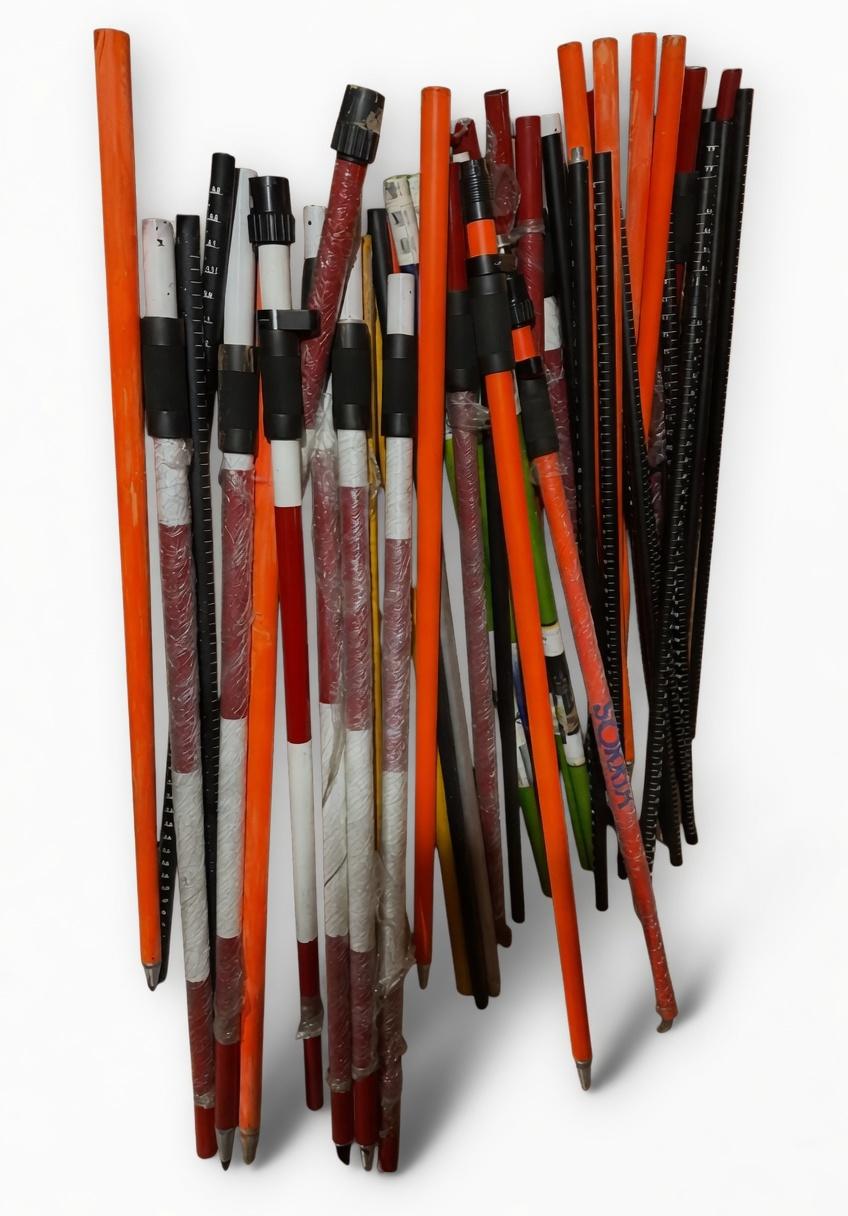
Levelling Staff & Ranging Rod
Telescopic aluminium staffs in 3, 5 and 7 metre lengths, plus ranging rods and staff bubbles.
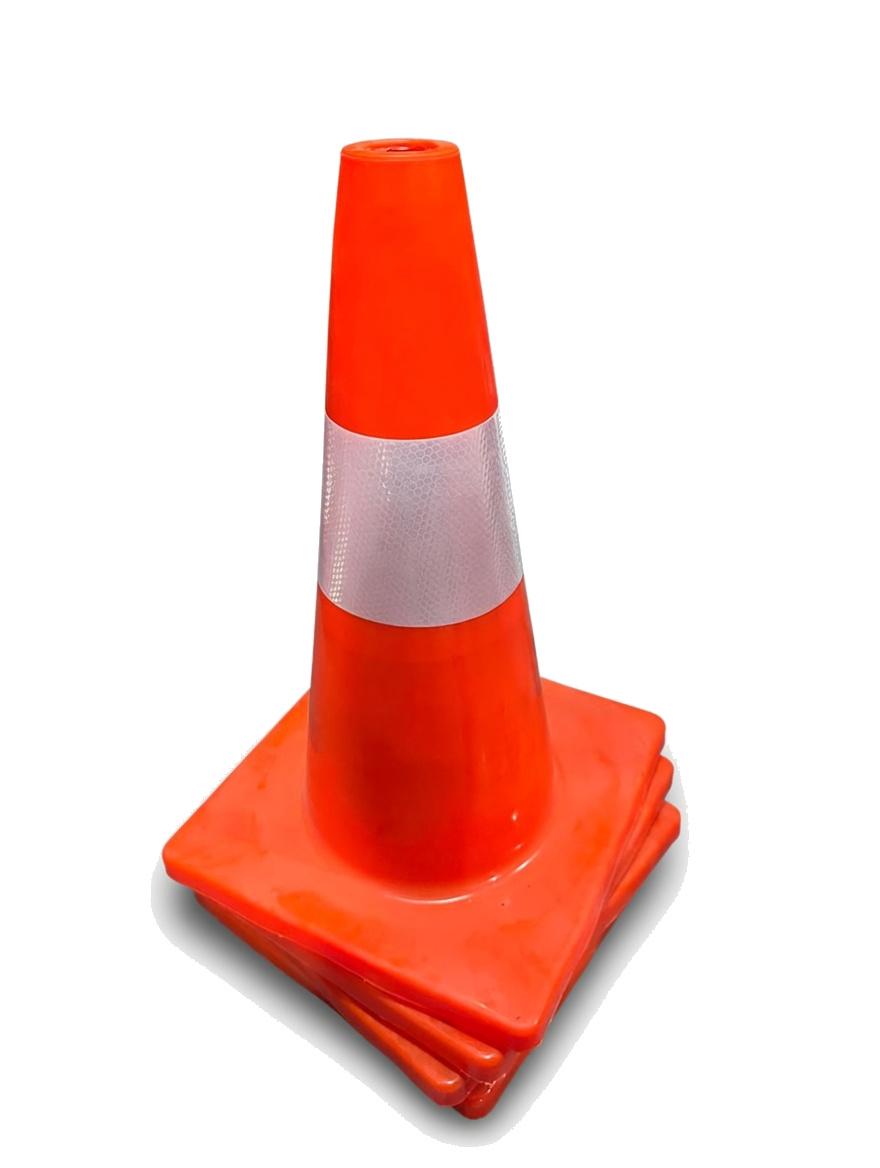
Reflective Traffic Cone
PVC cones with a reflective collar and a weighted base, in the sizes traffic management plans call for.
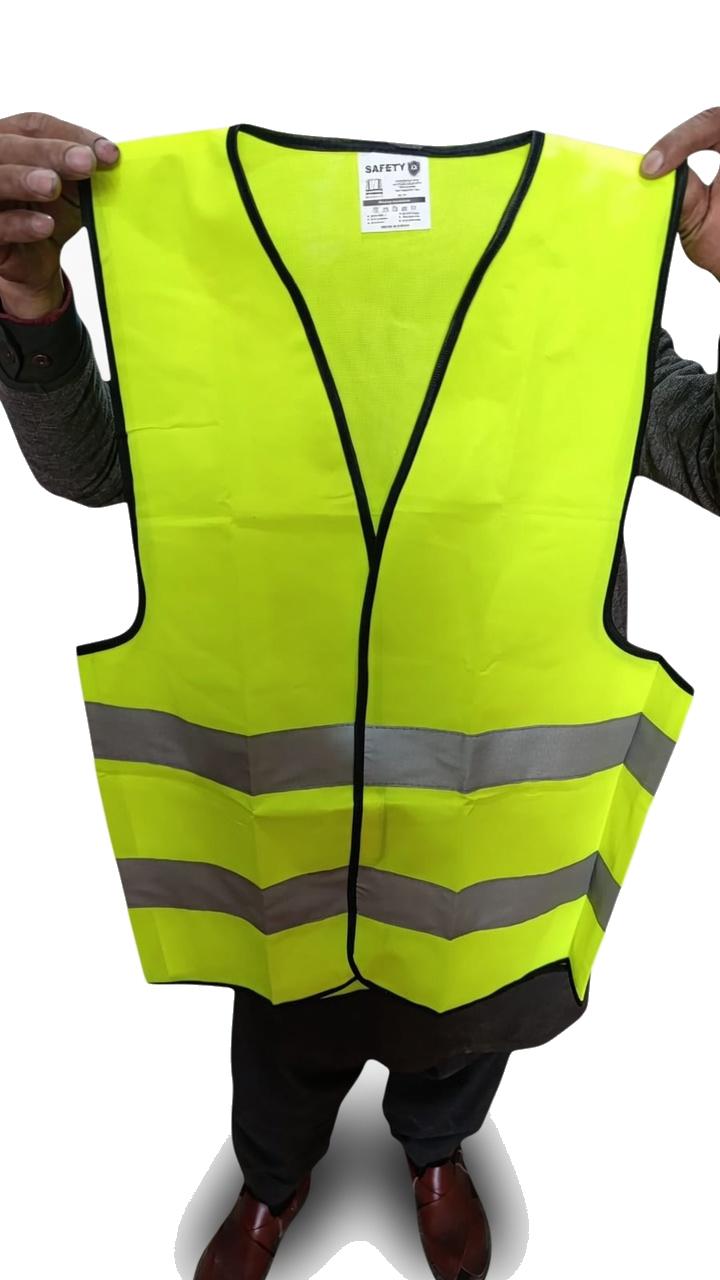
Reflective Safety Jacket
High visibility vests in orange and yellow, plain or printed, supplied by the carton.
FAQ
Questions buyers ask us
What do different colour survey flags mean?
Under the American APWA code, red is electric power, yellow gas or oil, orange communications, blue drinking water, purple reclaimed water, green sewer and drains, white proposed excavation and pink temporary survey marks. Pakistan has no single national code, so agree one per site and write it on the drawing.
What is the price of survey marking flags in Pakistan?
In 2026 cloth flags on wooden stakes cost about PKR 40 to 150 each depending on stake length, or about PKR 4,000 to 12,000 per 100. Imported PVC flags on wire stakes are about PKR 20 to 60 each. Confirm today's price on WhatsApp, rates move with the exchange rate.
Is there a flag colour code in Pakistan?
No single national code is followed on every site. WAPDA, SNGPL, PTCL and WASA each mark their own services, and consultants often borrow the APWA scheme. The safe approach is to agree 6 to 8 colours at the start of the job and print the key on every setting out drawing.
What is the difference between a survey flag and a survey peg?
A peg is the survey mark: a wooden or steel stake driven at a measured point, often with a nail for the exact position. A flag makes the peg visible from 50 metres or more. On most Pakistani sites a coloured flag is tied to or set beside each important peg.
How many marking flags does a site need?
Allow about 1 flag every 5 to 10 metres along a buried service, one at each corner and change of direction, and one at every control point. A typical housing society road of 500 metres with 3 services needs 150 to 300 flags, plus spares for replacement.