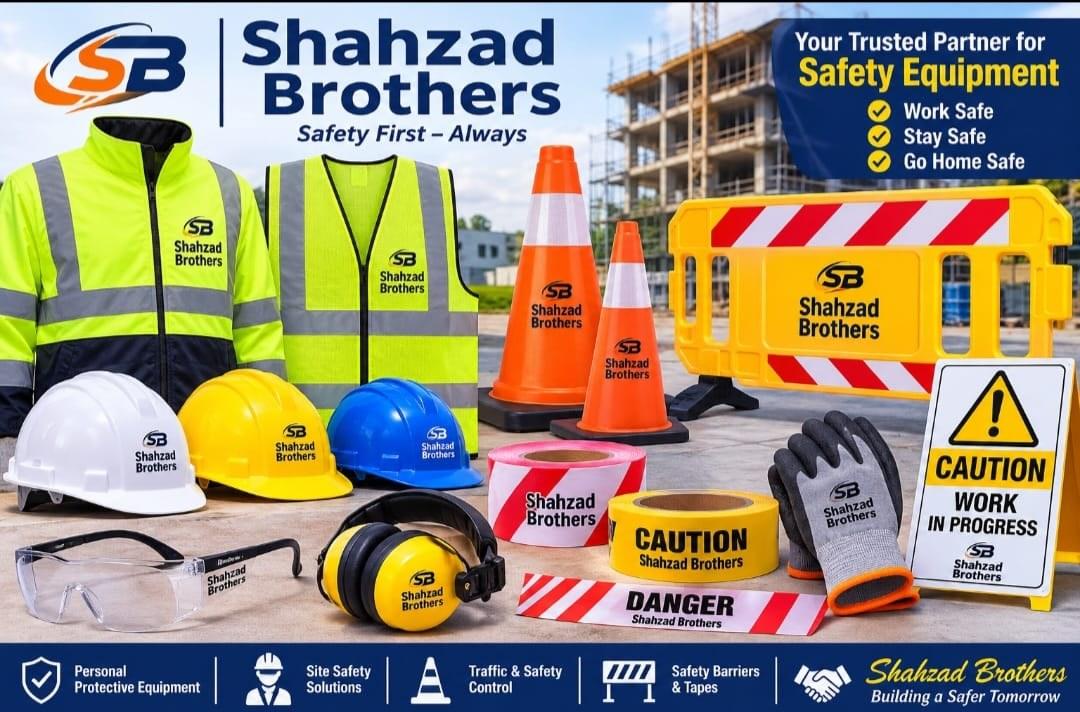
Barricade tape is a non-adhesive polyethylene warning ribbon, usually 75 mm wide and sold in 100 to 500 metre rolls, used to mark hazards and closed areas. In Pakistan in 2026 a 100 metre roll costs about PKR 250 to 600. Yellow and black means caution; red and white means danger, do not enter.
It is the cheapest piece of site safety equipment and the one used most carelessly: tied across a trench, left to bleach in the sun, then shredded by the wind within a fortnight. Used properly it is the fastest way to tell everyone on a site, a factory floor or an event ground where they must not go. This guide covers what the colours mean, sizes, prices, quality checks and how much to order.
What is barricade tape used for?
Barricade tape, also called caution tape, safety tape, warning tape or danger tape, marks an area that people should not enter or should enter only with care. Common uses on Pakistani sites:
- Around open excavations, footings, manholes and trenches
- Around lifting zones under a crane or hoist
- Around wet concrete, fresh paint and freshly laid floors
- Around electrical work, transformers and open panels
- Around a fire scene, spill or collapsed structure
- To guide crowds and queues at events and exhibitions
- Across a closed lane in a factory, warehouse or car park
It is a warning, not a barrier. That distinction is covered below.
What is safety tape called?
The same product goes by many names: barricade tape, caution tape, warning tape, danger tape, barrier tape and police tape. In Pakistani markets you will also hear "barrication tape" and "zebra tape". All of these are a non-adhesive polyethylene ribbon, usually 50 or 75 mm wide, wound on a core.
Two products are often confused with it. Floor marking tape is adhesive, usually 50 mm wide vinyl, stuck down to mark aisles and forklift lanes in factories and warehouses. Underground warning tape is wider, laid in a trench about 300 mm above a buried cable or gas pipe, so the next excavator meets the tape before the service. If your tender says "warning tape" near utilities, it usually means the underground type, so check the drawing before ordering.
What do barricade tape colours mean?
There is no single Pakistani law fixing tape colours. Most contractors and factories follow the international convention in their HSE plan:
| Tape colour | Usual printed text | Meaning |
|---|---|---|
| Yellow and black | CAUTION | Hazard present, enter with care |
| Red and white, or red | DANGER, DO NOT ENTER | Serious hazard, no entry |
| Green and white | SAFETY | First aid, assembly point, safe route |
| Blue and white | Information or utility | Water lines, notices, equipment areas |
| Magenta or purple and yellow | RADIATION | Radiation or specific chemical hazard |
| Black and white | Plain stripes | Housekeeping, aisle marking |
What does red barricade tape indicate? Red means danger: do not cross for any reason without the permission of the person in charge. On most sites, red tape goes around live electrical work, excavations deeper than a person, lifting zones and fire scenes.
How much does barricade tape cost in Pakistan?
| Roll | Width | Film | Indicative market price (PKR per roll) |
|---|---|---|---|
| 100 m standard printed | 75 mm | Thin PE, about 30 to 40 micron | 250 to 600 |
| 250 to 300 m standard printed | 75 mm | PE, about 40 to 50 micron | 600 to 1,400 |
| 500 m heavy | 75 mm | PE, about 50 to 70 micron | 1,200 to 2,500 |
| Custom printed with company name | 75 mm | PE | Quoted per order, minimum usually 100 rolls |
| Underground warning tape | 100 to 300 mm | PE, some with metal trace | Quoted per order |
These are 2026 market ranges; cartons of 20 to 50 rolls come cheaper. Confirm today's price on WhatsApp, rates move with the exchange rate.
Printed with your company name
Contractors, utilities and housing societies often print their name on the tape. It discourages theft, tells the public whose hazard it is, and looks organised to an inspector. Expect a minimum of about 100 rolls per design, one or two colours of print, and roughly two weeks.
Is barricade tape a safety barrier?
No. This is the most important point in this guide. Tape tells people where the hazard is. It cannot stop a person falling into a 3 metre excavation or a car rolling into a trench.
Use a rigid safety barrier when:
- A person could fall more than about 2 metres
- Vehicles could enter the area
- The area will stay open for more than a few days
- Children or the public pass by, as in housing societies and city streets
Rigid options are steel pedestrian barricades, scaffold tube guardrails, and water filled plastic road barriers. Tape then goes along the top as an extra visual warning. On roads, combine tape with reflective traffic cones; our traffic cone price guide covers sizes and layouts.
What should you check before buying in bulk?
Rolls of good tape and poor tape look the same in the carton. Three checks take one minute:
- The stretch test. Take 30 cm of tape between your hands and pull. Good virgin PE stretches, narrows and keeps going before it breaks. Recycled tape tears straight across like paper, and in the Pakistani sun it goes brittle and shreds within two or three weeks.
- The print test. Rub the print hard with a damp thumb. If the ink smears, it will be unreadable after the first rain.
- The length check. Weigh a roll or count the metre marks if printed. Short rolls are common. A 300 metre roll that is really 200 metres is a 33 percent price rise.
Sun, wind and monsoon
Pakistani summers are hard on thin film. Expect standard tape outdoors to need replacing every three to four weeks in May and June. Two habits double its life:
- Tie the tape slightly slack, not drum tight. Wind snaps tight tape at the knots.
- Twist the tape a few times between posts. A twisted ribbon flutters less and tears less.
How much barricade tape does a site need?
Our ordering rule: perimeter in metres, times the number of runs, times 1.2 for knots and waste, times the number of re-tapes in the season. For a footing excavation of 20 by 10 metres, the perimeter is 60 metres. Two runs (knee and waist height) gives 120 metres, and 1.2 for waste gives 144 metres. Over a three month summer job with monthly re-taping, that is about 430 metres: two 250 metre rolls.
As a rule of thumb, a mid sized building site keeps about 4 to 6 rolls of yellow and 2 to 3 rolls of red in the store at any time.
Do not forget indoor hazards: a wet floor caution sign does more inside a mall or office than tape does.
What we supply
We supply site safety equipment by the piece and the carton:
- Barricade and caution safety tape in yellow and black and red and white
- Reflective traffic cones to carry the tape on roads and sites
- Wet floor caution signs for factories, malls and offices
- Reflective safety jackets and a site PPE kit for the crew; see our construction PPE list and safety jacket price guide
- The full range under safety products
Ask for today's price
Tell us the colours, roll length, number of rolls and whether you want your company name printed. Send us a WhatsApp for today's price and delivery to your site.
What we supply
Equipment covered in this guide
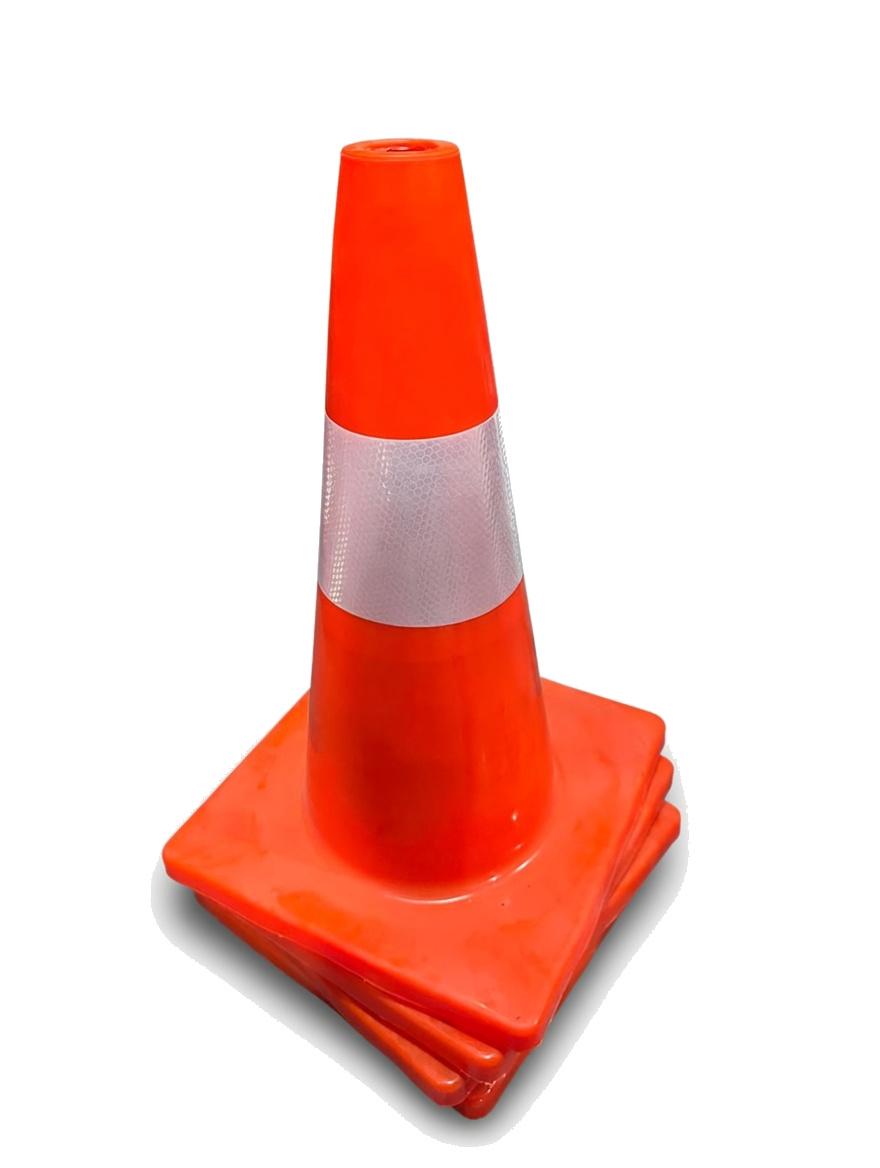
Reflective Traffic Cone
PVC cones with a reflective collar and a weighted base, in the sizes traffic management plans call for.
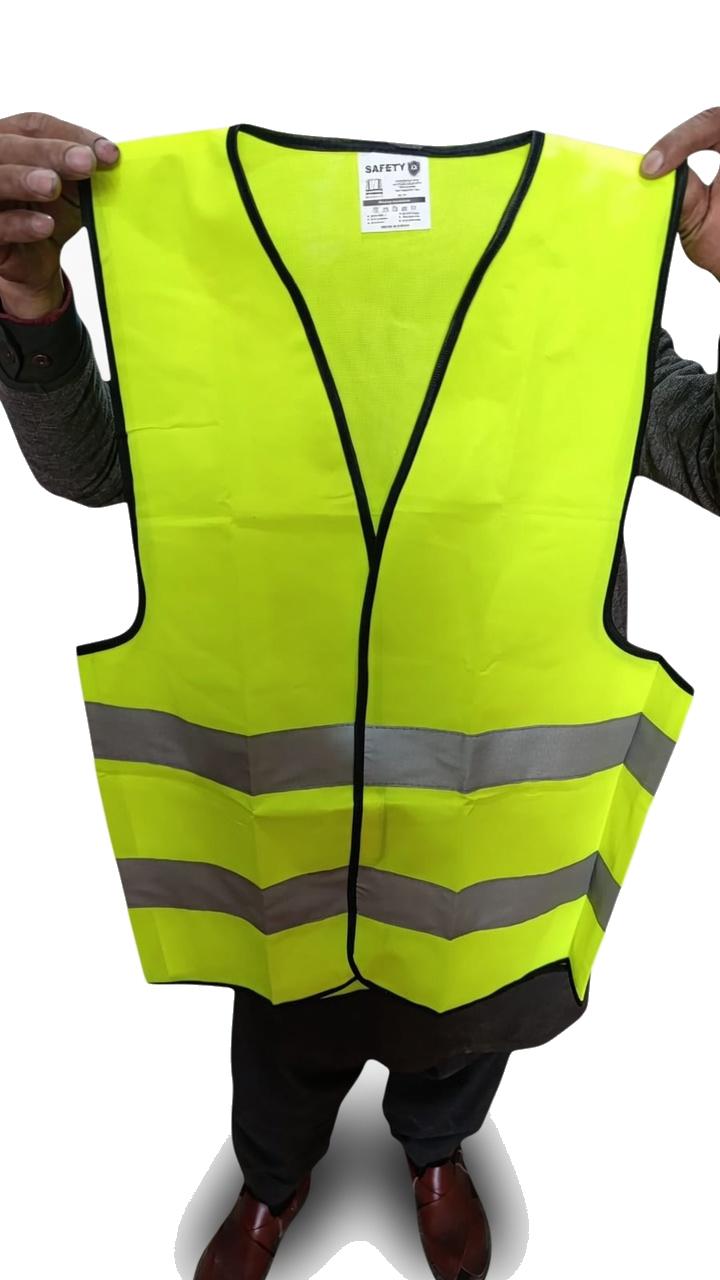
Reflective Safety Jacket
High visibility vests in orange and yellow, plain or printed, supplied by the carton.
Barricade & Caution Safety Tape
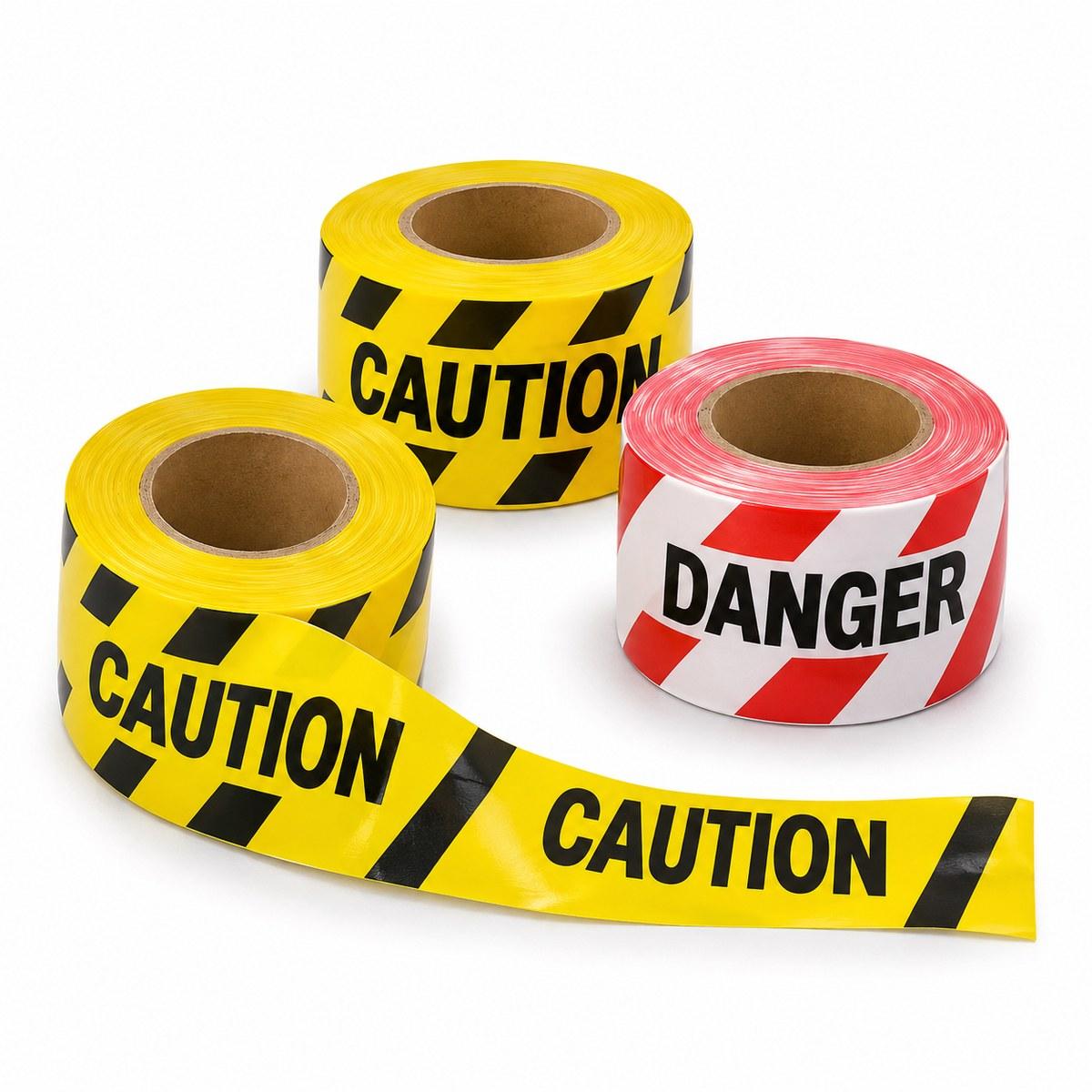
Non-adhesive barricade tape in yellow and black CAUTION and red and white DANGER, for cordoning off excavations, spills and work zones.
FAQ
Questions buyers ask us
What is barricade tape used for?
Barricade tape marks an area people must not enter or must approach with care: an open trench, a lifting zone, a wet floor, a fire scene or a hazard under repair. It is a 50 to 75 mm wide plastic warning ribbon, tied between cones, posts or rebar caps, not a physical barrier.
What is the price of barricade tape in Pakistan?
In 2026 a 100 metre roll of 75 mm printed tape costs about PKR 250 to 600, a 250 to 300 metre roll PKR 600 to 1,400 and a heavier 500 metre roll PKR 1,200 to 2,500. Custom printed tape costs more. Confirm today's price on WhatsApp, rates move with the exchange rate.
What does red barricade tape indicate?
Red, or red and white, means danger: do not enter at all. It is used around live electrical work, deep excavations, fire scenes and lifting zones. Yellow and black means caution, enter with care. Most Pakistani sites need both colours, roughly 70 percent yellow and 30 percent red.
Is barricade tape a rigid barrier?
No. Tape warns but cannot stop a fall or a vehicle. Where a person could fall more than about 2 metres, or traffic could enter the area, you need a rigid barrier such as steel barricades, guardrails or water filled road barriers, with tape added only as a visual warning.
What is safety tape called?
It goes by several names: barricade tape, caution tape, warning tape, danger tape, police tape and barrier tape. All are the same non-adhesive polyethylene ribbon, usually 50 or 75 mm wide. Adhesive floor marking tape, 50 mm wide and stuck to the floor, is a different product.