Cylinder vs cube strength: for the same concrete, a 150 x 300 mm cylinder breaks at about 80 percent of the load per square millimetre of a 150 mm cube. A mix giving 30 MPa in cubes gives roughly 24 to 25 MPa in cylinders. The ratio drifts towards 0.85 as strength rises.
This matters in Pakistan more than most places, because two testing traditions run side by side. Building works, many CDA and housing society projects, and NESPAK or consultant specifications that follow British practice test 150 mm cubes. NHA highway and bridge work under the AASHTO based NHA General Specifications specifies concrete classes by 28 day cylinder strength in psi, and many WAPDA, motorway and foreign funded projects do the same. Neither body always uses one test, so check your specification. Drawings move between the two, consultants change mid project, and someone has to know what "M25", "C25/30" and "3,000 psi" each mean.
What is the relationship between cube strength and cylinder strength?
The working rule is cylinder strength is about 0.8 times cube strength for normal concrete. The European strength classes in BS EN 206 set the pairs out directly:
| Strength class | Cylinder (MPa) | Cube (MPa) | Ratio | Approx. psi (cylinder) |
|---|---|---|---|---|
| C16/20 | 16 | 20 | 0.80 | 2,300 |
| C20/25 | 20 | 25 | 0.80 | 2,900 |
| C25/30 | 25 | 30 | 0.83 | 3,600 |
| C30/37 | 30 | 37 | 0.81 | 4,350 |
| C35/45 | 35 | 45 | 0.78 | 5,100 |
| C40/50 | 40 | 50 | 0.80 | 5,800 |
| C50/60 | 50 | 60 | 0.83 | 7,250 |
The pairs are rounded to tidy class names, so the ratio wobbles between 0.78 and 0.83. Do not read meaning into the wobble; read the trend. At ordinary site strengths, 0.8 is the right mental figure.
C25/30 notation, explained
In a class such as C25/30, the first number is the characteristic cylinder strength and the second is the characteristic cube strength, both at 28 days in MPa. "Characteristic" means the value that no more than about 5 percent of results are expected to fall below, so the mix has to be designed for a higher average, typically 6 to 12 MPa above it depending on the plant's track record.
An Indian style "M25" means a 150 mm cube characteristic strength of 25 MPa, which is about C20/25, not C25/30. Pakistani drawings prepared by consultants with Indian or Gulf experience sometimes use M grades. Check before you design the mix.
Why is cube strength higher than cylinder strength?
Three reasons, in order of importance.
- Platen restraint. When a specimen is squeezed, it tries to bulge sideways. Friction at the steel platens stops the ends from spreading. In a cube, whose height equals its width, the restrained zones from top and bottom overlap through the whole specimen, which props it up. In a cylinder twice as tall as it is wide, the middle part is far enough from both platens to fail almost freely. Freely failing concrete fails at a lower stress.
- Size. A 150 x 300 mm cylinder has more than double the volume of a 150 mm cube, so a weak spot is more likely to be inside it. Bigger specimens read lower.
- End condition. Cubes are tested on two moulded faces, which are flat and parallel. Cylinders are tested on a trowelled end and a moulded end, and need capping or grinding. Any imperfection in capping costs a cylinder strength that a cube does not lose.
The platen effect is also why a 100 mm cube reads a little higher than a 150 mm cube, and why a core with a length smaller than twice its diameter needs a correction factor.
Why does the 0.8 ratio vary?
Because it is an observed average, not a law. In our experience and in published comparisons, it moves with:
- Strength. Weak concrete tends towards 0.75 to 0.8, high strength concrete towards 0.85 or above. Brittle, strong concrete is less helped by platen restraint.
- Aggregate. Crushed Margalla limestone and rounded river gravel from the Indus or Chenab behave differently. Angular crushed aggregate bonds better and tends to narrow the gap.
- Capping quality. Poor cylinder capping widens the gap. Good grinding narrows it.
- Curing and moisture. A dry specimen reads higher than a wet one, and cubes and cylinders are not always tested equally wet.
One rule we give every site lab: if you must compare the two, cast both from the same sample, cure them in the same tank and test them on the same day on the same machine. A ratio worked out from your own concrete is worth more than any textbook figure. Five pairs are enough to see where your mix sits.
A worked comparison from a site lab
Say a ready mix plant supplies a C30/37 mix to a project in Islamabad and the lab casts three cubes and two cylinders from each of five trucks. The cubes average 41 MPa at 28 days and the cylinders 33 MPa. The ratio for this mix is 33 / 41 = 0.80, right on the textbook figure. If the cylinders had averaged 29 MPa, a ratio of 0.71, the first suspect would be capping or the cylinder moulds, not the concrete, because the cubes from the same trucks were fine. That is the value of casting both: each one checks the other.
Which test does my specification want?
Look at the standards clause, not the strength number.
| If the specification cites | You test | Mould | Typical Pakistani projects |
|---|---|---|---|
| BS 1881, BS EN 12390-2 and 12390-3, BS EN 206 | 150 mm cubes | Cube mould | Building works, many CDA and housing society projects, British style NESPAK or consultant specifications |
| ASTM C31, C39, C470, ACI 318 | 150 x 300 or 100 x 200 mm cylinders | Cylinder mould | NHA highway and bridge work (AASHTO based NHA General Specifications), many WAPDA, motorway and foreign funded projects |
| Both, or unclear | Ask the engineer in writing | Do not guess | Design and build jobs with mixed teams |
NHA concrete classes are written as 28 day cylinder strengths in psi, typically in the 3,000 to 5,000 psi range for structural work. Some contracts still mix British structural clauses with American materials testing, so read the testing clause itself. If the strength is written in psi, it almost certainly means cylinder strength. If it is written as a C class, the higher number is the one you check with cubes.
For the procedures themselves, see our concrete cube test and concrete cylinder test guides.
How do I convert a cube result to cylinder strength?
For an estimate:
- Cylinder strength = cube strength x 0.8
- Cube strength = cylinder strength / 0.8, or x 1.25
Example: your cubes average 33 MPa at 28 days. Estimated cylinder strength is 33 x 0.8 = 26.4 MPa, or about 3,800 psi.
What this conversion is good for: comparing two plants quoted on different bases, checking a mix design, explaining results to a client. What it is not good for: turning a failed result under one specification into a pass under the other. No consultant accepts that, and they are right not to. If the results are disputed, the evidence is cores, cut with a core drill machine and tested to the project standard.
What we supply
Whichever tradition your project follows, the lab equipment is mostly shared.
- Cube and cylinder moulds: 150 mm cube moulds in cast iron and plastic, and steel split cylinder moulds. See cube mould price in Pakistan and concrete cylinder mould for sizes and ranges.
- Concrete compression testing machine: the same 2,000 kN frame crushes both, with the right platens and spacers. Our compression testing machine price guide explains capacities.
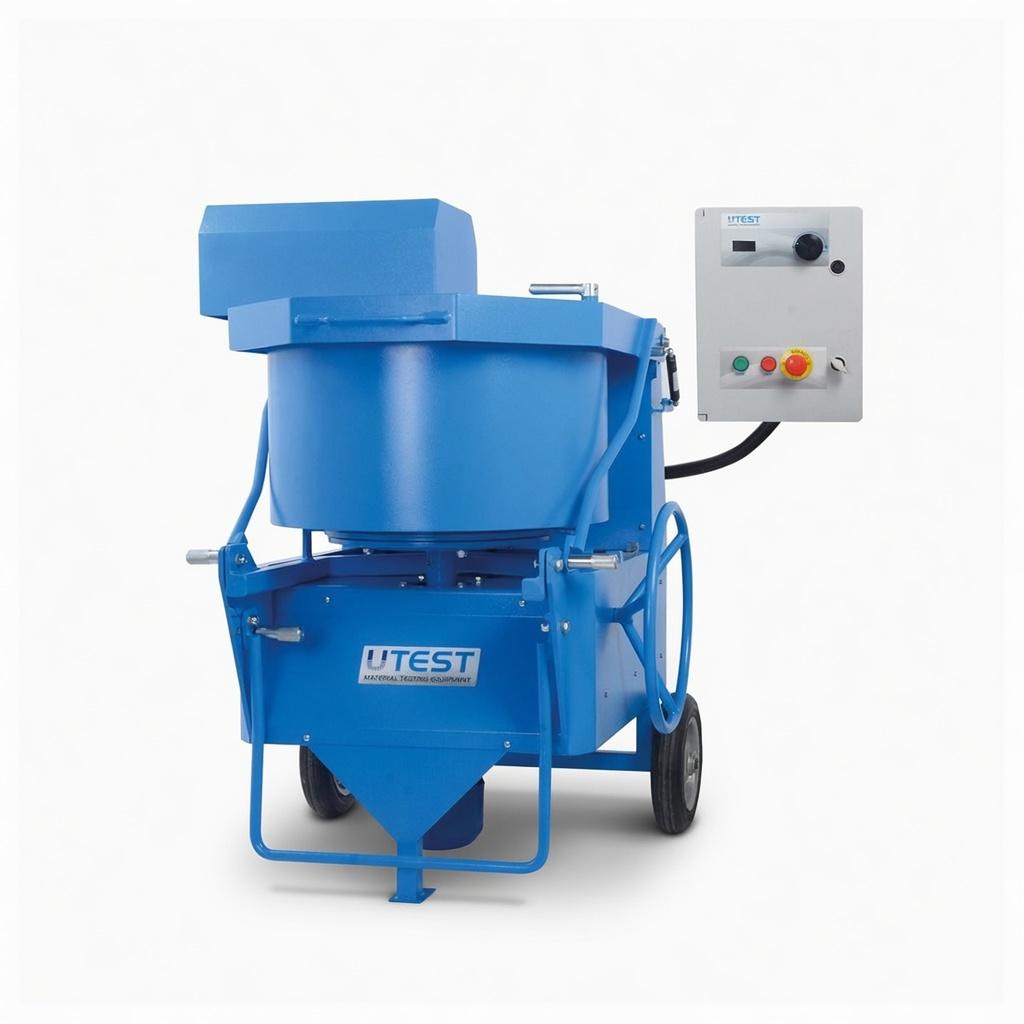
- Laboratory concrete mixer and slump test cone apparatus for trial mixes.
- The full range under civil lab equipment.
Ask for today's price
Tell us which standard your project follows and how many specimens you cast a week. We will put together moulds and a machine to match. All figures are 2026 market ranges. Confirm today's price on WhatsApp, rates move with the exchange rate. Contact us.
What we supply
Equipment covered in this guide
Laboratory Concrete Mixer
Small drum mixer for trial mixes and cube casting in a site or materials laboratory.
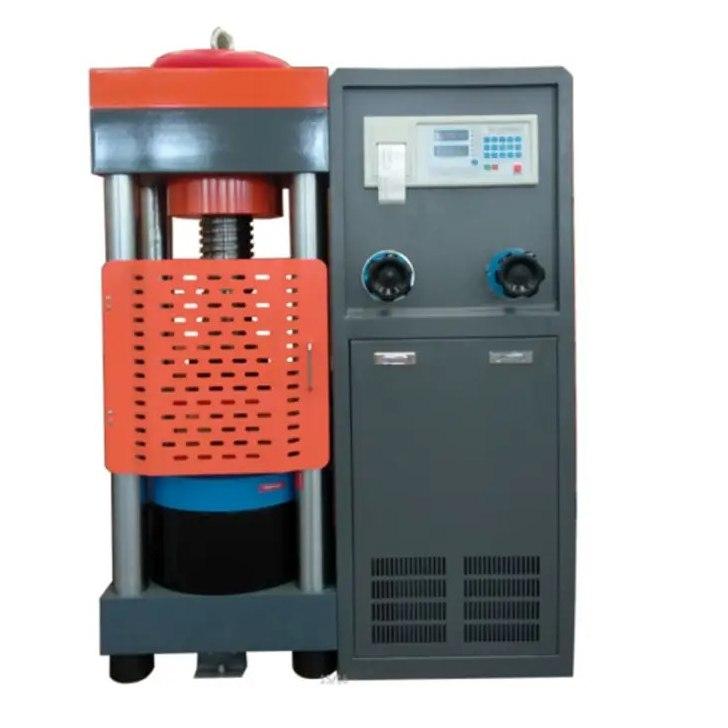
Concrete Compression Testing Machine
The machine every cube result on a project comes off. Supplied with the platens, the cage and a calibration certificate.
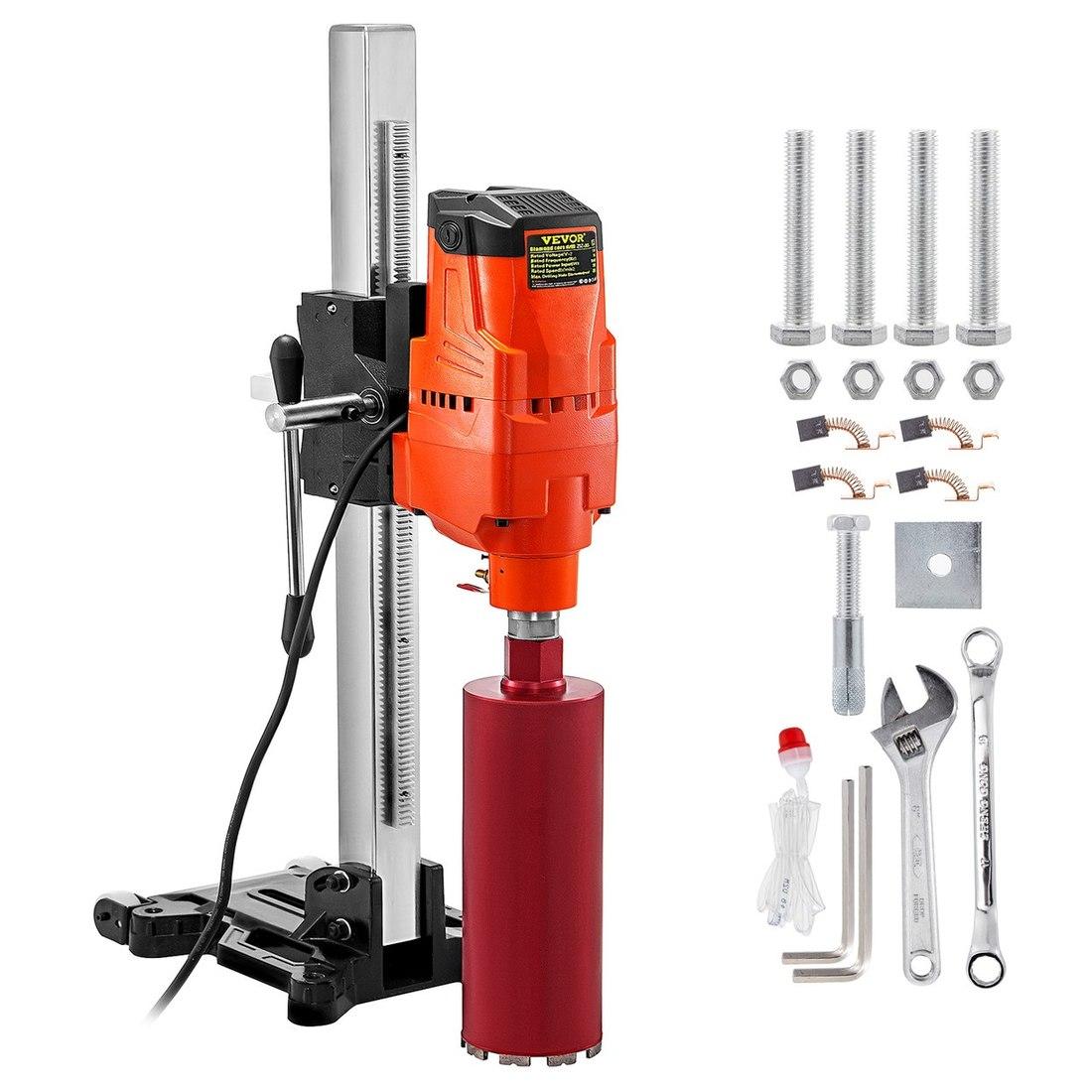
Core Drill Machine
Rig mounted diamond coring for concrete and asphalt cores, with barrels in the usual diameters.
FAQ
Questions buyers ask us
What is the relationship between cube strength and cylinder strength?
For normal strength concrete, the 150 x 300 mm cylinder strength is about 0.8 times the 150 mm cube strength. The ratio rises towards about 0.85 for high strength concrete above 60 MPa. So a 30 MPa cube corresponds to roughly a 24 to 25 MPa cylinder.
Why is cube strength higher than cylinder strength?
Friction between the steel platens and the specimen ends restrains it from expanding sideways. In a cube, with height equal to width, that restraint reaches through the whole specimen. A cylinder is twice as tall as it is wide, so its middle third fails almost unrestrained, and it reads about 20 percent lower.
What does C25/30 mean?
C25/30 is a European strength class from BS EN 206. The first number, 25 MPa, is the characteristic cylinder strength; the second, 30 MPa, is the characteristic 150 mm cube strength. Other common classes are C20/25, C30/37 and C35/45. Always check which number your drawing is quoting.
Can I convert cube results to cylinder results?
For estimates and design discussion, yes, multiply cube strength by about 0.8. For acceptance, no. A specification written for cylinders is checked with cylinders, and one written for cubes with cubes. Converting a failed 28 day result to pass under the other standard will not be accepted by any consultant.
Is 3000 psi concrete cube or cylinder strength?
Psi grades come from American practice and mean cylinder strength. 3,000 psi is about 20.7 MPa cylinder, roughly 26 MPa cube. 4,000 psi is about 27.6 MPa cylinder, roughly 34 to 35 MPa cube. On Pakistani drawings, confirm with the designer before casting test specimens.