The concrete cube test measures the compressive strength of hardened concrete by crushing 150 mm cubes, cast from the same batch that went into the slab, at 7 and 28 days. A 150 mm cube failing at 675 kN has a strength of 30 MPa. In Pakistan it is the usual acceptance test on building work.
On most building sites we supply, from housing society towers in Bahria Town to commercial plazas in Blue Area, the cube register is the one document every engineer argues over. This guide walks through the procedure as it is done properly, what the 7 and 28 day numbers should look like, and the site habits that produce low cubes from good concrete.
What is the concrete cube test method?
The method in Pakistan follows the British heritage: BS 1881 in older specifications and BS EN 12390-2 (making and curing) with BS EN 12390-3 (compressive strength) in current ones. Building works, many CDA and housing society projects, and NESPAK or consultant specifications that follow British practice write their concrete clauses this way. NHA highway and bridge work under the AASHTO based NHA General Specifications, and many WAPDA, motorway and foreign funded projects, specify 28 day cylinder strength in psi instead. Check your specification before you cast anything; see our concrete cylinder test guide.
Equipment you need
- Cube moulds, 150 mm, cast iron or steel, with a base plate. Three per age, so six per sample.
- A tamping bar or rod, or a laboratory vibrator or vibrating table.
- A scoop, trowel and release oil.
- A slump cone for the workability check taken from the same sample.
- A curing tank with water held at about 20 degrees Celsius.
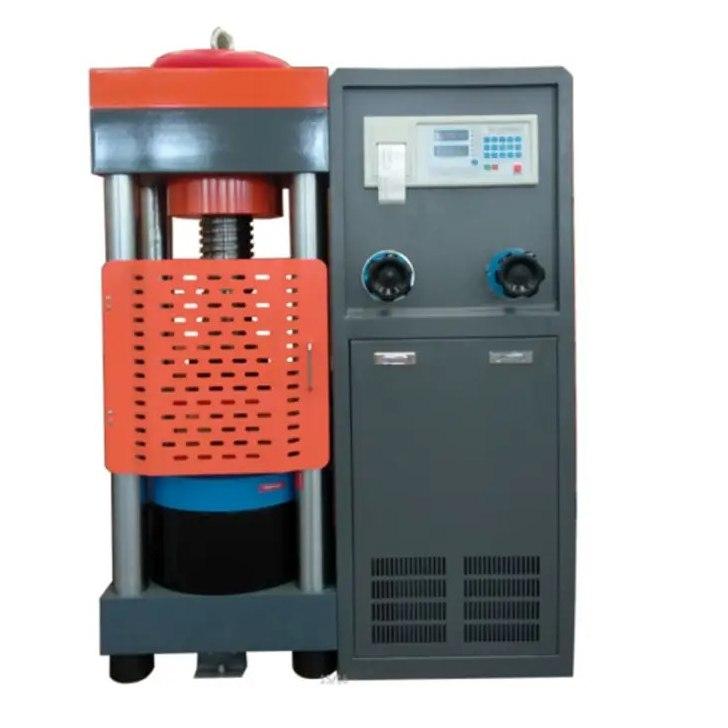
- A compression testing machine of 2,000 kN capacity, and a digital balance to weigh each cube.
Cube test procedure, step by step
- Prepare the moulds. Clean them, tighten every bolt, check the halves sit flush, and wipe a thin film of oil on the inside faces. Excess oil pools in corners and leaves soft patches.
- Sample correctly. Take the sample from the middle of the truck discharge, not the first or last barrow. Remix it on a non-absorbent board.
- Fill in layers. Fill each mould in layers about 50 mm deep, three layers for a 150 mm cube.
- Compact each layer. Under BS 1881 practice that is at least 35 strokes of a 25 mm square tamping bar per layer, spread evenly. BS EN 12390-2 also allows a vibrating table or poker; vibrate until the surface goes glossy and air bubbles stop, and no longer.
- Finish the top. Strike off level with the mould edge using a trowel, and mark the cube with the date, pour location and an ID.
- Store for the first day. Cover with wet hessian or a plastic sheet, keep in shade, and do not move for about 24 hours.
- Demould and cure. Strip the moulds after 16 to 72 hours (typically the next morning) and put the cubes straight into water at about 20 degrees Celsius until the test day.
- Crush. Weigh the cube, place it with the trowelled face to the side, never against a platen, and load it steadily at the rate the standard sets (about 0.6 MPa per second for BS EN 12390-3) until it fails.
What is the cube test at 7 days and 28 days?
The 28 day result is the one the design and the specification are based on. The 7 day result is an early warning, so that a bad pour is found while the formwork above it is still being built, not after.
With ordinary Portland cement, typical strength gain looks like this:
| Age | Typical percentage of 28 day strength | Expected for C25/30 (30 MPa cube) | Expected for C30/37 (37 MPa cube) |
|---|---|---|---|
| 3 days | 40 to 50 % | 12 to 15 MPa | 15 to 18 MPa |
| 7 days | 65 to 70 % | 19.5 to 21 MPa | 24 to 26 MPa |
| 14 days | 85 to 90 % | 25.5 to 27 MPa | 31.5 to 33 MPa |
| 28 days | 100 % | 30 MPa or more | 37 MPa or more |
Mixes with slag or fly ash gain more slowly early and keep gaining after 28 days, so a weak 7 day result on a blended cement is not a reason to panic. A weak 28 day result is.
How to read the result
Each set of three cubes is averaged. A single cube far below its two partners usually points to a sampling or handling fault on that one cube, not to the concrete. Under BS EN 206 style conformity, the mean of a run of results has to exceed the characteristic strength by a margin, and no single result may fall more than 4 MPa below it. Your project specification will state the exact criteria; read them before the first pour, not after the first bad result.
How do you calculate cube compressive strength?
Compressive strength is load divided by area.
- Cube area: 150 x 150 = 22,500 mm2
- Failure load from the machine: say 720 kN = 720,000 N
- Strength: 720,000 / 22,500 = 32.0 N/mm2, which is 32.0 MPa
Report to the nearest 0.5 MPa. Also note the cube density: weight divided by volume (0.003375 cubic metres for a 150 mm cube). Normal concrete comes out at about 2,350 to 2,450 kg per cubic metre, so a 150 mm cube weighs roughly 8 kg. A cube that weighs under 7.7 kg is almost always under-compacted, and its low strength is telling you about the cube, not the slab. Weigh every cube before crushing; it costs nothing and wins arguments.
Check the failure shape as well. A good cube fails in a double pyramid, with all four sides cracking roughly equally. A cube that splits on one face or fails explosively at one corner usually had a non-square face or was off centre on the platen.
How many concrete test cubes to take?
Most Pakistani specifications ask for one sample per pour, or one per 50 to 100 cubic metres on a large pour, whichever gives more samples. Each sample makes six cubes: three for 7 days, three for 28 days. Many consultants also ask for two spares for 56 days on blended cement mixes or in case of a dispute.
For a 30 cubic metre slab, then, you need six moulds as an absolute minimum, and more realistically twelve, because the moulds from yesterday's pour are still waiting to be stripped. Moulds are the bottleneck on busy sites. See cube mould price in Pakistan for what a working set costs.
Why do cubes fail when the concrete is good?
From what comes back to our counter, these are the causes, roughly in order of how often we see them:
- Cubes left in the sun. In June in Rawalpindi or Multan a cube on an open slab reaches 50 degrees Celsius in its first day. It loses water and early strength it never recovers. Shade and wet hessian matter more than people think.
- Under-compaction. Three lazy strokes per layer leave honeycomb inside. The weight check above catches this.
- Worn or out of square moulds. A mould whose faces have bowed or whose halves no longer meet cleanly makes a cube that is not flat. The load concentrates on the high spots and the cube fails early. Moulds that have been dropped off a tractor trolley a few times are the usual culprits.
- Curing late or not at all. Cubes demoulded and then left in a site office for a week before going into water.
- Transport damage. Cubes rattling loose in the back of a pickup on the GT Road arrive with internal cracks.
- Machine faults. A compression machine with worn platens or an out of date calibration. Have it calibrated yearly; our compression testing machine guide covers this.
In the monsoon there is a different problem: rainwater on the top of fresh cubes raises the water content of the top layer. Cover them before the shower, not during it.
What happens if the 28 day cubes fail?
Do not break out the slab on one set of cubes. The usual sequence is:
- Check the paperwork: sampling time, curing record, cube weights, machine calibration.
- Crush the 56 day spares if they exist.
- Run non-destructive checks such as a rebound hammer survey to find whether the whole element or only one area is weak.
- Cut cores with a core drill machine and test them. Cores are the evidence most consultants accept as final.
Only if the cores confirm the low strength does the structural engineer look at the design margins, strengthening or removal.
What we supply
For a site lab or a commercial lab running cube tests:
- Cube and cylinder moulds: 150 mm cast iron and plastic cube moulds, and steel split cylinder moulds
- Concrete compression testing machine for crushing cubes and cylinders
- Slump test cone apparatus, laboratory vibrator and laboratory concrete mixer for trial mixes
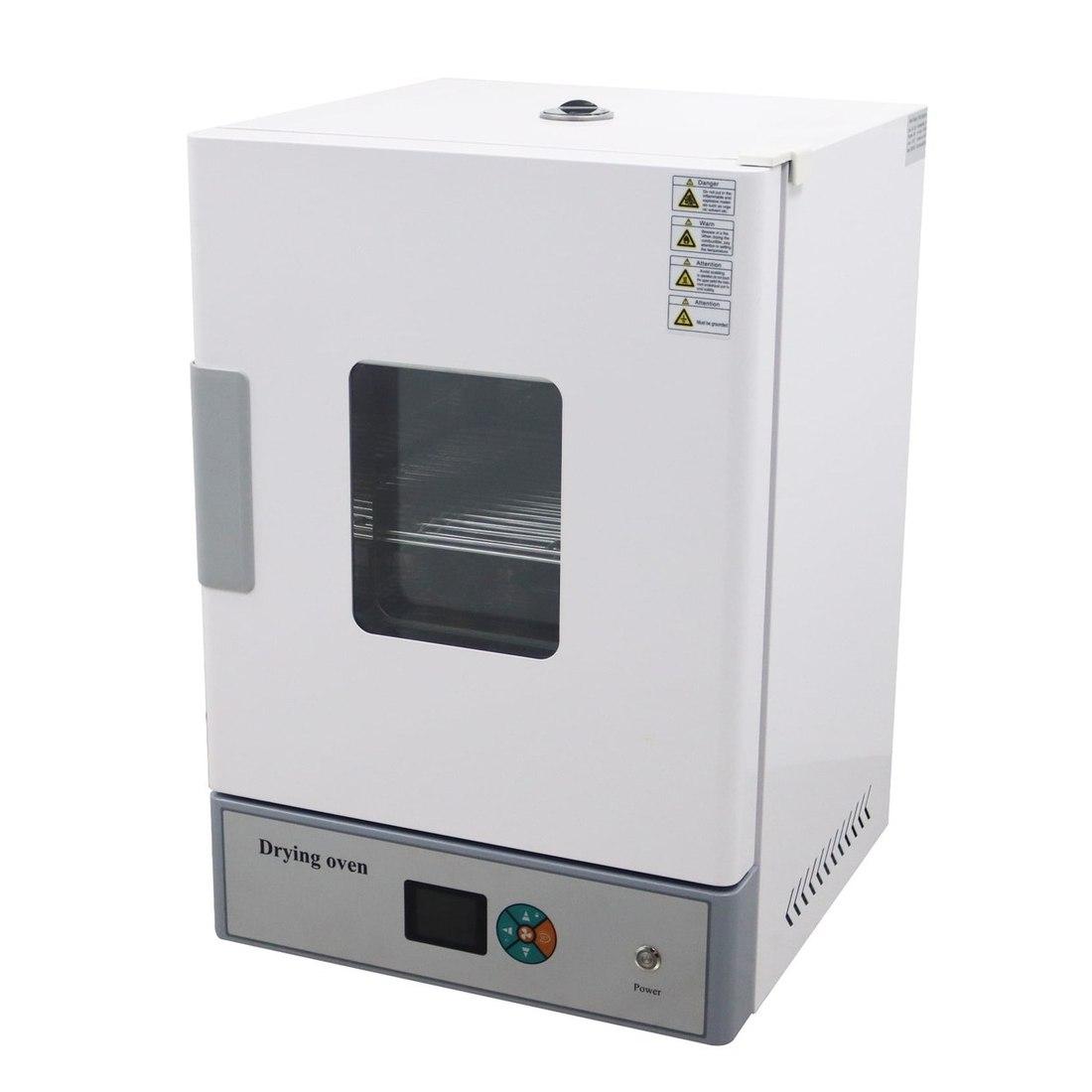
- Hot air drying oven and digital balance for aggregate and density work
- The full range under civil lab equipment, and our civil lab equipment list for setting up a new lab
If your project is on an American specification, read cube vs cylinder strength before you order moulds.
Ask for today's price
Tell us how many pours a week you cast and whether your consultant wants cubes or cylinders, and we will tell you how many moulds you need. Mould and machine prices are 2026 market ranges. Confirm today's price on WhatsApp, rates move with the exchange rate. Contact us here.
What we supply
Equipment covered in this guide
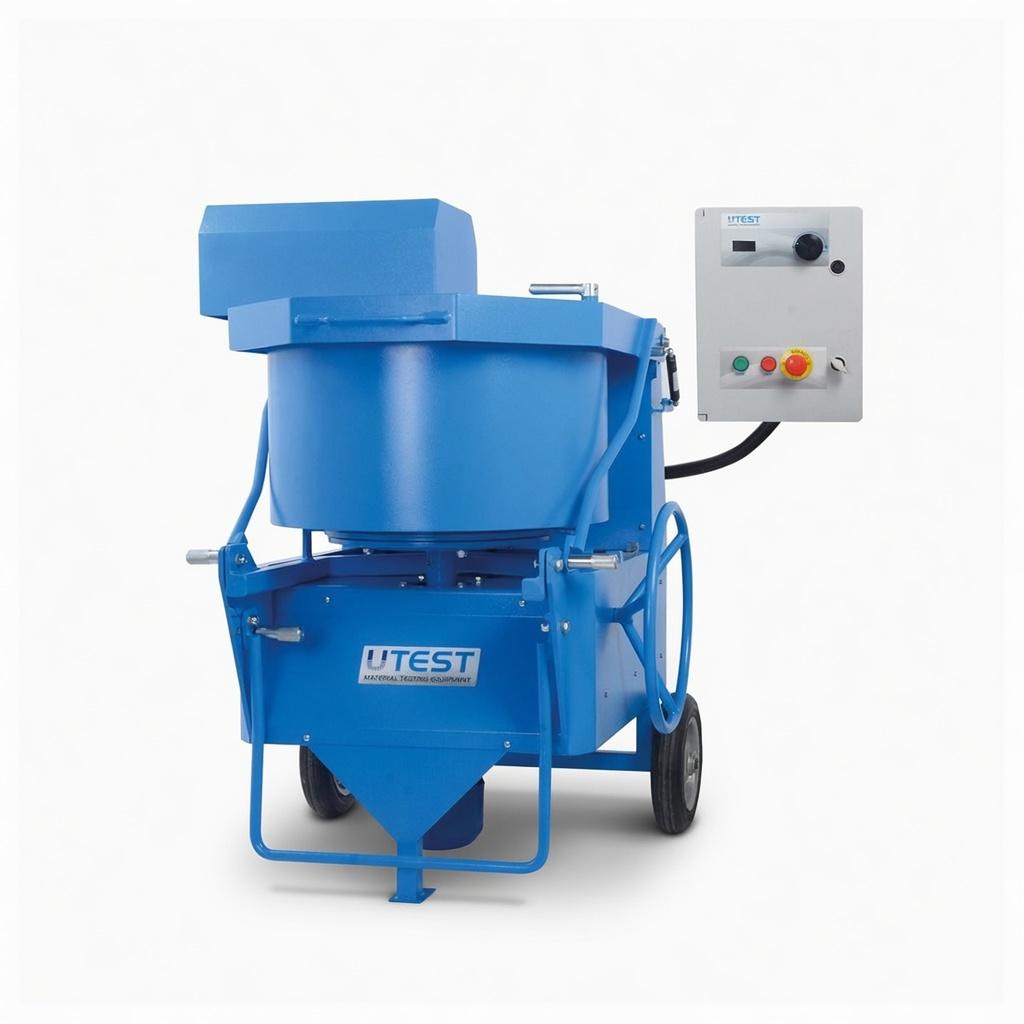
Laboratory Concrete Mixer
Small drum mixer for trial mixes and cube casting in a site or materials laboratory.
Concrete Compression Testing Machine
The machine every cube result on a project comes off. Supplied with the platens, the cage and a calibration certificate.
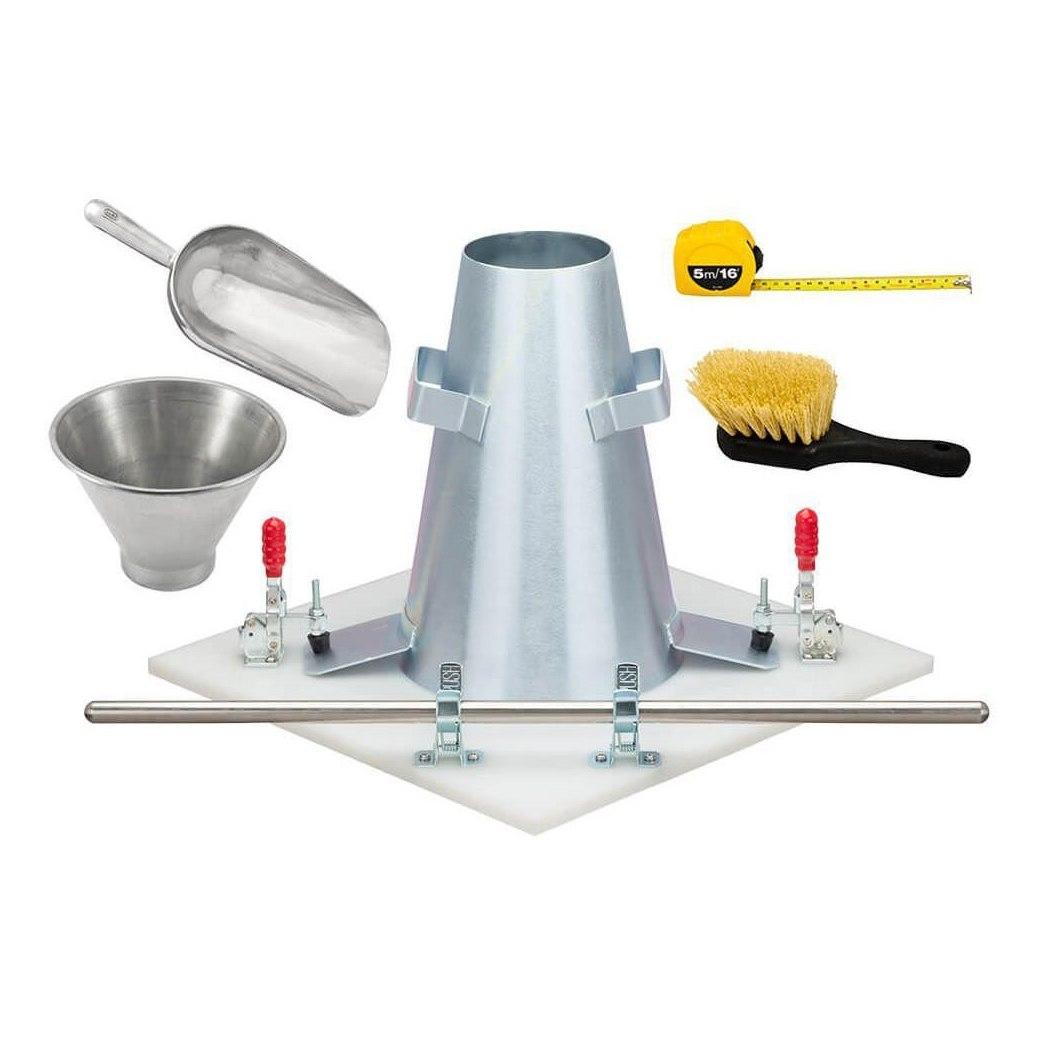
Slump Test Cone Apparatus
Cone, base plate, tamping rod and rule. The first thing a site engineer asks for and the first thing to go missing.
FAQ
Questions buyers ask us
What is the concrete cube test method?
Fresh concrete is sampled at the pour, filled into oiled 150 mm cube moulds in layers, compacted by rod or vibration, covered, demoulded after about 24 hours, cured in water at about 20 degrees Celsius, and crushed in a compression testing machine at 7 and 28 days. Strength is the failure load divided by 22,500 mm2.
What is the cube test at 7 days and 28 days?
The 7 day cube gives an early warning and usually reaches about 65 to 70 percent of the 28 day strength with ordinary Portland cement. The 28 day result is the one the specification is judged against. For a C25/30 mix you expect roughly 20 MPa at 7 days and above 30 MPa at 28 days.
How many concrete test cubes should I take?
Most Pakistani specifications ask for one sample per pour or per 50 to 100 cubic metres, whichever is more frequent, and six cubes per sample: three crushed at 7 days and three at 28 days. Many consultants add a spare pair for 56 days in case the 28 day result is disputed.
What is the standard size of a concrete test cube?
The standard cube is 150 x 150 x 150 mm, used for aggregate up to about 40 mm. A 100 mm cube is used for finer mixes and grouts, and gives slightly higher results. A 150 mm cube of normal concrete weighs about 8 kg, which is a useful density check.
How do you calculate cube compressive strength?
Divide the maximum load by the loaded area. For a 150 mm cube the area is 22,500 mm2, so a failure load of 675 kN gives 675,000 N divided by 22,500 mm2, which is 30 N/mm2 or 30 MPa. Report to the nearest 0.5 MPa and average the three cubes of each set.
Why do concrete cubes fail?
Most low cubes are made low on site, not mixed low at the plant. Poor compaction, cubes left in the sun for two days, worn or out of square moulds and late curing can each cut 10 to 20 percent off the result. Check the mould and the curing record before blaming the concrete.