The concrete cylinder test measures compressive strength by crushing a 150 x 300 mm (6 x 12 inch) or 100 x 200 mm (4 x 8 inch) cylinder from the pour at 7 and 28 days. A 150 mm cylinder failing at 442 kN has a strength of 25 MPa. In Pakistan, NHA, motorway and many WAPDA jobs use it.
Most building work in Pakistan is still tested with cubes, as are many CDA and housing society projects and any NESPAK or consultant specification that follows British practice. Highway and bridge work under the NHA General Specifications, which are AASHTO based, specifies concrete classes by 28 day cylinder strength in psi, typically 3,000 to 5,000 psi, and so do many WAPDA, motorway, power and foreign funded projects. Check your specification. If your contract cites ASTM C31, C39 or ACI 318, this is the test you will be doing. For the cube method, see our concrete cube test guide.
What is the standard concrete cylinder size?
| Size | Imperial name | Area of one end | Typical use | Cylinders per strength test |
|---|---|---|---|---|
| 150 x 300 mm | 6 x 12 inch | 17,671 mm2 | Default for structural concrete, aggregate to about 50 mm | 2 |
| 100 x 200 mm | 4 x 8 inch | 7,854 mm2 | Aggregate to about 25 mm, high strength mixes | 3 |
| 75 x 150 mm | 3 x 6 inch | 4,418 mm2 | Mortar, grout, small aggregate research mixes | By specification |
The rule under ASTM C31 is that the cylinder diameter should be at least three times the nominal maximum aggregate size, and the length twice the diameter. The 2 to 1 ratio matters: shorter specimens read higher, which is why cores of other proportions get a correction factor.
The 100 x 200 mm cylinder has become popular because it uses less than a third of the concrete, weighs about 3.7 kg instead of about 12.5 kg, and fits a smaller machine. A 150 mm cylinder of 40 MPa concrete needs about 700 kN to break; a 100 mm cylinder of the same concrete needs about 315 kN. Check which size your specification names before buying moulds.
How is the concrete cylinder test done?
The making and curing of cylinders on site is covered by ASTM C31, the moulds by ASTM C470, and the compression test itself by ASTM C39.
Making the cylinders (ASTM C31)
- Moulds ready. Clean, oiled, bolted tight on a level base. Steel split moulds or single use plastic moulds; see concrete cylinder mould.
- Sample. From the middle of the discharge, remixed. Take a slump test from the same sample.
- Fill in layers. For rodding, a 150 x 300 mm cylinder is filled in three equal layers and a 100 x 200 mm cylinder in two.
- Rod each layer. 25 strokes per layer, with a 16 mm rod for 150 mm cylinders and a 10 mm rod for 100 mm cylinders, rounded at the tip. Tap the outside of the mould 10 to 15 times with a mallet after each layer to close the rod holes.
- Strike off level, cap with a plastic lid or bag, label.
- Initial curing. Keep the cylinders still, in shade, between 16 and 27 degrees Celsius for up to 48 hours. In a Pakistani summer that means a shaded, damp curing box, not the slab.
- Demould and cure. Strip at about 24 hours and cure in water saturated with lime, or in a moist room, at about 23 degrees Celsius until testing.
Testing (ASTM C39)
- Measure the diameter twice at right angles near mid height, and the length.
- Check the ends. ASTM C39 wants the ends plane to about 0.05 mm and very close to square. If they are not, they are ground or capped.
- Centre the cylinder on the lower platen of the compression testing machine.
- Load at about 0.25 MPa per second (ASTM C39 gives a band around this) until it fails.
- Record the load, the fracture type and any defects.
Capping: sulphur or neoprene pads?
The trowelled top of a cylinder is never flat enough to test directly. There are two common answers.
- Sulphur mortar capping (ASTM C617). Molten sulphur compound is poured into a capping plate and the cylinder is pressed into it vertically. It gives a hard, flat end. It needs a melting pot, ventilation and care: molten sulphur burns and its fumes are unpleasant. Caps must harden for a few hours before testing.
- Unbonded neoprene pads (ASTM C1231). A rubber pad sits in a steel retaining ring on each end. No fumes, no waiting, and much quicker for a site lab testing dozens of cylinders a day. Pads wear out and must be replaced after a set number of uses, and they have limits on the strength range they cover.
Most site labs in Pakistan on motorway and power projects now use neoprene pads for routine work. The field check we suggest: look at the broken cylinder. If cracks run down from one side of the top end only, or a cone forms on one end and the other end is untouched, the end was not bearing evenly. Reface or recap before you blame the concrete.
How do you calculate cylinder compressive strength?
Strength = maximum load / area of the end.
- Measured diameter: 150.4 mm, area = 3.1416 x 75.2 x 75.2 = 17,766 mm2
- Failure load: 480 kN = 480,000 N
- Strength: 480,000 / 17,766 = 27.0 MPa
Report to the nearest 0.1 MPa. Many Pakistani drawings for American specification projects still state strength in psi. 3,000 psi is 20.7 MPa, 4,000 psi is 27.6 MPa and 5,000 psi is 34.5 MPa. Do the conversion once, write it on the cube register, and stop arguing about it on site.
What is an acceptable cylinder test result?
On ACI 318 projects, a strength test is the average of two 150 x 300 mm or three 100 x 200 mm cylinders at 28 days. The concrete is accepted if:
- the average of any three consecutive tests reaches the specified strength, and
- no single test falls more than 3.5 MPa (500 psi) below the specified strength, for specified strengths of 35 MPa or less.
If a test fails, the usual next steps are to check sampling and curing records, then cut cores with a core drill machine. Cores under ACI 318 are judged on their own criteria, which are more lenient than for cylinders.
Expect a 7 day cylinder to reach about 65 to 70 percent of its 28 day value with ordinary Portland cement, the same proportion as cubes.
Why are my cylinder results low?
The same things that spoil cubes spoil cylinders, and a few extra:
- Curing in the heat. The first 24 hours above 27 degrees Celsius cost real strength. On summer pours in Punjab and Sindh, a curing box with wet sand and a thermometer is the cheapest fix there is.
- Damaged ends. Cylinders knocked during transport chip at the edge.
- Poor capping. Thick or uneven sulphur caps, or worn neoprene pads.
- Out of round moulds. Steel moulds that have been dropped go oval; single use plastic moulds bulge if overfilled.
- Testing the wrong size as if it were the other. A 4 x 8 inch result calculated with a 150 mm area reads less than half its true value. It happens.
For how cylinders compare to cubes, read cube vs cylinder strength.
What we supply
- Cube and cylinder moulds: steel split cylinder moulds in 150 x 300 mm, held in stock, plus cube moulds
- Concrete compression testing machine of 2,000 kN capacity for cylinders and cubes, and the universal testing machine for steel and more
- Slump test cone apparatus, digital balance and core drill machine
- The full range under civil lab equipment; our compression testing machine price guide covers machine sizes
Ask for today's price
Tell us your specification, the cylinder size and how many you cast per week. Equipment prices are 2026 market ranges. Confirm today's price on WhatsApp, rates move with the exchange rate. Send us a message.
What we supply
Equipment covered in this guide
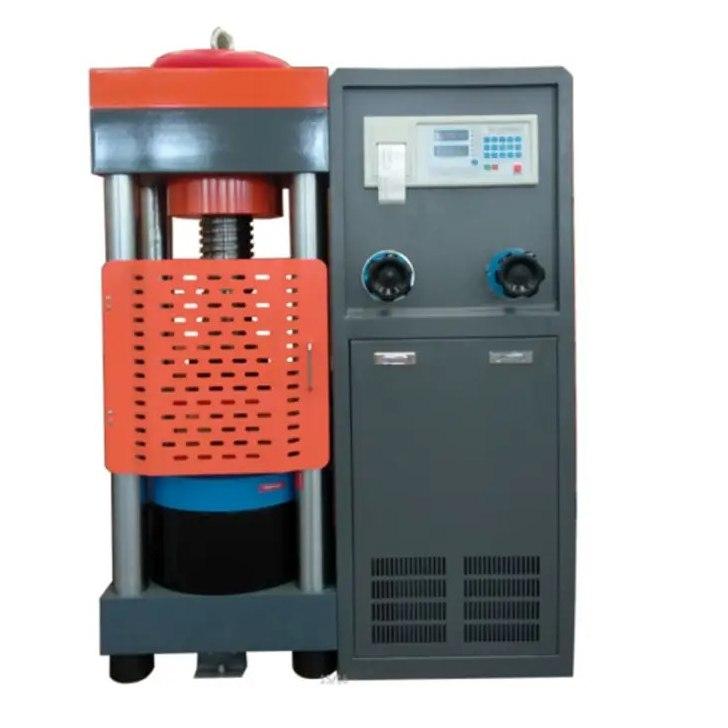
Concrete Compression Testing Machine
The machine every cube result on a project comes off. Supplied with the platens, the cage and a calibration certificate.
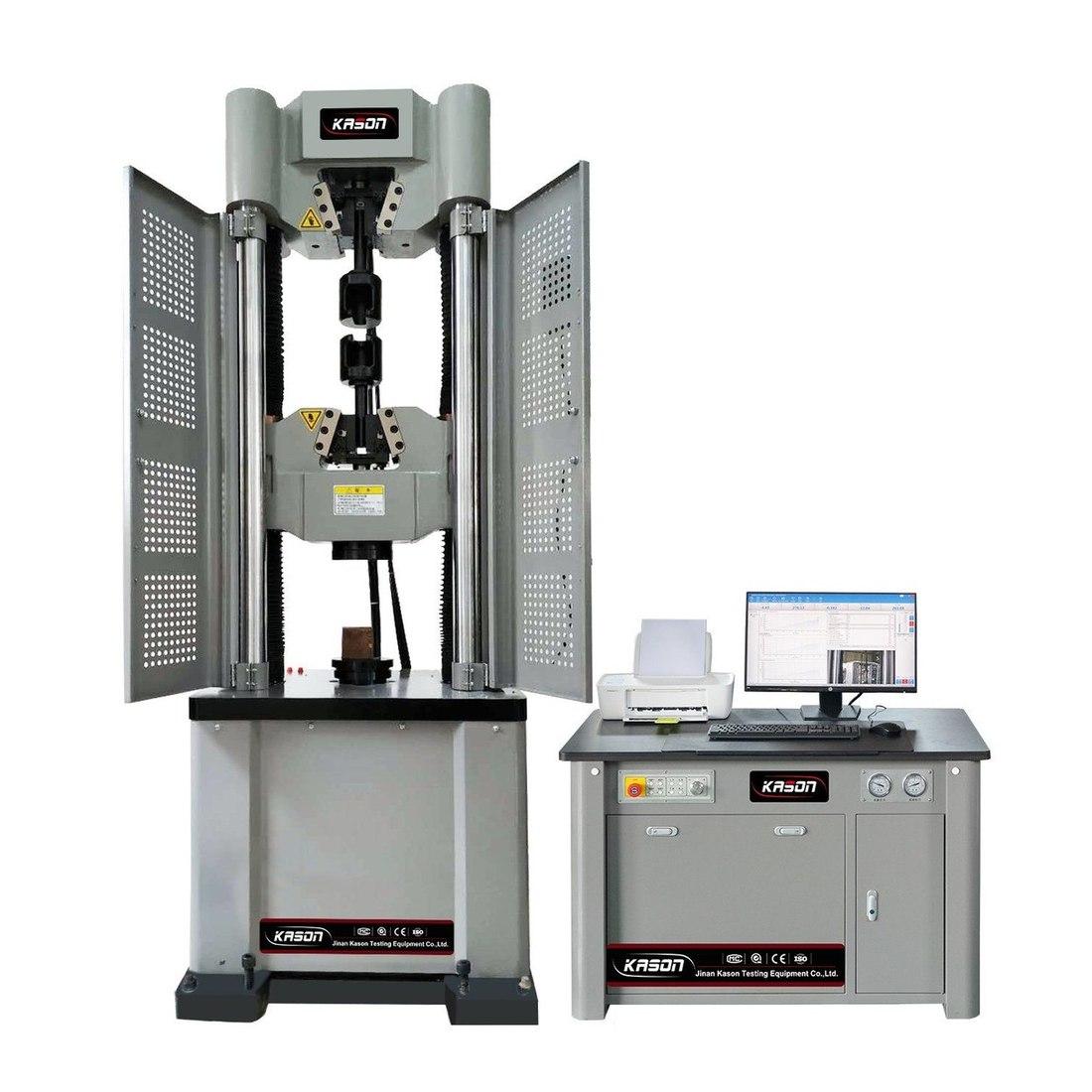
Universal Testing Machine
Tension, compression and bend testing for rebar, strand and structural sections, with the grips to match.
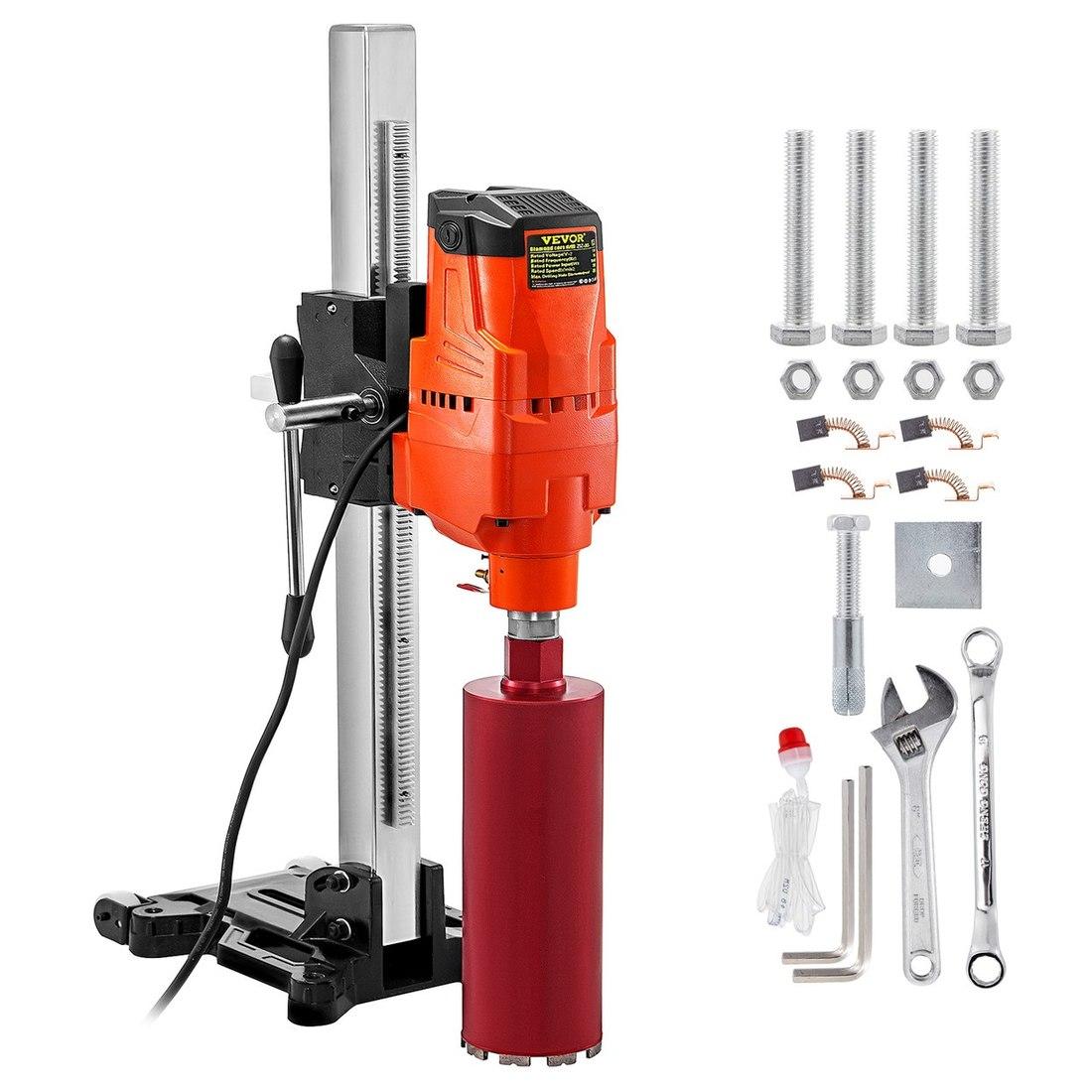
Core Drill Machine
Rig mounted diamond coring for concrete and asphalt cores, with barrels in the usual diameters.
FAQ
Questions buyers ask us
What is the standard concrete cylinder size?
The standard cylinder is 150 mm diameter by 300 mm high, the 6 x 12 inch cylinder. ASTM C31 also allows 100 x 200 mm (4 x 8 inch) cylinders when the largest aggregate is small enough. The height is always twice the diameter, and the diameter should be at least three times the largest aggregate size.
How do you calculate cylinder compressive strength?
Divide the maximum load by the cross sectional area. A 150 mm cylinder has an area of about 17,671 mm2, so a failure load of 442 kN gives 25 MPa. A 100 mm cylinder has an area of about 7,854 mm2. Measure the actual diameter twice at mid height and use the average.
What is an acceptable cylinder test result?
Under ACI 318 practice, used on most American specification projects in Pakistan, the average of any three consecutive tests must reach the specified strength, and no single test may fall more than 3.5 MPa (500 psi) below it when the specified strength is 35 MPa or less. Each test is two 6 x 12 or three 4 x 8 cylinders.
How many cylinders are needed per test?
ASTM C31 and ACI 318 define a strength test as the average of at least two 150 x 300 mm cylinders or three 100 x 200 mm cylinders tested at the same age, usually 28 days. Most sites also cast cylinders for 7 days and one or two spares, so 6 to 8 per sample is normal.
Why are cylinders capped before testing?
The trowelled top of a cylinder is never perfectly flat. ASTM C39 requires the ends to be plane within about 0.05 mm and close to square to the axis. Sulphur mortar capping or unbonded neoprene pads in steel retainers make the ends bear evenly. Without capping, results can read 10 percent or more low.