Compression testing machine prices in Pakistan in 2026 run from about PKR 280,000 for a hand operated 1500 to 2000 kN cube press to PKR 600,000 to 1,200,000 for a digital 2000 kN machine and PKR 2 to 4.5 million for an automatic one. Capacity and calibration matter more than the display.
A materials lab is audited on two things first: the balances and the compression machine. If the consultant does not trust the machine, every cube crushed in the last six months is in question. Below: price bands, sizing, and the checks that keep a machine accepted on NHA, NESPAK and private consultant jobs.
What is the price of a compression testing machine?
The price depends on three things: capacity in kN, how load is applied (hand pump, motorised pump, or servo controlled), and where it was made. Indicative market ranges for new machines in October 2026 are below. Confirm today's price on WhatsApp, rates move with the exchange rate.
| Class | Capacity | Load control | Typical make | Indicative market price (PKR) |
|---|---|---|---|---|
| Hand operated, dial gauge | 1000 to 2000 kN | Manual hand pump | Locally made, Chinese | 280,000 to 550,000 |
| Digital, motorised pump | 1000 kN | Electric pump, operator sets rate | Chinese, Indian | 450,000 to 850,000 |
| Digital, motorised pump | 2000 kN | Electric pump, rate shown on display | Chinese, Indian | 600,000 to 1,200,000 |
| Digital, motorised pump | 3000 kN | Electric pump, rate shown on display | Chinese, Indian | 900,000 to 1,700,000 |
| Automatic, servo controlled | 2000 to 3000 kN | Pace held by the controller, printout | Chinese, Indian, Turkish | 2,000,000 to 4,500,000 |
| European branded automatic | 2000 to 3000 kN | Servo, software, data export | Italian, British | 5,000,000 to 12,000,000 |
| Universal testing machine | 600 to 1000 kN | Hydraulic, digital or computer controlled | Chinese | 2,500,000 to 9,000,000 |
Listings under PKR 20,000 online are parts, errors or mislabelled rebound hammers. No working, calibrated machine exists at that price.
What is a 2000 kN compression testing machine?
A 2000 kN machine, the CTM 2000 kN you see on tender lists, applies up to about 200 tonnes of force, which breaks a 150 mm cube of up to about 88 MPa. It is the default machine for a building or road project in Pakistan because it covers every grade a structural engineer will specify, with headroom.
Do the arithmetic before you buy:
- 150 mm cube: loaded area 22,500 mm². A 30 MPa cube fails at about 675 kN. A 50 MPa cube at 1,125 kN.
- 150 by 300 mm cylinder: loaded area about 17,670 mm². A 30 MPa cylinder fails at about 530 kN. A 60 MPa cylinder at about 1,060 kN.
- 100 mm cube: loaded area 10,000 mm². Even a 60 MPa cube fails at only 600 kN.
So a 1000 kN machine handles cylinders and normal-strength cubes, but a 150 mm cube of C40 and above takes it past 90 percent of its range, where accuracy and seal life both suffer. A 2000 kN machine is comfortable for everything up to high-strength concrete. A 3000 kN machine is for precast and prestressed plants, bridge decks above 60 MPa, and labs that also test 200 mm cubes, blocks and kerbstones.
The sizing rule we give buyers in Rawalpindi: your strongest expected specimen should fail between 20 and 80 percent of the machine's capacity. Below 20 percent the reading sits in the least accurate part of the range. Above 80 percent you are wearing the ram seals on every test.
Cube or cylinder: which strength are you testing?
Pakistani specifications are split. Buildings designed to British practice, and most housing schemes, call for 150 mm cubes. Roads and bridges under NHA, and projects written to ACI and ASTM, usually call for 150 by 300 mm cylinders. Cylinder strength is roughly 80 percent of cube strength for the same concrete, which is why C30/37 means a 30 MPa cylinder or a 37 MPa cube.
This matters for the machine in two ways. Cylinders need capping or neoprene pad caps and a retainer so the ends bear evenly; cubes are tested on their cast sides and need nothing. And the frame must have enough daylight, the clear height between platens, for a 300 mm cylinder plus spacer. Many cheap cube presses do not. If you will ever test cylinders, ask for the daylight figure in writing.
Which machine is used for compression tests?
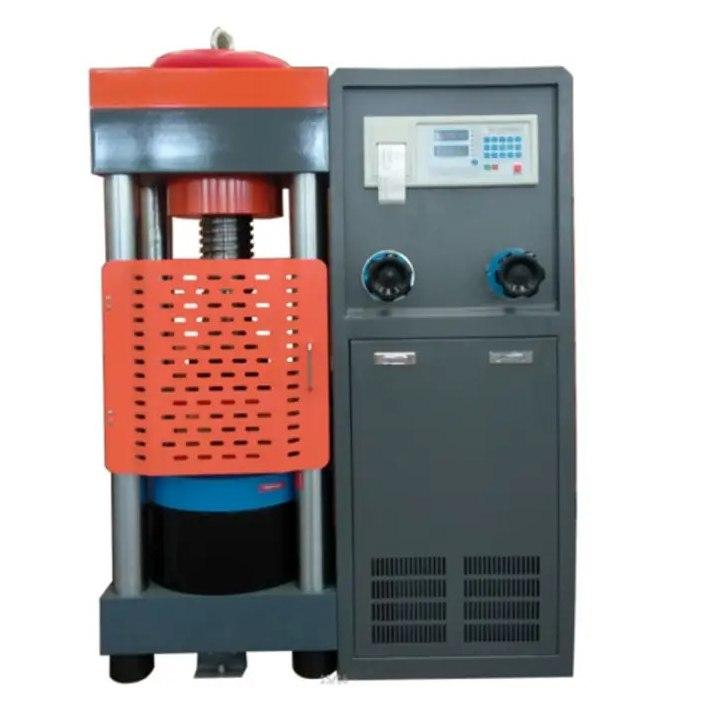
Concrete is tested on a compression testing machine, a stiff four-column or closed frame press with hardened platens and a spherical seat. It comes in three control types.
Hand operated. A hand pump and a dial gauge, or a basic digital readout. No electricity needed, which is why site labs in remote areas still keep one. The weakness is loading rate: the operator has to pump steadily for a minute or more, and most do not. Results scatter by several MPa between operators.
Digital with a motorised pump. The pump does the work and the display shows load and, on better units, rate in kN per second. The operator adjusts a valve to hold the pace. This is the right machine for most contractor and consultant site labs.
Automatic. A servo controller holds the rate itself, detects failure, and prints or stores the result with specimen details. Worth the money where a lab breaks more than 40 or 50 specimens a day, or where results go into a client database and must be auditable.
A universal testing machine also tests in compression, but it is bought for tension and bend tests on rebar and strand. A 20 ton, roughly 200 kN, UTM is a teaching or light-materials machine; a 600 to 1000 kN hydraulic UTM for 32 mm rebar costs PKR 2.5 to 9 million. Do not buy a UTM to crush cubes; buy one when a consultant wants rebar tested on site.
How much does a compression test cost?
A commercial lab in Rawalpindi, Islamabad or Lahore charges about PKR 300 to 1,000 per cube or cylinder, more for cores and a report on letterhead. A site casting 18 cubes a week, at 7 and 28 days, spends PKR 25,000 to 70,000 a month, before the driver's time and the results arriving after the next pour. A digital 2000 kN machine pays for itself in one to two years on a medium project, and the cubes are crushed the day they are due.
Which compression tester is the most accurate?
The most accurate machine is the one with a current Class 1 calibration and a controlled loading rate. The display type matters much less than either.
Loading rate: the number most site labs get wrong
The standards specify the rate, and an operator who pumps too fast reads high. The figures to put on the wall next to the machine:
- BS EN 12390-3 (cubes): 0.6 plus or minus 0.2 MPa per second. On a 150 mm cube that is about 13.5 kN per second, with a band of 9 to 18 kN per second. A 40 MPa cube should take a little over a minute to fail.
- ASTM C39 (cylinders): about 0.25 MPa per second, within a range of 0.15 to 0.35 MPa per second. On a 150 by 300 mm cylinder that is about 4.4 kN per second. A 30 MPa cylinder should take about two minutes.
If the cubes on your site are failing in 20 seconds, the results are inflated and a consultant's check test on cores will expose it.
Calibration and consultant approvals
A compression machine is verified against a reference load cell or proving ring, usually to BS EN ISO 7500-1 or ASTM E4. The certificate should list readings at several points across the range, typically 10 to 100 percent, and show errors within 1 percent for Class 1.
In practice, consultants on NHA, provincial highway and large private projects ask for a certificate not older than 12 months, traceable to a recognised reference, before they sign off cube registers. Recalibrate after any repair to the pump, ram or load cell, and after moving the machine between sites. A machine that has been trucked from Rawalpindi to a site in Gilgit-Baltistan is not the same machine until it has been checked.
Platens, voltage and what breaks
The faults that come across our bench in Rawalpindi, roughly in order:
- Seized spherical seat. The upper platen must tilt freely to meet the specimen, then lock under load. Dust and dried grease freeze it, and cubes start failing on one side only. If your failure patterns are not the even double pyramid shape the standards show, look here first. Clean and lightly oil it weekly.
- Worn or dished platens. Platens must be hard and flat to a few hundredths of a millimetre. Testing uncapped cylinders or cubes with fins of mortar on them dents the surface. Check with a straightedge and feeler gauge monthly.
- Ram seal leaks. Summer heat thins the oil and old seals weep. A machine that will not hold load for two minutes at 50 percent of range needs seals before its next calibration.
- Dirty hydraulic oil. Site dust gets in through the breather. Change it yearly, more often on a dusty site.
- Voltage. A 220 V motorised pump on a 170 V site supply runs slowly and the rate drops mid-test. A load-shedding cut halfway through ruins the specimen. Run the machine from a stabiliser, keep the display on a small UPS, and test cubes when the generator is already running.
The one field check we recommend before accepting any compression machine, new or used: pump to half capacity, close the valve and watch the reading for two minutes. If it falls by more than about 1 percent, there is a leak, and no certificate will fix it.
What we supply
Our concrete compression testing machine is supplied with the platens, the safety cage and a calibration certificate. For rebar tension and bend tests, the universal testing machine comes with grips to match. Around the machine you will need cube and cylinder moulds by the set, a laboratory vibrator to compact specimens consistently, a slump test cone apparatus, a laboratory concrete mixer for trial mixes, and a core drill machine for when a cube result is disputed. The full range is under civil engineering lab equipment.
If you are setting up a whole site lab, read our civil engineering lab equipment list for the starter kit and budget. For a quick non-destructive check on hardened concrete before coring, see the rebound hammer test guide.
Ask for today's price
Tell us the specimen type, cube or cylinder, the highest grade you will test, how many specimens a day, and whether the site has reliable power. That is enough to recommend the right capacity and control type. Send us a WhatsApp for today's price, with delivery across Pakistan.
What we supply
Equipment covered in this guide
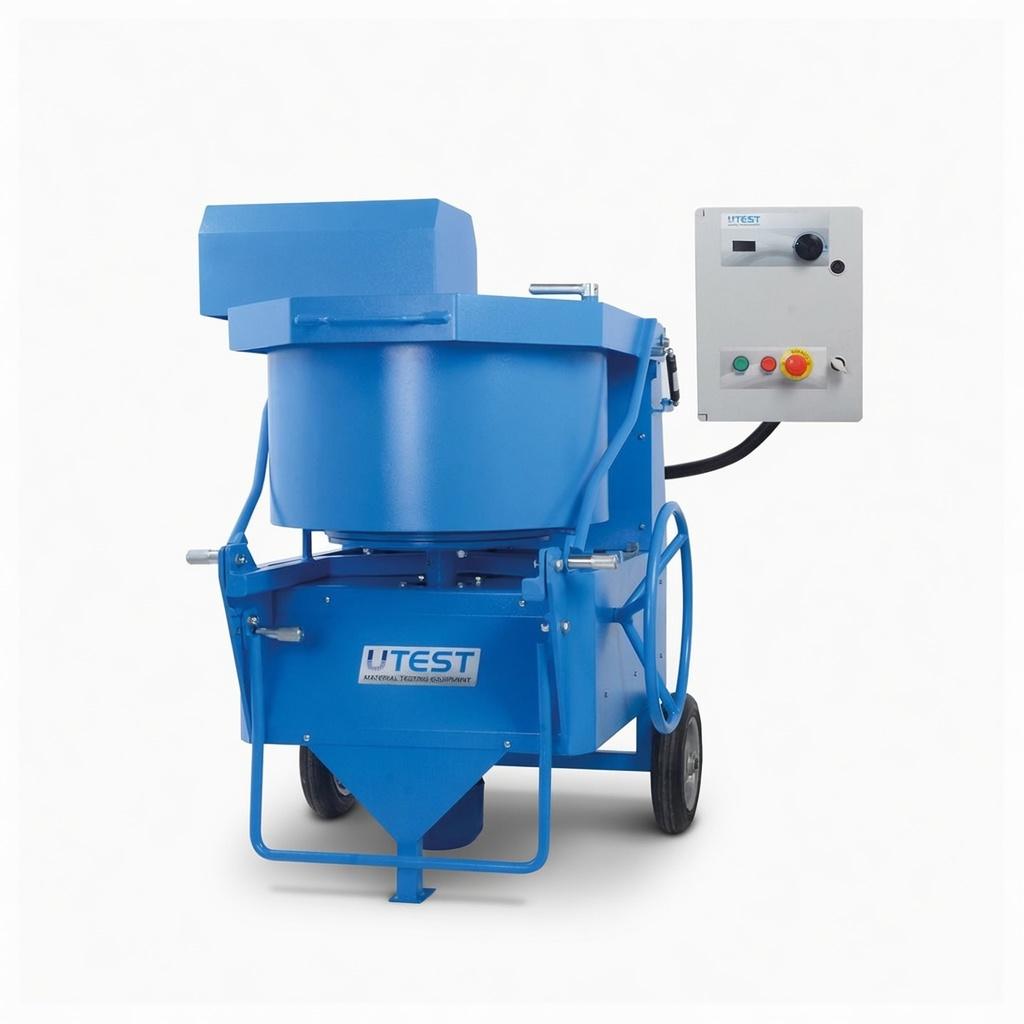
Laboratory Concrete Mixer
Small drum mixer for trial mixes and cube casting in a site or materials laboratory.
Concrete Compression Testing Machine
The machine every cube result on a project comes off. Supplied with the platens, the cage and a calibration certificate.
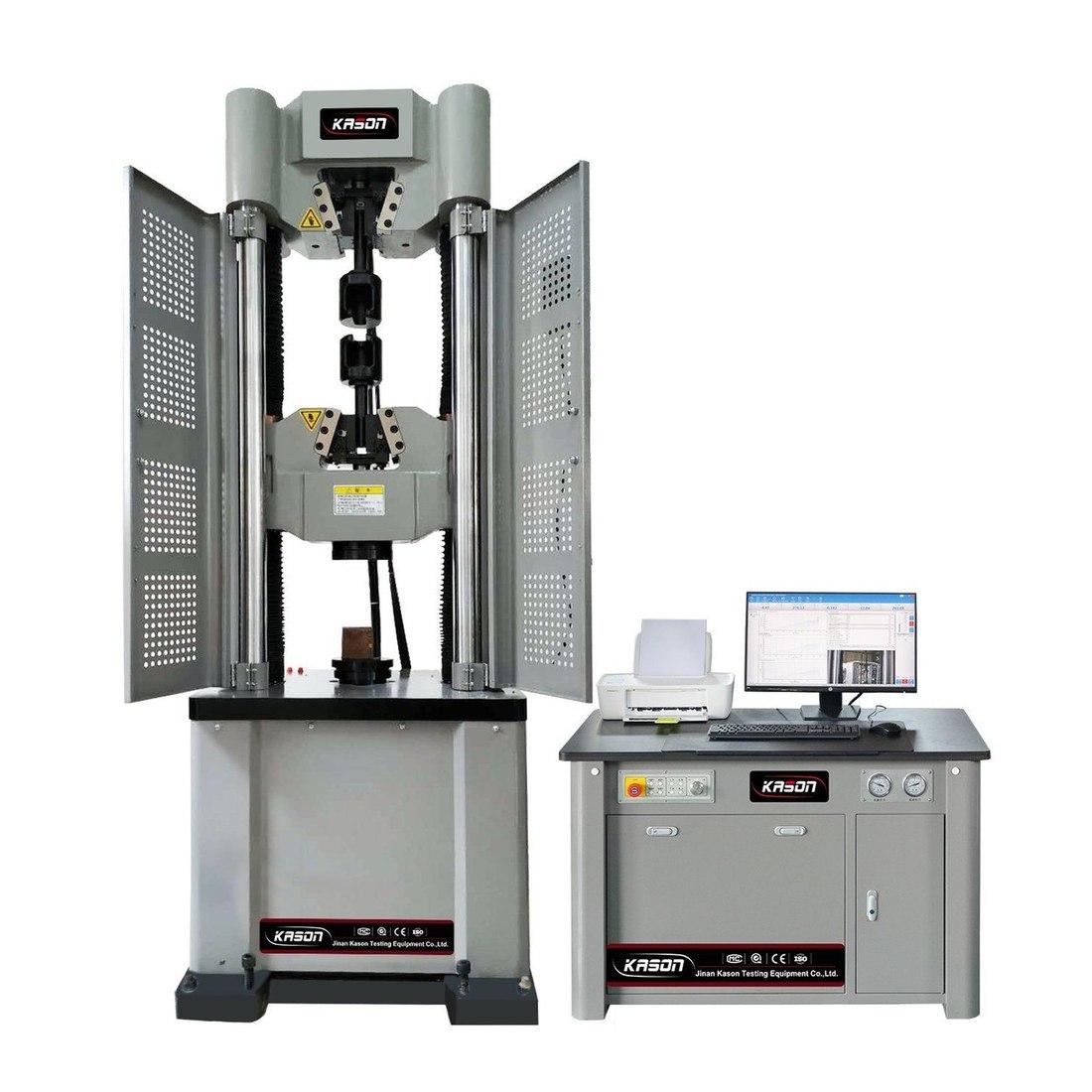
Universal Testing Machine
Tension, compression and bend testing for rebar, strand and structural sections, with the grips to match.
FAQ
Questions buyers ask us
What is the price of a compression testing machine in Pakistan?
In 2026 a hand operated 1500 to 2000 kN machine sells for about PKR 280,000 to 550,000, a digital 2000 kN machine with a motorised pump for PKR 600,000 to 1,200,000, and an automatic 2000 or 3000 kN machine for PKR 2,000,000 to 4,500,000. These are indicative market ranges that move with the exchange rate.
What is a 2000 kN compression testing machine?
It is a hydraulic press that can apply up to 2000 kN, roughly 200 tonnes, to a concrete specimen. That is enough to break a 150 mm cube of about 88 MPa or a 150 by 300 mm cylinder of about 113 MPa, which covers almost every structural concrete grade used in Pakistan.
Which machine is used for compression tests on concrete?
A concrete compression testing machine, often called a CTM or cube testing machine, with hardened platens and a spherical seat on the upper platen. A universal testing machine can also test in compression, but it is bought for tension tests on rebar and costs 3 to 5 times as much.
How much does a compression test cost?
A commercial lab in Rawalpindi, Islamabad or Lahore typically charges about PKR 300 to 1,000 per cube or cylinder, more for cores and for a report on letterhead. A site casting 18 cubes a week spends PKR 25,000 to 70,000 a month, which is why larger contractors buy their own machine.
What loading rate should a compression testing machine apply?
BS EN 12390-3 requires 0.6 plus or minus 0.2 MPa per second, about 13.5 kN per second on a 150 mm cube. ASTM C39 calls for about 0.25 MPa per second, within a 0.15 to 0.35 range, which is about 4.4 kN per second on a 150 by 300 mm cylinder.
How often must a compression testing machine be calibrated?
At least once every 12 months, and after any repair to the pump, ram or load cell or after the machine is moved. Consultants and NHA project labs normally ask to see a current certificate showing errors within 1 percent across the working range before they accept cube results.
Which compression tester is the most accurate?
Accuracy comes from calibration, not the display. A machine verified to Class 1, meaning errors within 1 percent from about 10 to 100 percent of its range, is accurate enough for any consultant. A digital or automatic machine is more repeatable because it controls the loading rate, which a hand pump cannot.