Proctor test is the laboratory compaction test that finds a soil's maximum dry density (MDD) and optimum moisture content (OMC). Standard Proctor uses a 2.5 kg rammer, modified Proctor a 4.5 kg rammer with about 4.5 times the energy. Every field density result in Pakistan is judged as a percentage of this MDD, usually 95 to 98 percent.
Ask a site engineer what controls compaction acceptance and they will say the FDT. Ask the lab engineer and they will say the Proctor, because a field density of 2.00 g/cm3 means nothing until it is divided by something. Get the Proctor wrong and every FDT on the job is wrong with it, in the same direction.
What is the Proctor test?
The Proctor test, named after the engineer R. R. Proctor who described it in the 1930s, compacts the same soil at several moisture contents with a fixed effort, and measures the dry density each time.
Dry soil compacts badly because the particles do not slide. As water is added, density rises. Past a certain point, water fills the voids and pushes particles apart, and density falls again. The peak of that curve is the maximum dry density, and the moisture content at the peak is the optimum moisture content.
On site that gives the contractor two numbers to work to:
- OMC tells the water bowser how wet to make the layer before rolling, usually within about 2 percent of optimum.
- MDD is the reference for every FDT test on that material.
When people say "test proctor" or "compaction test" on site, they mean this lab test, not a field check.
Standard vs modified Proctor: what is the difference?
The two tests use the same principle with different compaction energy. The modified test was introduced for airfields and heavy roads, where modern rollers compact far harder than the original standard effort.
| Parameter | Standard Proctor | Modified Proctor |
|---|---|---|
| Standards | ASTM D698, AASHTO T99 | ASTM D1557, AASHTO T180 |
| Rammer mass | 2.5 kg (5.5 lb) | 4.5 kg (10 lb) |
| Drop height | 305 mm (12 inch) | 457 mm (18 inch) |
| Layers | 3 | 5 |
| Blows per layer, 101.6 mm mould | 25 | 25 |
| Blows per layer, 152.4 mm mould | 56 | 56 |
| Mould volume | 944 cm3 or 2,124 cm3 | 944 cm3 or 2,124 cm3 |
| Compaction energy | about 600 kN.m/m3 | about 2,700 kN.m/m3 |
| Typical use in Pakistan | Building backfill, light platforms | NHA and provincial roads, airfields, base and subbase |
BS 1377-4 has equivalent light (2.5 kg) and heavy (4.5 kg) rammer tests, used where a specification is British based, for example on some older WAPDA and irrigation work.
For the same soil, modified MDD is typically 0.05 to 0.15 g/cm3 higher than standard, and modified OMC is 2 to 4 percent lower. That is why "95 percent compaction" means very different things depending on which Proctor sits underneath it.
How is a Proctor test done?
The procedure below follows the ASTM pattern; the BS version is close.
- Prepare the sample. Air dry or oven dry at a low temperature, break up lumps without crushing particles, and sieve. Material for the 101.6 mm mould passes 4.75 mm; for the 152.4 mm mould it passes 19 mm.
- Make up five or more portions at moisture contents about 2 percent apart, bracketing the expected optimum. For a sandy gravel that might be 4 to 12 percent; for a silty clay, 10 to 20 percent.
- Let clay portions stand in sealed bags, often overnight, so water spreads evenly.
- Compact each portion into the mould in 3 or 5 layers with the specified blows, distributing them evenly across the surface. The last layer should finish just above the collar joint.
- Remove the collar, trim flat and weigh the mould and soil. Wet density is the soil mass divided by mould volume.
- Take a moisture sample from the centre of the specimen, dry it at 110 degrees Celsius and calculate moisture content.
- Plot dry density against moisture. Draw the curve through the points and read MDD and OMC at the peak.
A worked example
A crushed subbase sample, modified Proctor in the 152.4 mm mould:
- 4.1 percent moisture, 2.08 g/cm3 dry density
- 6.0 percent, 2.15 g/cm3
- 7.9 percent, 2.19 g/cm3
- 9.8 percent, 2.16 g/cm3
- 11.7 percent, 2.09 g/cm3
The peak sits at about 2.19 g/cm3 and 7.8 percent moisture. Those become the MDD and OMC for that material, and a 98 percent requirement means the field must reach 2.146 g/cm3.
Typical ranges in Pakistan: well graded crushed stone base and subbase, MDD 2.15 to 2.35 g/cm3 at 5 to 8 percent OMC; silty sands, 1.85 to 2.05 g/cm3 at 8 to 12 percent; Potohar silty clays, 1.70 to 1.90 g/cm3 at 12 to 18 percent.
What is maximum dry density used for?
Maximum dry density is the yardstick for every compacted layer. Field dry density divided by MDD gives the degree of compaction, and that is what a consultant signs off.
Specifications on Pakistani roads commonly ask for 95 to 100 percent of modified MDD on subgrade and 98 to 100 percent on subbase and base, with lower targets on deep embankment fill. Building work often asks for 95 percent of standard or modified, depending on the structural engineer. The CBR test also relies on the Proctor: CBR specimens are compacted at OMC to a set percentage of MDD before soaking.
Lab mistakes that move the MDD
Never reuse soil that has already been compacted in the mould. It is tempting when material is short, and ASTM D698 and D1557 both say not to. Every pass of the rammer breaks down soft particles, and the crushed limestone, sandstone and shale used for subbase in the Potohar and Salt Range break down fast. A reused sample gives a higher MDD at every point, which then makes good field compaction look like a failure. We have seen 0.06 g/cm3 added this way, enough to turn a 98 percent layer into 95.
Other common faults:
- Oven too hot. Gypsum bearing soils, common in parts of Punjab and Balochistan, lose bound water above about 60 degrees and read drier than they are.
- Ignoring oversize. Base material with a lot of stone above 19 mm needs an oversize correction (ASTM D4718) before comparing with field results.
- Uneven blows. All blows in the centre leave the edges loose. Rotate around the mould.
- Soft floor. The mould must sit on a solid concrete block of at least 90 kg. A wooden bench absorbs energy and lowers MDD.
- Old Proctor, new borrow. If the crusher or borrow pit changes, run a new Proctor. The old MDD does not carry over.
What we supply
We supply the lab equipment around the Proctor test from our Rawalpindi store:
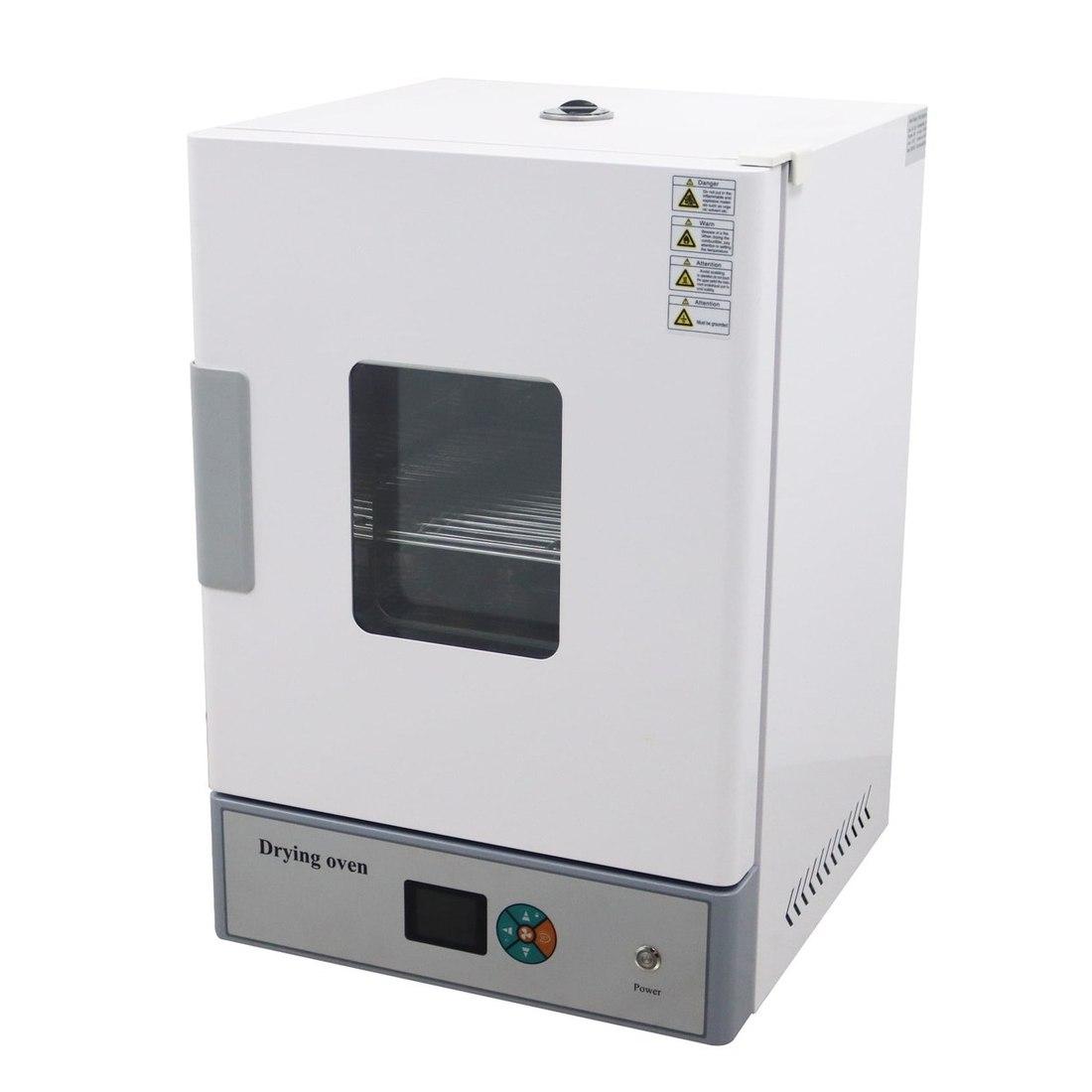
- Hot air drying oven held at 110 plus or minus 5 degrees Celsius
- Laboratory digital balance, 30 kg by 1 g for moulds and 600 g by 0.01 g for moisture tins
- Sieves and shaker for the 4.75 mm and 19 mm preparation sieves
- CBR testing machine, whose specimens are compacted at Proctor OMC
- FDT test set apparatus and speedy moisture tester for the field side
Proctor moulds and rammers can be quoted with a lab order. For the complete lab, see our civil lab equipment list, the civil engineering lab equipment category and our guide to field density test methods.
Ask for today's price
Tell us whether your specification calls for standard or modified Proctor, which mould size, and what else your lab already has. We will quote the missing pieces. Prices quoted in this guide are 2026 market ranges; confirm today's price on WhatsApp, rates move with the exchange rate. Send us a WhatsApp for today's price.
What we supply
Equipment covered in this guide
Hot Air Drying Oven
Forced convection ovens for moisture content and sample preparation, in the standard laboratory capacities.
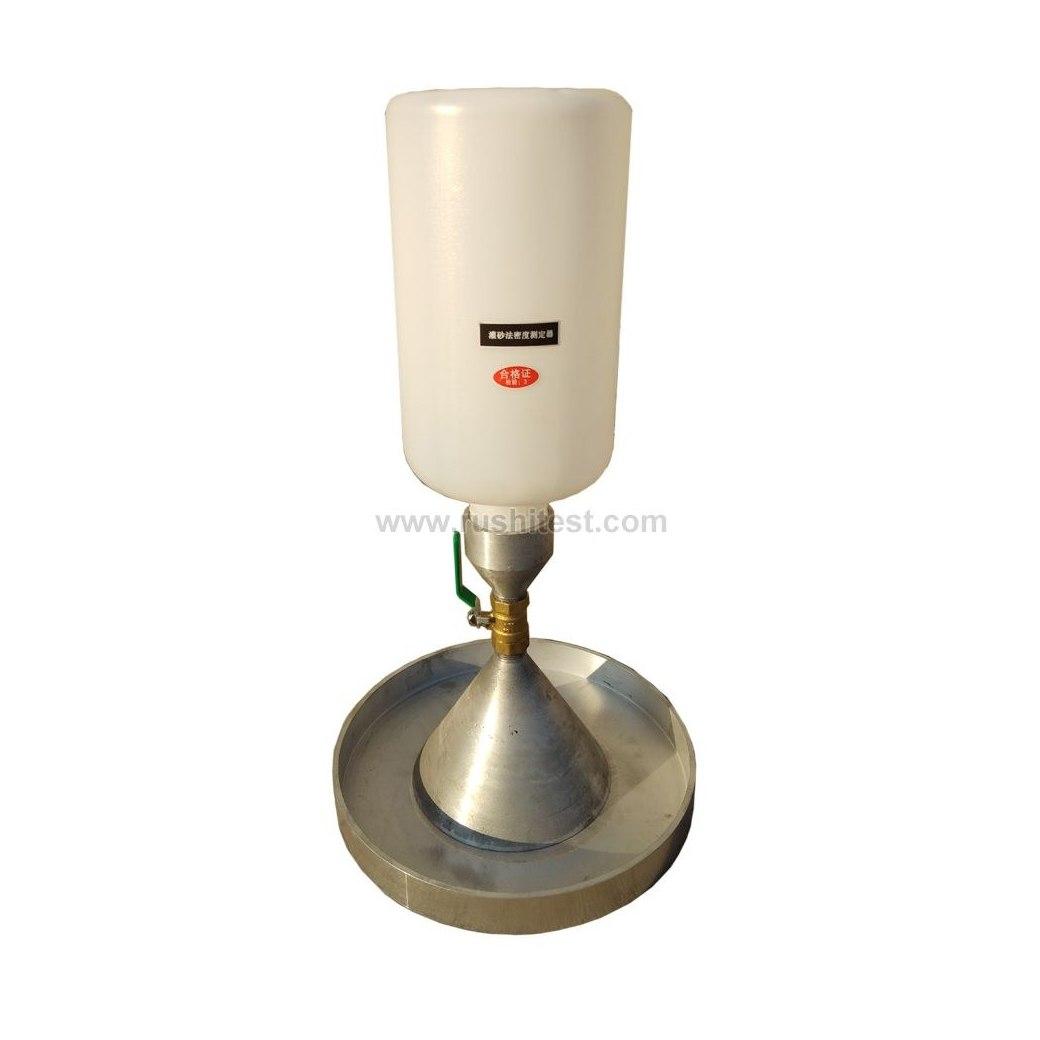
FDT Test Set Apparatus
Sand replacement field density kit: cylinder, cone, base plate and calibrated sand, for compaction acceptance.
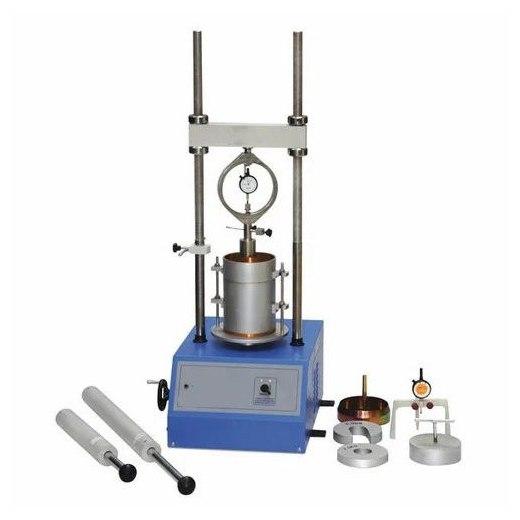
CBR Testing Machine
California Bearing Ratio rigs with moulds, surcharge weights and penetration piston, for subgrade and sub base design.
FAQ
Questions buyers ask us
What is the standard Proctor test?
The standard Proctor test (ASTM D698, AASHTO T99) compacts soil in 3 layers with a 2.5 kg rammer dropped 305 mm, at five or more moisture contents. The peak of the dry density curve gives the maximum dry density and optimum moisture content. It suits light compaction such as building backfill.
What is the difference between standard and modified Proctor?
Modified Proctor (ASTM D1557, AASHTO T180) uses a 4.5 kg rammer dropped 457 mm in 5 layers, about 4.5 times the energy of standard. It gives a higher MDD and a lower OMC for the same soil. Road works in Pakistan almost always specify modified.
What is the volume of a modified Proctor mould?
The 101.6 mm (4 inch) mould holds about 944 cm3 and takes 25 blows per layer. The 152.4 mm (6 inch) mould holds about 2,124 cm3 and takes 56 blows per layer. The larger mould is used when the soil has stone above 4.75 mm, which covers most subbase and base material.
What is 95 percent standard Proctor?
It means the field dry density must be at least 95 percent of the maximum dry density from the standard Proctor test. If standard MDD is 1.90 g/cm3, the layer must reach 1.805 g/cm3. It is a lighter requirement than 95 percent of modified, which is common for roads.
How long does a Proctor test take?
Compacting five points takes 2 to 3 hours for a practised technician, but moisture samples need 16 to 24 hours in an oven at 110 degrees Celsius. Plan on a result the next working day. Clay soils also need to soak at each moisture content, often overnight, before compaction.
What are the four main types of compaction?
Impact or tamping, as in the Proctor rammer and jumping jack; vibration, as in plate compactors and vibratory rollers; static pressure, as in smooth wheel rollers; and kneading, as in sheepsfoot and pneumatic tyre rollers. Granular soil responds best to vibration, clay to kneading and impact.