A water level gauge shows how full a tank, boiler or channel is, usually from a fixed position. A water level meter is a portable reel of graduated tape that you lower into a well or borehole to read the depth to water, typically to 50 or 100 m. Search results in Pakistan mix the two constantly.
If you landed here looking for something to tell you when the roof tank is full, you want a tank indicator, and this guide will tell you so in the next section. If you need to know how far down the water is in a tube well, a borehole or a piezometer, you want a water level meter, and the rest of the guide is for you.
What is used to measure water level?
Five instruments cover almost every job. Each is the right answer for one kind of water and the wrong answer for the others.
| Instrument | Where it works | What it tells you | Typical Pakistani price |
|---|---|---|---|
| Tank level indicator | Overhead and underground tanks | Full, half, low, empty | PKR 2,000 to 6,000 |
| Sight glass or tubular gauge | Boilers, process tanks | Level visible through glass | Varies by pressure rating |
| Float or electrode sensor | Tanks, sumps, pump control | Switches at set levels | PKR 500 to 5,000 |
| Submersible pressure sensor | Wells, tanks, channels | Continuous level to a controller | Several tens of thousands upward |
| Water level meter (dip meter) | Wells, boreholes, piezometers | Depth to water, to about 1 cm | PKR 30,000 to 75,000 for 50 to 100 m |
Prices are indicative October 2026 market ranges; confirm today's price on WhatsApp, rates move with the exchange rate.
Tank level indicators and gauges
These are the products that fill Daraz and most Facebook results for "water level meter". A set of electrodes or a float sits in the tank at fixed heights, wired or wirelessly linked to a small display or a buzzer in the house. Some also switch the pump on and off.
They do one job well: telling you whether the tank needs filling. They cannot tell you the depth of water in the ground, and no amount of extra cable changes that, because they detect only the fixed heights where their sensors sit.
A sight glass or tubular gauge on a boiler or process tank is the industrial version: a transparent tube connected to the vessel so the level is visible.
Water level sensors
"Water level sensor" covers two very different things.
- Float switches and electrode sensors. Cheap, used in tanks and sumps to start and stop pumps. Also sold for Arduino projects. They switch at a level; they do not measure it.
- Submersible pressure transducers. A sealed sensor hung in a well on a vented cable. It measures the pressure of the water above it and converts that to a continuous level. This is the basis of automatic groundwater monitoring and telemetry.
A pressure transducer in a tube well is a real monitoring system, but it still needs a manual water level meter to check and correct it. Transducers drift, and the cable can slip.
Water level meters for wells and boreholes
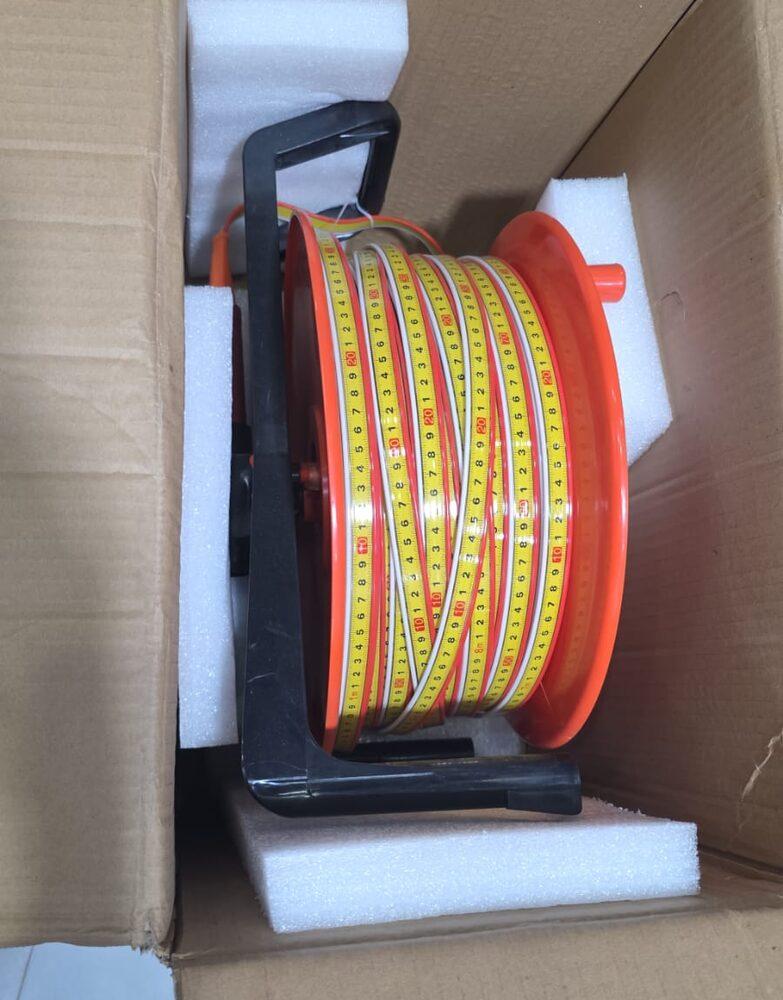
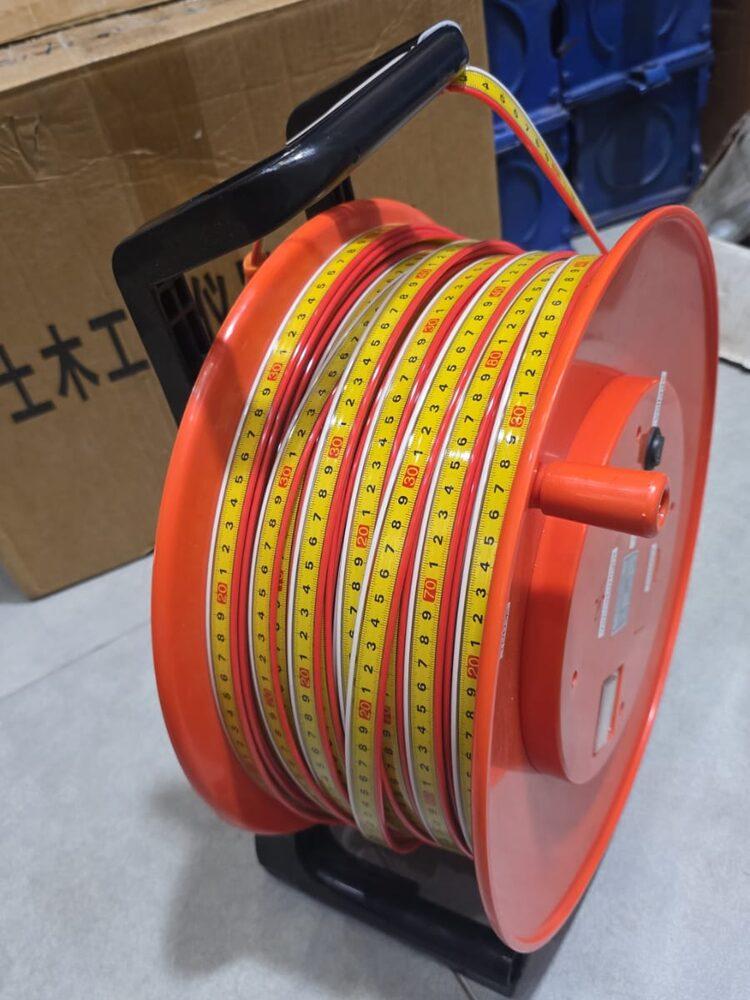
A water level meter, also sold as a dip meter, dipper or water level indicator, is a reel carrying a graduated tape with a probe at the end. When the probe touches water it closes a circuit: a light comes on, a needle moves or a buzzer sounds. The depth is read off the tape at the top of the casing.
It is the standard tool for:
- Static and pumping levels in tube wells and household bores.
- Pump tests on new wells.
- Reading standpipe piezometers on building sites, dams and slopes.
- Checking dewatering on deep excavations.
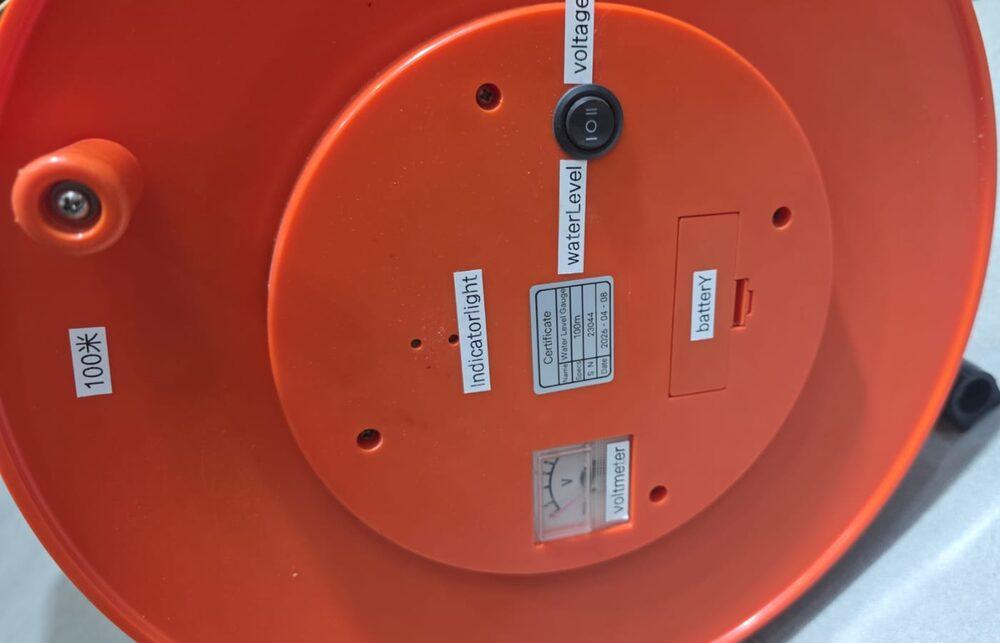
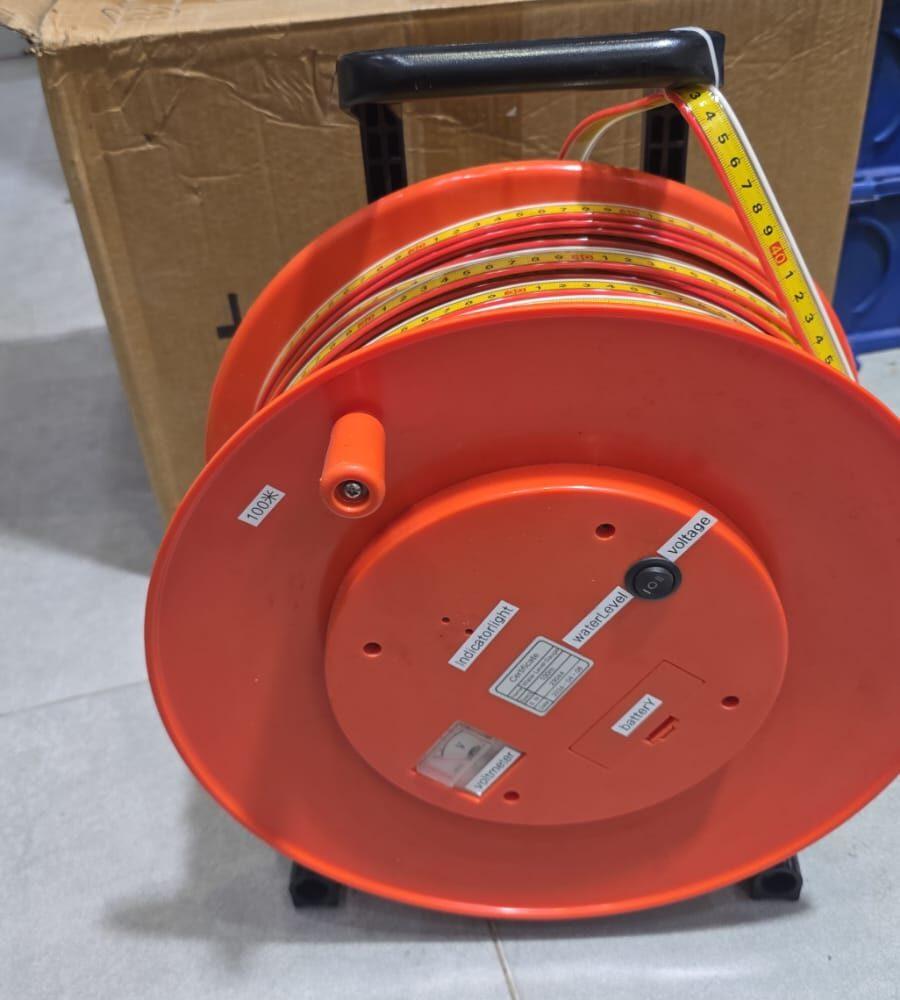
The water level meter we stock is a reel unit with a light, a voltmeter and a graduated tape, in 50 m and 100 m lengths.
Which one do you need?
Answer one question: where is the water?
- In a tank you own: tank level indicator.
- In a boiler or process vessel: sight glass or an industrial gauge.
- In a sump that needs a pump to switch automatically: float or electrode switch.
- In a well, borehole or piezometer, measured by hand: water level meter.
- In a well, logged automatically: pressure transducer, plus a water level meter to check it.
The check that catches the wrong purchase
If a seller offers you a "100 m water level meter" for a few thousand rupees, ask one question: where is the 100 m of graduated tape? Several listings use "100 m" to mean the wireless range between a tank sensor and its display, not a measuring length. A real 100 m borehole meter comes on a reel the size of a small tyre, and the tape is printed in centimetres along its whole length.
River, canal and dam levels
A large share of searches for water level in Pakistan are about rivers and dams: Mangla, Tarbela, the Chenab at Head Marala. Those levels are measured by the authorities with staff gauges fixed to the structure and with radar or pressure sensors, and published by WAPDA, the Indus River System Authority and provincial irrigation departments. They are not measured with a handheld meter, and no instrument we sell replaces those official sources. If you need a river level, use the published figures.
Buying a water level meter: what to check
If you have decided a well meter is what you need, a few checks separate a meter that lasts from one that fails in the first summer.
Tape length against your deepest level. Buy at least 1.5 times the deepest water level you will read, including drawdown when the pump runs. A 50 m tape suits canal-area wells; 100 m suits most of the Pothohar.
Tape markings. Graduations should be clear along the whole length, at least every centimetre with metre marks you can read at a glance. Rub the first metre with your thumb; printing that smears will not survive a season.
Indication. A light alone can be hard to see in midday sun at the top of a bore. A voltmeter needle or a buzzer as well makes the moment of contact obvious. The meter we stock has both a light and a voltmeter.
Probe and zero. The tape's zero should be at the sensing point of the probe. Check it with a bucket and a ruler before the first job.
Reel and stand. A reel that stands on its own frame, with a carry handle, frees both hands at the bore. The reel brake or friction should hold the tape where you leave it.
Battery access. The compartment should be easy to open with a coin and close firmly against dust.
Calibration label. Length, serial number and date, so the meter can be tied to a record.
Our guide to water level meter price in Pakistan covers these checks and current market ranges in more detail.
What we supply
- Water level meter, 50 m and 100 m: for wells, boreholes and piezometers.
- Borehole water level meter: slim probe on 150 m of cable for narrow bores.
We do not sell household tank indicators. For the instrument we do sell, see water level meter price in Pakistan and how to measure water level in a borewell.
Ask for today's price
Tell us where the water is and how deep, and we will tell you which instrument fits, even if it is not one we sell. Send us a WhatsApp for today's price.
What we supply
Equipment covered in this guide
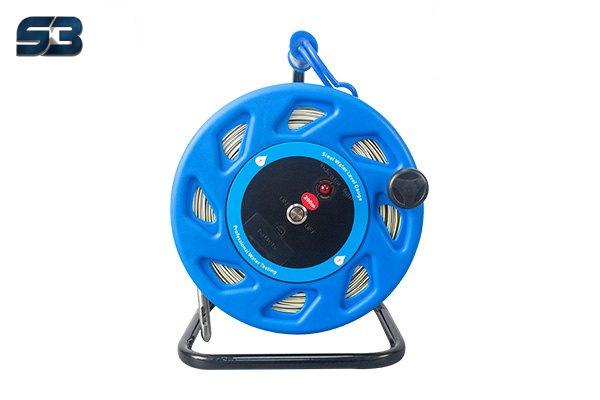 400 m water level indicator
Borehole Water Level Meter
Reeled probe on a marked cable, accurate to a tenth of a millimetre. The standard way to log a rest level and a drawdown.
 50 m and 100 m reel
Water Level Meter, 50 m & 100 m
A graduated tape on a carry reel with a light and a voltmeter that tell you the moment the probe touches water. In stock in 50 and 100 metre lengths.
FAQ
Questions buyers ask us
What is used to measure water level?
It depends where the water is. In a tank, a float gauge, sight glass or tank level indicator. In a river or canal, a staff gauge or radar sensor. In a well, borehole or piezometer, a portable water level meter with a graduated tape, which reads depth to water to about 1 cm.
What is the difference between a water level gauge and a water level meter?
A gauge is usually fixed in place and shows the level in a tank, boiler or channel. A water level meter is portable: a reel of graduated tape with a probe, lowered into a well to read the depth to water. Gauges answer how full; meters answer how deep.
How much does a water tank level indicator cost in Pakistan?
Household tank indicators and wireless tank meters sell for roughly PKR 2,000 to 6,000 in 2026. A portable 50 m or 100 m borehole water level meter costs roughly PKR 30,000 to 75,000. They are different instruments for different jobs; confirm current prices on WhatsApp.
Can a water level sensor measure a tube well?
A submersible pressure sensor can, if it is installed in the well on its own cable and read by a controller or logger, and it is used for automatic monitoring. The cheap float and electrode sensors sold for tanks cannot; their cables are a few metres long and they only detect fixed levels.
What is a dip meter?
Dip meter, dipper and water level indicator are all names for the same portable instrument: a probe on a graduated tape that signals with a light, buzzer or needle when it touches water. It is the standard tool for measuring water level in wells, boreholes and piezometers.