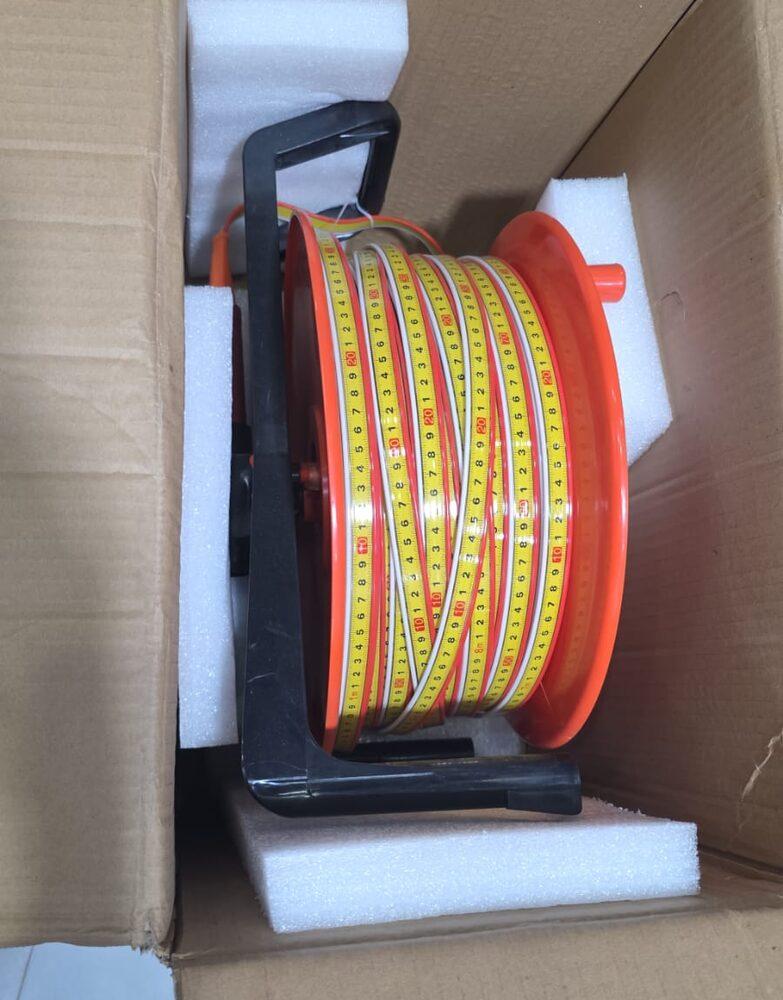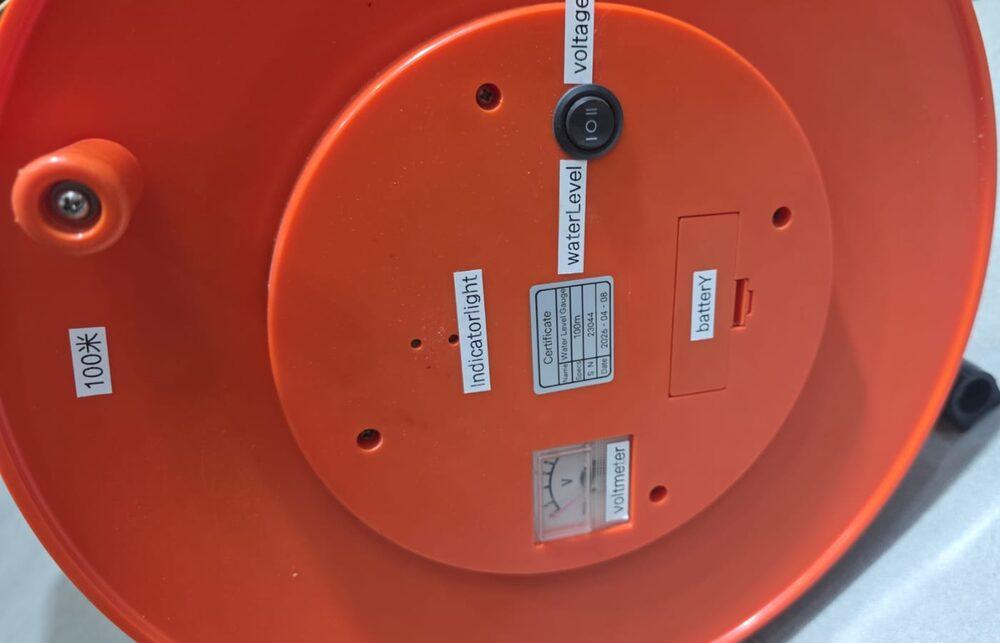
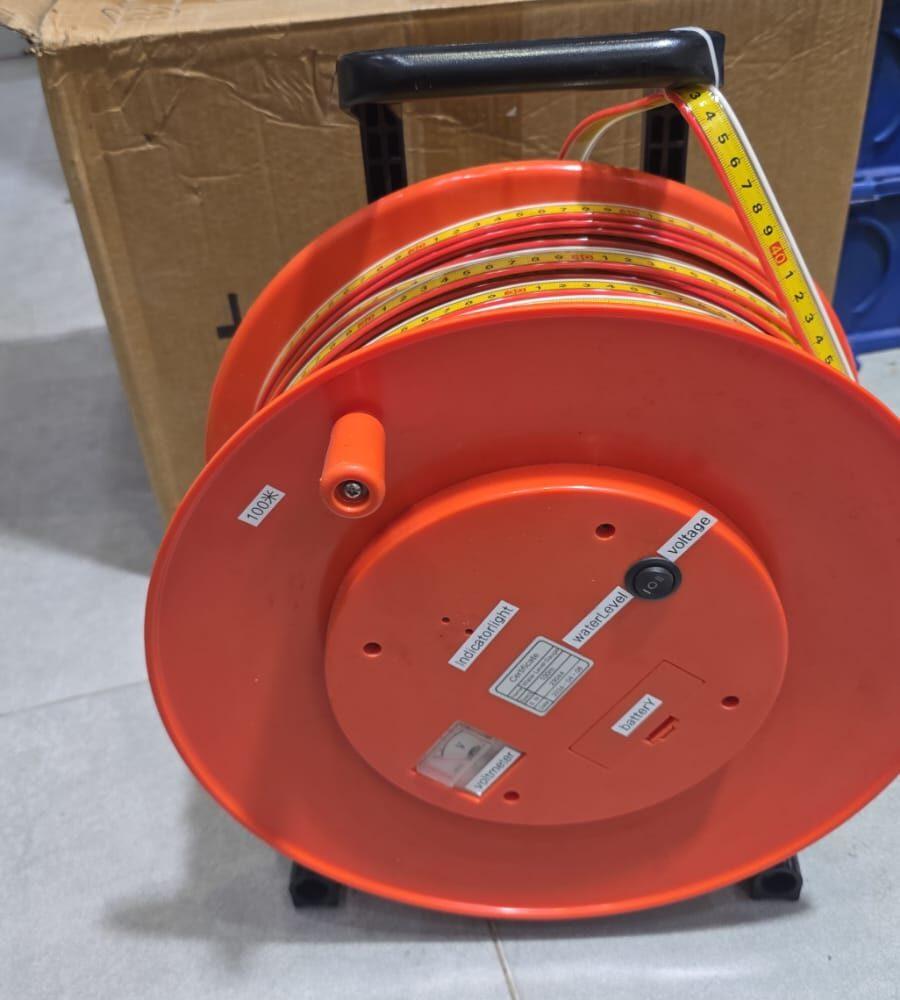
A piezometer is an instrument that measures the water pressure at a single point in the ground, reported as the level that water would rise to. The simplest piezometer is a 25 to 50 mm plastic standpipe with a porous tip, read by lowering a water level meter until it touches water, often 5 to 30 m down.
Every dam, barrage and large excavation in Pakistan relies on them. Tarbela and Mangla carry hundreds; so do the deep basements going into Islamabad's Blue Area and the metro and flyover projects in Rawalpindi and Lahore. On smaller jobs, a handful of standpipes around a dewatering scheme tell the contractor whether the water table is where the design said it would be.
What is a piezometer used for?
A piezometer is used to measure pore water pressure: the pressure of water in the spaces between soil grains or in rock fractures. That pressure matters because it pushes grains apart and reduces the friction holding a slope, a wall or a foundation together. Rising pore pressure is the early warning before a slope slides or an embankment seeps.
The common uses are:
- Dams, barrages and canal banks. Watching seepage through and under the structure.
- Deep excavations and basements. Confirming that dewatering has lowered water below formation level before the slab is cast.
- Slopes and landslide zones. Murree, the Kaghan road and Hunza all have slopes where rising water after rain triggers movement.
- Groundwater studies. Mapping the water table and the direction of flow between bores.
- Embankments on soft ground. Checking that pressure built up under new fill has dissipated before the next lift is placed.
How does a piezometer work?
Every piezometer isolates a short section of ground, the intake or tip, and measures the water pressure there. Above and below the tip the borehole is sealed, usually with bentonite, so water from other layers cannot leak in and distort the reading. What differs between types is how the pressure gets to the surface.
What are the different types of piezometers?
There are four main types, and the choice depends on soil, response time and whether readings must be automated.
| Type | How it reads | Response | Typical use | Read with |
|---|---|---|---|---|
| Open standpipe (Casagrande) | Water rises in a pipe | Slow in clay, fast in sand | Building sites, groundwater studies | Water level meter |
| Vibrating wire | Diaphragm changes a wire's frequency | Seconds | Dams, embankments, clay | Readout unit or logger |
| Pneumatic | Gas pressure balances diaphragm | Minutes | Older dam installations | Pneumatic readout |
| Hydraulic (twin tube) | Water-filled tubes to a gauge | Minutes | Embankment cores, galleries | Gauge board |
Open standpipe. A porous tip in a sand pocket, a plastic riser to the surface, a bentonite seal above the sand and a lockable cap. Water in the pipe rises to the piezometric level. It is cheap, almost impossible to break and needs no electronics. Its weakness is time: in clay, water may take days to flow in or out, so the reading lags behind reality.
Vibrating wire. A sealed sensor with a steel wire stretched against a diaphragm. As pressure changes, the wire's resonant frequency changes and is read by a readout box or logger. It responds almost instantly and can be read remotely, so it is the default on dams and in clay.
Pneumatic and hydraulic. Older systems still found on many Pakistani dams and barrages. Both are read from a central point and avoid electronics in the ground.
How do you read a piezometer?
For a standpipe, you read it with a water level meter. The method is short, and getting it right is about discipline rather than equipment.
- Unlock the cap and let the pipe stand open for a minute.
- Identify the reference point: a notch or paint mark on the top of the riser whose level has been surveyed.
- Lower the water level meter probe until the light comes on or the voltmeter needle moves.
- Lift 20 cm, lower again slowly, and read the tape exactly at the reference mark when it triggers.
- Record depth, date, time and who read it.
- Subtract the depth from the surveyed level of the mark to get the piezometric level.
Depth to water is useful on its own for day-to-day dewatering checks. For reports to a consultant, convert to reduced level so that readings from different piezometers can be compared. That needs a level run from a benchmark to each riser mark, done once with an auto level when the piezometers are installed.
The reading error we see most often
The usual error is not the meter. It is the reference point. Risers get knocked by excavators, cut down by a site team that finds them in the way, or extended with a coupling. Each change shifts the mark and silently corrupts every later reading. Our advice to clients: paint the reference mark, photograph it with a tape held against it, and re-level the tops of all risers every three months or after any visible damage. A jump of 30 cm in one piezometer that its neighbours do not show is almost always a moved riser, not a change in the ground.
Piezometer installation: what a good one looks like
Most bad piezometer data comes from bad installation, not bad instruments. When a consultant's specification calls for standpipes, these are the points worth checking on site, because once the hole is backfilled they cannot be inspected.
- Drilling without polymer mud where possible. Drilling fluid can seal the soil around the tip and make it respond slowly or not at all. If mud is used, the hole should be flushed with clean water before the tip goes in.
- A clean sand pocket around the tip. Typically 0.5 to 1 m of filter sand, placed by tremie or slowly from the surface while the depth is checked with a weighted tape.
- A proper bentonite seal above the sand. At least 1 m of bentonite pellets or grout. Without it, water from shallower layers runs down the outside of the pipe and the reading is a blend of two layers.
- Grout to surface and a protective cover. A lockable steel cap set in concrete, painted and flagged. Excavators and dumpers are the main cause of lost piezometers on Pakistani sites.
- A record for each one. Tip depth, sand and seal depths, the surveyed level of the reference mark, and the first stable reading.
After installation, read each standpipe daily for the first week. In sand the level settles within hours; in clay it may take days to reach equilibrium, and readings taken before then are not the true pore pressure. A falling-head test, where the pipe is topped up with water and the level is read as it drops back, confirms the tip is working. A tip that does not respond to a falling-head test has been sealed by drilling mud or grout and should be replaced, not read.
How much does a piezometer installation cost?
The piezometer itself is usually the cheap part. A standpipe kit costs little; most of the cost is the drilling, the sand pack and seal, and the time of a supervising engineer. Vibrating wire sensors are imported and cost far more each, plus the readout or logger. For a building site with four to six standpipes, the water level meter used to read them is often the only instrument the contractor needs to own. We supply that meter; drilling and installation are normally done by a geotechnical contractor under the consultant's specification.
What we supply
- Water level meter, 50 m and 100 m: the standard instrument for reading standpipe piezometers and monitoring wells.
- Borehole water level meter: 14 mm probe for narrow risers and longer cables.
- The wider groundwater range under detection and mining instruments.
For the job these piezometers usually support, read our guides to construction dewatering and groundwater level monitoring. Our geotechnical survey team can plan a piezometer layout with your consultant.
Ask for today's price
Tell us how many piezometers you need to read, how deep they are and how often you will read them. We will confirm the right meter length and quote delivery anywhere in Pakistan. Send us a WhatsApp for today's price.
What we supply
Equipment covered in this guide
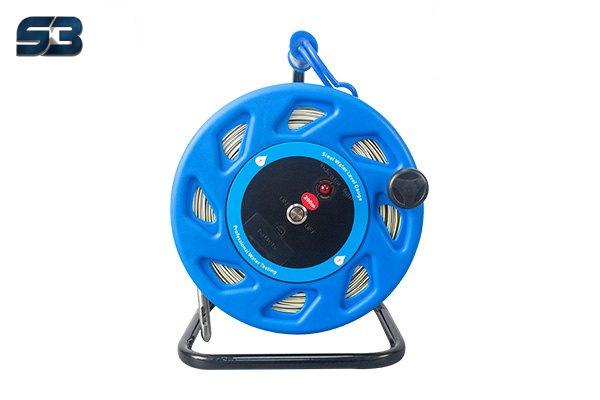 400 m water level indicator
Borehole Water Level Meter
Reeled probe on a marked cable, accurate to a tenth of a millimetre. The standard way to log a rest level and a drawdown.
 50 m and 100 m reel
Water Level Meter, 50 m & 100 m
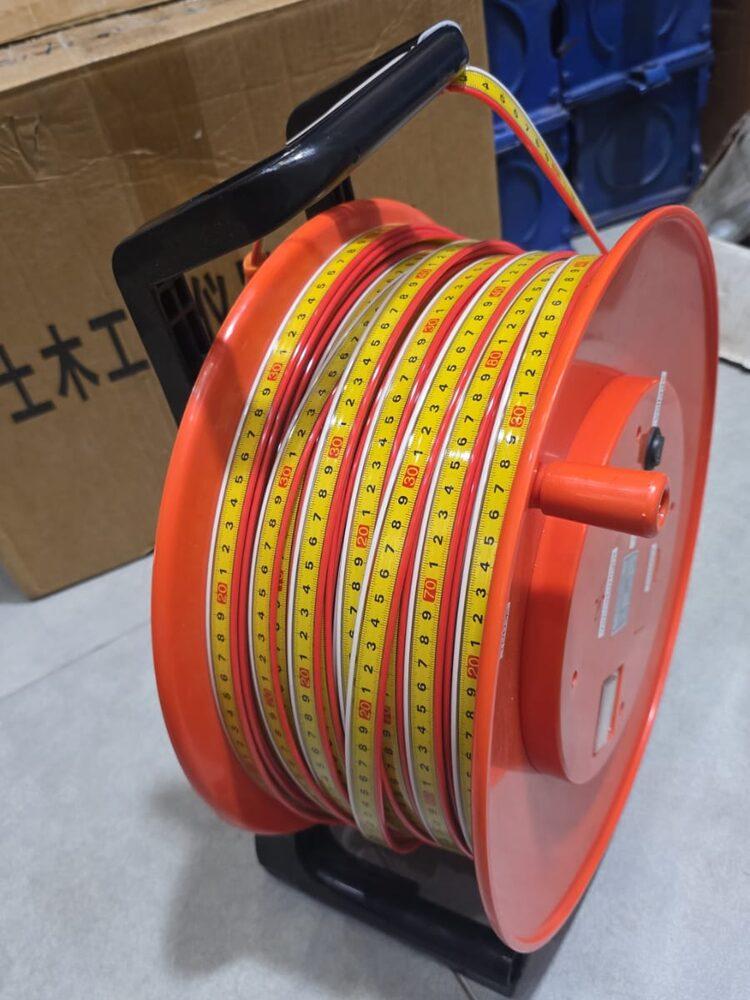
A graduated tape on a carry reel with a light and a voltmeter that tell you the moment the probe touches water. In stock in 50 and 100 metre lengths.
FAQ
Questions buyers ask us
What is a piezometer used for?
A piezometer measures the water pressure at one point in the ground, expressed as the height water would rise to. Engineers use them to watch pore pressure under dams, embankments, deep excavations and slopes, and to map the water table. A 25 mm standpipe read with a water level meter is the simplest form.
How do you read a standpipe piezometer?
Lower a water level meter down the standpipe until the light or buzzer triggers, read the tape at a marked point on the top of the pipe, and subtract that depth from the surveyed level of the mark. The result is the piezometric level in metres. Take two readings and record the time.
What is the difference between a piezometer and a monitoring well?
A piezometer has a short intake, often 0.5 to 1 m, sealed above and below so it reads the pressure at one depth. A monitoring well has a long screen, often several metres, and is used to sample water and observe the general water table. Both are read with the same water level meter.
Which piezometer type responds fastest?
Vibrating wire piezometers respond in seconds because almost no water has to move. An open standpipe in clay can take days or weeks to equalise, because water must flow into or out of the pipe. In silt and clay, consultants usually specify vibrating wire for that reason.
How deep is a piezometer installed?
At the depth of interest: just below the base of an excavation, in the core of an embankment, or in the aquifer being studied. On Pakistani building sites standpipes are commonly 10 to 30 m deep; on dams and barrages they can be far deeper, read from instrument houses on the crest.