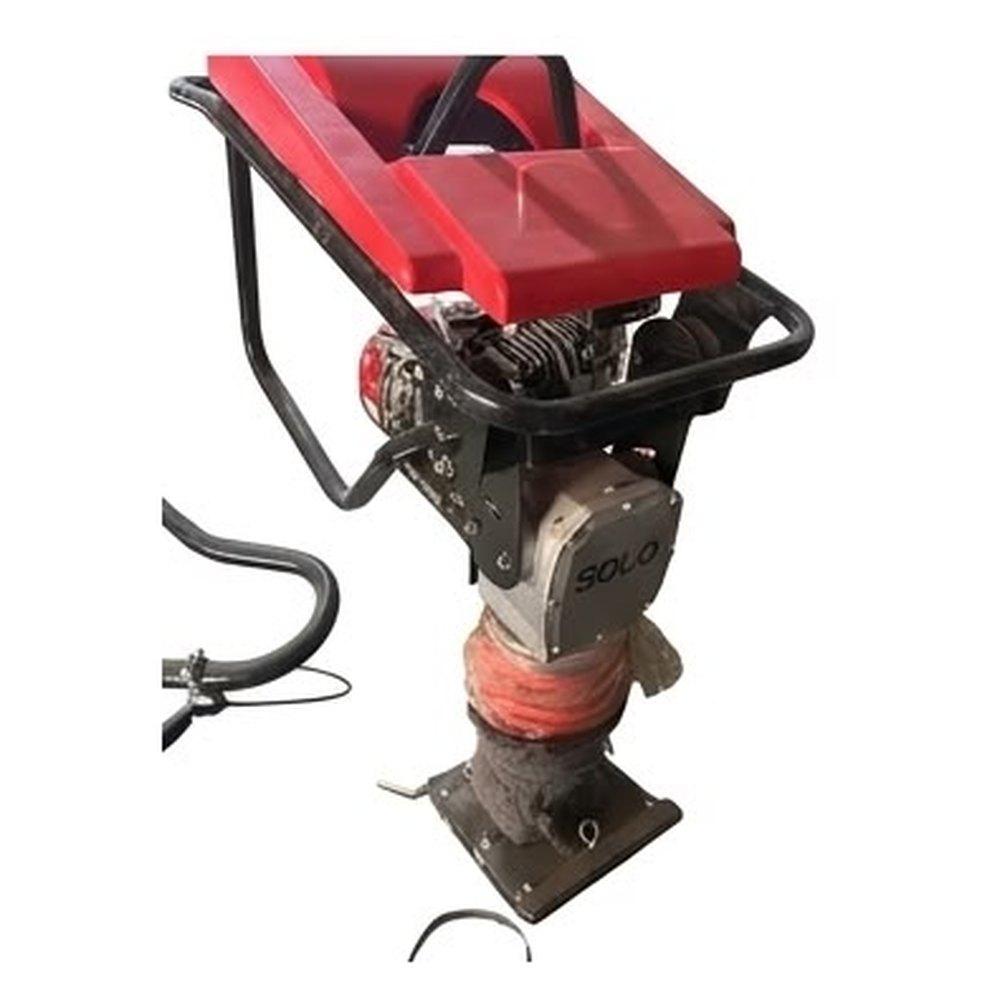
Tamping rammer price in Pakistan in 2026 runs from about PKR 70,000 to 130,000 for a value four stroke jumping jack and PKR 160,000 to 250,000 for a branded rammer with a Honda GX100 engine, such as the Mikasa MTR-40H. Electric frog rammers cost about PKR 45,000 to 110,000. All three compact clay and trench backfill.
A tamping rammer is the machine that compacts where nothing else fits: a 400 mm sewer trench, the backfill around a manhole, the strip of fill against a basement wall. It is also the right machine for clay, which a plate compactor barely touches. This guide covers prices, the jumping jack against the frog, two stroke against four stroke, and how to compact a trench so it passes the density test.
How much does a tamping rammer cost in Pakistan?
A tamping rammer costs from about PKR 70,000 for a value four stroke machine to PKR 250,000 for a branded one. The difference is in the engine, the air filtration and the ramming system, which decide how long the machine survives dust and daily work.
| Type | Weight | Power | Foot size | Indicative market price (PKR) |
|---|---|---|---|---|
| Electric frog rammer | 60 to 120 kg | Electric motor, 220 V or 380 V | Wide base plate | 45,000 to 110,000 |
| Value two stroke rammer | 60 to 75 kg | Two stroke petrol, mixed fuel | About 230 by 330 mm | 60,000 to 110,000 |
| Value four stroke rammer | 60 to 80 kg | Chinese four stroke petrol | About 230 by 330 mm | 70,000 to 130,000 |
| Branded rammer | 60 to 80 kg | Honda GX100 or Mikasa engine | Standard or narrow foot | 160,000 to 250,000 |
These are 2026 market ranges for new machines. Confirm today's price on WhatsApp, rates move with the exchange rate. Branded rammers are imported, so their price follows the dollar and the yen closely.
Tamping rammer, jumping jack and frog rammer: what is the difference?
Tamping rammer and jumping jack are two names for the same machine. An engine drives a crank and a set of springs in a sealed leg, and the foot strikes the ground roughly 600 to 700 times a minute while the operator guides it by the handle. It is tall, narrow and upright, which is why it fits a trench.
Frog rammer is a different design common in Chinese and South Asian building work. It is usually electric, sits low with a heavy base, and lifts and drops itself forward in a hopping action, which is how it got its name. It is cheap to run and quiet, and it is the machine many contractors in Punjab use for floor filling inside a building before the slab on grade, where a cable can reach a socket. It is less suited to a deep, narrow trench.
An electric frog rammer needs a proper supply. Check whether yours is a 220 V or 380 V model, run it from a socket with its own breaker, and keep the cable out of the wet fill. On a site with long load shedding hours, a petrol jumping jack keeps working when the grid does not, which is why utility contractors who move between sites prefer engine rammers.
The Mikasa MTR-40H is a Honda GX100 powered rammer with a narrow foot, a vibration absorbing handle and four stage air filtration. It is the one to choose for pipe surround and narrow trench work by a utility contractor who runs it every day.
Clay, trenches and layer thickness
Rammers are built for cohesive soil: clay, silt and mixed fill with fines. The impact of the foot kneads the soil and drives the air out, which vibration alone cannot do. Much of the fill around Rawalpindi, Islamabad and the Potohar plateau is silty clay, so most trench backfill here is rammer work.
How to compact a trench so it passes:
- Place loose layers of 150 to 200 mm. A 60 to 80 kg rammer can reach roughly 300 mm in clay, but WAPDA, CDA, gas utility and housing society specifications usually set thinner layers, and the consultant will test each one.
- Make three to four passes over every part of the layer, overlapping each pass by about a third of the foot.
- Keep the moisture near optimum. Fill that is too dry will not compact; after monsoon rain, fill that is too wet pumps and the rammer bounces.
- Protect the pipe. Hand compact the haunches beside the pipe, and do not run the rammer directly over a pipe until there is at least 300 mm of compacted cover.
- Test before the next layer. Field density by sand cone (ASTM D1556) against the Proctor maximum dry density (ASTM D698 or D1557) is what the consultant will ask for.
A rammer will also compact sand and gravel in a space a plate cannot enter, but on an open area of granular material a plate compactor is three to four times faster and leaves a flatter surface.
Two stroke vs four stroke rammers
The older rammers on Pakistani sites are two stroke. They are lighter, simpler and slightly cheaper, but they run on petrol mixed with two stroke oil at the ratio in the manual. Get the mix wrong, or let a helper fill the tank with straight petrol from the generator can, and the engine seizes. That is the most common rammer failure we have seen over twenty years.
Four stroke rammers run on straight petrol with oil in the engine's own sump. They make far less smoke, which matters when the operator is standing in a trench breathing the exhaust, and they are quieter. The four stroke jumping jack BS60-4 and the Honda GX100 on the Mikasa are both four stroke.
One catch with a four stroke rammer: it must be carried and stored upright or only tilted as the manual allows. Laid flat in the back of a Suzuki pickup, engine oil runs into the cylinder and the machine will not start until it is cleaned.
What breaks, and the one habit that saves the clutch
Run a rammer at full throttle or switch it off. Half throttle lets the centrifugal clutch slip, and a burnt clutch is one of the most common rammer repairs on our bench. Operators throttle back to rest their arms; the machine then bounces weakly, compacts nothing, and cooks the clutch.
The other wear points:
- Air filter: Pakistani site dust chokes a single stage filter in days. Clean it daily in summer. This is where the Mikasa's four stage filtration earns its price.
- Bellows: the rubber boot over the leg. A split lets dust into the ramming system and wears it fast.
- Ramming system oil: the leg has its own oil. Check the level weekly.
- Shoe and foot plate: wears and cracks at the edges after a few seasons of stony fill.
We hold clutches, bellows, filters and foot plates for the rammers we sell and service them on our own bench in Rawalpindi.
What we supply
All rammers and compactors are under small machinery.
- Tamping rammer: the value jumping jack for trench and foundation backfill.
- Mikasa MTR-40H tamping rammer: Honda GX100, narrow foot, four stage filtration.
- Frog rammer: electric, for filling inside buildings.
- Four stroke jumping jack BS60-4: straight petrol, no mixing.
To compare rammers with plates and rollers, read compactor machine price in Pakistan and plate compactor price in Pakistan. Density testing is covered in our field density test methods guide.
Ask for today's price
Tell us the trench width, the soil, and how many days a month the rammer will run. We will recommend the right machine honestly and quote today's price. Send us a WhatsApp, with delivery across Pakistan in two to three days.
What we supply
Equipment covered in this guide
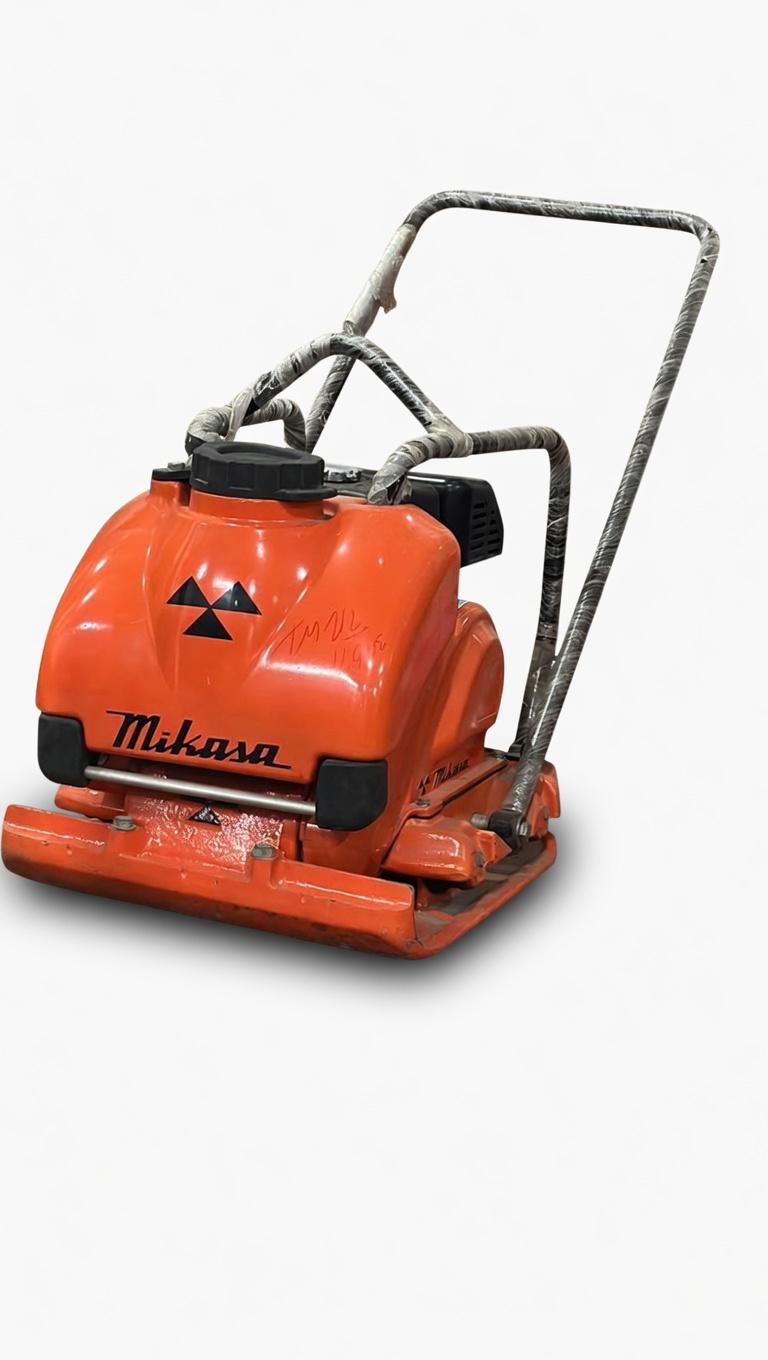 Mikasa
 Plate Compactor
Forward plate compactor with a water tank for asphalt work. Japanese build, and the one crews ask for by name.
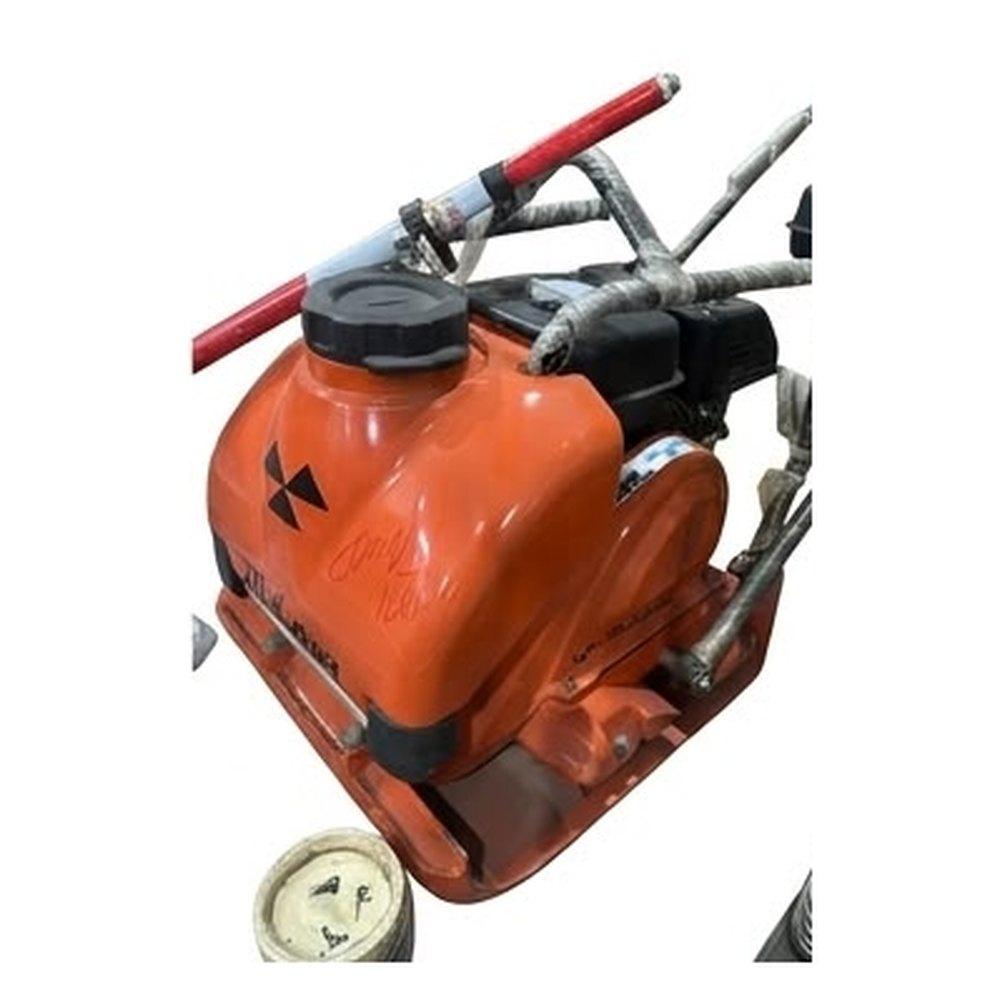
Petrol Plate Compactor
Reversible petrol plate for backfill, trenches and sub base. Water tank fitted, wheels included.
Tamping Rammer
Jumping jack for narrow trenches and around services, where a plate cannot reach and a roller will never fit.
FAQ
Questions buyers ask us
What is the price of a tamping rammer in Pakistan?
In 2026 a value four stroke tamping rammer costs about PKR 70,000 to 130,000, and a branded rammer with a Honda GX100, such as the Mikasa MTR-40H, about PKR 160,000 to 250,000. Electric frog rammers cost roughly PKR 45,000 to 110,000. Confirm today's price on WhatsApp, rates move with the exchange rate.
What is the difference between a tamping rammer and a frog rammer?
A tamping rammer, or jumping jack, is engine driven and stands upright, striking about 600 to 700 times a minute on a small foot. A frog rammer is usually electric, lower and heavier at the base, and hops forward with a lifting action. The rammer suits trenches; the frog suits filling inside buildings.
Is a two stroke or four stroke rammer better?
For most Pakistani sites, four stroke. It runs on straight petrol with oil in its own sump, makes far less smoke in a trench and avoids the wrong fuel mix that seizes two stroke engines. A two stroke is lighter and simpler, and costs perhaps 10 to 20 percent less.
How thick a layer can a tamping rammer compact?
A 60 to 80 kg rammer is effective to roughly 300 mm in cohesive soil, but most WAPDA, CDA and housing society specifications call for loose layers of 150 to 200 mm in trenches. Compact each layer with 3 to 4 passes and test density before placing the next.
Can a tamping rammer be used on sand?
Yes, in confined spaces where a plate will not fit, such as a 400 mm wide trench. On an open area of sand or crushed stone a plate compactor is 3 to 4 times faster and gives a flatter finish, so use the rammer only where the plate cannot reach.
Why does a tamping rammer lose power?
The common causes are a choked air filter, a slipping centrifugal clutch from running at half throttle, low oil in the ramming system, and worn bellows letting dust in. On our bench in Rawalpindi about half of rammer repairs trace back to the air filter or the clutch.