Plate compactor price in Pakistan in 2026 ranges from about PKR 49,000 for a light 60 kg Chinese unit to PKR 90,000 to 180,000 for a mid-range 100 kg plate and PKR 200,000 to 350,000 for a Mikasa or Dynapac class machine. Tamping rammers run PKR 70,000 to 250,000. These are indicative market ranges; we quote by WhatsApp.
Compaction equipment is the first machinery most contractors buy after a mixer, and the smallest machines are where buyers most often get it wrong: the wrong machine for the material, or a plate too light for the layer. This guide gives the prices by class and brand and explains, from twenty years of selling and servicing them, what actually matters.
Plate compactor price bands in Pakistan
Indicative market ranges for new machines in September 2026. Confirm today's price on WhatsApp, rates move with the exchange rate.
| Class | Plate weight | Engine | Typical units | Indicative market price (PKR) |
|---|---|---|---|---|
| Light value plate | 60 to 80 kg | 5.5 hp petrol, Chinese | Unbranded, generic | 49,000 to 90,000 |
| Mid value plate | 90 to 120 kg | 6.5 hp petrol, Honda pattern | Petrol plate compactor, JCF | 90,000 to 180,000 |
| Branded forward plate | 60 to 90 kg | Honda GX160 | Mikasa MVC-F60, Dynapac LF | 180,000 to 280,000 |
| Branded heavy plate | 90 to 120 kg | Honda GX270 | Mikasa MVC-88, Dynapac CM13 | 220,000 to 350,000 |
| Reversible plate | 150 to 300 kg | Diesel or petrol | Mikasa MVH, Chinese reversible | 350,000 to 900,000 |
| Tamping rammer, value | 60 to 75 kg | Chinese 4-stroke | BS60-4 pattern | 70,000 to 130,000 |
| Tamping rammer, branded | 60 to 80 kg | Honda GX100 or Mikasa | Mikasa MT-55, MTX-60 | 160,000 to 250,000 |
The jump from a value plate at PKR 70,000 to a Mikasa at PKR 250,000 looks large. The difference is in the vibrator: a sealed unit with proper bearings that keeps the plate flat and vibrating true for years, against an open unit that loses its bearings in a season of daily work. For a contractor who runs the machine a few days a month, the value plate is the right buy. For one who runs it every day, the Mikasa is cheaper over five years.
Plate compactor vs tamping rammer vs roller
These three machines compact different materials, and buying the wrong one is the most common error.
Plate compactor for granular material: sand, gravel, crushed stone, sub-base, paver bedding and thin asphalt. The vibrating plate rearranges the particles. It does not work on clay, which just rebounds.
Tamping rammer for cohesive material: clay, silt, mixed fill in trenches, around manholes and foundations. The heavy impact of the foot, at around 700 blows a minute, kneads the soil the way a padfoot roller does. It will also compact granular material in confined spaces where a plate cannot fit, but is slow over an open area.
Walk-behind roller for larger areas and thicker layers of both granular material and asphalt, where a plate would take all day. We cover the classes in road roller price in Pakistan.
A utility contractor doing trench backfill needs a rammer. A paving contractor doing a car park needs a plate. A society developer doing streets needs a roller and a plate for the edges. Most contractors end up with a plate and a rammer.
Forward vs reversible plates
A forward plate travels in one direction. You walk it to the end of the run, turn it round and come back. It is lighter, usually 60 to 120 kg, cheaper, and right for pavements, patches, paver bedding and anything you can walk around.
A reversible plate has two eccentric weights that can be phased to drive the plate forward or backward, controlled from the handle. It is heavier, 150 kg and up, compacts deeper, and is the machine for trenches and backfill where there is no room to turn. It costs two to three times as much.
Buy forward unless the work is trench backfill or layers over 250 mm.
Petrol vs diesel
Plate compactors under 120 kg are almost all petrol. The engines are Honda GX or Honda-pattern Chinese 4-stroke, and they are light, easy to start and simple to service. A Honda GX engine on a Mikasa or Dynapac is the single biggest reason those machines last.
Diesel appears on reversible plates above 150 kg and on some heavy rammers. The engine is heavier, which helps compaction, burns cheaper fuel, and lasts longer under daily use, but it is harder to start cold and harder to carry.
For a tamping rammer, four-stroke petrol has replaced the old two-stroke. The four-stroke jumping jack BS60-4 pattern uses straight petrol without mixing oil, which removes the most common cause of rammer engine failure on Pakistani sites: the wrong fuel mix.
Sizing to layer depth
The machine has to reach the bottom of the layer, or the top is compacted over a soft base and the paving fails in the first monsoon.
- 60 to 80 kg plate: 100 to 150 mm of granular material per layer. Paver bedding, patch repairs, pavements.
- 90 to 120 kg plate: 200 to 250 mm. Sub-base for driveways, car parks, society footpaths.
- 150 kg and up reversible: 300 to 400 mm. Trench backfill, foundation backfill, road sub-base in small areas.
- 60 to 75 kg rammer: 250 to 400 mm of cohesive fill, in layers, in confined spaces.
If the specification says 300 mm layers and the contractor owns an 80 kg plate, the answer is to place in 150 mm layers and compact each, not to run the plate longer. More passes on an undersized machine does not reach deeper.
Centrifugal force is the other number to read. A 10 to 15 kN plate is light duty; 20 to 30 kN is commercial. The Mikasa MVC-88VTHW at around 15 kN and 90 kg and the Dynapac CM13 in the same class are the two we recommend for daily commercial work.
What breaks and what spares to hold
A plate compactor is simple and the failures are predictable. In order of frequency on our bench:
- Drive belt. Wears, glazes, snaps. Keep one in the pickup. PKR 800 to 2,500.
- Anti-vibration rubber mounts. Perish in heat, crack, then the handle shakes the operator to pieces. A set of four, PKR 2,000 to 6,000.
- Vibrator bearings. The expensive one. On a sealed Mikasa unit they last years; on a value plate, a season of daily use. A bearing kit is PKR 4,000 to 15,000 plus labour.
- Air filter and spark plug. Dust kills engines. Clean the filter daily in dry season.
- Engine mounting bolts. Vibration loosens them. Check weekly.
- Water tank and tap on asphalt plates. The tap seizes.
We hold all of these for the Mikasa, Dynapac and value plates we sell, and for the BS60-4 pattern rammer, in Rawalpindi. Service is on our own bench and a plate compactor travels by courier from anywhere in Pakistan. New machines carry a two year warranty.
What we supply
All compaction equipment is under small machinery.
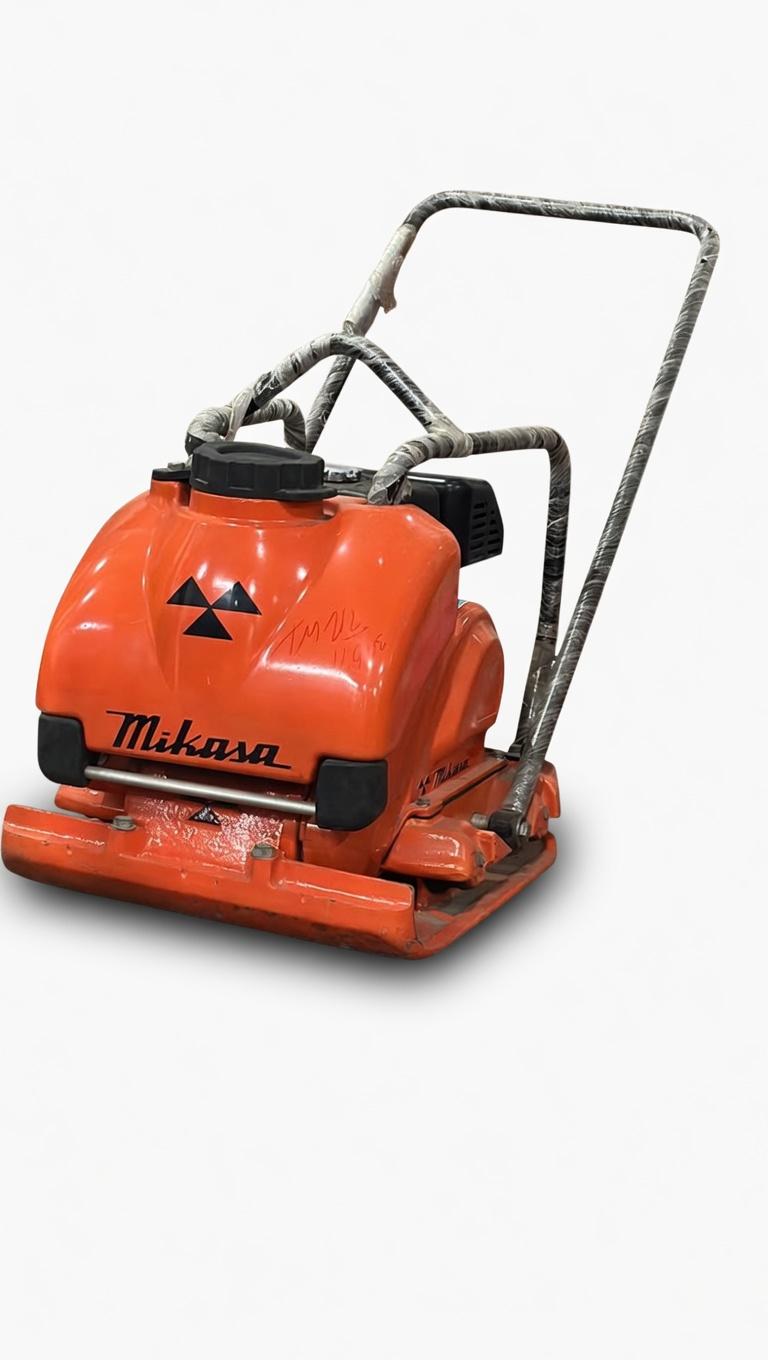
- Mikasa plate compactor: the Japanese standard, Honda engine, sealed vibrator.
- Mikasa MVC-88VTHW plate compactor: 90 kg with water tank, for asphalt and sub-base.
- Dynapac CM13 plate compactor: the Swedish alternative in the same class.
- Petrol plate compactor: the value unit for occasional use.
- Tamping rammer and four-stroke jumping jack BS60-4: for clay, trenches and confined spaces.
For larger areas and thicker layers, read road roller price in Pakistan.
Ask for today's price
Prices above are the market and they move with the exchange rate. Tell us the material, the layer depth and how many days a month the machine will run and we will recommend the right class honestly. Send us a WhatsApp for today's price on Mikasa, Dynapac or a value unit, with delivery across Pakistan in two to three days.
What we supply
Equipment covered in this guide
MikasaMikasa Plate Compactor
Forward plate compactor with a water tank for asphalt work. Japanese build, and the one crews ask for by name.
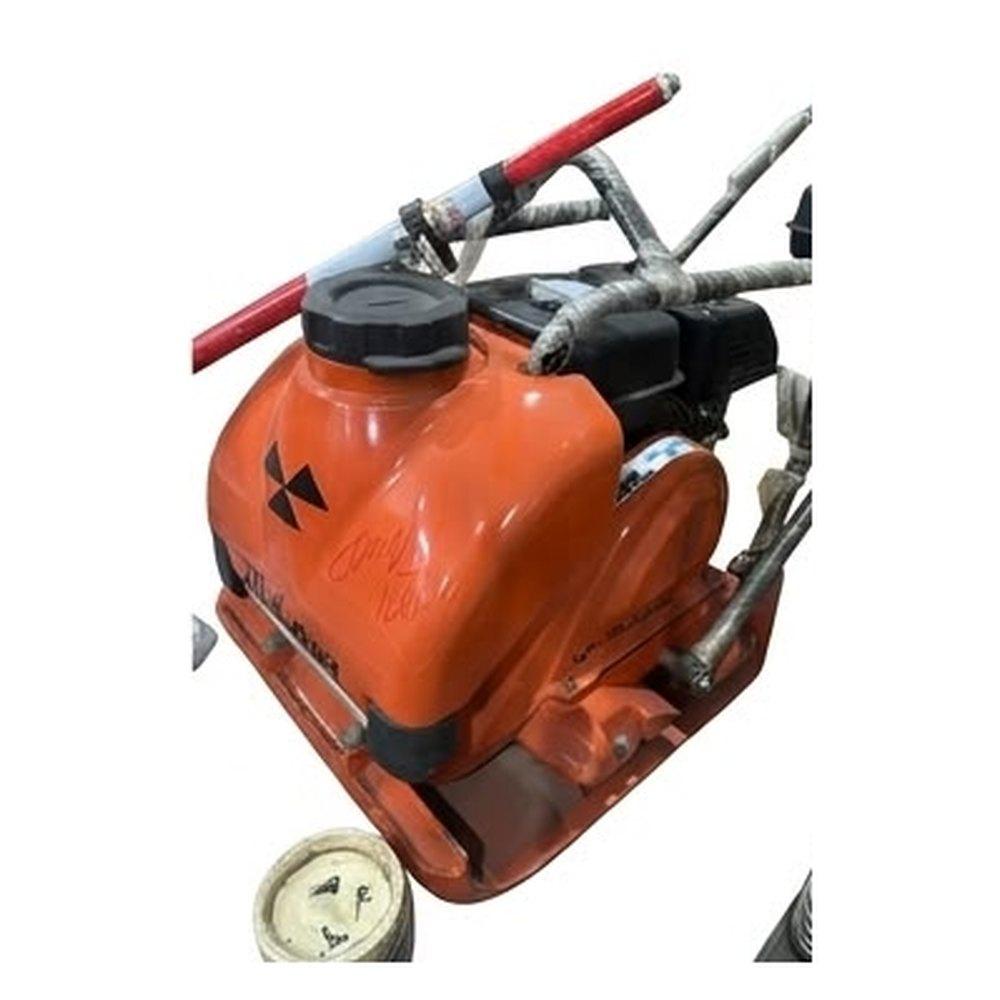
Petrol Plate Compactor
Reversible petrol plate for backfill, trenches and sub base. Water tank fitted, wheels included.
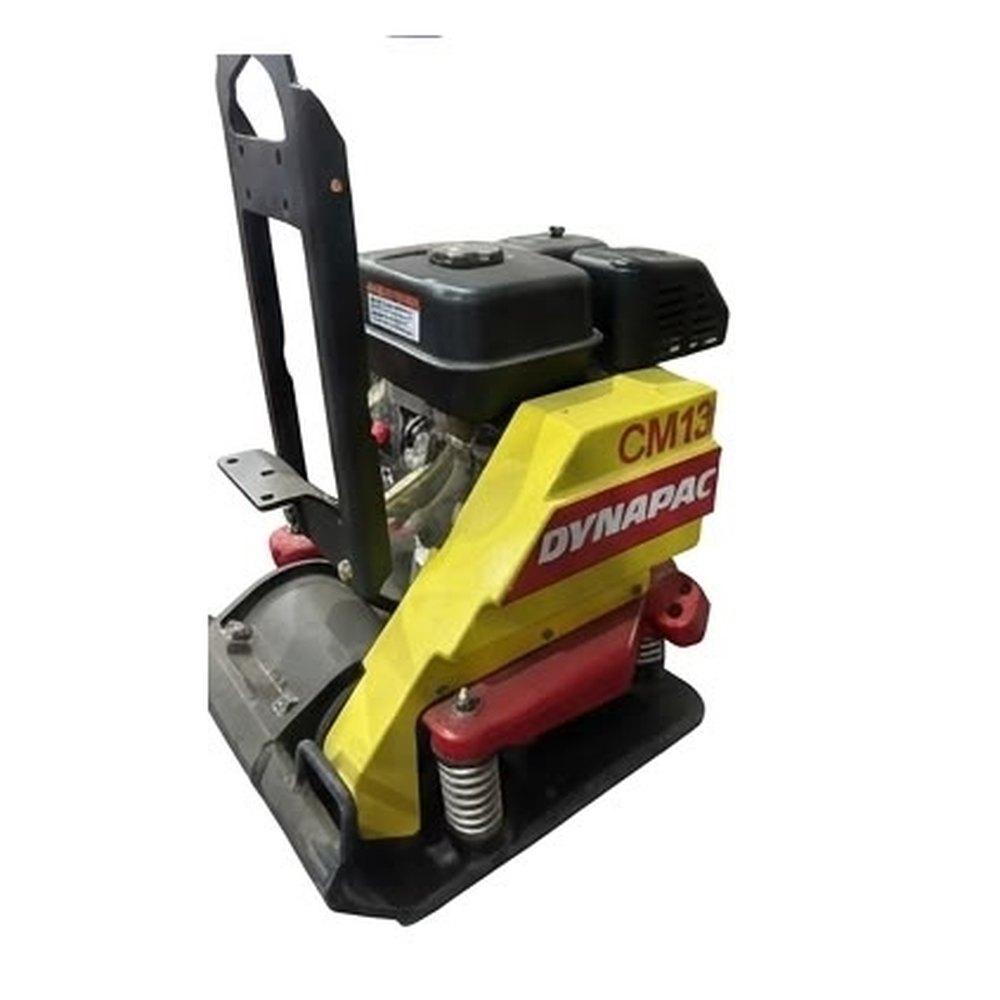 DynapacCM13
Dynapac CM13 Plate Compactor
Sprung handle, high centrifugal force and a plate that tracks straight. Compaction plant from a compaction manufacturer.
FAQ
Questions buyers ask us
What is the price of a plate compactor in Pakistan?
In 2026 a light Chinese plate compactor of 60 to 80 kg sells for PKR 49,000 to 90,000, a mid-range 90 to 120 kg unit for PKR 90,000 to 180,000, and a Mikasa or Dynapac class machine for PKR 200,000 to 350,000. Tamping rammers run PKR 70,000 to 250,000. These are market ranges; we quote by WhatsApp.
What is the difference between a plate compactor and a tamping rammer?
A plate compactor vibrates a flat plate and compacts granular material like sand, gravel and crushed stone over a wide area. A tamping rammer, or jumping jack, delivers heavy impact blows on a small foot and compacts cohesive soil and clay in trenches and confined spaces. They are not interchangeable.
Is Mikasa worth the extra price?
For daily commercial use, yes. A Mikasa plate uses a sealed vibrator with Japanese bearings, a Honda engine and a plate that stays flat. It runs five to eight years with routine service where a value unit lasts two to three. For occasional use, a good value plate is the sensible buy.
Forward or reversible plate compactor?
Forward plates travel one way and are lighter and cheaper, fine for pavements, patches and bedding. Reversible plates travel both ways, are heavier at 150 kg and above, and compact deeper layers in trenches and backfill where turning around is impossible. Buy reversible for trench and utility work.
How deep does a plate compactor compact?
A 60 to 80 kg plate compacts about 100 to 150 mm of granular material per layer. A 100 to 120 kg plate reaches 200 to 250 mm. A reversible 150 kg plus plate reaches 300 to 400 mm. Place fill in layers no thicker than the machine can reach and compact each one.
What spares should I keep for a plate compactor?
A drive belt, a set of rubber anti-vibration mounts, a vibrator bearing kit, an air filter and a spark plug. These cover 90 percent of failures. We hold them for Mikasa, Dynapac and the value plates we sell, and service machines on our bench in Rawalpindi.