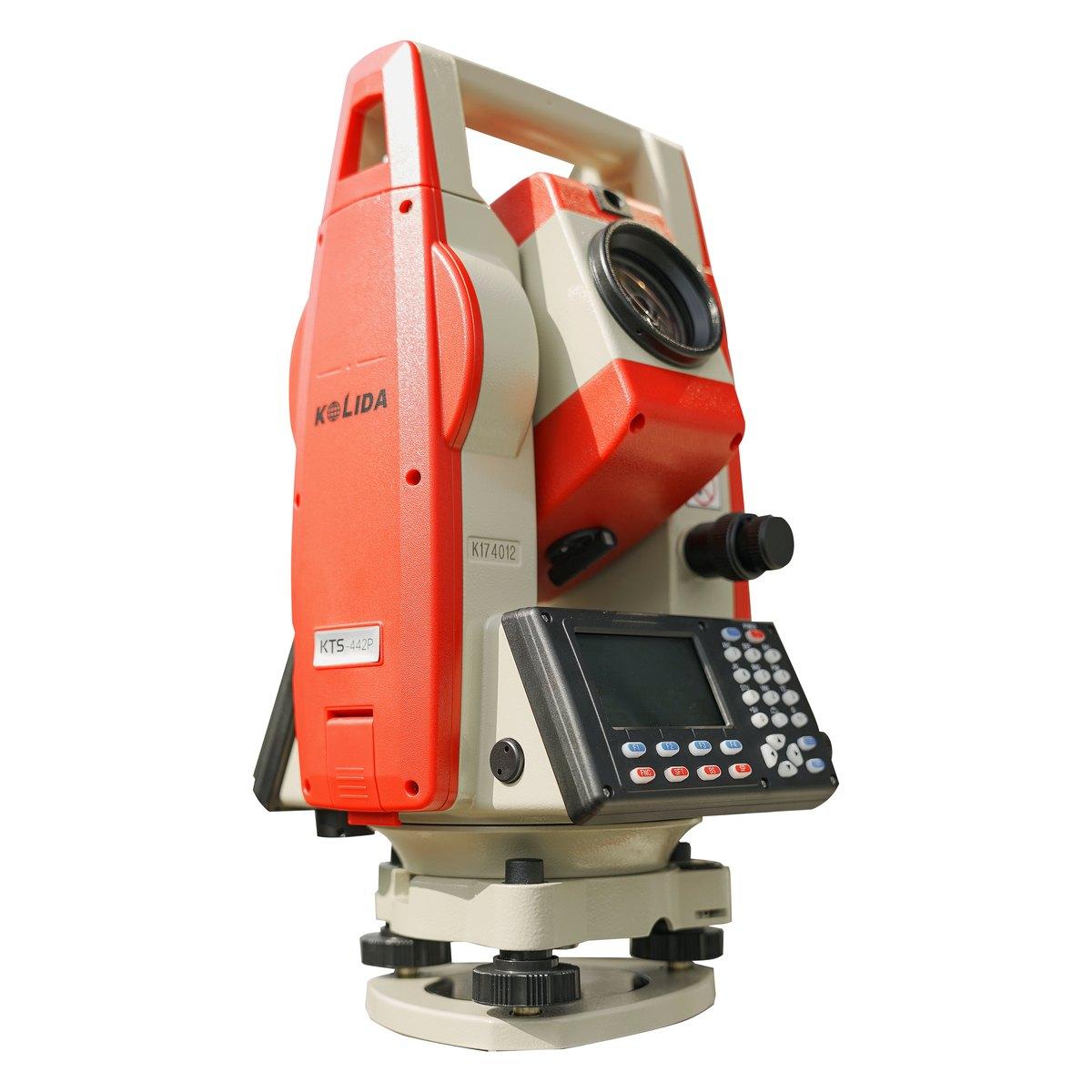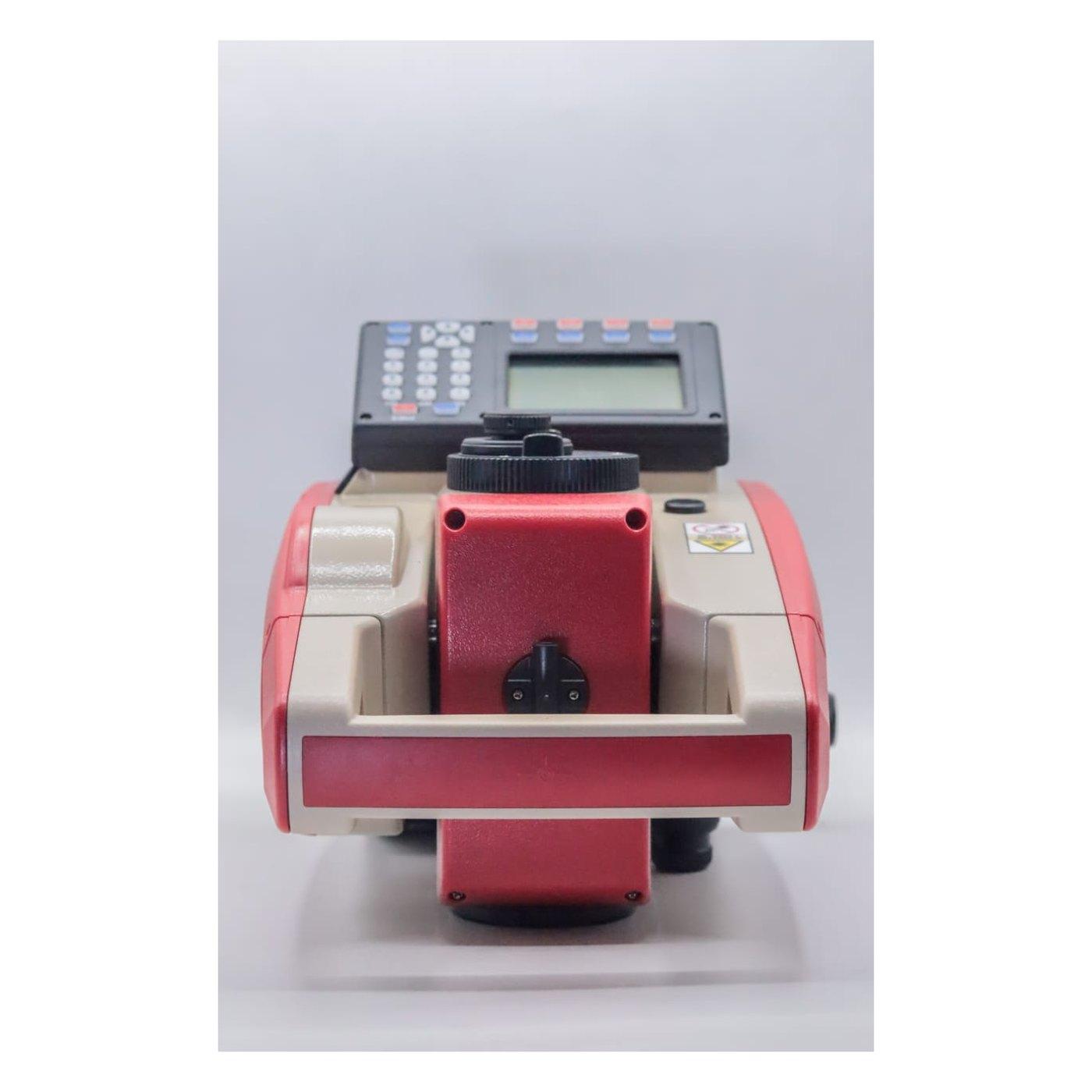
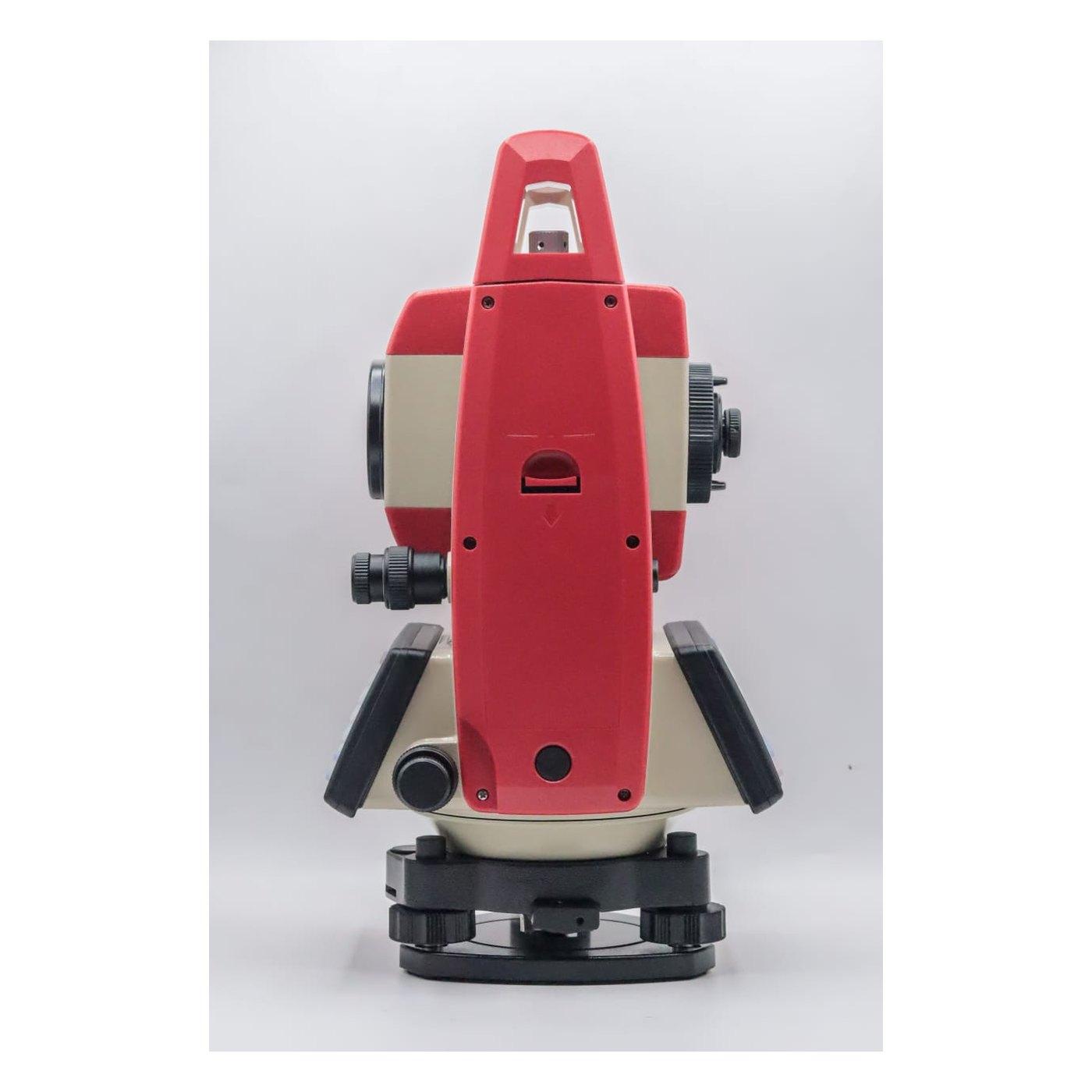
Auto level vs total station is a question of what you need to measure. An auto level measures only heights, to about 1 to 2 mm, and a good 32x kit costs PKR 65,000 to 100,000 in 2026. A total station measures angles and distances in 3D, and the Kolida KTS-442P complete set is PKR 500,000.
Contractors ask us which one to buy first almost every week, usually after a consultant has asked for coordinates or a slab has come out 30 mm off level. The honest answer depends on what goes wrong on your sites. This guide explains what each instrument does, where each is more accurate, what they cost, and when you need both.
What is the difference between an auto level and a total station?
An auto level gives you a horizontal line of sight. You read a levelling staff, and the difference between two readings is the difference in height. That is all it does, and it does it extremely well. It cannot tell you where a point is in plan, only how high it is.
A total station measures a horizontal angle, a vertical angle and a slope distance to a prism or a surface. From those three numbers it computes the easting, northing and height of the point. It can set out a column grid from a drawing, trace a road curve, survey a site for a topographic map, or locate plot corners in a housing society.
| Point | Auto level | Total station |
|---|---|---|
| Measures | Height difference only | Angles, distance, 3D coordinates |
| Height accuracy at site ranges | About 1 to 2 mm per setup | About 5 to 10 mm (trigonometric) |
| Plan position | None | About 2 to 3 mm within 200 m |
| Crew | 2: instrument and staff | 2: instrument and prism pole |
| Learning time for a site foreman | Half a day | 1 to 2 weeks to work confidently |
| Power | None | Batteries, about 8 hours on a KTS-442P |
| Indicative price (PKR, 2026) | 45,000 to 75,000 (32x), 90,000 to 120,000 (Sokkia B) | 500,000 KTS-442P complete set (our price); 950,000 to 1,125,000 Sokkia iM (market) |
Only the KTS-442P figure is our confirmed price, from August 2026. All other figures are 2026 market ranges in Pakistan. Confirm today's price on WhatsApp, rates move with the exchange rate.
How accurate are heights from each instrument?
This is the point most buyers miss. A total station measures heights, but not the same way and not as well as a level.
An auto level reads the staff directly. Each reading is good to about a millimetre at 50 metres with a 32x telescope, and a properly run line with equal sights closes at roughly 2 mm per kilometre.
A total station computes height from the slope distance and the vertical angle, then adds the instrument height and subtracts the prism height. Each of those carries an error. The vertical angle error grows with distance. The instrument height is measured with a tape to a mark on the side of the instrument, and is usually good to 2 or 3 mm. The prism pole height is read off a scale that is often bent, dirty or set to the wrong click. On a hot afternoon, refraction near the ground adds more.
Add those together and a careful crew gets heights good to 5 to 10 mm. That is fine for earthwork volumes, topographic survey, drainage design and road formation. It is not fine for a finished floor, a drain invert at 1 in 500, or a slab soffit.
The working rule we give crews: if the tolerance on a level is tighter than 10 mm, take it from the auto level, not the total station. Use the total station for where things go, and the level for how high they sit.
Which does a contractor need first?
For most contractors in Pakistan, the auto level comes first. Levels are needed on every day of a building or road job: excavation depth, PCC, footings, plinth, slab shuttering, floor finishes, external drainage, road layers. A level and a staff do all of it.
You need a total station when your work starts to depend on positions from a drawing rather than distances from an existing wall. In our experience that happens when:
- Plots go beyond about 1 kanal, or the building is not a simple rectangle.
- The consultant gives coordinates for grid lines, piles or boundary pillars.
- You are setting out a road curve, a culvert skew or a housing society layout.
- The client or a development authority such as CDA, RDA or LDA asks for an as-built survey.
- You are doing topographic survey for design or for earthwork quantities.
A small building contractor working on 5 and 10 marla houses can work for years with an auto level, a theodolite or a tape and a good foreman. A contractor on an NHA package, a WAPDA canal lining job or a 500 kanal housing society cannot.
What are the applications of total stations?
On Pakistani sites a total station does these jobs most often:
- Setting out column grids, pile positions and building corners from CAD coordinates.
- Housing society layout: plot corners, road centrelines and curves.
- Road and canal alignment, with chainage and offset stake-out.
- Topographic survey for design and earthwork quantities.
- Monitoring settlement or movement on retaining walls and embankments.
- As-built surveys for consultants and development authorities.
For setting out in open country over long distances, an RTK GNSS rover can be faster because it needs no line of sight. We compare the two in total station vs GPS.
When you need both
On any job bigger than a single house, you need both, and the crews that do well run them together.
A typical pattern on a road or housing society job: the total station crew sets out centreline and offset pegs from the design. The level crew follows and marks formation, subbase and base levels on the same pegs. Running heights from the total station alone saves an instrument but costs time later, when the road layers are checked and the consultant's level book does not agree with yours.
On a building: the total station sets out the grid and the column positions once per floor, transferring lines up through the slab. The auto level does every level on every floor, every day.
If the budget allows only one instrument this year, buy the level and the staff, and engage a survey firm with a total station for the few days of setting out. Then buy the total station when that cost is recurring every month.
What does a complete kit cost?
For a new crew starting from nothing, using 2026 market ranges except where we state our own price:
- Auto level kit: a 32x level, aluminium survey tripod and 5 metre levelling staff, about PKR 65,000 to 100,000.
- Total station kit: the Kolida KTS-442P complete set is PKR 500,000 from us and includes the tripod, prism, pole, batteries and charger.
- Both together: about PKR 565,000 to 600,000, which is the realistic budget for a site survey crew on a mid-sized project.
Confirm today's price on WhatsApp, rates move with the exchange rate.
What we supply
Both instruments are on our shelves in Rawalpindi, checked on our bench before dispatch:
- Kolida KTS-442P: 2 second, 600 metre reflectorless, PKR 500,000 complete set.
- Kolida KTS-591 Android: touchscreen and onboard CAD for crews who stake from drawings.
- Sokkia iM series: authorised Sokkia supply for consultants and long contracts.
- NA32 automatic level, Orion Plus and Sokkia B series under auto levels.
For prices by brand read total station price in Pakistan and auto level price in Pakistan. To keep either instrument honest, see total station calibration and dumpy level vs auto level.
Ask for today's price
Tell us the type of work, the size of your typical site and who checks your levels, and we will tell you honestly whether you need a level, a total station or both. Send us a WhatsApp for today's price, stock and delivery to your city.
What we supply
Equipment covered in this guide
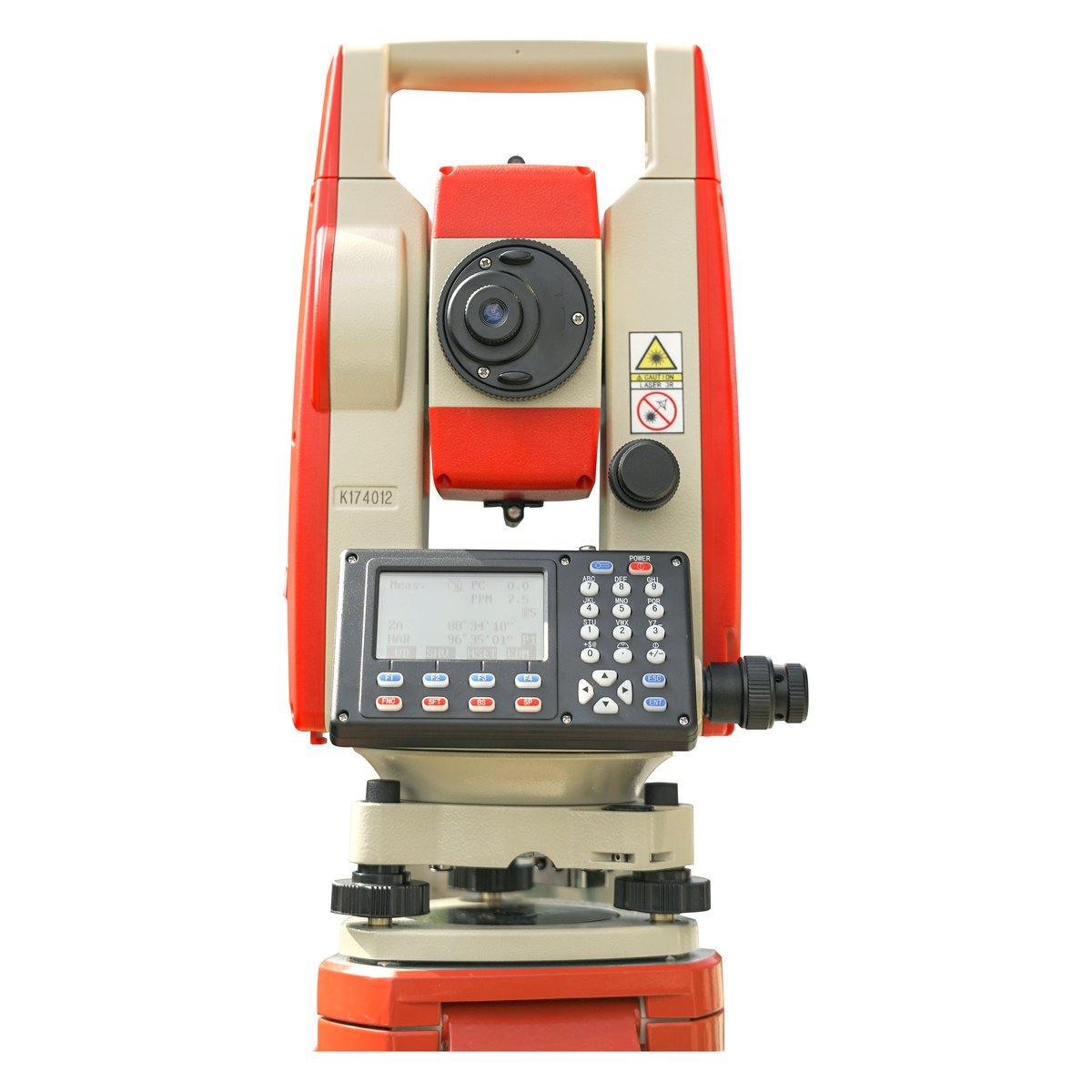 KolidaKTS-442P
Kolida KTS-442P Total Station
The workhorse of our survey counter. Reflectorless measurement, a rugged field build and a hard carry case that survives the back of a pickup.
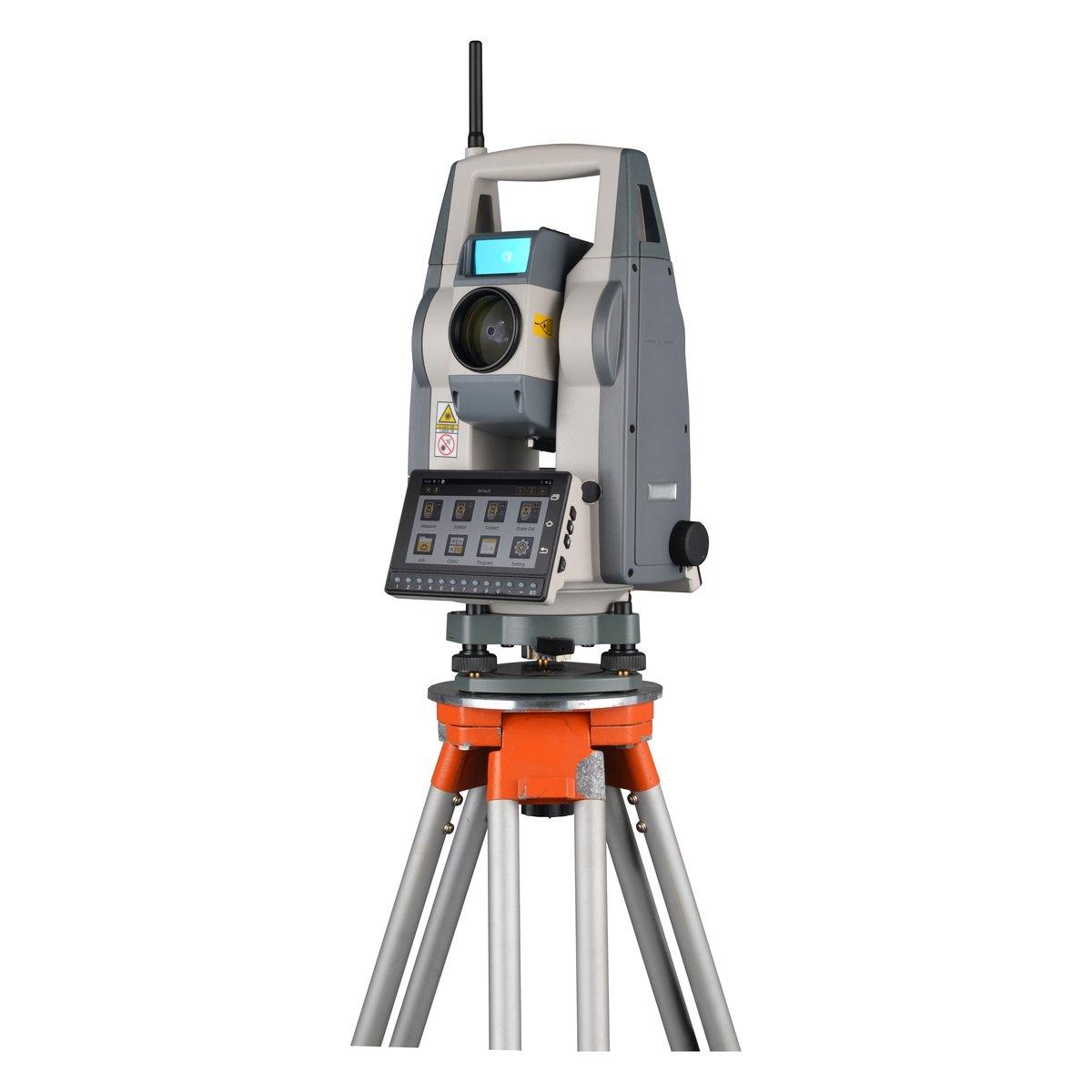 KolidaKTS-591
Kolida KTS-591 Android Total Station
A total station with an Android touch screen on the front and a keypad underneath it. Everything the 442P does, with survey software running on the instrument instead of a separate controller.
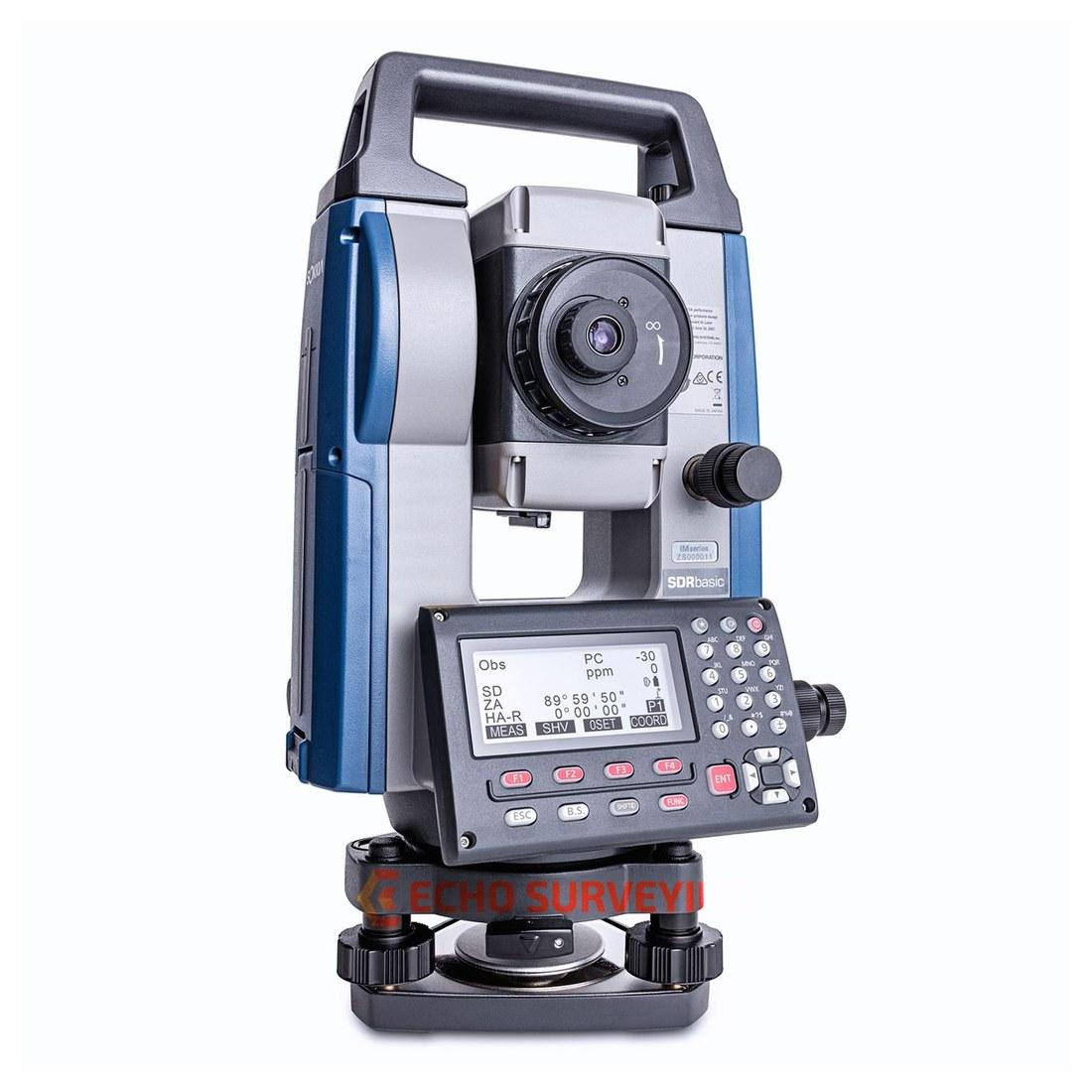 SokkiaiM-50 / iM-52 / iM-55 / iM-60 / iM-100 series
Sokkia iM Series Total Station
Japanese optics and angle measurement for control work where the tolerance is not negotiable. The iM-50, iM-55 and iM-100 series, supplied with training and calibration.
FAQ
Questions buyers ask us
What is the difference between an auto level and a total station?
An auto level measures only height differences, by reading a staff along a horizontal line of sight, to about 1 to 2 mm. A total station measures horizontal angles, vertical angles and distances, so it gives full 3D coordinates for setting out and topographic survey, with heights typically good to 5 to 10 mm.
Which should a contractor buy first, an auto level or a total station?
Most building and road contractors should buy an auto level first, because levels are needed every day from excavation to finishing, and a 32x kit costs about PKR 65,000 to 100,000. Add a total station when you set out grids, curves or plots from coordinates, typically once projects pass about 1 kanal.
Can a total station do the work of an auto level?
Partly. A total station gives trigonometric heights, typically accurate to 5 to 10 mm at normal site ranges, which is fine for earthwork and topographic survey. For floor levels, drain inverts, road crowns and slab soffits with tolerances under about 10 mm, an auto level and staff are faster and more accurate.
How much does a total station cost compared with an auto level in Pakistan?
The Kolida KTS-442P complete set is PKR 500,000 from us, confirmed August 2026. A good 32x auto level is a 2026 market range of PKR 45,000 to 75,000, so roughly 7 to 10 auto levels for one total station. Confirm today's price on WhatsApp, rates move with the exchange rate.
How is a total station different from a theodolite?
A theodolite measures only angles, horizontal and vertical, so distances need a tape. A total station adds an electronic distance measurement unit (EDM), reaching 600 metres without a prism on the KTS-442P, plus onboard memory and programs for coordinates, stake-out and resection. A digital theodolite costs PKR 120,000 to 250,000 in the 2026 market.
Which is more accurate, RTK or a total station?
A total station is more accurate at short range: about 2 to 3 mm in position within 200 metres. RTK GNSS is typically 1 to 2 cm horizontally and 2 to 3 cm vertically, but needs no line of sight between points. For building layout use a total station; for open land and long roads RTK is faster.