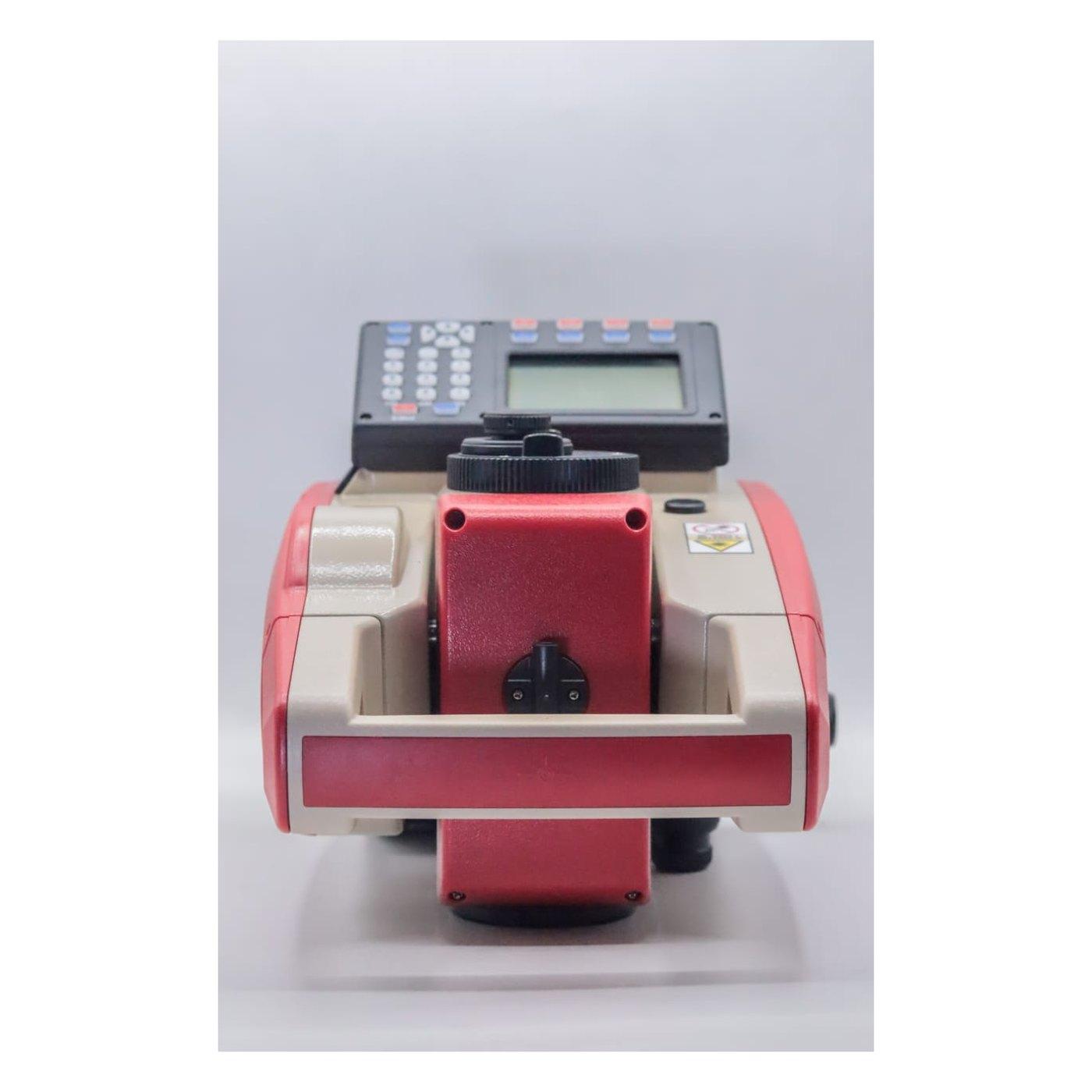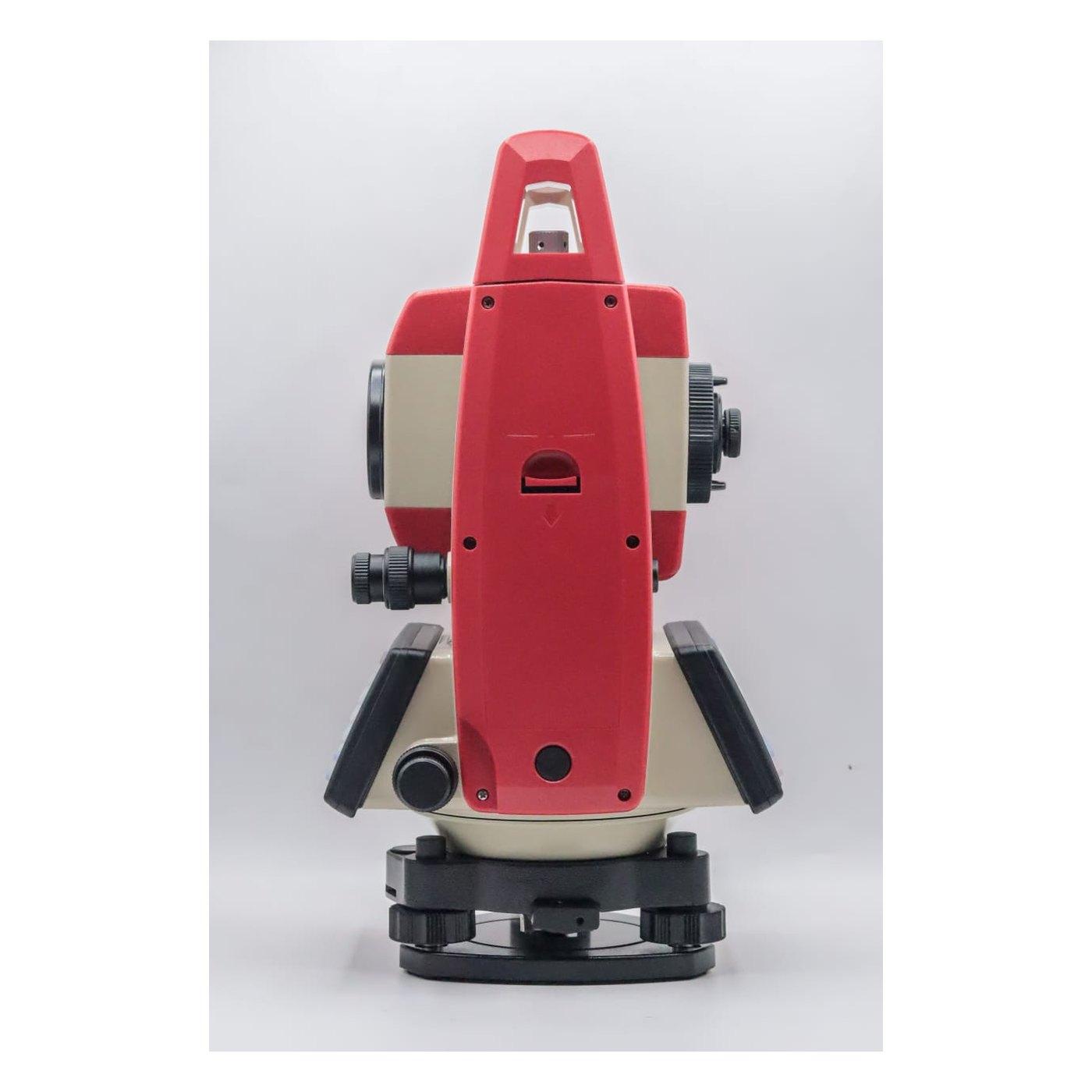
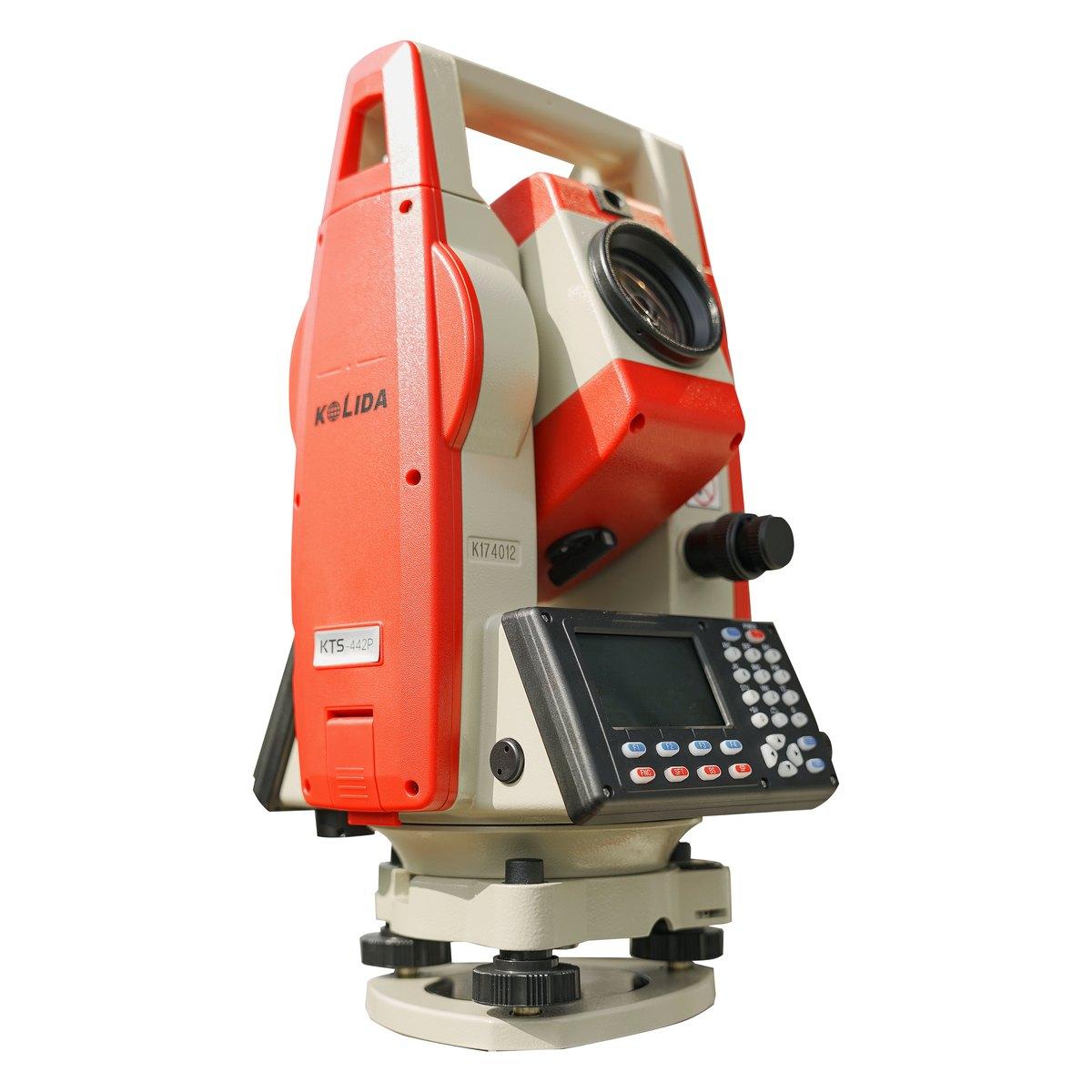
Total station calibration means checking and correcting the errors that creep into angles and distances: collimation, vertical index, tilt sensor zero, laser plummet and the EDM constant. A user can run the field checks in about an hour, monthly. A full bench calibration costs about PKR 10,000 to 25,000 in the 2026 Pakistani market and is due every 12 months.
We service and calibrate the Kolida and Sokkia instruments we sell on our own bench in Rawalpindi, and we see the same patterns every year: instruments that were knocked, instruments that cooked in a car in June, and instruments that were perfectly fine but were being used with the wrong settings. This guide sets out the checks you can do yourself, when the result means a bench visit, and what heat and dust actually do.
Why total stations go out of calibration
A total station is a set of axes that must be at right angles to each other: the line of sight, the horizontal or trunnion axis, and the vertical axis. On top of that sit a tilt sensor, an EDM and a laser plummet, each with its own zero. All of these are adjusted at the factory and on the bench. All of them drift.
The causes we see most:
- Knocks and falls. A tripod pushed over by labour or a vehicle, even onto soft ground.
- Transport. Hours in a pickup on rough roads, with the case loose in the back, works screws and the compensator loose.
- Heat. Large temperature changes, such as a car parked in the sun then used at once, shift the optics and electronics until they settle.
- Dust. Fine dust from Punjab and Sindh sites gets into tangent screws, the focusing ring and the EDM window.
- Time. Even a well treated instrument drifts slowly. Annual bench calibration catches it.
How do you calibrate a total station? The field checks
Modern instruments, including the Kolida KTS-442P and the Sokkia iM series, have onboard programs for the main checks. Use them on a calm morning, set up on firm ground, out of the sun if possible, after the instrument has reached air temperature.
Collimation (line of sight) error
Sight a sharp target about 100 metres away, roughly at the same height as the instrument. Read the horizontal angle on face left, transit the telescope and read on face right. The two readings should differ by exactly 180 degrees. Twice the collimation error is the difference from 180 degrees. The onboard program does the arithmetic and stores the correction.
Vertical index error
Using the same target, the vertical angles on face left and face right should add up to exactly 360 degrees. The difference, halved, is the index error. It affects every vertical angle, and so every height.
Tilting axis error
Sight a target at a steep angle, such as a mark high on a building or a tower. Tilting axis error shows up as a difference between faces that grows with the angle of the sight. Many instruments test this in the same program. If it is out, the instrument needs the bench.
Tilt sensor (compensator) zero
Run the compensator check in the onboard menu. It reads the tilt in one position and again after turning 180 degrees, and computes the zero offset. A small correction is normal. A large one after a fall suggests damage.
Laser plummet
Set up over a sharp mark, level carefully, and put the laser dot on the mark. Turn the instrument slowly through 360 degrees. The dot should stay on the mark. If it traces a circle larger than about 1 to 2 mm across, the plummet needs adjustment, and every setup over a peg is off by that much.
EDM baseline check
Set three or more pegs in a straight line on flat ground, say at 0, 40 and 100 metres. Measure every combination of distances. The two short distances should add up to the long one. If they do not, the difference reveals an additive constant error. Repeat on the same baseline every month and keep the results; a change is more telling than any single number.
Prism constant
Check the prism constant set in the instrument matches the prism in use. Many Chinese and Sokkia prisms are minus 30 mm; others are 0. A mismatch puts a fixed error of that size into every distance and is the commonest false "calibration fault" we see.
Summary of field checks
| Check | How | What should happen | When to send it to the bench |
|---|---|---|---|
| Collimation | Face left and right to a target at about 100 m | Hz readings differ by 180 degrees | Correction keeps growing month to month |
| Vertical index | Same target, both faces | Vertical angles sum to 360 degrees | After a fall, or correction is large |
| Tilting axis | Steep target, both faces | Same as collimation at steep sights | Any noticeable error |
| Tilt sensor zero | Onboard compensator check | Small offset only | Large offset or unstable reading |
| Laser plummet | Rotate 360 degrees over a mark | Dot stays on mark within 1 to 2 mm | Circle larger than about 2 mm |
| EDM baseline | 3 pegs in line, all combinations | Parts add up to the whole within a few mm | Persistent difference or drift |
| Prism constant | Compare setting with prism label | Values match | Not a bench issue: change the setting |
ISO 17123: the standard behind the checks
ISO 17123 is the international series of field test procedures for surveying instruments. Part 3 covers theodolites, part 4 electro-optical distance measuring instruments, and part 5 total stations. The tests describe how many sets of observations to take, in what pattern, and how to compute the experimental standard deviation of the instrument as used in the field.
You do not need to run the full procedure every month. But for a consultant who asks for evidence of accuracy, or a large contract where the equipment list is audited, a test following ISO 17123 gives a defensible record. We can run and record it on the bench.
What heat and dust do
Heat is the bigger problem in Pakistan. An instrument stored in a closed car in Multan or Hyderabad in June can be 20 degrees hotter than the air. Until it settles, angles and the electronic level drift. Allow about two minutes for every degree of difference before you measure.
Heat also affects distance through the atmospheric correction. The EDM speed of light depends on air temperature and pressure, and the instrument needs both entered.
A temperature setting 20 degrees wrong puts about 20 parts per million into every distance: 2 mm per 100 metres, 20 mm per kilometre. Instruments left at the factory default of 20 degrees Celsius and used in 40 degree Sindh summers are measuring every long line short or long, and no calibration will fix that. Enter the real temperature each morning and again after noon.
Dust works more slowly. It stiffens the tangent screws, scratches the objective lens when wiped dry, and clouds the EDM window, which shortens reflectorless range. Use a blower brush first, then a lens cloth. Keep the rain cover on in dusty wind and keep the case closed. During the monsoon, dry a wet instrument with the case open indoors.
When to send it to a service bench
Send the instrument in when:
- Field checks show errors outside the limits in the manual, or a correction keeps growing.
- The instrument has fallen, even if it seems fine.
- Readings jump, the compensator will not settle, or the EDM gives no reading to a prism at normal range.
- A consultant or client asks for a calibration certificate, usually under 12 months old.
- It has been 12 months since the last bench check.
We service and calibrate the Kolida and Sokkia instruments we sell, with spares held in Rawalpindi, usually within three working days. Bench calibration in the 2026 market costs about PKR 10,000 to 25,000, more if parts are needed. Confirm today's price on WhatsApp, rates move with the exchange rate.
What we supply
Instruments, spares and accessories from our total stations and tools and accessories ranges:
- Kolida KTS-442P: calibrated before dispatch, PKR 500,000 complete set.
- Kolida KTS-591 Android and Sokkia iM series.
- Single prism with tribrach, tribrach and carrier and a proper instrument transport case, which prevents most of the damage we repair.
For setup technique read how to use a total station. For choosing an instrument, see best total station for surveying in Pakistan.
Ask for today's price
For a calibration slot, a certificate for a consultant, or today's price on a new instrument, send us a WhatsApp with the make, model and what the field checks showed. We reply during business hours with a date and an honest view of whether it needs the bench at all.
What we supply
Equipment covered in this guide
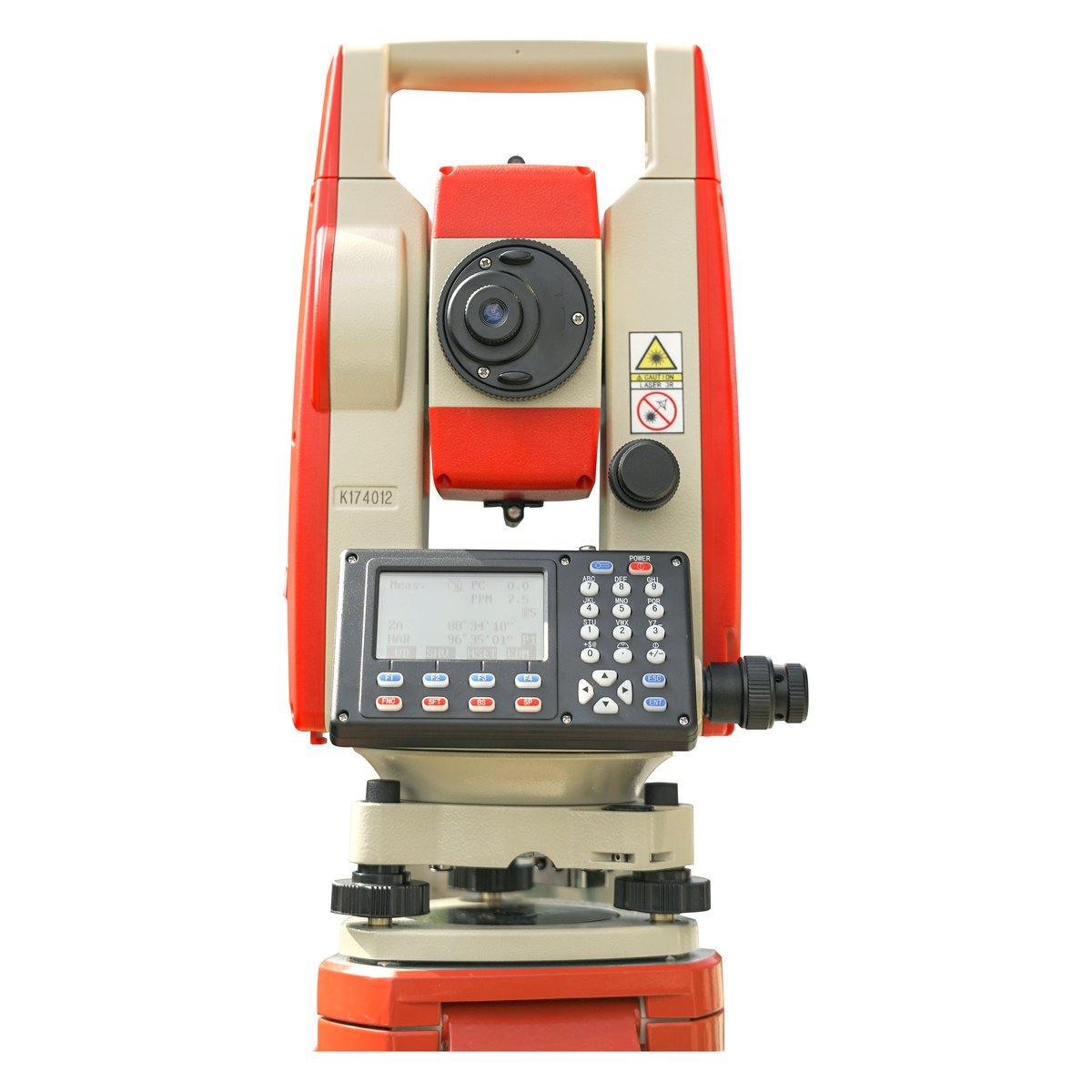 KolidaKTS-442P
Kolida KTS-442P Total Station
The workhorse of our survey counter. Reflectorless measurement, a rugged field build and a hard carry case that survives the back of a pickup.
 KolidaKTS-591
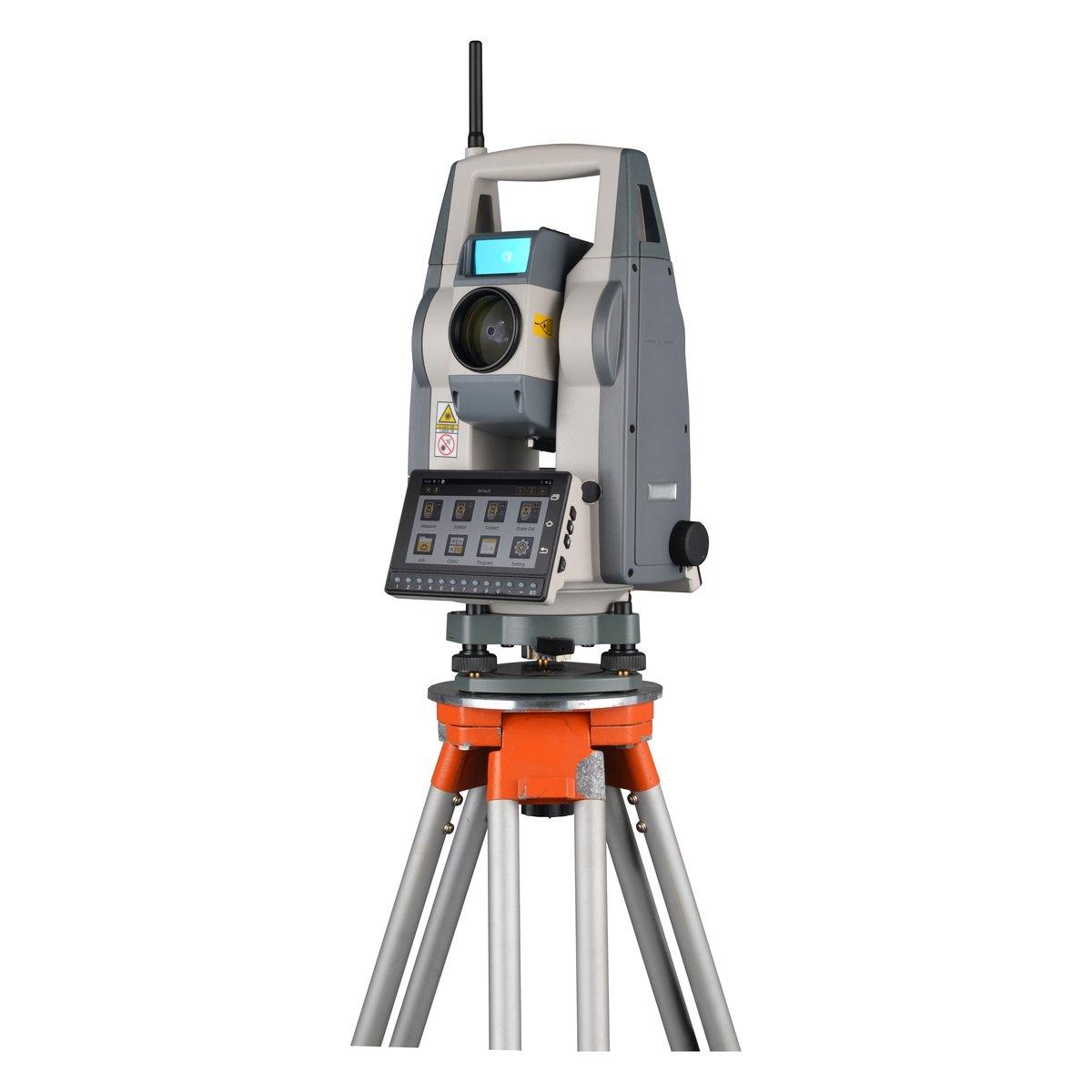
Kolida KTS-591 Android Total Station
A total station with an Android touch screen on the front and a keypad underneath it. Everything the 442P does, with survey software running on the instrument instead of a separate controller.
 SokkiaiM-50 / iM-52 / iM-55 / iM-60 / iM-100 series
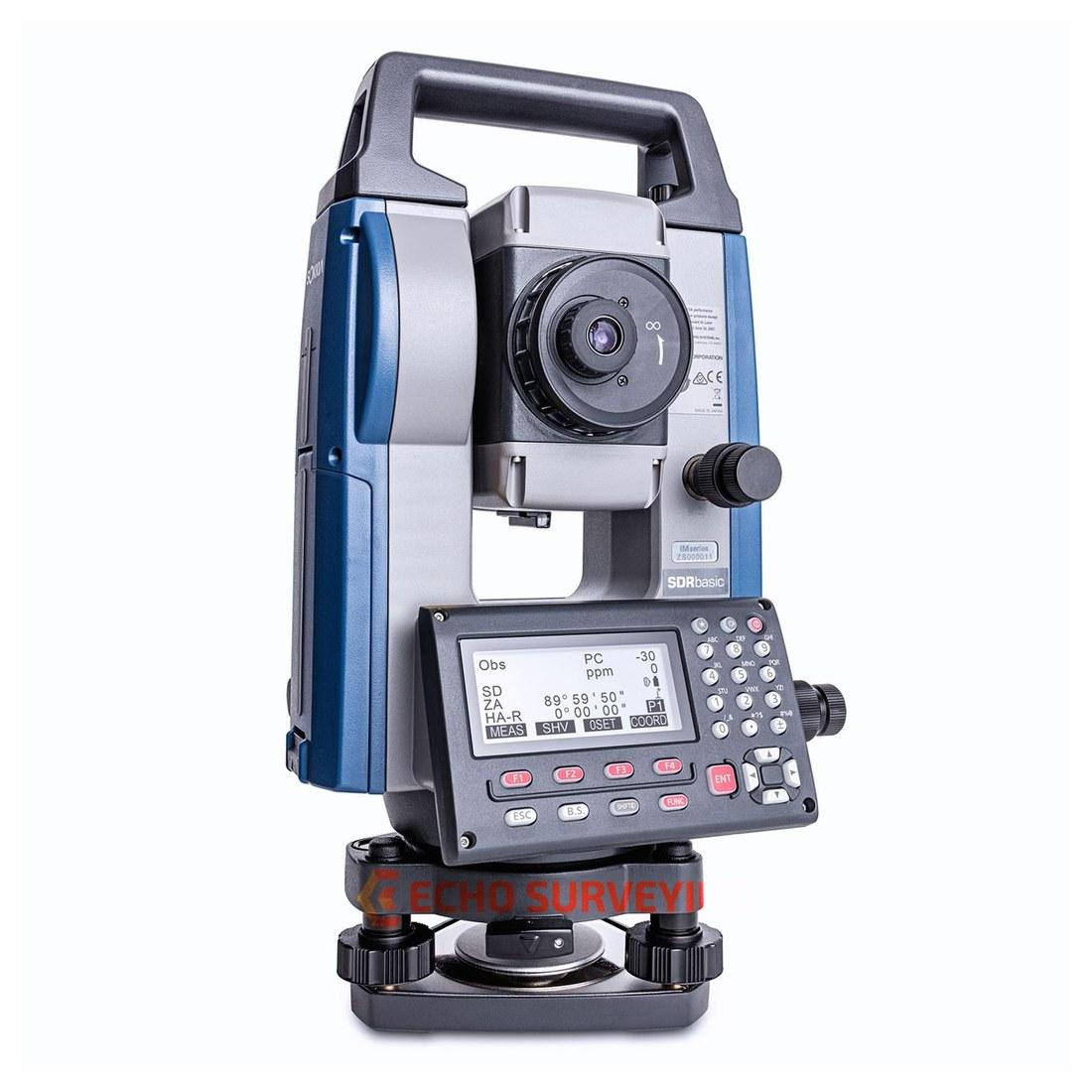
Sokkia iM Series Total Station
Japanese optics and angle measurement for control work where the tolerance is not negotiable. The iM-50, iM-55 and iM-100 series, supplied with training and calibration.
FAQ
Questions buyers ask us
How much does it cost to calibrate a total station in Pakistan?
In the 2026 Pakistani market a bench check and adjustment of a total station costs about PKR 10,000 to 25,000, more if a part such as a compensator or EDM board is needed. Confirm today's price on WhatsApp, rates move with the exchange rate. We service the Kolida and Sokkia instruments we sell on our Rawalpindi bench.
How do you calibrate a total station?
Use the instrument's onboard calibration program. Sight a well-defined target about 100 metres away near the horizontal, measure on face left and face right, and the instrument computes collimation and vertical index error. Repeat the tilt sensor zero, then check the laser plummet and EDM separately. Compare results with the limits in the manual.
How often should a total station be calibrated?
Do field checks at least once a month and before any major job, and after every fall or long road journey. Send the instrument for a full bench calibration once every 12 months, or every 6 months on heavy road and canal work. Many consultants ask for a certificate under 12 months old.
What is ISO 17123?
ISO 17123 is the international standard series of field procedures for testing surveying instruments. Part 3 covers theodolites, part 4 electro-optical distance measuring instruments, and part 5 total stations. It describes how many sets of measurements to take and how to compute the instrument's standard deviation, so a user can confirm accuracy in about 1 to 2 hours.
Which is more accurate, RTK or a total station?
Within about 200 metres a calibrated total station is more accurate: 2 to 3 mm in position. RTK GNSS is typically 1 to 2 cm horizontally and 2 to 3 cm vertically. A total station that is out of calibration, though, can be worse than RTK, which is why the monthly checks matter.
What is the principle of EDM in surveying?
An EDM sends an infrared or laser signal to a prism or surface and measures the returned signal, by phase difference or time of flight, to compute distance. Accuracy is stated as a constant plus a proportional part, for example 2 mm plus 2 ppm, which is 4 mm at 1 kilometre.