
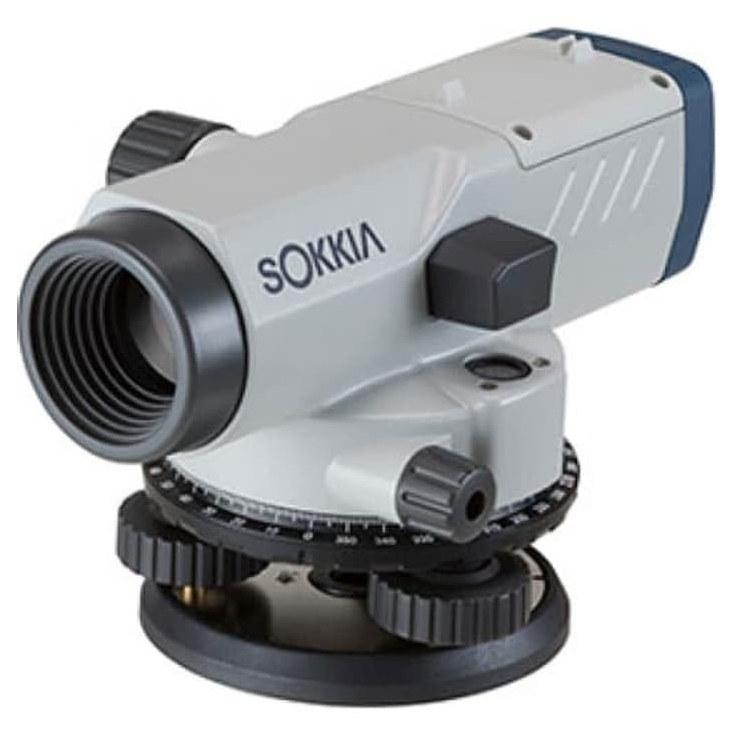
Dumpy level vs auto level comes down to the compensator. A dumpy level is levelled by hand with a bubble tube before every sight; an auto level levels its own line of sight within about 15 minutes of arc. A good 32x auto level closes at about 2 mm per kilometre and costs PKR 45,000 to 75,000 in 2026.
Twenty years ago, when we started selling levels from Rawalpindi, a site engineer on a WAPDA canal job or a CDA sector road still carried a dumpy level. Today we sell perhaps one dumpy-style instrument a year, almost always to a polytechnic lab. This guide explains what changed, what each instrument actually does, and what a consultant will accept on your site.
What is the main function of a dumpy level?
A dumpy level does one job: it gives a horizontal line of sight so you can read a levelling staff and work out differences in height. The telescope is fixed rigidly to the vertical spindle, which is where the name comes from: it is short and solid, or "dumpy".
To use it, you set the tripod, then level the instrument with three or four footscrews using a long, sensitive bubble tube mounted on the telescope. You level over two footscrews, turn 90 degrees, level over the third, and repeat until the bubble stays centred all the way round. Only then is the line of sight horizontal, and only if the bubble tube is in adjustment.
On a calm, cool morning a careful operator does this well. On a June afternoon in Multan or Jhelum, with the tripod legs sinking slowly into soft fill and the bubble drifting as the metal heats, every sight needs a glance at the bubble and often a touch on the footscrews. Miss one and the reading is wrong, with nothing to tell you so.
Why is an auto level called an auto level?
An auto level, also called an automatic level, levels its own line of sight. You centre a small circular bubble with three footscrews, which takes about twenty seconds, and a compensator inside the telescope does the rest.
The compensator is a small prism or mirror assembly hung on fine wires or a pivot. Gravity pulls it to hang straight, and the optics are designed so that when the instrument is tilted slightly, the swinging compensator bends the line of sight back to horizontal. Most compensators work over a range of about plus or minus 15 minutes of arc, which is why the circular bubble only needs to be roughly centred. A damping system, magnetic or air, stops it swinging for long.
The result is that every reading on the staff comes from a horizontal line, even if the tripod settled a little since the last sight. That single change removed the most common error in levelling: the operator forgetting to re-check the bubble.
What are the key differences between a dumpy level and an auto level?
| Point | Dumpy level | Auto level |
|---|---|---|
| Levelling method | Long bubble tube, re-checked every sight | Circular bubble plus compensator |
| Setup time | 3 to 5 minutes | Under 1 minute |
| Typical magnification | 18x to 25x | 24x to 32x |
| Realistic accuracy, double-run levelling | About 3 to 6 mm per km | About 1.5 to 2.5 mm per km for a 32x unit |
| Effect of tripod settling | Error until bubble re-centred | Corrected within compensator range |
| Common failure | Bubble tube out of adjustment | Sticking or damaged compensator after a drop |
| Indicative market price (PKR, 2026) | Rarely sold new; teaching labs only | 25,000 to 45,000 (24x), 45,000 to 75,000 (32x), 90,000 to 120,000 (Sokkia B series) |
Accuracy figures are typical field results with a good operator and staff, not laboratory specifications. Prices are 2026 market ranges in Pakistan. Confirm today's price on WhatsApp, rates move with the exchange rate.
Why dumpy levels disappeared from Pakistani sites
Three things pushed the dumpy out.
Price. Chinese factories brought the price of a reliable 32x auto level down to the price a dumpy used to cost. Once a 32x auto level costs PKR 45,000 to 75,000, there is no budget argument left for the older design.
Speed. Highway, canal and housing society work in Pakistan is measured in kilometres of levelling a week. An instrument that sets up in under a minute and does not need the bubble re-checked on each sight lets one crew do noticeably more stations in a day, with fewer mistakes to chase in the office.
Heat and soft ground. Our sites are hot and our fill is loose. A tripod on a freshly compacted embankment in Punjab settles a little through the morning. With a dumpy, that settling is an error until the operator notices. With an auto level, the compensator absorbs it, as long as the circular bubble stays within range.
Dumpy levels still have one real use: teaching. Levelling a dumpy by hand teaches a student what a horizontal line of sight actually means, and why the bubble tube must be in adjustment. That is why the instruments we still see are in engineering college stores, often next to an old optical theodolite.
Which method of levelling is most accurate?
For heights, differential levelling with a good level and staff is the most accurate method a site crew can use. It beats trigonometric heights from a total station and RTK GNSS heights by a wide margin over short distances.
Within differential levelling, accuracy depends on method more than on the instrument:
- Keep backsight and foresight distances equal, within a few metres. This cancels most of any remaining collimation error and the effect of earth curvature and refraction.
- Keep sights under about 60 metres in summer. Heat shimmer above hot ground bends the line of sight, worst in the low metre near the surface.
- Read the staff at least 0.5 metres above the ground for the same reason.
- Use a staff bubble so the staff is held plumb. A leaning staff always reads high.
- Run every line out and back, or close it on a known benchmark, and compute the misclosure before you leave site.
The three types of levelling you will hear about are differential levelling (what this article is about), trigonometric levelling with a theodolite or total station, and barometric or GNSS heighting. Only the first is used to set a road crown or a drain invert to the millimetre.
What Pakistani consultants accept
We are asked this most weeks by contractors starting their first NHA, NESPAK, provincial C&W or development authority job. The short answer: consultants accept an auto level, and they have not expected a dumpy level for a long time.
What they check is the result and the record:
- Loop closure. Your level runs must close within the tolerance in the contract specification. That tolerance is normally written as a number of millimetres multiplied by the square root of the loop length in kilometres. Read the figure in your own specification rather than assuming one.
- A recent two-peg test. Many resident engineers ask to see one, especially at the start of a contract. Keep it in the level book with the date.
- A calibration note. For larger contracts, a dated check from the supplier's bench is expected for every instrument on the equipment list.
- Benchmarks. Levels must start and close on the project benchmarks, not on an assumed datum.
A Sokkia B series level is the instrument some consultants and university labs specify by name. A 32x NA32 class or Orion Plus does the same job on most building and road sites. Both are accepted if the record is clean.
Before you trust any auto level, tap a tripod leg lightly while reading the staff. The crosshair should swing and settle back on the same millimetre within about two seconds. If it settles on a different figure, the compensator is sticking, and a sticking compensator is worse than a dumpy level because it gives you a confident wrong number with no bubble to warn you. We see this on the bench after falls and after instruments ride loose in a pickup on rough roads.
What we supply
We stock auto levels for every budget under auto levels, each checked on our Rawalpindi bench before dispatch:
- Orion Plus automatic level: 32x, a dependable instrument for building and road crews.
- NA32 automatic level: the standard 32x class most Pakistani contractors run.
- Sokkia B series automatic level: the Japanese step up, authorised Sokkia supply.
- Wild Heerbrugg NA32 automatic level: for buyers who want the classic Swiss optics.
- Levelling staff and ranging rod and an aluminium survey tripod to complete the kit.
For full price bands see our auto level price in Pakistan guide. If you are deciding whether you need a total station as well, read auto level vs total station. For floors and interior work, a laser level may suit better.
Ask for today's price
Auto level prices move with the exchange rate, so the figures above are a guide, not a quote. Tell us what you are levelling, a building, a road or a canal, and how long your typical sights are, and we will recommend the right magnification honestly. Send us a WhatsApp for today's price, stock and delivery to your city.
What we supply
Equipment covered in this guide
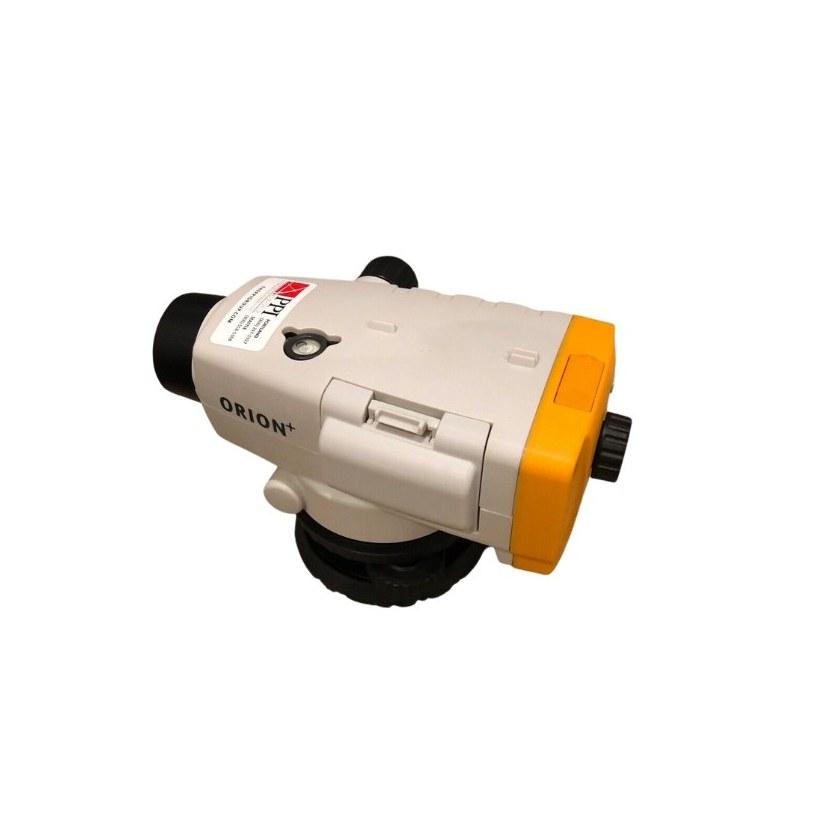 Orion+
 Automatic Level
A compensator level that settles fast and stays settled. The one we hand a site engineer who levels every day and has no time to fuss with it.
 NA32
Wild Heerbrugg NA32 Automatic Level
The Swiss NA32, kept because it still works. A serviced classic instrument for collectors, teaching sets and surveyors who trust the glass.
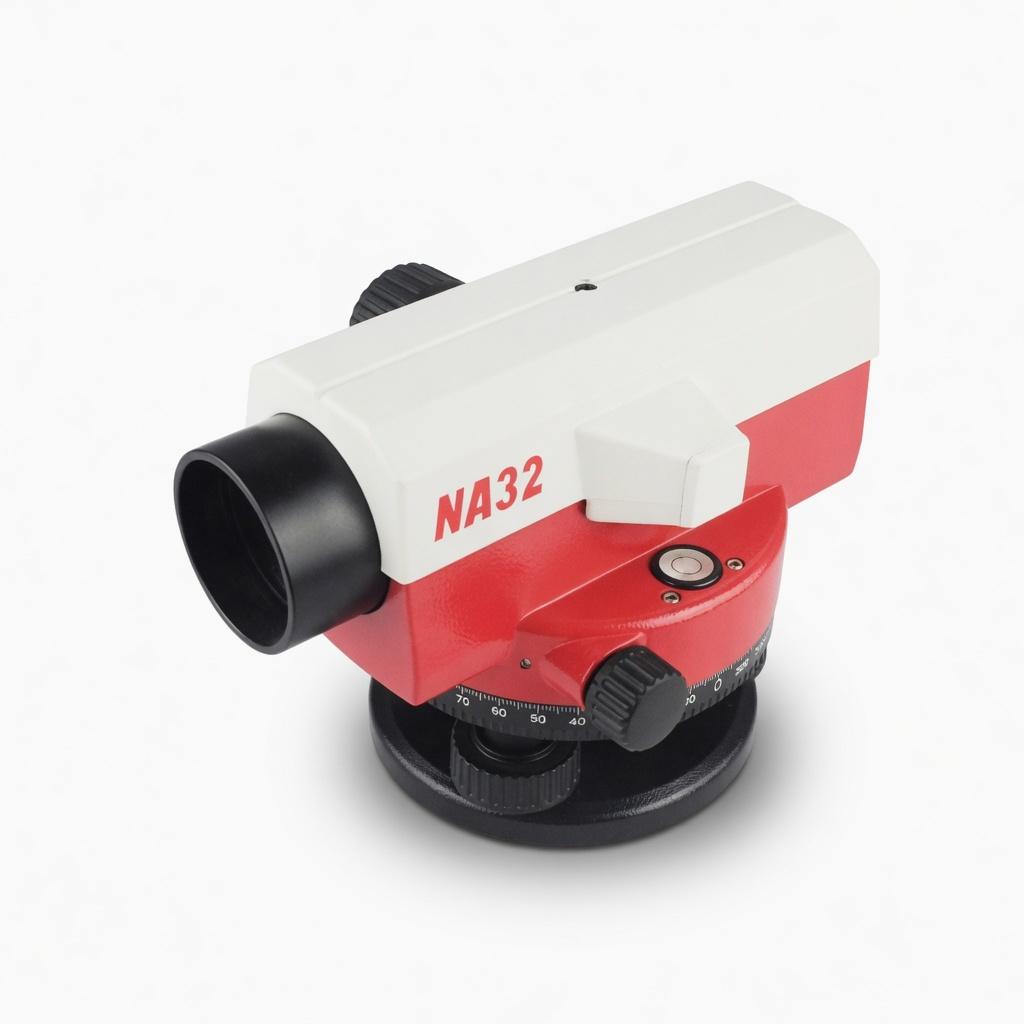 NA32
NA32 Automatic Level
The classic 32x automatic level. Simple, repairable and still the most common instrument on a Pakistani site.
FAQ
Questions buyers ask us
What is the main difference between a dumpy level and an auto level?
A dumpy level must be levelled by hand with a long bubble tube before every reading, and that bubble must stay centred for the reading to be right. An auto level has a compensator that hangs a prism on fine wires and corrects the line of sight automatically once the circular bubble is roughly centred, within about 15 minutes of arc.
Why is an auto level called an auto level?
Because it levels its own line of sight. A pendulum compensator inside the telescope swings under gravity and keeps the horizontal line horizontal even when the instrument is tilted slightly, typically up to about 15 minutes of arc. The operator only centres the circular bubble with 3 footscrews.
Is a dumpy level more accurate than an auto level?
No. In practice a good 32x auto level reaches about 1.5 to 2.5 mm per kilometre of double-run levelling, while a dumpy level in normal site hands is closer to 3 to 6 mm, mostly because the bubble is not re-centred perfectly on every sight in the heat.
Can I still buy a dumpy level in Pakistan?
New dumpy levels are rare and are sold mostly to teaching labs. A budget 24x auto level costs PKR 25,000 to 45,000 in 2026 and a good 32x unit PKR 45,000 to 75,000, so there is little saving in a dumpy. Confirm today's price on WhatsApp, rates move with the exchange rate.
Do NHA or NESPAK consultants accept an auto level?
Yes. Consultants judge the result, not the instrument type: your level loop must close within the tolerance in the contract specification, usually a few millimetres times the square root of the loop length in kilometres. Keep a peg test record from the last 30 days and a calibration note, and an auto level is accepted.
How often should I check an auto level?
Do a two-peg test at least once a month, and again after any fall, a long road journey or a tripod knocked over by labour. It takes about 15 minutes with 2 pegs 60 metres apart. If the error is more than about 3 mm over that distance, have the instrument adjusted.