Steel bar cutting machine price in Pakistan in 2026 runs from about PKR 150,000 to 260,000 for an electric GQ40 bench cutter that shears bars to 40 mm, and PKR 220,000 to 380,000 for the heavier GQ50 rated to 50 mm. Handheld hydraulic cutters for bars to 25 mm cost PKR 45,000 to 150,000.
Most steel on a Pakistani site is still cut with a disc grinder or a hacksaw and a lot of patience. That works for a few bars. Once a site is cutting several tonnes a week from a bar bending schedule, the grinder becomes the slowest and most dangerous part of the steel yard. This guide sets out what each class of cutter costs, which size you need, and the things that wear out.
How much does a steel bar cutting machine cost in Pakistan?
A steel bar cutting machine costs between about PKR 45,000 for a handheld hydraulic unit and PKR 380,000 for a heavy GQ50 bench cutter. The price depends on the largest bar it will shear, the motor and gearbox, and whether the frame is built to run every day.
| Class | Largest bar | Drive | Typical use | Indicative market price (PKR) |
|---|---|---|---|---|
| Manual handy cutter | 12 to 16 mm | Lever or hand pump | Small repairs, odd bars | 8,000 to 30,000 |
| Handheld hydraulic cutter | 16 to 25 mm | Electric motor, hydraulic ram | Houses, fixing on the slab | 45,000 to 150,000 |
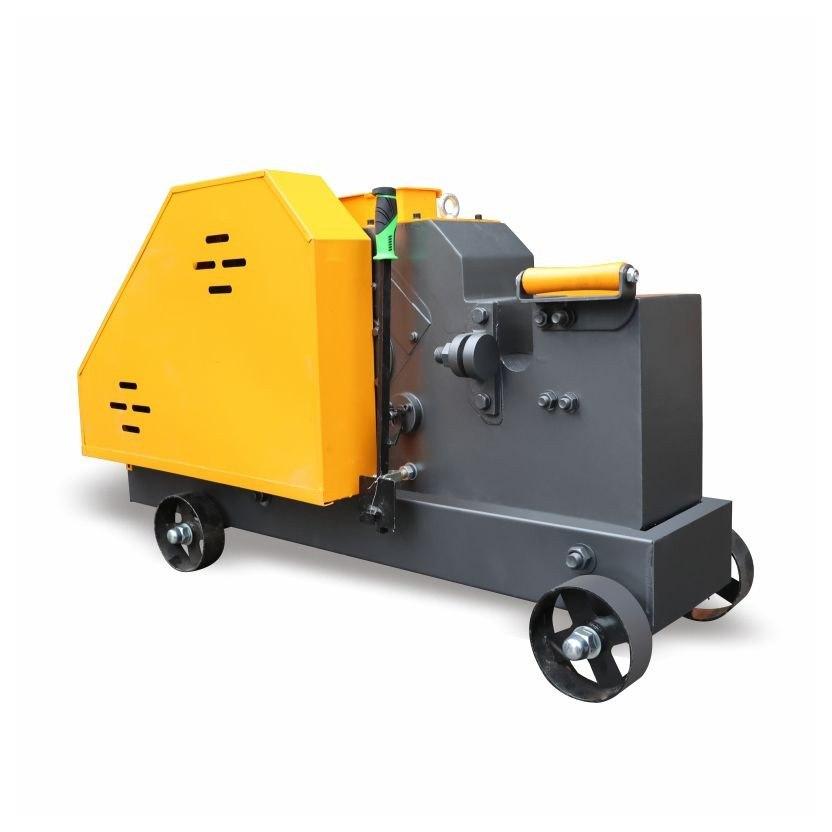
| GQ40 bench cutter | 40 mm | Electric motor, flywheel and crank | Building site steel yards | 150,000 to 260,000 |
| GQ50 bench cutter | 50 mm | Heavier motor and gearbox | Bridges, piles, high rise cores | 220,000 to 380,000 |
These are 2026 market ranges for new machines. Confirm today's price on WhatsApp, rates move with the exchange rate. Most bench cutters in Pakistan are imported from China, so a swing of a few rupees in the dollar moves the landed price by thousands.
GQ40 vs GQ50: which size do you need?
The number in the model is the largest bar in millimetres. Choose by the largest bar on your schedule, not the average.
- GQ40: shears deformed and plain bar up to 40 mm. That covers almost all residential and commercial building work in Rawalpindi, Islamabad and Lahore, where main bars run 12 to 25 mm and columns rarely go above 32 mm. It is the cutter most steel fixers already know.
- GQ50: the same flywheel and crank principle on a heavier frame and gearbox, rated to 50 mm. It belongs on bridge decks, pile cages, transfer beams and high rise cores, where 32 and 40 mm bar is routine and a GQ40 would be working at its limit all day.
The ratings are usually quoted for ordinary strength bar. Pakistani mills now supply mostly Grade 60 deformed bar, and on NHA and NESPAK supervised work you will also see higher grades. Treat a cutter's rating as one bar size lower for Grade 60 and above if you want the crank and blades to last. A GQ40 will cut a 40 mm Grade 60 bar, but doing it all day is how gear teeth break.
How many bars can a rebar cutter cut at once?
A bench cutter shears a bundle of smaller bars in one stroke, and this is where it beats every other method. The rule we give customers is simple: add up the cross sectional area of the bars and keep it under about 70 percent of the area of the machine's rated bar. Then lay them flat in one row across the blade.
| Bar size | Area of one bar (mm²) | GQ40 bundle (limit about 880 mm²) | GQ50 bundle (limit about 1,370 mm²) |
|---|---|---|---|
| 10 mm | 79 | 10 to 11 bars, if the blade is wide enough | Blade width is the limit |
| 12 mm | 113 | 7 bars | 12 bars, if the blade is wide enough |
| 16 mm | 201 | 4 bars | 6 bars |
| 20 mm | 314 | 2 bars | 4 bars |
| 25 mm | 491 | 1 bar | 2 bars |
| 32 mm | 804 | 1 bar | 1 bar |
In practice the width of the blade often limits small bar before the area does. Never stack bars on top of each other: the top bar rides up, the cut is angled, and the blade edge chips. A GQ40 makes about 30 strokes a minute, so even one bar at a time it outruns any grinder.
Handheld hydraulic and manual cutters
A handheld electric hydraulic cutter has a small motor driving a hydraulic ram that pushes a blade through one bar at a time. Units rated to 16, 20 and 25 mm are common. They take 3 to 5 seconds a cut, weigh 8 to 20 kg, and run on a normal 220 V socket.
They earn their place in three situations:
- On the slab, trimming bars that are already fixed, where a bench cutter cannot reach.
- Small sites such as a single house, where the schedule rarely goes past 16 mm.
- Repairs and retrofits, cutting out corroded bars in a beam or a water tank.
A manual handy cutter, a lever or hand pumped unit, handles 12 to 16 mm and costs very little. It is a sensible spare in the van. It is not a production tool.
Power supply on site: three phase, single phase and generators
Bench cutters are electric. Most GQ40 and GQ50 machines are wound for 380 V three phase with motors around 3 kW and 4 kW, and single phase 220 V versions are sold for smaller sites. Before you buy, check what supply the site actually has.
- Three phase WAPDA connection: the best case. Fit the machine with its own breaker and a phase sequence check so the flywheel turns the right way.
- Single phase only: buy the 220 V version. Do not run a three phase motor from a phase converter of unknown quality.
- Generator: size it at three to four times the motor rating so it starts under load, which means at least 10 to 15 kVA.
The failure we see most often is low voltage. In summer, when the grid sags in the afternoon, a motor fed through 60 metres of thin cable draws more current, overheats and burns its winding. Use 4 to 6 mm² cable for long runs and keep the machine near the supply, not the cable near the steel.
Blade wear and what breaks
A bench cutter has two blades, one fixed and one moving. Each blade is usually a square with four usable edges, so a set can be turned three times before replacement.
- Blade edges: chipped by stacked bars, too many bars, or a blade gap that has opened up. Check the gap weekly; it should be well under 1 mm.
- Blade bolts: loosen with vibration, which opens the gap. Tighten them daily.
- Gear oil: the gearbox runs in oil. Low oil in 45 degree heat ruins the gears in a season.
- Clutch and crank: worn by cutting at the rated limit all day.
- Dust: site dust packs the motor fan and cooling fins. Blow it out weekly from April to September.
We hold blades, bolts and clutch parts for the cutters we sell, and service them on our own bench in Rawalpindi.
What we supply
All rebar processing machines are under small machinery.
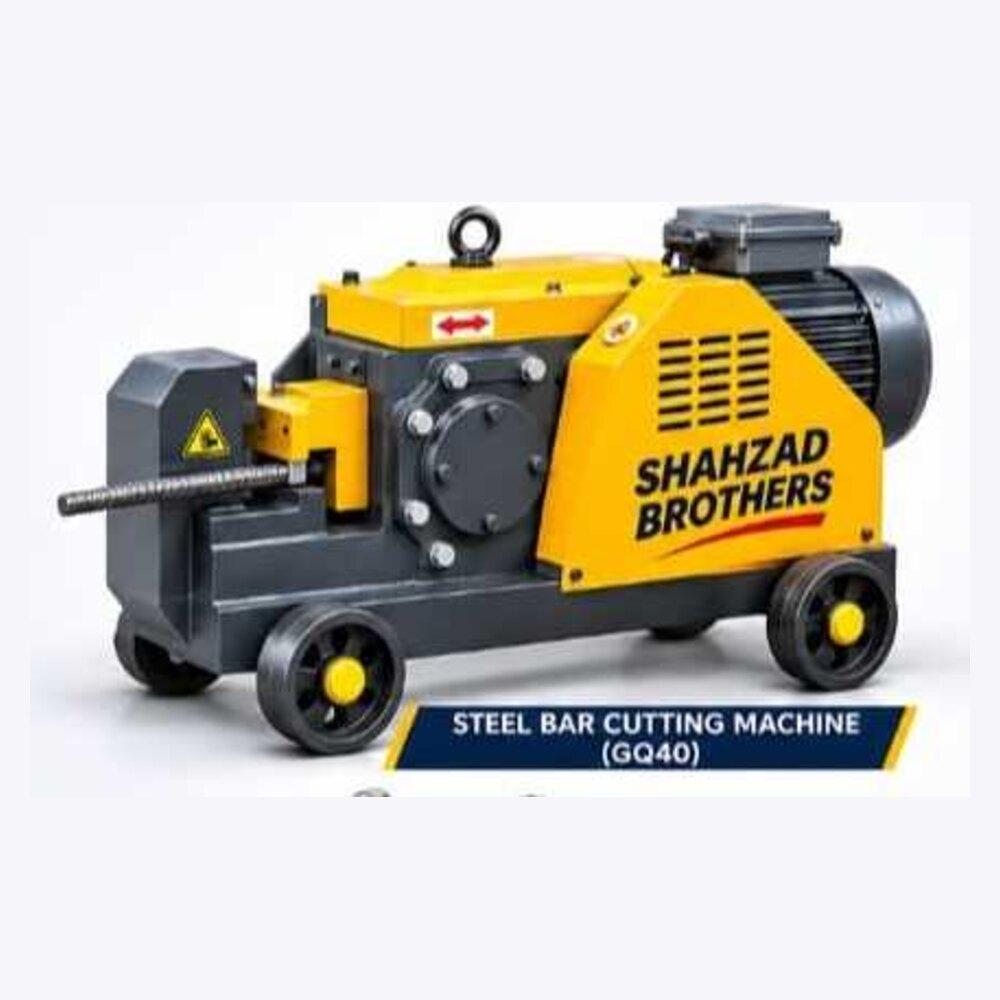
- Steel bar cutting machine GQ40: the standard yard cutter, bars to 40 mm, on wheels.
- Steel bar cutting machine GQ50: heavier frame and gearbox, bars to 50 mm.
- Steel bar cutter and handy steel bar cutter: for smaller bar and work on the slab.
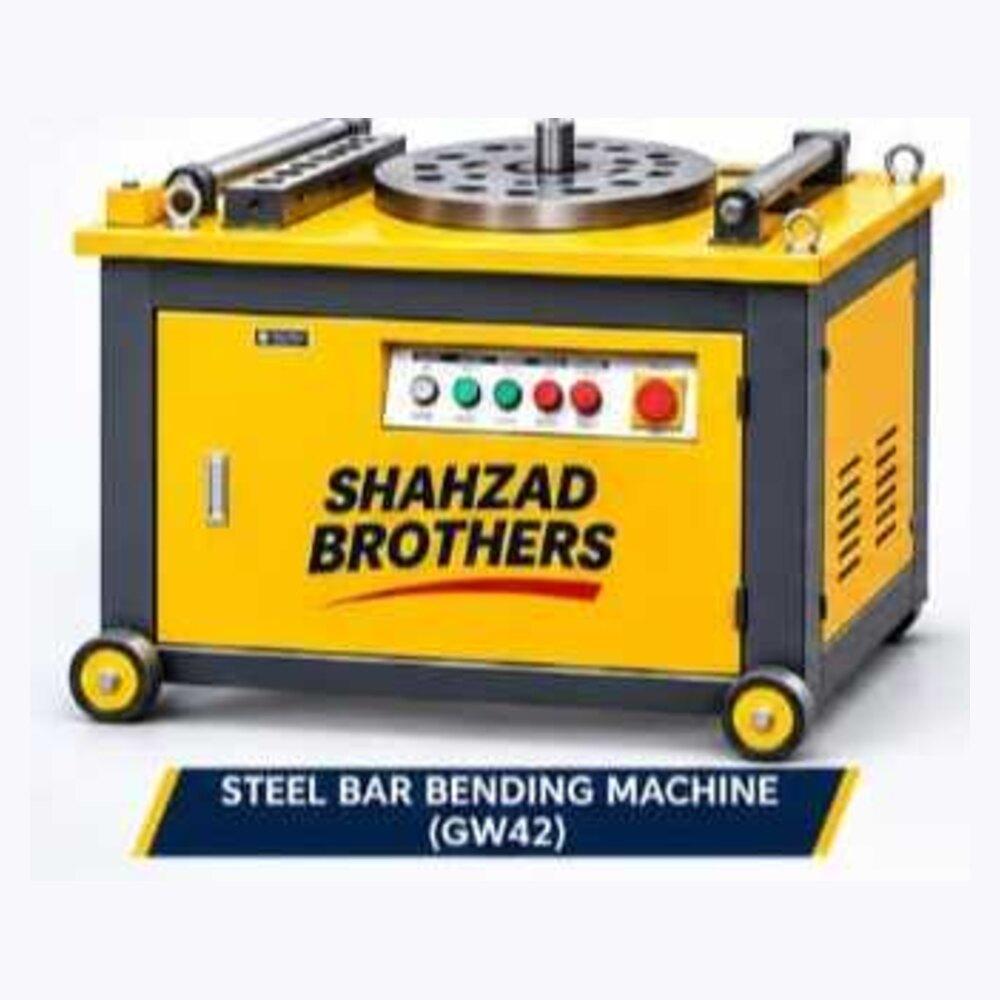
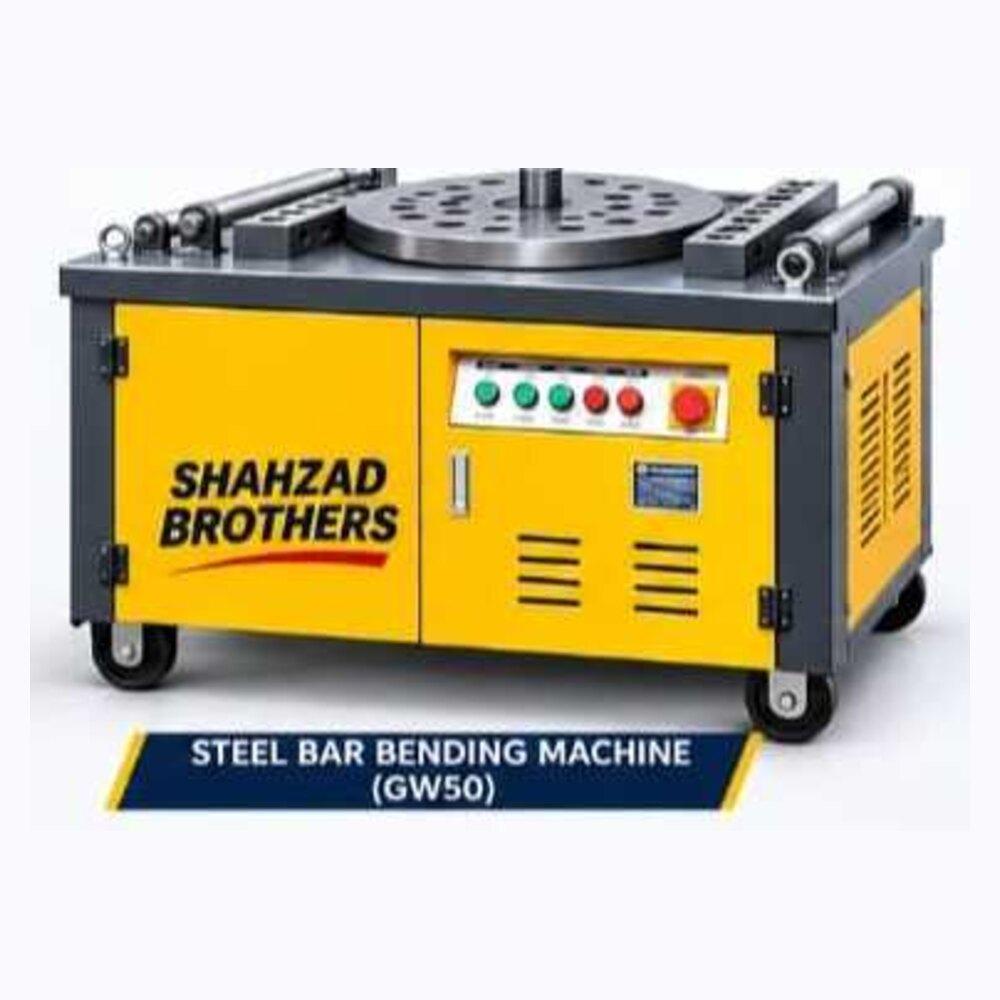
- Steel bar bending machine GW42 and GW50: the benders that work beside them.
Cutting lengths come from the bar bending schedule. Our guide to the bar bending schedule shows how they are worked out, and bar bending machine price in Pakistan covers the bender side. Before you cut into old concrete, locate the existing steel with a scanner from our guide to rebar scanner price in Pakistan.
Ask for today's price
Tell us the largest bar on your schedule, how many tonnes a week you cut, and what power the site has. We will recommend the right cutter honestly and quote today's price. Send us a WhatsApp, with delivery across Pakistan in two to three days.
What we supply
Equipment covered in this guide
Steel Bar Cutter
Bench and handheld bar cutters for rebar up to heavy diameters, electric and hydraulic.
GQ40Steel Bar Cutting Machine GQ40
Electric rebar cutter for bars up to 40 mm. The standard bench cutter for a building site steel yard, on wheels.
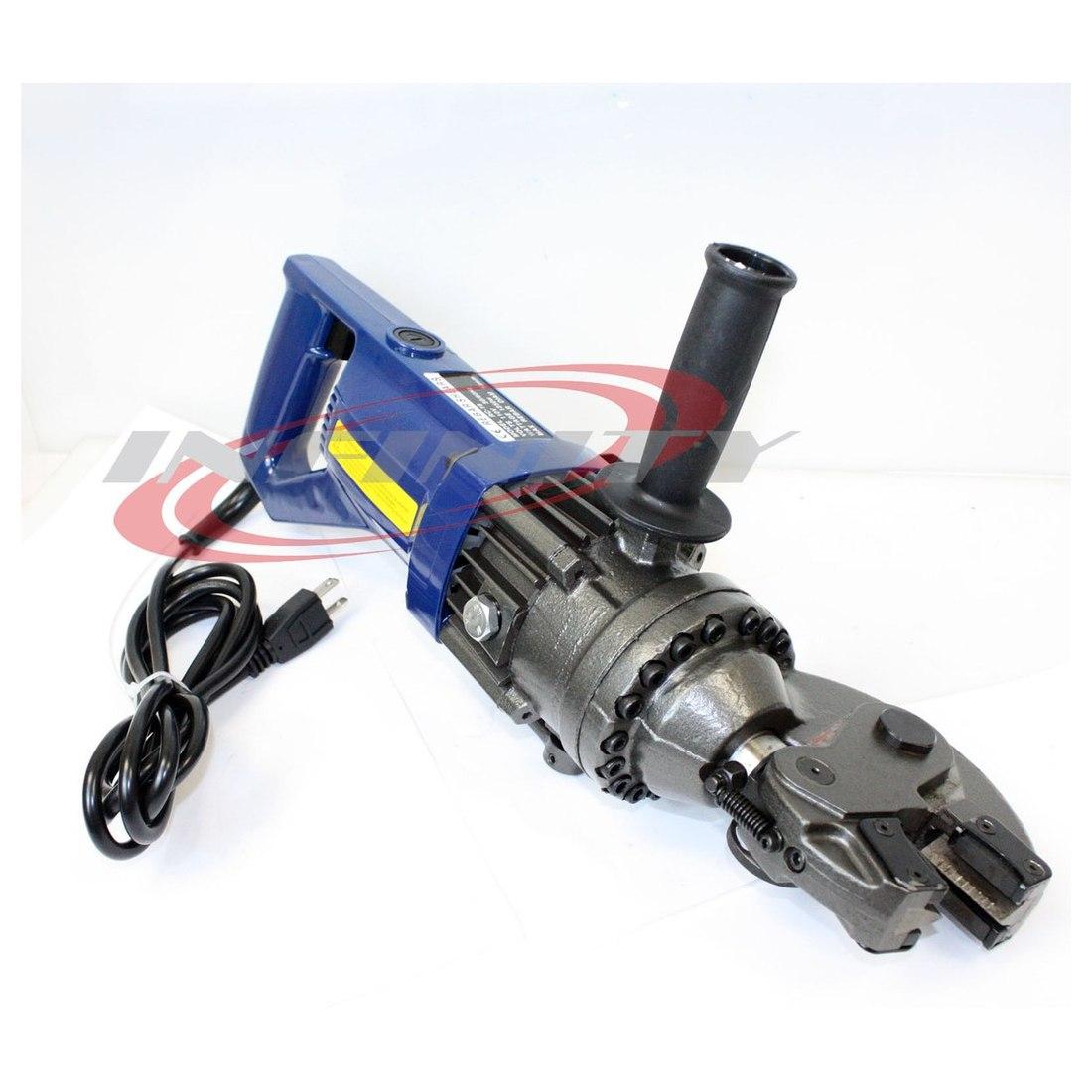
Handy Steel Bar Cutter
One man electro hydraulic bar cutter. Cuts rebar at the cage instead of walking every bar back to the bench.
FAQ
Questions buyers ask us
What is the price of a steel bar cutting machine in Pakistan?
In 2026 an electric GQ40 bench cutter costs about PKR 150,000 to 260,000 and a heavier GQ50 about PKR 220,000 to 380,000. Handheld hydraulic cutters for bars up to 25 mm run PKR 45,000 to 150,000. These are market ranges; confirm today's price on WhatsApp, rates move with the exchange rate.
What is the difference between a GQ40 and a GQ50?
The number is the largest bar in millimetres. A GQ40 shears bars up to 40 mm and covers nearly all building work. A GQ50 has a heavier frame, gearbox and motor for bars up to 50 mm, used on bridges, piles and high rise cores where 32 and 40 mm main bar is common.
How many bars can a GQ40 cut at once?
Keep the combined cross section under about 70 percent of a 40 mm bar, which is roughly 880 square millimetres. That works out to about 4 bars of 16 mm, 7 bars of 12 mm or 2 bars of 20 mm, laid flat in one row across the blade, never stacked.
Does a bar cutting machine need three phase power?
Most GQ40 and GQ50 cutters are wound for 380 V three phase with motors of about 3 to 4 kW, and single phase 220 V versions exist. On a site without a three phase WAPDA connection, run it from a generator of at least 10 to 15 kVA so the motor starts cleanly.
How long do the blades of a rebar cutter last?
Each blade usually has 4 cutting edges, so a set can be turned three times before it is replaced. On a busy site yard a set of edges lasts weeks to a few months. Overloading with too many bars or a wide blade gap chips the edges in a single day.
Is a handheld rebar cutter enough for a house?
For a single house using 10 to 16 mm bar, a handheld hydraulic cutter rated to 20 or 25 mm is usually enough. It cuts one bar in 3 to 5 seconds. For a contractor running two or three sites, the GQ40 cuts a bundle every 2 seconds and pays back quickly.