Bar bending schedule, or BBS, is the table that lists every reinforcement bar in a member: its mark, diameter, shape, number, cutting length and weight. Weight per metre is d squared over 162, so a 12 mm bar weighs 0.889 kg per metre. A good BBS is accurate to about 2 to 3 percent of the steel actually used.
The BBS is where a structural drawing becomes work. The engineer draws the bars; the BBS tells the steel fixer how long to cut each one, how to bend it, and tells the quantity surveyor how many tonnes to order. On Pakistani sites it is also the document a consultant from NESPAK or a private firm checks before a pour, and the basis on which steel is paid for. This guide shows how to read one and how to prepare one, with the arithmetic laid out exactly.
What is a bar bending schedule in civil engineering?
A bar bending schedule is a list of all the reinforcement in a structural member, prepared from the structural drawings, giving each bar's mark, diameter, shape code, number, cutting length, total length and weight. It is used for three jobs:
- Cutting and bending: the fixers cut and bend to the schedule, not to the drawing.
- Ordering steel: the total weight by diameter tells the purchaser how many tonnes of 10, 12, 16 and 20 mm bar to buy, in 12 metre (40 foot) lengths.
- Checking and billing: the consultant checks the cage against the schedule, and the contractor bills steel by the kilogram from it.
What goes in a BBS: the columns
| Column | What it means | Example |
|---|---|---|
| Bar mark | A unique label for each bar type, tagged on the bundle | S1, B1, C3 |
| Member | Where the bar goes | Beam GB-2, slab S-4 |
| Diameter | Bar size in mm | 12 mm (often called #4 in Pakistan) |
| Shape code | The bent shape, with a sketch and dimensions A, B, C | Straight, L bar, closed stirrup |
| Number | How many identical bars | 41 |
| Cutting length | Length of straight bar before bending, in mm | 1,240 |
| Total length | Number multiplied by cutting length, in m | 34.72 |
| Unit weight | kg per metre for that diameter | 0.617 |
| Weight | Total length multiplied by unit weight, in kg | 21.4 |
Many sites in Pakistan still name bars by eighths of an inch, so #3 is about 10 mm, #4 about 12 mm, #5 about 16 mm, #6 about 20 mm and #8 about 25 mm. Write the millimetre size in the schedule; that is what the mill certificate shows.
Shape codes and bend deductions
A shape code is a short reference to a standard bent shape so that the schedule does not need a fresh drawing for every bar. BS 8666 is the standard most British trained consultants use: shape code 00 is a straight bar, 11 is a bar with one 90 degree bend, 21 is a U shaped bar with two bends. Many Pakistani schedules simply sketch the shape in the column with its dimensions, which is fine as long as the dimensions are clear.
Dimensions on a shape are measured to the outside of the bar. When a bar is bent, the outside stretches and the inside compresses, so the straight length needed is a little less than the sum of the outside dimensions. That difference is the bend deduction. The values most site engineers in Pakistan use are:
- 45 degree bend: deduct 1 d
- 90 degree bend: deduct 2 d
- 135 degree bend: deduct 3 d
- 180 degree bend: deduct 4 d
where d is the bar diameter. Hooks are added: a 135 degree stirrup hook is commonly taken as 10 d. For seismic hooks, ACI 318, which the Building Code of Pakistan follows, requires a 135 degree bend with an extension of at least 6 d and not less than 75 mm. Islamabad and Rawalpindi sit in a high seismic zone; follow the hook detail on the drawing.
How to calculate cutting length
Cutting length equals the sum of the outside dimensions, plus hooks, minus bend deductions.
Stirrup
A beam 230 mm wide and 450 mm deep with 25 mm clear cover, and 10 mm stirrups.
- Outside width of stirrup: 230 minus 2 × 25 = 180 mm
- Outside depth: 450 minus 2 × 25 = 400 mm
- Perimeter: 2 × (180 + 400) = 1,160 mm
- Two 135 degree hooks of 10 d: 2 × 10 × 10 = 200 mm
- Three 90 degree bends at 2 d: 3 × 20 = 60 mm
- Two 135 degree bends at 3 d: 2 × 30 = 60 mm
Cutting length = 1,160 + 200 minus 60 minus 60 = 1,240 mm.
Cranked bar and the 0.42 d rule
A 45 degree crank of height D has an inclined leg of D ÷ sin 45, which is 1.414 D, covering a horizontal distance of D. The bar is therefore 0.414 D longer than its plan length, usually rounded to 0.42 D. In a 150 mm slab with 20 mm cover top and bottom and 12 mm bar, D = 150 minus 20 minus 20 minus 12 = 98 mm, so each crank adds 0.42 × 98 = about 41 mm. Two cranks add about 82 mm, and four 45 degree bends deduct 4 × 1 × 12 = 48 mm.
Number of bars
Number = (length of the member minus the two end covers) ÷ spacing, rounded up, plus 1. For a 6,000 mm slab with 25 mm end cover and bars at 150 mm: (6,000 minus 50) ÷ 150 = 39.67, rounded up to 40, plus 1 = 41 bars.
Unit weight: why d squared over 162
The weight of one metre of bar is its cross sectional area multiplied by the density of steel, 7,850 kg per cubic metre. With d in millimetres, that is π × d² ÷ 4 × 7,850 ÷ 1,000,000, which simplifies to d² ÷ 162.2. Site practice rounds to 162.
| Diameter | d² ÷ 162 | Unit weight (kg/m) | Weight of a 12 m length (kg) |
|---|---|---|---|
| 8 mm | 64 ÷ 162 | 0.395 | 4.74 |
| 10 mm | 100 ÷ 162 | 0.617 | 7.40 |
| 12 mm | 144 ÷ 162 | 0.889 | 10.67 |
| 16 mm | 256 ÷ 162 | 1.580 | 18.96 |
| 20 mm | 400 ÷ 162 | 2.469 | 29.63 |
| 25 mm | 625 ÷ 162 | 3.858 | 46.30 |
| 32 mm | 1,024 ÷ 162 | 6.321 | 75.85 |
Weigh a few bars from each delivery against this table. Bar that is consistently 4 or 5 percent light is underweight, and the supplier is being paid for steel he did not deliver.
Worked example: BBS for a slab and a beam
A slab panel with 12 mm bottom bars across a 4,400 mm span at 150 mm spacing over a 6,000 mm length, 10 mm distribution bars 6,000 mm long at 200 mm spacing over the 4,400 mm width, and the beam stirrups above over a 4,000 mm span at 150 mm spacing.
| Bar mark | Member | Dia (mm) | Shape | No. | Cutting length (mm) | Total length (m) | Unit weight (kg/m) | Weight (kg) |
|---|---|---|---|---|---|---|---|---|
| B1 | Slab, main bottom | 12 | Straight | 41 | 4,400 | 180.40 | 0.889 | 160.4 |
| B2 | Slab, distribution | 10 | Straight | 23 | 6,000 | 138.00 | 0.617 | 85.1 |
| S1 | Beam, stirrup | 10 | Closed, 135 degree hooks | 28 | 1,240 | 34.72 | 0.617 | 21.4 |
| Total | 266.9 |
B2 count: (4,400 minus 50) ÷ 200 = 21.75, rounded up to 22, plus 1 = 23. S1 count: (4,000 minus 50) ÷ 150 = 26.33, rounded up to 27, plus 1 = 28.
Summarise by diameter for ordering: 160.4 kg of 12 mm and 106.5 kg of 10 mm. Add laps where bars exceed 12 m and an allowance for offcuts.
Before anyone touches the cutter, pair the cutting lengths against the 12 metre stock bar. A 7,600 mm bar and a 4,400 mm bar come out of one length with no waste; cutting all the 4,400s first leaves a pile of 3,200 mm offcuts that never get used. On a mid size building that planning saves several hundred kilograms.
What we supply
The schedule is only as good as the cutting and bending. A bench cutter shears to a stop set at the schedule length, and a bench bender repeats the angle on every bar.
- Steel bar cutting machine GQ40 and GQ50: cut bundles to length, bars to 40 and 50 mm.
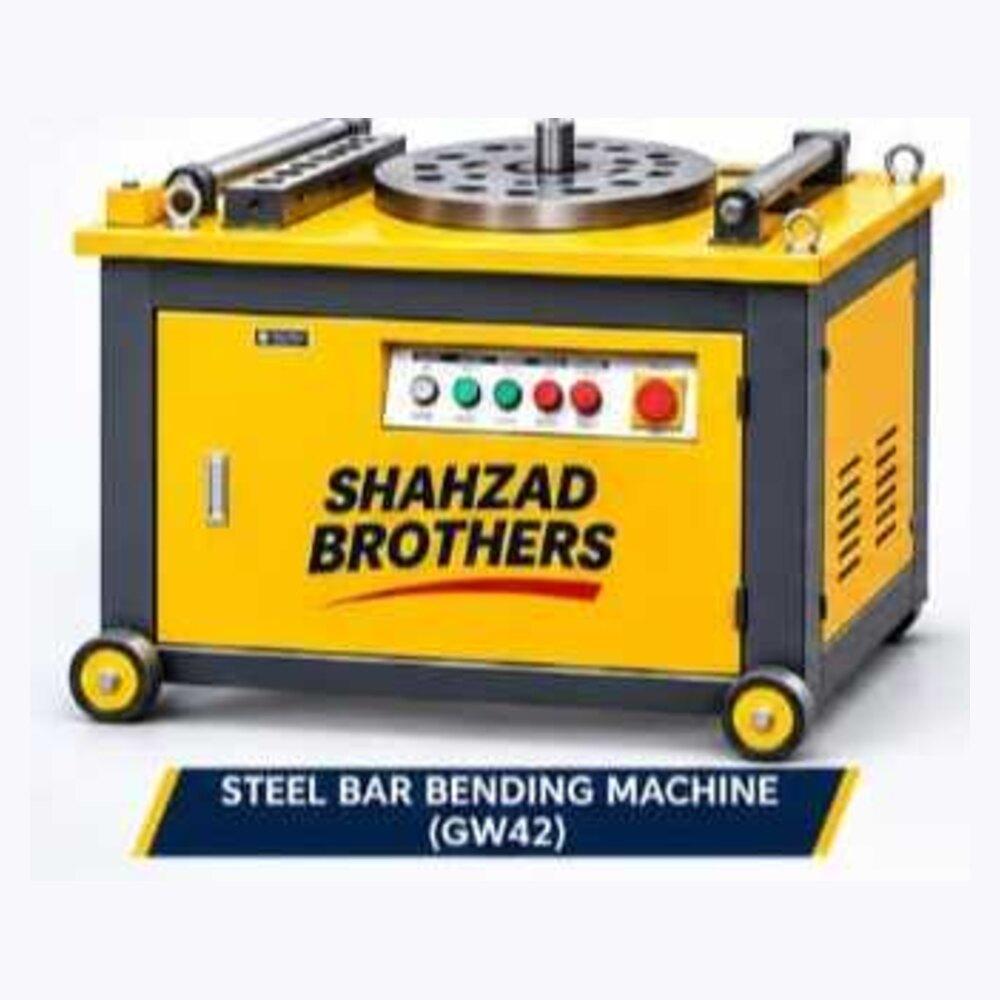
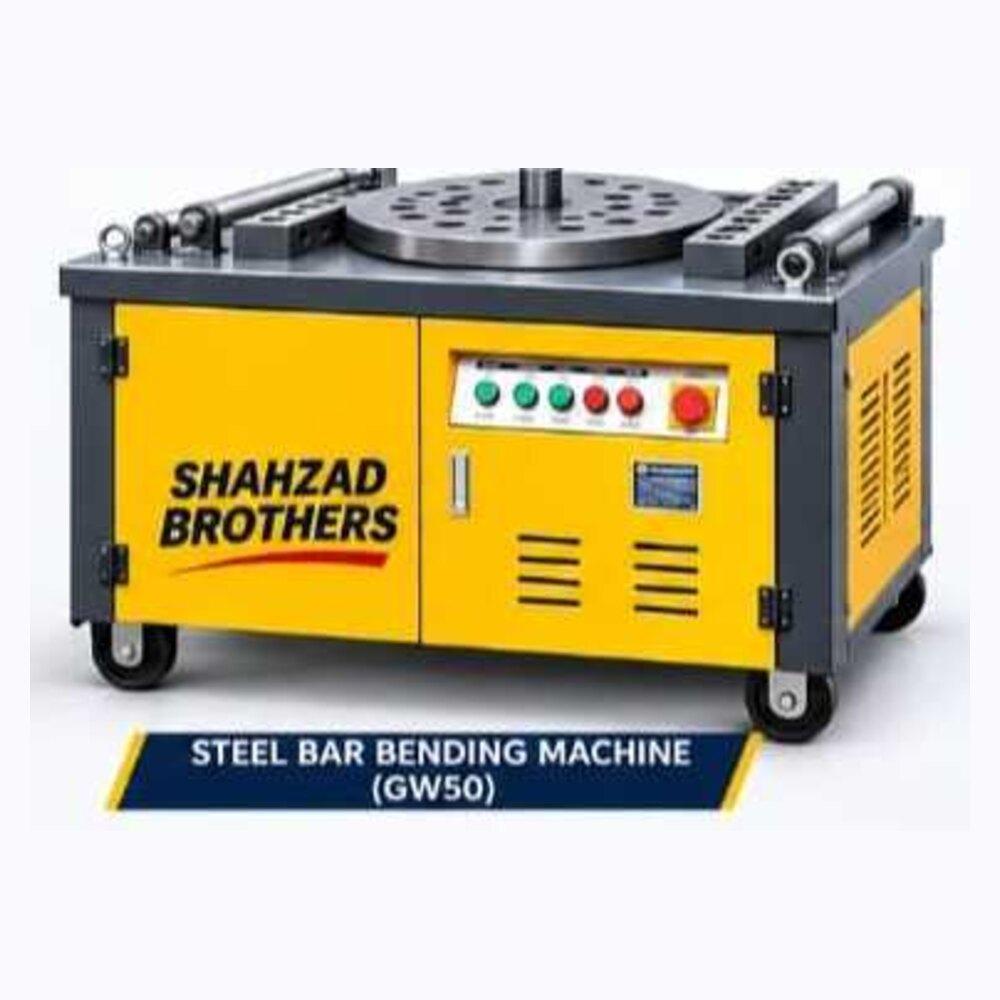
- Steel bar bending machine GW42 and GW50: stirrups and hooks to the set angle.
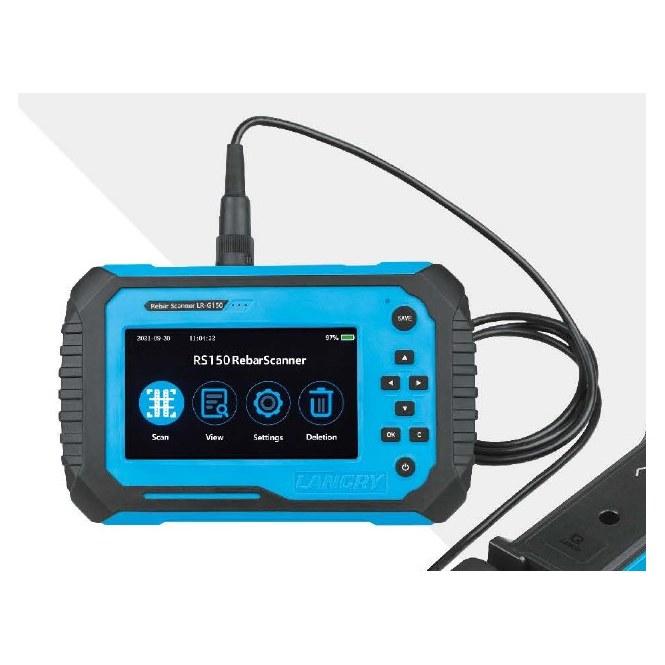
- Langry RS150 rebar scanner: checks the cover and spacing after the pour.
Prices and sizing are in steel bar cutting machine price in Pakistan and bar bending machine price in Pakistan. To check finished cover against the drawing, see rebar scanner price in Pakistan. All rebar machines are under small machinery.
Ask for today's price
If your site is cutting and bending by hand from a schedule like the one above, a cutter and bender will pay for themselves on one building. Tell us the largest bar and the tonnage, and send us a WhatsApp for today's price.
What we supply
Equipment covered in this guide
 LangryRS150
Langry RS150 Rebar Scanner
Probe in the hand or probe on a trolley, one instrument either way. Stirrup correction keeps the reading honest on congested steel.
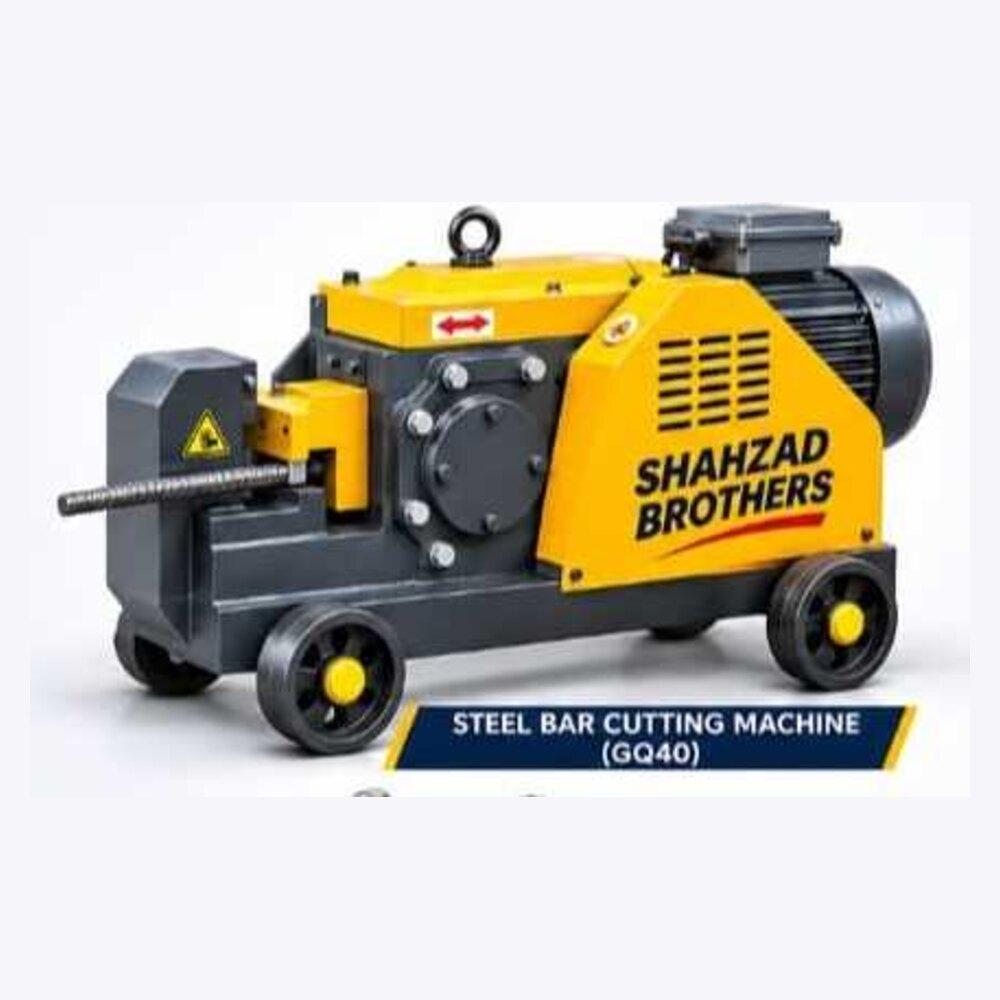 GQ40
Steel Bar Cutting Machine GQ40
Electric rebar cutter for bars up to 40 mm. The standard bench cutter for a building site steel yard, on wheels.
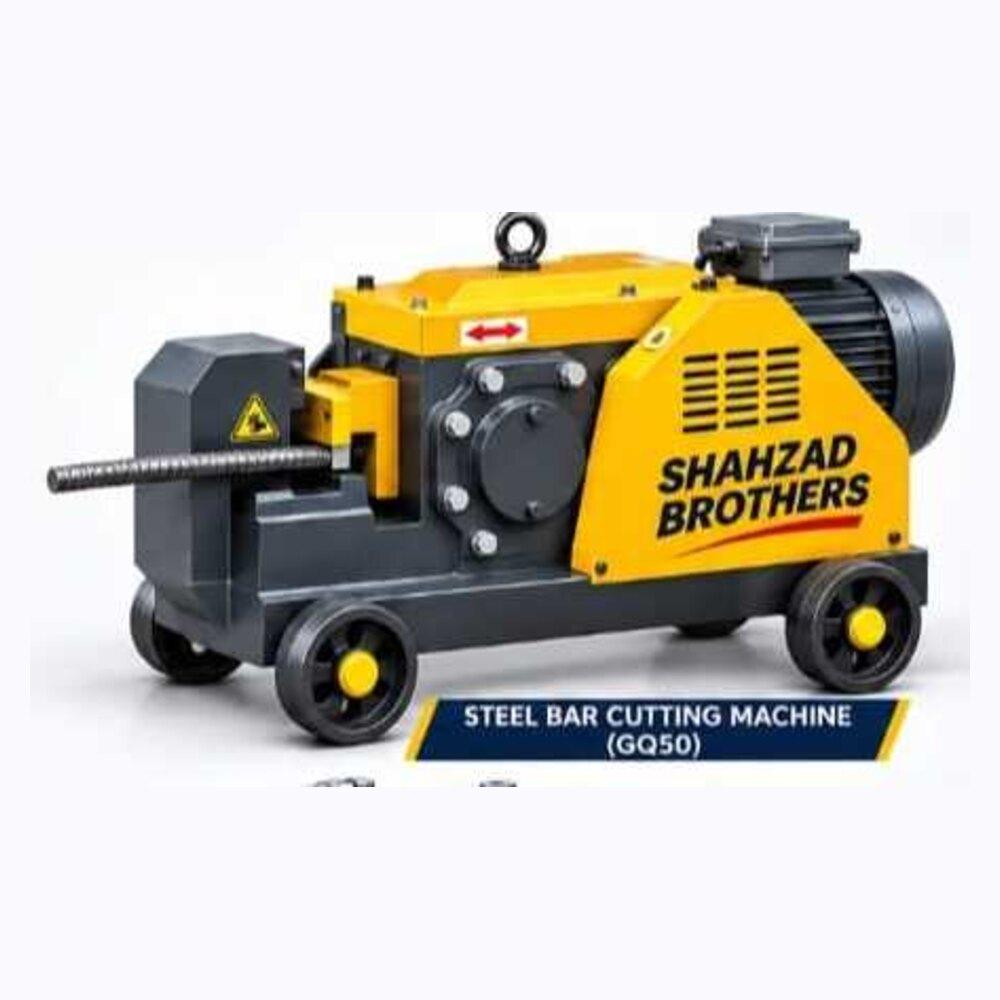 GQ50
Steel Bar Cutting Machine GQ50
Heavier rebar cutter for bars up to 50 mm, for bridges, piles and high rise cores where 40 mm is not enough.
FAQ
Questions buyers ask us
What is BBS in civil engineering?
BBS stands for bar bending schedule: a table listing every reinforcement bar in a member with its mark, diameter, shape, number, cutting length and weight. It turns the structural drawing into cutting and bending instructions and gives the steel quantity in kilograms, usually within 2 to 3 percent of what is finally used.
How do you calculate the weight of a steel bar?
Weight in kilograms per metre equals d squared divided by 162, with d in millimetres. A 12 mm bar weighs 144 divided by 162, or 0.889 kg per metre. The 162 comes from the steel density of 7,850 kg per cubic metre multiplied by the bar's cross sectional area.
What is 0.42 d in a bent up bar?
It is the extra length a 45 degree crank adds. If the crank height is D, the inclined leg is 1.414 D long against a horizontal run of D, so the bar is 0.414 D longer, rounded to 0.42 D. For a 98 mm crank height that is about 41 mm per crank.
What is 50d lapping length?
It means the two bars overlap by 50 times the bar diameter. For a 12 mm bar that is 600 mm and for a 16 mm bar 800 mm. Pakistani drawings commonly give laps between 40d and 60d depending on concrete grade and bar position; always use the figure in the drawing notes.
How many times can you bend a rebar?
Once. Bend reinforcement cold, in one movement, around the correct pin, and do not straighten and rebend it. Rebending Grade 60 bar cracks the surface at the bend. ACI 318 also restricts field bending of bars already cast into concrete unless the engineer permits it.
How do you calculate the cutting length of a stirrup?
Add the four outside sides, add two hooks, then subtract the bend deductions. For a 180 by 400 mm stirrup in 10 mm bar with 135 degree hooks of 10d: 1,160 plus 200, minus 60 for three 90 degree bends and 60 for two 135 degree bends, gives 1,240 mm.