Rebar scanner prices in Pakistan in 2026 run from about PKR 200,000 for a professional cover meter such as the Langry RS150 to PKR 400,000 to 700,000 for the integrated RS350, and PKR 1,500,000 or more for a Profometer or Ferroscan class instrument. These are indicative market ranges; we quote on WhatsApp.
A rebar scanner is the cheapest insurance on a concrete job. One core drilled through a main bar in a transfer slab costs more in repair, delay and argument than the scanner did. This guide gives the prices by class, explains how the instruments work and where they mislead, and sets out the field checks a consultant will expect to see.
How much does a rebar scanner cost in Pakistan?
A rebar scanner costs between about PKR 200,000 and PKR 700,000 in Pakistan for a professional Langry class instrument, and several times that for the premium Swiss and Liechtenstein brands. Cheap wall scanners from hardware shops cost less but do not measure cover and are not accepted on a consultant's report. Confirm today's price on WhatsApp, rates move with the exchange rate.
| Instrument | Bar diameter | Cover range | Notable features | Indicative market price (PKR) |
|---|---|---|---|---|
| Hardware store wall scanner | Not measured | About 50 to 100 mm, detect only | Beeps over metal, no cover value | 15,000 to 60,000 |
| Langry RS150 | 6 to 50 mm | 6 to 90 mm, 6 to 190 mm | Handheld probe or trolley, stirrup correction | 200,000 to 350,000 |
| Langry RS250 | 6 to 50 mm | 1 to 105 mm, 1 to 205 mm | Touch screen, up to 24 hours working time | 280,000 to 450,000 |
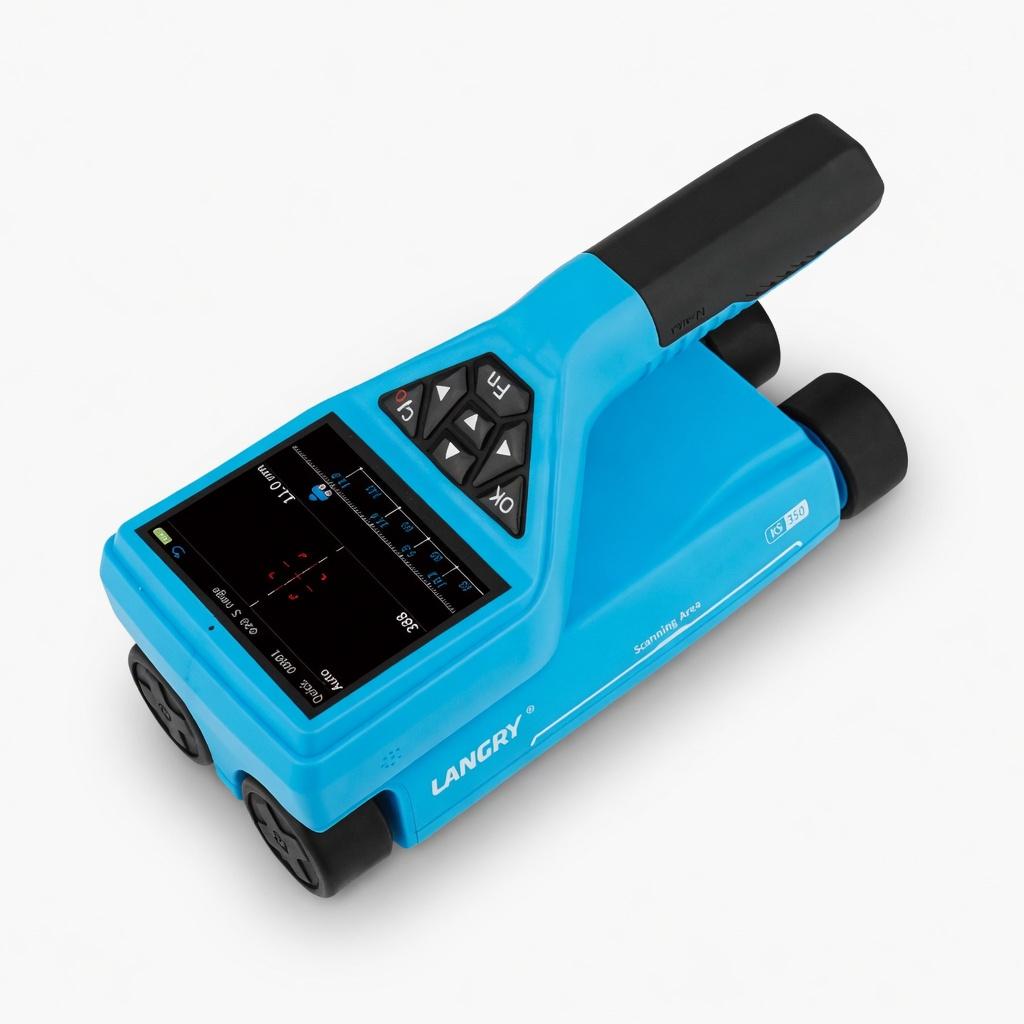
| Langry RS350 | 6 to 50 mm | 1 to 210 mm, two ranges | Plus or minus 1 mm from 1 to 80 mm, colour touch screen, Bluetooth or USB | 400,000 to 700,000 |
| Profometer or Ferroscan class | Varies by model | To about 180 mm, imaging on some | Brand recognised by international consultants | 1,500,000 to 4,000,000 |
| Langry TD6 test block | 10 and 18 mm bar | 10 to 90 mm main, 19 to 99 mm stirrup | Verification block, non magnetic | 60,000 to 150,000 |
One Pakistani listing in the current search results shows a generic rebar scanner at PKR 450,000, which sits inside the RS250 to RS350 band above. The premium brands are worth the money where a foreign lender or international consultant names them in the specification; for routine cover checks under Pakistani consultants, a calibrated Langry instrument does the job at a fraction of the cost.
How does a rebar scanner detect rebar?
A rebar scanner detects rebar by electromagnetic induction. A coil in the probe sends a pulsed or alternating magnetic field into the concrete. Steel within range disturbs that field and induces eddy currents, and a second coil, or a Hall sensor in the case of the RS150, measures the disturbance. The instrument converts the strength of the signal into a cover depth, using the bar diameter, or into a diameter estimate, using two readings at different probe orientations.
In use, the operator slides the probe across the surface. The signal peaks directly above a bar, the instrument beeps and shows the cover, and the operator marks the line in chalk. A second pass at right angles finds the bars in the other direction. On the RS150 the probe can also ride on a displacement trolley, which turns a series of spot readings into a scan line with bar positions and spacing recorded.
Concrete itself is invisible to the instrument, which is why it works through dust and paint but also why it cannot see plastic conduits, voids or the back face of a slab.
What is a good tool for scanning concrete rebar?
The right tool depends on the work, not on the price list.
- Contractor checking cover before a pour or before drilling anchors. The RS150 is enough. It gives cover and position reliably, and the stirrup correction stops secondary steel pulling the reading off on beams and columns.
- Consultant producing cover surveys for reports. The RS250 or RS350. The RS350 holds plus or minus 1 mm from 1 to 80 mm cover, stores the data and sends it by Bluetooth or USB, so a report is built from logged readings rather than a notebook.
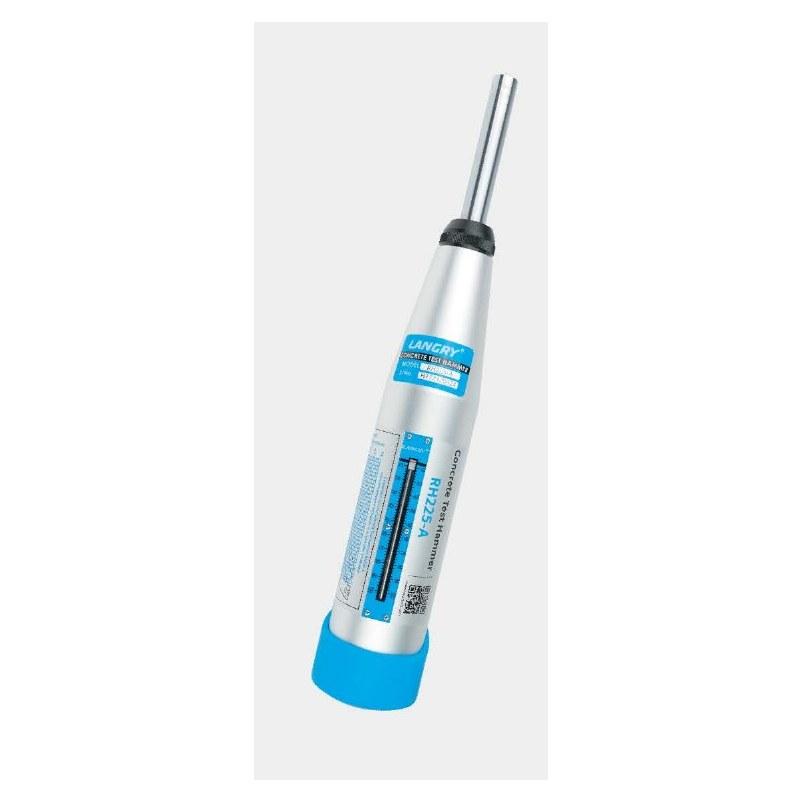
- Structural assessment of older buildings. The RS350, paired with the Langry RH225-A rebound hammer and the Langry UPV2100 ultrasonic pulse velocity tester. The scanner tells you where not to test, the hammer and the UPV tell you about the concrete.
- Projects where the specification names a premium brand. Buy that brand. Arguing with the specification costs more.
How much does rebar scanning cost?
Rebar scanning as a hired service in Pakistan is usually charged per day or per test location by testing laboratories and NDT consultants, and indicative market rates run from about PKR 15,000 to 60,000 per site day, plus travel and reporting. A slab scan on one floor of a house is often a half day; a cover survey on a multi storey frame for a structural audit can run to a week.
The arithmetic for a contractor is straightforward. If you are paying for more than eight to ten days of scanning a year, or if a delay waiting for the lab costs you a pour, a scanner of your own pays for itself within the first year. Consultancies doing structural audits reach that point in a few months.
How to scan concrete thickness?
A rebar scanner cannot measure concrete thickness, because it only sees steel within about 200 mm of the surface. Thickness is measured in one of three other ways:
- Ground penetrating radar, which images the back face of a slab from one side and also shows conduits and voids. This is a survey service rather than a site tool for most firms.
- Ultrasonic pulse velocity through the section where both faces are reachable and the path length is known, mainly to assess quality rather than thickness. The UPV2100 reads pulse velocity from 1,000 to 10,000 m/s.
- A core, 50 to 100 mm diameter, which is the reference everyone accepts. Scan first so the core misses the bars.
The cover checks a consultant expects
Pakistani consultants and authorities on building, highway and bridge work generally follow ACI 318 cover requirements, adopted in the Building Code of Pakistan, or BS and Eurocode values on some donor funded work. Typical figures are 20 mm for slabs not exposed to weather, 40 mm for beams and columns, 50 mm for exposed members, and 75 mm where concrete is cast against earth. In practice the inspector checks a grid of readings against the drawing and flags anything short.
Three field habits separate a cover survey that stands up from one that gets challenged.
Zero the probe in air before every job. Hold the probe well away from steel, including the reinforcement in the floor you are standing on, the steel toe of your boot and the mobile phone in your pocket, and run the zero. A probe zeroed on a slab carries a few millimetres of error into every reading.
Respect the spacing rule. The rule we teach on our Rawalpindi bench: an electromagnetic scanner only separates two bars cleanly when their spacing is greater than the cover. On a column with 40 mm cover and bars at 75 mm centres, fine. On a congested beam at 50 mm cover with bars lapped at 40 mm centres, the scanner sees one fat bar at a shallower depth than either. That reading is wrong on the safe looking side, which is the dangerous kind of wrong.
Verify on a known block. The Langry TD6 carries 18 mm and 10 mm bars at known cover in non magnetic material. Run the scanner over it every three months and after any drop, and record the result with the report. Probes take knocks on scaffolds, and summer heat in a parked vehicle in Rawalpindi or Multan is hard on battery and electronics alike, so this is not a formality.
What we supply
The full range of Langry non destructive testing instruments is under Langry products.
- Langry RS350 integrated rebar scanner: the consultant's instrument, plus or minus 1 mm near the surface, data transfer by Bluetooth or USB.
- Langry RS250 rebar scanner: mid range, touch screen, up to 24 hours of working time.
- Langry RS150 rebar scanner: handheld or trolley, with stirrup correction.
- Langry TD6 rebar detector testing device: the verification block.
- Langry RH225-A rebound hammer and UPV2100 tester to complete the site kit.
Our rebound hammer test guide explains why you scan before you test, and our guide to compression testing machine price in Pakistan covers the lab side, where cores and cubes settle what the site instruments estimate.
Ask for today's price
Tell us what the scanner is for: cover checks before a pour, structural audits, or a teaching lab, and whether a specification names a brand. We will quote the right model and the TD6 block if your reports need it. Send us a WhatsApp for today's price and delivery across Pakistan.
What we supply
Equipment covered in this guide
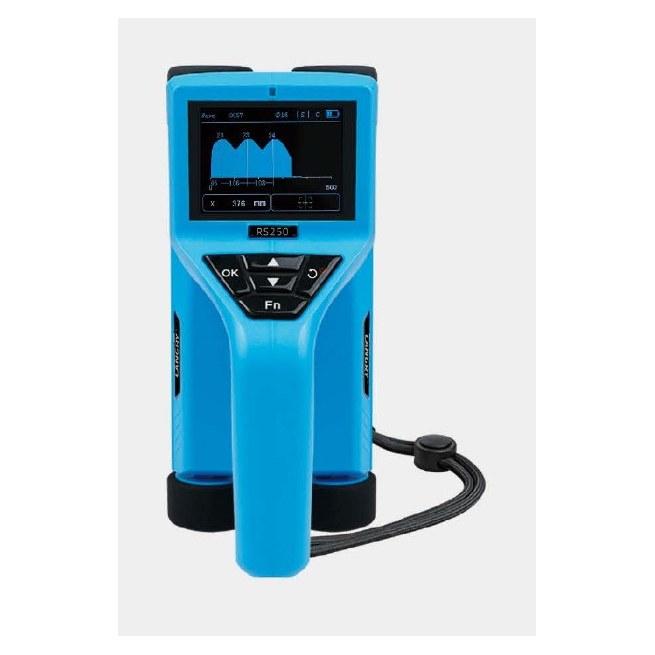 LangryRS250
Langry RS250 Rebar Scanner
Portable rebar scanner reading to 210 mm of cover, with twenty four hours of battery and PC analysis software behind it.
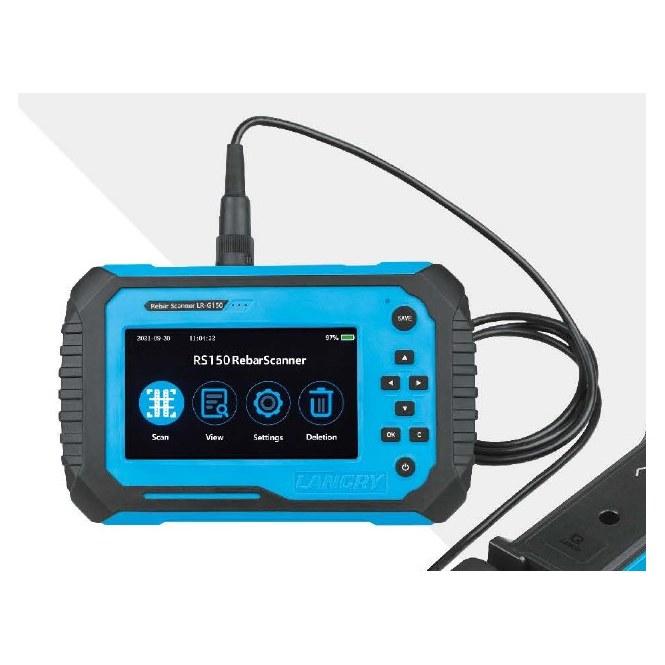 LangryRS150
Langry RS150 Rebar Scanner
Probe in the hand or probe on a trolley, one instrument either way. Stirrup correction keeps the reading honest on congested steel.
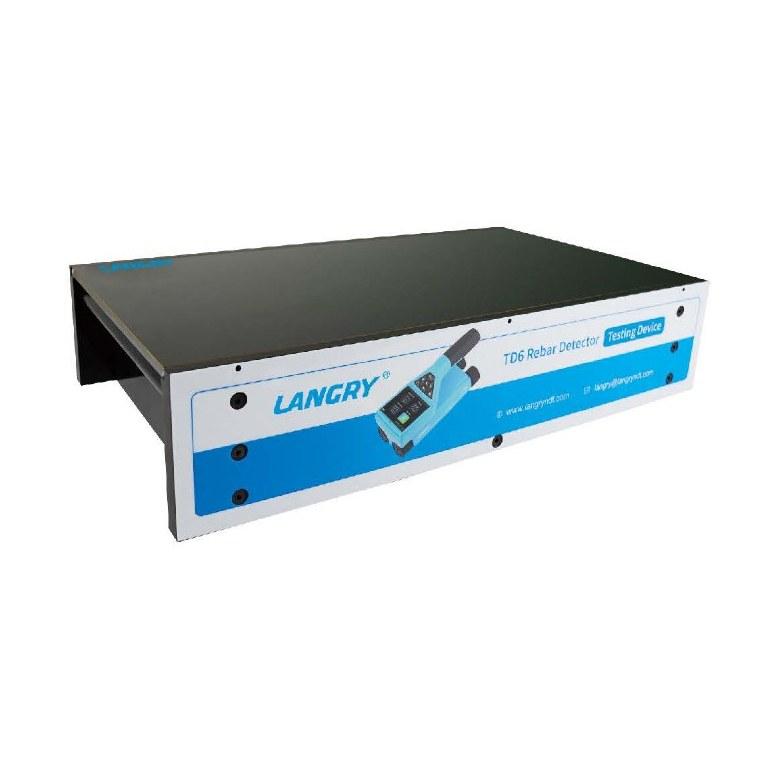 LangryTD6
Langry TD6 Rebar Detector Testing Device
The calibration block a rebar scanner is verified against, in non magnetic material so it does not fight the instrument.
FAQ
Questions buyers ask us
What is the price of a rebar scanner in Pakistan?
In 2026 a professional cover meter such as the Langry RS150 sells for roughly PKR 200,000 to 350,000, the RS250 for PKR 280,000 to 450,000 and the integrated RS350 for PKR 400,000 to 700,000. A Profometer or Ferroscan class instrument costs PKR 1,500,000 to 4,000,000. These are indicative market ranges; we quote by WhatsApp.
What is the difference between a rebar scanner and a cover meter?
In practice none. Cover meter is the older British term, from BS 1881 Part 204, for an instrument that measures concrete cover over reinforcement. Rebar scanner, rebar detector and rebar locator describe the same electromagnetic instrument. Profometer is a brand name that became a generic word, much like Schmidt for rebound hammers.
How deep can a rebar scanner read?
The Langry RS350 and RS250 read cover to about 205 to 210 mm on their second range, and the RS150 to 190 mm. Accuracy is best near the surface: the RS350 holds plus or minus 1 mm from 1 to 80 mm of cover. Beyond about 150 mm, treat readings as indicative rather than exact.
Can a rebar scanner measure bar diameter?
Yes. All three Langry scanners estimate bar diameter across 6 to 50 mm, and the RS250 is specified to within one bar size. The estimate is reliable on a single, well spaced bar at moderate cover. On congested steel, lapped bars or two layers, check a sample by breaking out a small area or with project drawings.
How often should a rebar scanner be checked?
Zero the probe in air before every job and verify it on a calibration block such as the Langry TD6 at least every 3 months, and after any drop. The TD6 carries main bars at 10 to 90 mm cover and stirrups at 19 to 99 mm, so a drifting scanner shows up within minutes.
Can a rebar scanner measure slab thickness?
No. An electromagnetic cover meter only responds to steel within about 200 mm of the surface. Slab thickness needs ground penetrating radar, an impact echo instrument or a 50 to 100 mm core. Ultrasonic pulse velocity can help where both faces are reachable and the path length is known.