Concrete batching plant price in Pakistan in 2026 starts around PKR 6,000,000 for a JS-500 mobile plant of 25 cubic metres an hour, runs PKR 9,000,000 to 14,000,000 for a JS-750 plant of 35 cubic metres an hour, and reaches PKR 25,000,000 and above for a JS-1000 stationary plant of 50 to 60 cubic metres an hour with cement silos. These are indicative market ranges; we quote by WhatsApp.
A batching plant is the largest single purchase most contractors make short of an excavator, and the quoted price is only part of the budget: foundations, a generator, silos, a loader and a water supply all have to be added. This guide gives the market prices by capacity, lists what is and is not included, and sets out the site, power and running costs so you can plan the whole number.
Concrete batching plant price in Pakistan by capacity
Indicative market ranges for new Chinese-built plants in September 2026, plant only, without silos unless stated. Confirm today's price on WhatsApp, rates move with the exchange rate.
| Model | Mixer | Rated output | Type | Indicative market price (PKR) | Typical buyer |
|---|---|---|---|---|---|
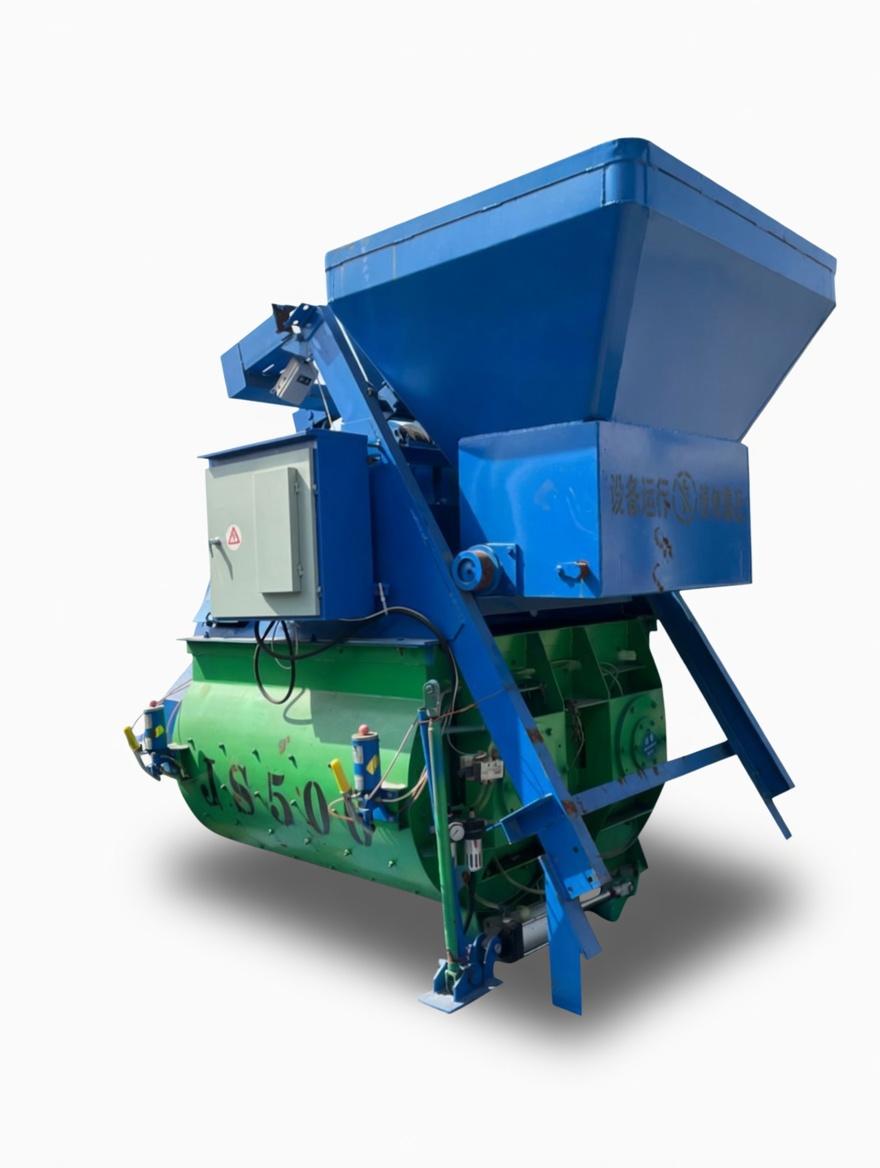
| HZS25 / JS-500 | JS500 twin shaft, 0.5 m3 per batch | 25 m3/h | Mobile or compact stationary | 6,000,000 to 9,000,000 | Contractor on housing, roads, small bridges |
| HZS35 / JS-750 | JS750 twin shaft, 0.75 m3 per batch | 35 m3/h | Mobile or stationary | 9,000,000 to 14,000,000 | Mid-size contractor, small ready mix |
| HZS50 / JS-1000 | JS1000 twin shaft, 1.0 m3 per batch | 50 m3/h | Stationary | 15,000,000 to 22,000,000 | Ready mix, large building projects |
| HZS60 / JS-1000 with belt | JS1000 twin shaft, 1.0 m3 per batch | 60 m3/h | Stationary, belt fed | 25,000,000 and up with silos | Ready mix business, infrastructure |
| Cement silo, 50 to 100 ton | Bolted or welded | 1,200,000 to 2,500,000 each | Added to any plant | ||
| Screw conveyor | 219 to 273 mm | 350,000 to 700,000 each | One per silo |
The JS-650 sits between the 500 and 750 and is a sensible compromise for a contractor who expects to grow; we supply the JS-650 concrete batching plant for exactly that buyer.
Mobile vs stationary
A mobile plant is built on a trailer chassis with the batcher, mixer and control cabin folding for transport. It sets on a levelled hardcore base with a few concrete pads, commissions in days, and moves to the next site. Capacity tops out around 35 cubic metres an hour. It is the right choice for a contractor with a series of projects of six to eighteen months each.
A stationary plant is bolted to concrete foundations with a proper silo base, a loading ramp and often a belt conveyor feeding the mixer. Capacity runs from 50 cubic metres an hour up. It is the right choice for a ready mix business or a single project of three years and more, where the foundations are a small part of the cost.
A middle option is a compact stationary plant: a JS-500 or JS-750 on a modular frame that can be dismantled and moved in a week rather than a day. It is cheaper than mobile and faster to relocate than a full stationary installation.
What is included
Ask for the written list. A complete plant from us includes:
- Twin-shaft mixer. JS500, JS650, JS750 or JS1000 with wear-resistant liners, two drive motors, hydraulic discharge gate and an inspection hatch.
- Aggregate batcher. Two to four bins with pneumatic gates, weigh hoppers on load cells, and a belt or skip to the mixer.
- Cement weigh hopper on load cells, with a vibrator and butterfly valve.
- Water system. Pump, flow meter or weigh hopper, and an admixture dosing pump.
- Control cabin. Air-conditioned, with a PLC control panel, computer, printer for batch tickets, and manual override.
- Structure. Mixer platform, stairs, guard rails, and for a mobile plant the trailer chassis.
- Pneumatic system. Compressor and valves for the gates.
- Installation, commissioning and calibration of the weigh systems, plus operator training.
Usually priced separately: cement silos and screw conveyors, the generator, a wheel loader for feeding the aggregate bins, foundations and civil works, and a water tank or bore.
Site and power requirements
Area. A JS-500 mobile plant with a loader needs roughly 25 by 30 metres including aggregate stockpiles. A JS-1000 stationary plant with two silos, a loader and truck turning space needs 50 by 60 metres or more.
Foundations. A mobile plant needs a compacted hardcore base and concrete pads under the legs. A stationary plant needs reinforced concrete foundations under the mixer tower and under each silo, designed for the silo's full load. The silo foundation is the one that gets underbuilt; a 100 ton silo full of cement in a monsoon on a poor foundation is a serious accident.
Power. A JS-500 plant draws 60 to 75 kW of three-phase power; a JS-750 around 90 to 110 kW; a JS-1000 around 150 to 200 kW. On a grid connection, that means a transformer application. On a generator, allow 100 kVA for the JS-500 and 250 to 300 kVA for the JS-1000, and budget the generator at PKR 2,500,000 to 7,000,000.
Water. 150 to 200 litres per cubic metre of concrete, so a JS-500 at full output needs around 5,000 litres an hour. A bore or a tanker schedule, and a tank of at least 20,000 litres.
Loader. A 1.5 to 3 cubic metre wheel loader to keep the aggregate bins fed. Without it the plant runs at a third of capacity.
Running cost per cubic metre
A worked example for a JS-500 plant producing 150 cubic metres a day, excluding materials. Figures are indicative for Pakistan in 2026.
- Labour: a plant operator, a loader driver and a helper, around PKR 150,000 a month. At 22 days and 150 cubic metres a day, PKR 45 per cubic metre.
- Generator diesel: a 100 kVA set at around 15 litres an hour for 8 hours a day, PKR 30,000 to 40,000 a day. About PKR 230 per cubic metre.
- Maintenance and wear parts: mixer liners, blades, belts, load cell checks. Around PKR 100,000 a month. PKR 30 per cubic metre.
- Depreciation on PKR 7,000,000 over seven years at 3,300 cubic metres a month: about PKR 25 per cubic metre.
Total around PKR 330 to 400 per cubic metre at good utilisation, rising to PKR 700 and above if the plant runs at a third of capacity. The lesson is that a plant pays when it runs. A contractor pouring 30 cubic metres a day should buy a JS-500, not a JS-1000.
Installation and commissioning
For a mobile plant: the base is prepared, the plant arrives on a low-bed trailer, is set and levelled, the cabin is wired, the compressor is connected, and the weigh systems are calibrated with test weights. Three to five days, with our technician on site.
For a stationary plant: foundations are cast and cured, which takes three weeks alone. The structure is erected, the mixer lifted into place, silos erected, screw conveyors fitted, cabling run and the control system commissioned. Three to five weeks from delivery, with our technician through commissioning and the first production day.
Training covers the operator on the control software, mix design entry, batch ticket printing and the daily checks, and the mechanic on the mixer liners, the pneumatic system and the load cells.
Calibration and testing what you pour
A batching plant produces concrete to a design mix, and the consultant will want proof. Two things keep a plant honest:
Weigh system calibration. Load cells on the aggregate, cement and water hoppers drift. Check them monthly with test weights and keep the record. We calibrate at commissioning and can return for annual checks.
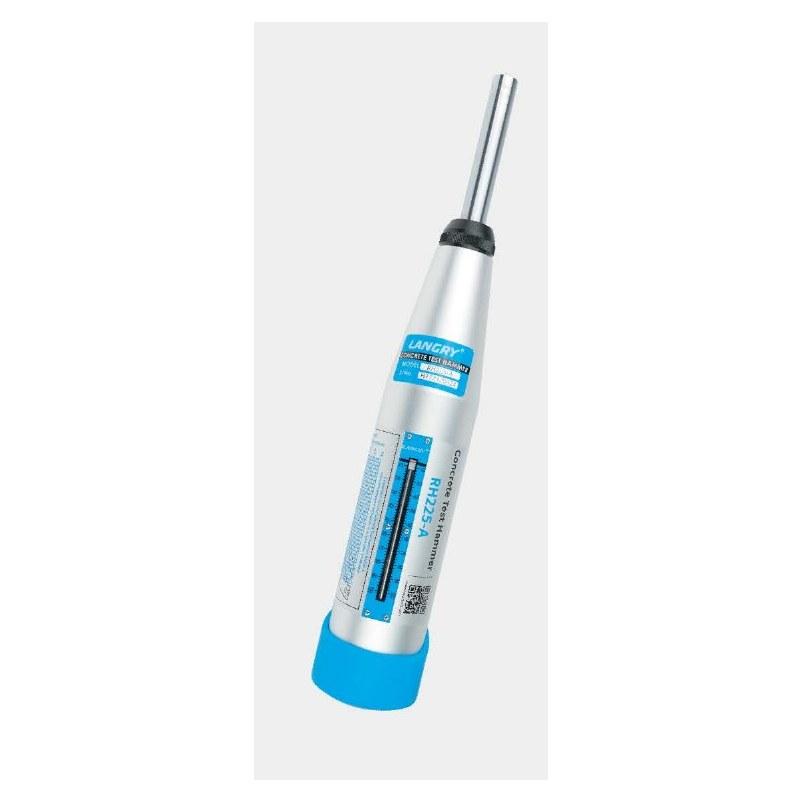
Testing the hardened concrete. Cube tests at 7 and 28 days are the standard. For in-place checks, a rebound hammer gives a quick indication of strength on the structure, and a rebar scanner confirms cover. We cover both in our rebound hammer test guide, and we supply the Langry range to consultants and plant operators across Pakistan.
If the pour is more than 60 metres from the plant, a trailer-mounted concrete pump moves the concrete to the formwork without a fleet of wheelbarrows.
What we supply
Our plants are under batching plants, supplied with installation, commissioning, calibration and a two year warranty.
- JS500 concrete batching plant: 25 m3/h, mobile or compact, the contractor's plant.
- JS-650 concrete batching plant: the step between 500 and 750.
- JS750 concrete batching plant: 35 m3/h, for mid-size contractors and small ready mix.
- JS1000 concrete batching plant: 50 to 60 m3/h, stationary, for ready mix businesses.
- HBT60-13 trailer-mounted concrete pump: to move what the plant makes.
If your daily volume is below 20 cubic metres, read concrete mixer machine price in Pakistan first; a plant that runs at a quarter of capacity is the most expensive concrete in Pakistan.
Ask for today's price
Plant prices move with the exchange rate and with steel. Tell us the daily volume, whether the plant will move between sites, and what power is available, and we will quote the right capacity with a written list of everything included. Send us a WhatsApp for today's price, lead time and a site visit.
What we supply
Equipment covered in this guide
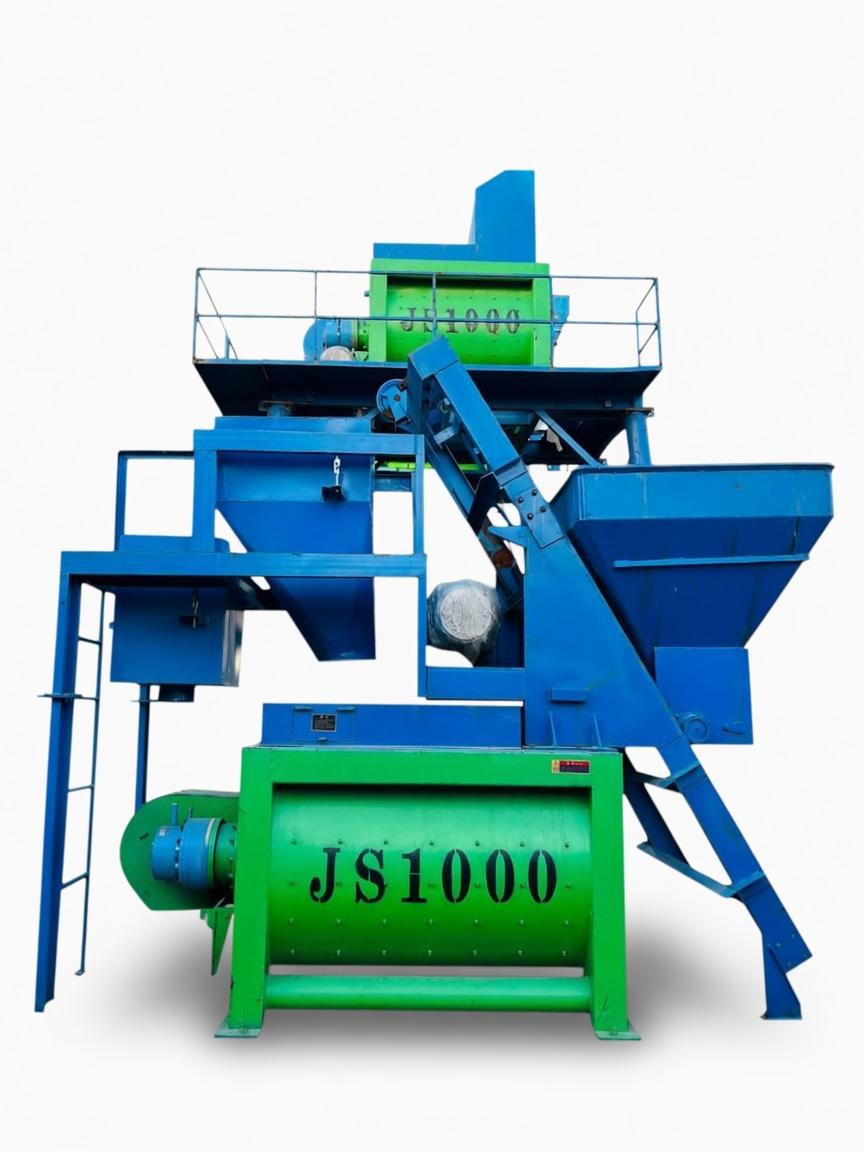 JS-1000
JS-1000 Concrete Batching Plant
Brand new 2025 model. Fifty cubic metres of concrete an hour from a twin shaft mixer, with aggregate hoppers, belt feed and a control cabin.
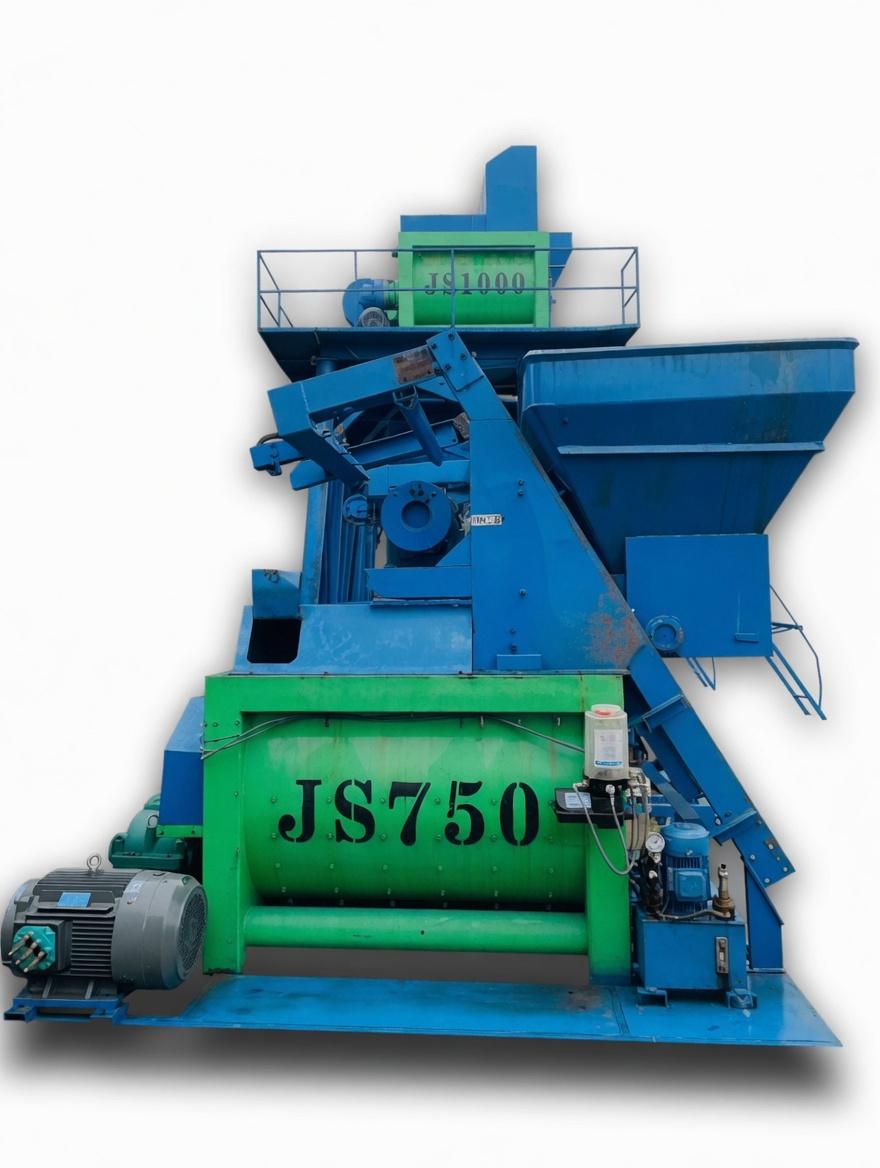 JS-750
JS-750 Concrete Batching Plant
Brand new 2025 model. Thirty five to forty cubic metres an hour, the size most housing and commercial pours actually need.
JS-500JS-500 Concrete Batching Plant
Brand new 2025 model. Thirty to thirty five cubic metres an hour, on a footprint that fits a tight urban plot.
FAQ
Questions buyers ask us
What is the price of a concrete batching plant in Pakistan?
In 2026 a JS-500 mobile batching plant of 25 cubic metres an hour starts around PKR 6,000,000 in the Pakistani market, a JS-750 plant of 35 cubic metres an hour runs PKR 9,000,000 to 14,000,000, and a JS-1000 stationary plant of 50 to 60 cubic metres an hour with cement silos costs PKR 25,000,000 and above. These are market ranges; we quote by WhatsApp.
What is included in a batching plant?
A complete plant includes the twin-shaft mixer, an aggregate batcher with two to four bins and weigh hoppers, a cement weigh hopper, a water system with flow meter, a belt or skip hoist, the control cabin with PLC and printer, and the structure. Cement silos and screw conveyors are usually priced separately.
Mobile or stationary batching plant?
Mobile plants of 25 to 35 cubic metres an hour are trailer-mounted and move between sites in a day or two, right for contractors with a sequence of projects. Stationary plants of 50 cubic metres an hour and above are for ready mix businesses and large single projects running for years.
What power supply does a batching plant need?
A JS-500 plant needs about 60 to 75 kW of three-phase power; a JS-1000 plant needs 150 to 200 kW. On most Pakistani sites that means a diesel generator of 100 kVA for the small plant and 250 to 300 kVA for the large one, which adds to the budget.
What is the running cost of a batching plant per cubic metre?
Excluding materials, a JS-500 plant run by three men on a generator costs roughly PKR 400 to 700 per cubic metre in labour, fuel and maintenance at reasonable utilisation. The figure drops as output rises, which is why plants that run below half capacity are expensive.
How long does installation take?
A mobile JS-500 plant can be set on a prepared base and commissioned in three to five days. A stationary JS-1000 with silos needs foundations cured first and takes three to five weeks from delivery to first pour, including calibration of the weigh systems.