Safety shoes price in Pakistan runs from about PKR 2,500 to 4,500 for a local steel toe pair, PKR 5,000 to 11,000 for a Chinese imported S1P or S3 shoe, and PKR 14,000 to 35,000 for branded imported boots in 2026. The grade you need depends on water, nails, heat and how long the pair must last.
Safety shoes are the most searched item of personal protective equipment in Pakistan, and also the one where buyers lose the most money. A carton of the wrong shoes looks identical to the right ones on delivery day. The difference shows four months later, when soles split in the heat and toe caps turn out to be plastic. This guide sets out the grades, the labels, and the checks we run before a bulk order leaves our Rawalpindi counter.
How much do safety shoes cost in Pakistan?
The market splits into four grades. The ranges below are 2026 market ranges for Pakistan, per pair, and they move with the exchange rate because almost every toe cap, midsole and sole compound is imported even when the shoe is stitched locally.
| Grade | Typical examples | Protection class | Sole | Indicative market price (PKR per pair) |
|---|---|---|---|---|
| Local basic | Lahore and Karachi workshop brands | Steel toe, often untested | PU, single density | 2,500 to 4,500 |
| Steel toe gumboot | PVC or rubber boot with toe cap | Toe cap, waterproof | PVC or rubber | 1,800 to 4,000 |
| Chinese imported | Safetoe, entry Safety Jogger class | S1P or S3 labelled | PU or PU/TPU | 5,000 to 11,000 |
| Local branded | Bata industrial and similar ranges | S1P or S3 | PU or rubber | 6,000 to 12,000 |
| Branded imported | Delta Plus, Honeywell, Caterpillar class | S3, often HRO and SRC | Rubber or nitrile | 14,000 to 35,000 |
Confirm today's price on WhatsApp, rates move with the exchange rate.
Why the same shoe has three prices online
Marketplace listings mix single-pair retail, trade and carton prices on one page. A carton of 10 or 12 pairs normally comes in under the single-pair rate, and the gap widens on the local grades. If a listing is far below the ranges above, the toe cap or the label is usually the reason.
What do the labels on safety shoes mean?
Proper safety footwear is tested to EN ISO 20345. The tongue or inside label should carry the standard number, the year, the class, the size and the maker. The classes that matter on a Pakistani site are:
- SB: basic safety shoe with a toe cap tested to 200 joules of impact and 15 kN of compression. Nothing else is promised.
- S1: adds a closed heel, antistatic sole and an energy absorbing heel.
- S1P: S1 plus a midsole that resists penetration, so a nail through a shuttering plank does not reach your foot.
- S2: S1 plus resistance to water entering through the upper.
- S3: S2 plus the penetration resistant midsole and a cleated sole. This is the default construction boot.
Extra markings you will see: HRO means a heat resistant outsole, worth having for asphalt crews and foundry work. SRC is a slip resistance rating. EH is an American electrical hazard marking, which is different from a fully insulating electrician's boot. The 2022 revision of the standard changed some codes, so a label may read S3S or similar; the logic is the same.
Real versus fake certification marks
A CE logo alone means nothing. Fakes print "CE" and "Steel Toe" on the tongue with no standard number and no class. A genuine label lists EN ISO 20345, the year, a class such as S3 SRC, and a manufacturer you can trace. If the box says S3 but the shoe is mesh fabric with an open weave, it is not S3, because S2 and S3 need a water resistant upper.
What should you check before buying safety shoes in bulk?
We ask every contractor buying more than one carton to run five checks on a sample pair before payment.
- The magnet test. Hold a fridge magnet against the toe. A steel cap pulls it. Composite caps are legitimate and will not pull, but then the label must say composite. If the label says steel and the magnet does nothing, the cap is a plastic shell, and we have seen whole cartons like that.
- The flex test. Bend the sole at the ball of the foot twenty times by hand. If the glue line between upper and sole whitens or opens, that pair will split in June.
- The nail test. Press a nail point into the insole with your thumb. On S1P and S3 you feel a hard plate underneath. On fakes the nail sinks.
- The heat check. Ask what the sole is. Single density PU softens and delaminates after weeks on a 60 degree roof slab or fresh asphalt. Rubber and nitrile soles survive a Pakistani summer.
- The label check. Standard, year, class, size, maker, all inside the shoe, not just on the box.
Which safety shoes suit Pakistani sites?
Conditions decide the grade more than the brand does.
- Dry structural work in Islamabad, Rawalpindi or Lahore: S1P leather shoes. Breathable and cheaper than S3.
- Curing, basements, dewatering and the monsoon months: S3 boots, or steel toe gumboots for crews standing in water. See our guide on construction dewatering for the sites that stay wet for months.
- Asphalt, road marking and hot slabs: HRO rubber soles. PU soles fail first here.
- Electrical and WAPDA distribution work: insulating footwear tested for the purpose, not a standard S3 boot with an EH sticker.
- Factories and warehouses: low cut S1P or S2 shoes with SRC slip resistance on polished floors.
Sizing a carton for a labour crew
Ordering sizes is where bulk buyers lose the most pairs to the storeroom shelf. Our rule of thumb for a Pakistani male labour crew: sizes 40 to 43 cover about 80 percent of feet. Split a 100 pair order as 5 of size 39, 15 of 40, 25 of 41, 25 of 42, 20 of 43, 7 of 44 and 3 of 45, then adjust after the first issue. Safety shoes run slightly smaller than street shoes, so labour usually takes one size up from their chappal size.
How long do safety shoes last, and what is the real cost per month?
A cheap pair that fails in four months costs more per month than a mid grade pair that lasts a year.
| Grade | Typical life on daily site use | Price (PKR) | Approximate cost per month (PKR) |
|---|---|---|---|
| Local PU | 4 to 8 months | 2,500 to 4,500 | 400 to 700 |
| Chinese S3 | 8 to 12 months | 5,000 to 11,000 | 550 to 950 |
| Branded S3 rubber sole | 12 to 18 months | 14,000 to 35,000 | 1,000 to 2,000 |
For general labour the middle grade usually wins. For supervisors, engineers and surveyors who walk ten kilometres a day, a branded boot is worth it for comfort alone. Replace any pair immediately after a heavy object lands on the toe, because a dented cap no longer protects.
Storage on site
Keep cartons out of shipping containers in summer. Inside a container the temperature can pass 55 degrees, which ages PU soles before they are ever worn. A shaded storeroom with airflow adds months to stock life.
What do NESPAK and other consultants ask for?
On consultant supervised projects, including NHA, CDA and many housing society works, the contractor's HSE plan normally lists safety footwear for every person on site, and site inspectors check it at the gate. Most plans name EN ISO 20345 or an equivalent and specify S1P or S3. If you are tendering, price PPE per person per year rather than once, because inspectors will stop work on a crew in torn shoes. Our construction PPE list sets out the full kit by role, with costs.
What we supply
We supply safety footwear by the pair and by the carton, alongside the rest of a site kit:
- Safety shoes and rubber safety boots, steel toe, in local and imported grades
- Safety helmets, see also our safety helmet price guide
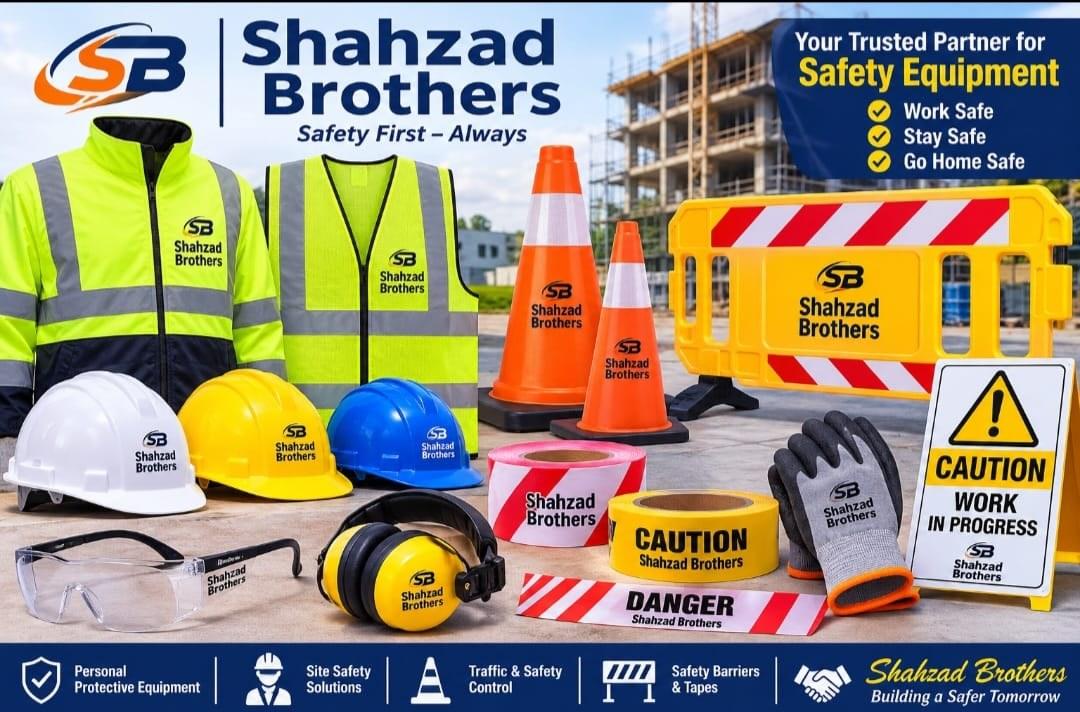
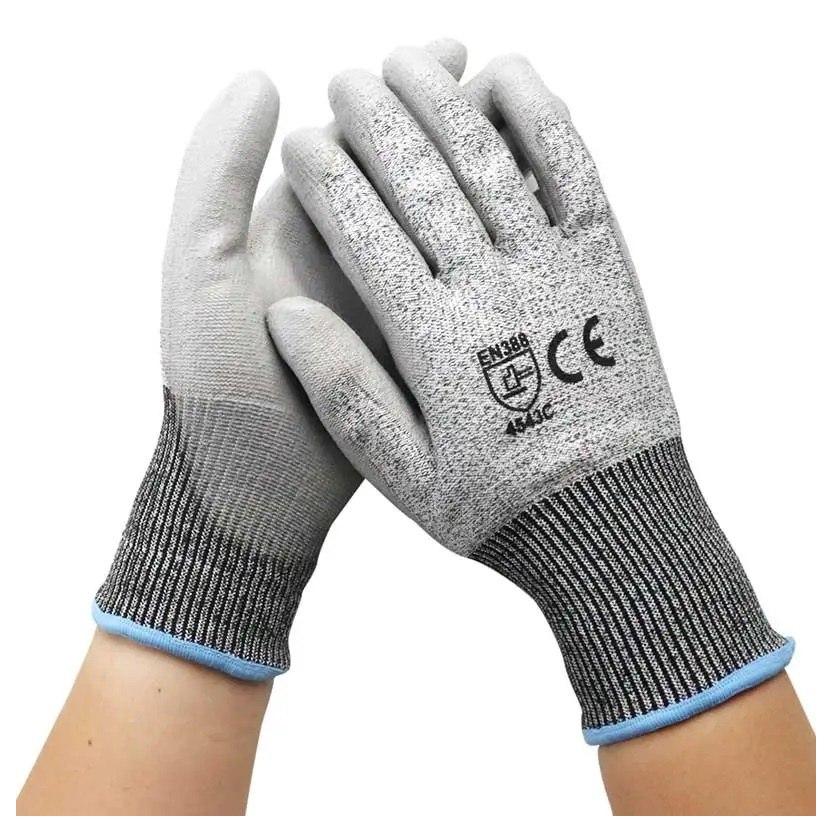
- Reflective safety jackets and safety gloves, with guides on safety jacket prices and safety gloves prices
- A ready site PPE kit for new crews
- The full range under safety products
Ask for today's price
Tell us the number of pairs, the size break, the class you need (S1P or S3) and the city for delivery. We will quote local, Chinese and branded options side by side, so you can choose on life and cost per month rather than sticker price. Send us a WhatsApp for today's price.
What we supply
Equipment covered in this guide
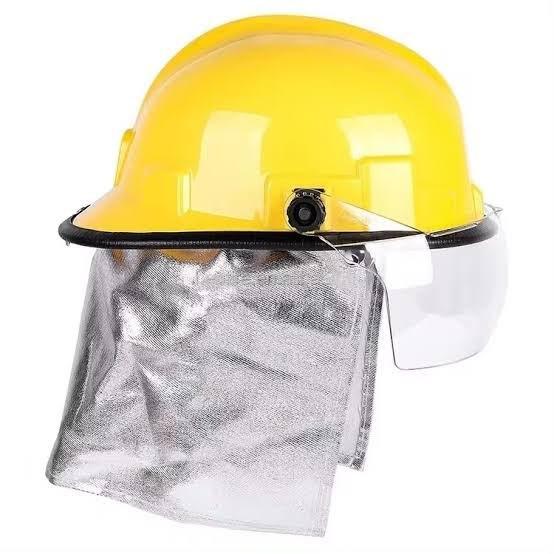
Safety Helmet
Industrial helmets with a ratchet harness and chin strap, available printed with your own site marking.
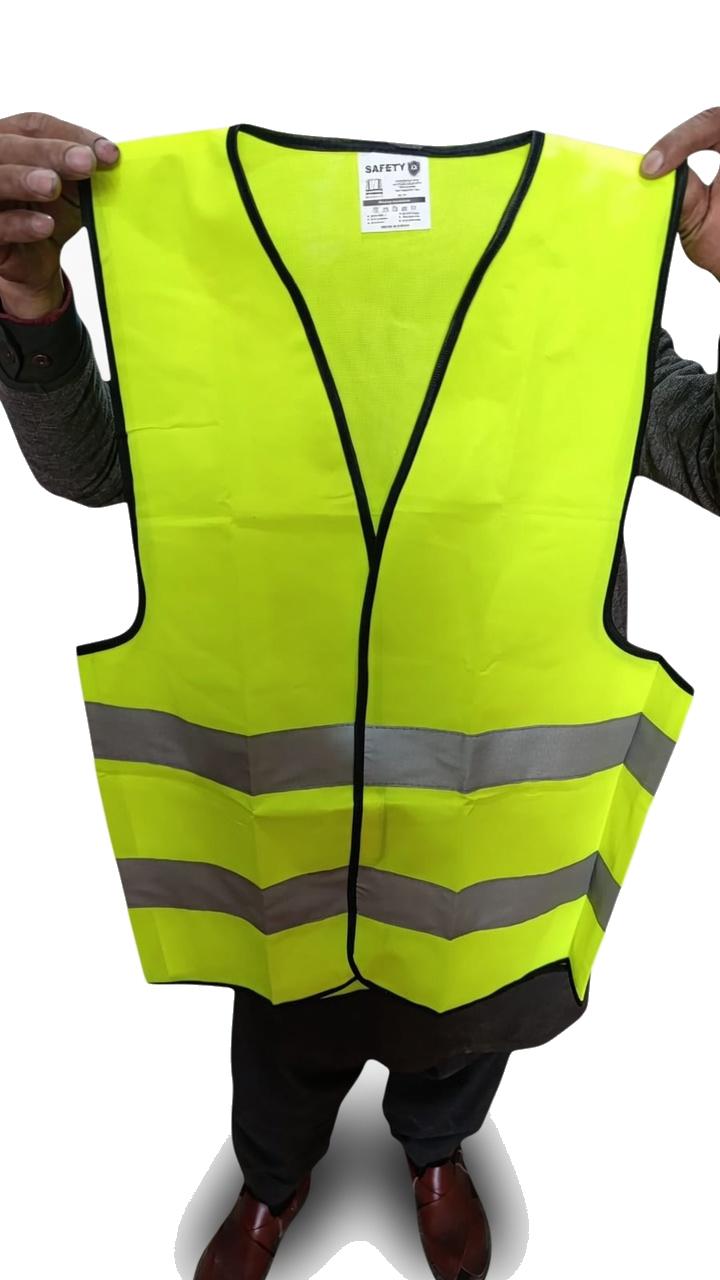
Reflective Safety Jacket
High visibility vests in orange and yellow, plain or printed, supplied by the carton.
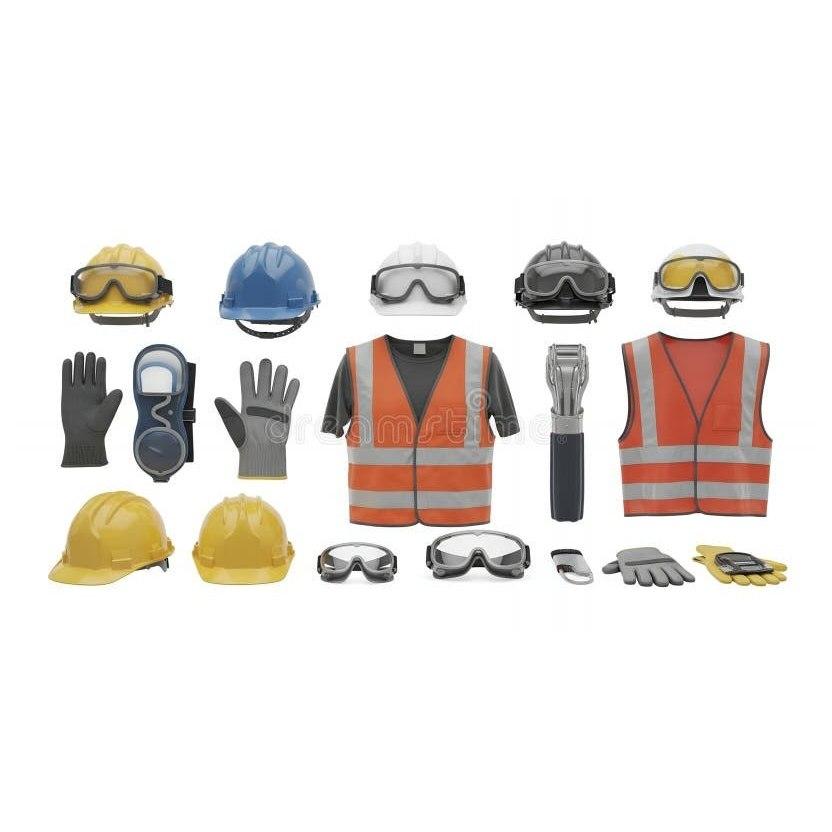
Site PPE Kit
Gloves, eye protection, safety boots and first aid kits. The list an HSE audit asks for, supplied in one go.
FAQ
Questions buyers ask us
How much do safety shoes cost in Pakistan?
In 2026 a local steel toe safety shoe costs about PKR 2,500 to 4,500 a pair, a Chinese imported S1P or S3 pair about PKR 5,000 to 11,000, and branded imported boots PKR 14,000 to 35,000. These are market ranges that move with the exchange rate, so confirm today's price on WhatsApp.
What is the price of Bata safety boots in Pakistan?
Bata industrial safety shoes in Pakistan usually sit in the PKR 6,000 to 12,000 range in 2026, depending on the model, leather and whether it is an S1P or S3 boot. Prices change with each stock arrival, so check the current rate before you place a bulk order.
Are there good safety shoes under 1,000 rupees?
Not real ones. Below about PKR 2,000 you are buying a work shoe or a plain gumboot without a tested toe cap. A genuine steel toe cap alone costs a few hundred rupees to make. For site labour, budget at least PKR 2,500 to 4,500 per pair.
Which safety shoe class should a construction site buy?
Buy S1P for dry sites and S3 where there is water, curing, mud or the monsoon. Both have a 200 joule toe cap and a midsole that resists nails. S3 adds water resistance and a cleated sole, which matters on 9 sites out of 10 in Pakistan.
How long do safety shoes last on a Pakistani site?
A local PU sole pair lasts about 4 to 8 months on daily site use. A good rubber or nitrile sole pair lasts 9 to 15 months. Replace any pair at once after a heavy impact on the toe, because a dented steel cap no longer protects.
How many pairs come in a carton of safety shoes?
Most cartons hold 10 or 12 pairs, packed in one size or a mixed size run. For a crew of 50 labourers, order 4 to 5 cartons split roughly 40, 41, 42 and 43 heavy, with a few 39 and 44 pairs. Ask for the size break before payment.