Petrol vs electric pressure washer in Pakistan comes down to power: an electric washer costs less, from about PKR 12,000, and runs for roughly PKR 100 to 400 an hour on a WAPDA bill, but stops in load-shedding. A petrol washer on a Honda engine costs PKR 120,000 upwards and works anywhere.
Most buying guides for this question are written for countries where the power never goes off. Pakistan is not one of them. This guide compares the two on the things that decide it here: load-shedding, single and three phase supply, running cost per hour and where the machine will actually be used.
Are electric pressure washers better than petrol?
For a home on a steady supply, electric is better: quieter, lighter, no fuel, and a fraction of the price. For commercial work, sites and farms in Pakistan, petrol is usually better, because it delivers more flow without a three phase connection and keeps working through load-shedding.
| Factor | Electric, single phase | Electric, three phase | Petrol, Honda engine |
|---|---|---|---|
| Typical pressure | 100 to 180 bar | 150 to 200 bar | 130 to 220 bar |
| Typical flow | 5 to 9 L/min | 12 to 21 L/min | 9 to 15 L/min |
| Power needed | 1.4 to 3 kW at 220 V | 4 to 7.5 kW at 400 V | None |
| Works in load-shedding | No | No | Yes |
| Noise | Low | Low | High, about 95 to 100 dB |
| Running cost per hour | PKR 100 to 250 | PKR 250 to 500 | PKR 270 to 900 |
| Indicative market price (PKR) | 12,000 to 140,000 | 250,000 to 700,000 | 120,000 to 1,200,000 |
Running costs assume roughly PKR 50 to 70 per unit on a commercial electricity bill and PKR 270 to 300 per litre of petrol in 2026. Prices are indicative 2026 market ranges. Confirm today's price on WhatsApp, rates move with the exchange rate.
Load-shedding and voltage drops
A petrol washer runs whether or not the grid does. In towns and on the edges of Rawalpindi, Lahore and Karachi, two to six hours of load-shedding a day is still normal in summer, and that is exactly when wash bays are busiest.
Voltage is the quieter problem. On summer afternoons we regularly see 180 to 190 volts at the socket in older areas, and an induction motor on 180 volts draws more current, runs hot and trips its thermal cut out after 15 minutes. Buyers blame the motor; the supply is the cause. If you must run electric on a weak supply, use a stabiliser rated for the motor, or wash in the evening when voltage recovers.
Single phase vs three phase
Single phase 220 volt power, which every home has, limits an electric pressure washer to about 3 kW. That gives at most about 9 litres a minute at useful pressure, which suits a family car but not a wash bay.
Three phase 400 volt supply allows 4 to 7.5 kW motors and 12 to 21 litres a minute, which is proper commercial flow. It is the best option for a fixed bay with a reliable connection: quiet, clean and cheap per hour. The catch is getting it. A new three phase connection from the local distribution company takes time, paperwork and a demand notice, and many shop premises simply do not have it.
So in practice the choice is single phase electric for a home, three phase electric for an established workshop or factory, and petrol for everyone else.
WAPDA bill vs petrol: what does an hour cost?
An hour of cleaning costs about PKR 100 to 250 on a single phase electric washer, PKR 250 to 500 on a three phase commercial machine, and PKR 270 to 900 on petrol, depending on engine size.
Worked out:
- 2 kW home electric: 2 units an hour at PKR 50 to 70 = PKR 100 to 140.
- 5.5 kW three phase: 5.5 units an hour = PKR 275 to 385.
- 5.5 hp Honda GC petrol: about 1 litre an hour = PKR 270 to 300.
- 9 to 13 hp Honda GX petrol: 1.8 to 3 litres an hour = PKR 500 to 900.
Add engine oil every 50 hours and an air filter in dusty months for petrol, and a share of your fixed electricity charges for electric. The gap per hour is real but small against the earnings of a car wash, and it disappears if load-shedding stops the electric machine for two hours a day.
Honda pressure washers: why the engine matters
A Honda pressure washer means a washer with a Honda engine; Honda does not make the pump. The engine matters because it is the part most likely to stop a petrol machine for good.
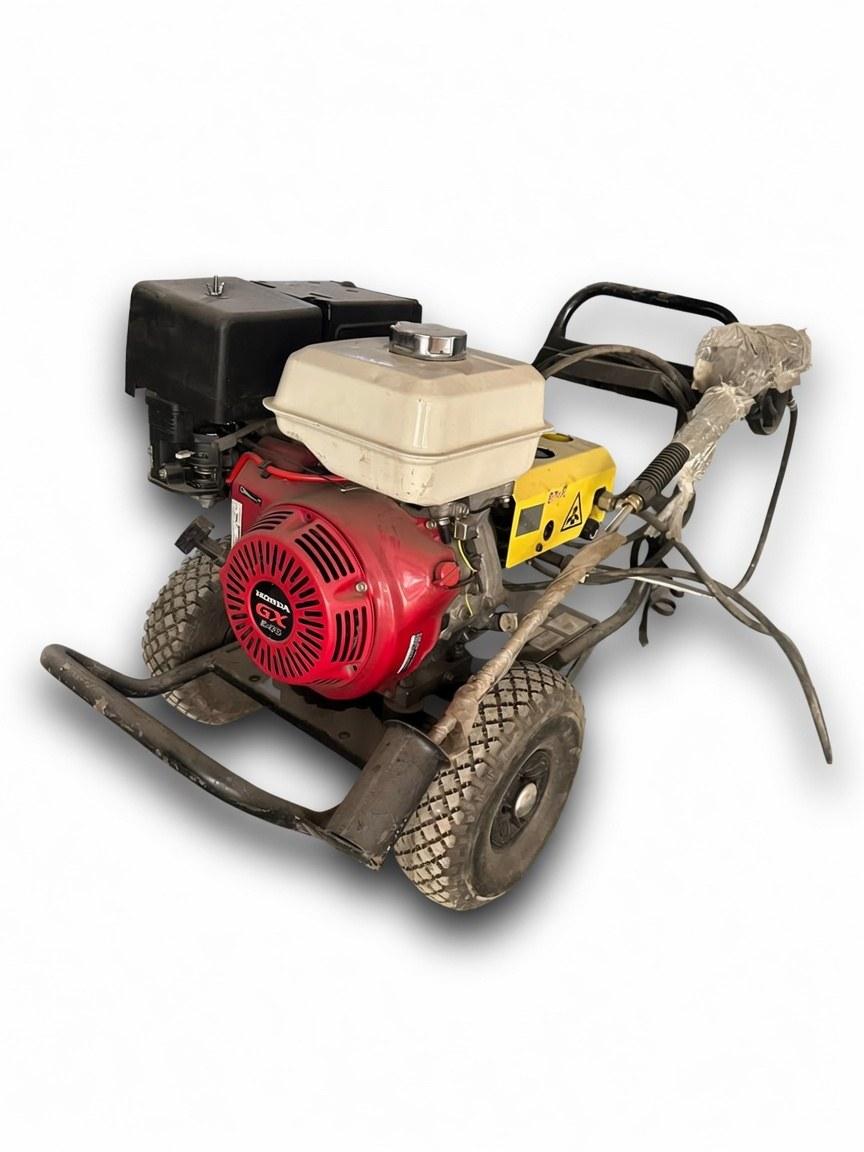
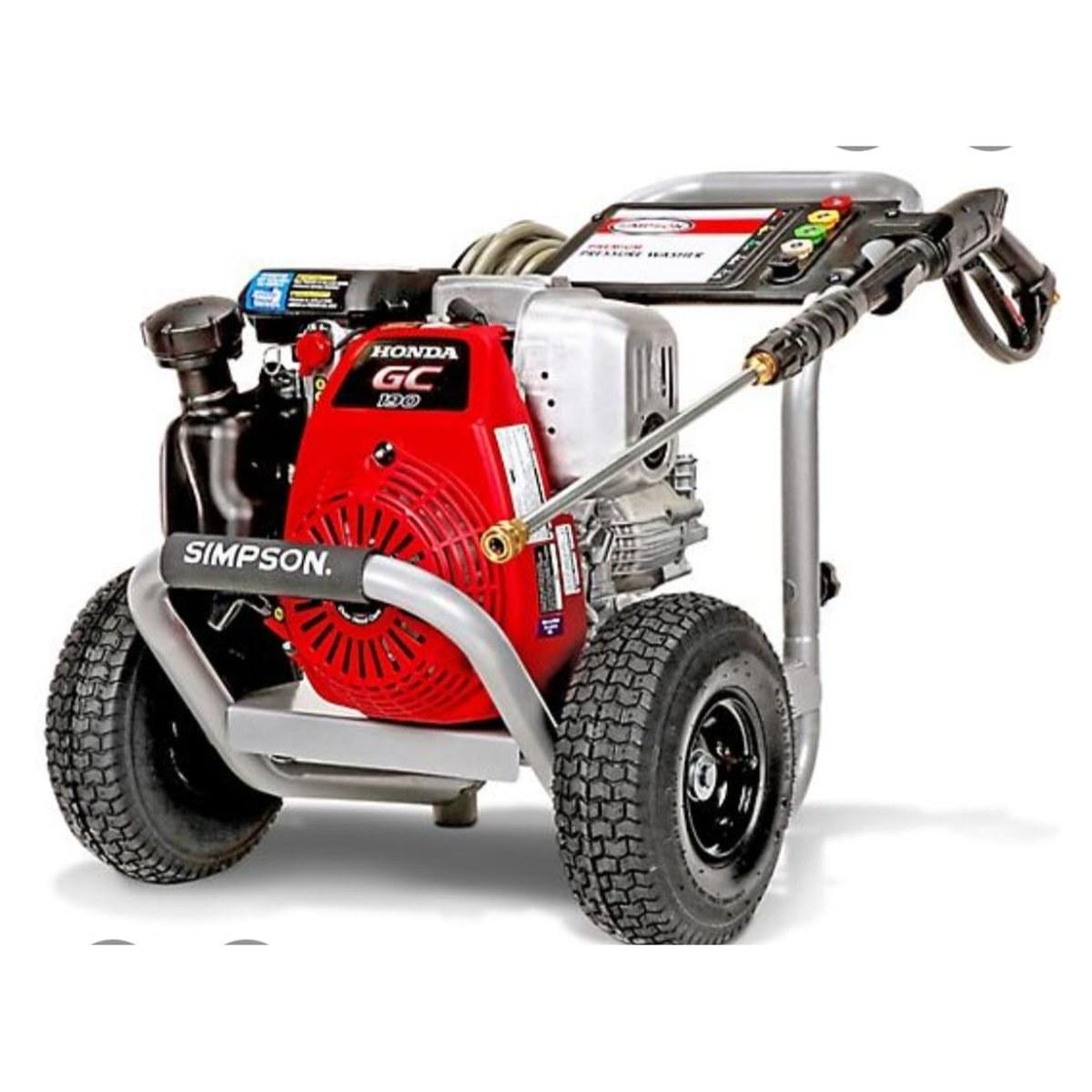
Honda GC engines are light, overhead cam units used on compact washers. Honda GX engines are heavier, cast iron sleeved and built for long commercial hours. Both start reliably in Murree winters and Multan summers, and their parts sit in every machinery market from Peshawar to Karachi. Copies are common, so check for a genuine serial number stamped on the engine block.
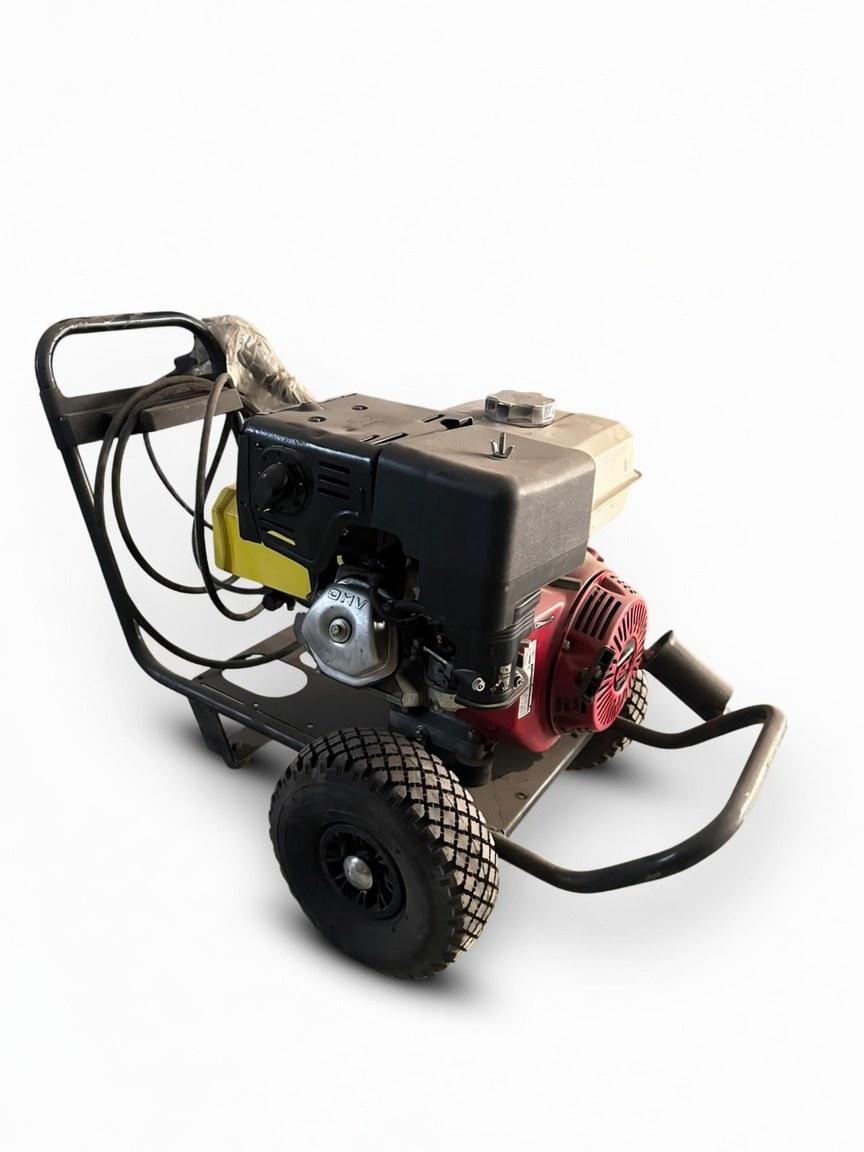
The Honda engine petrol pressure washer uses a Honda GC engine on a compact frame and is the usual first machine for a new car wash. The Karcher HD petrol high pressure washer puts a Karcher HD class pump on a Honda engine and a steel trolley for longer days. Both run cold water. For oil and grease, the Landa hot water pressure washer adds a fired coil.
Noise, fumes and maintenance
Petrol has costs that do not show on the price tag. A petrol washer is loud, about as loud as a small generator, which matters in a residential street or a housing society with rules on commercial noise. It produces exhaust, so it must never run inside a closed garage or workshop. And the engine needs its own care: oil changed every 50 hours, the air filter cleaned weekly in dusty months, the spark plug checked each season, and fresh petrol, because fuel left in the carburettor for weeks gums it up. An electric washer needs none of that. For a workshop with a good three phase supply and neighbours close by, that is a real argument for electric.
Which one should you buy?
Choose electric single phase if you wash one or two cars a week at home. Choose electric three phase if you run a fixed workshop with a reliable three phase connection and want low noise. Choose petrol if you have load-shedding, no three phase supply, a site or farm with no power at all, or a car wash that cannot afford to stop.
On sites, petrol is almost always right. New roads, housing societies under development, quarries and batching plants rarely have a socket where the dirt is. See commercial pressure washer for sizing by flow, and car washer machine price in Pakistan for bay sized machines.
What we supply
We supply petrol pressure washers built for Pakistani power conditions, from Rawalpindi:
- Honda engine petrol pressure washer: compact, Honda GC engine.
- Karcher HD petrol high pressure washer: Karcher HD pump, Honda engine, steel trolley.
- Petrol pressure washer: site washer with gun, lance and hose reel.
- Submersible pump: to feed any washer from a drum.
See all pressure pumps and washers. For Karcher models and prices read Karcher pressure washer price in Pakistan, and for the wider market our pressure washer price guide.
Ask for today's price
Tell us where the machine will work, whether you have single or three phase power, and how many hours a day it will run. We will tell you honestly whether petrol or electric suits you. Send us a WhatsApp for today's price on a Honda engine or Karcher HD petrol washer.
What we supply
Equipment covered in this guide
 KarcherHD class, Honda petrol engine
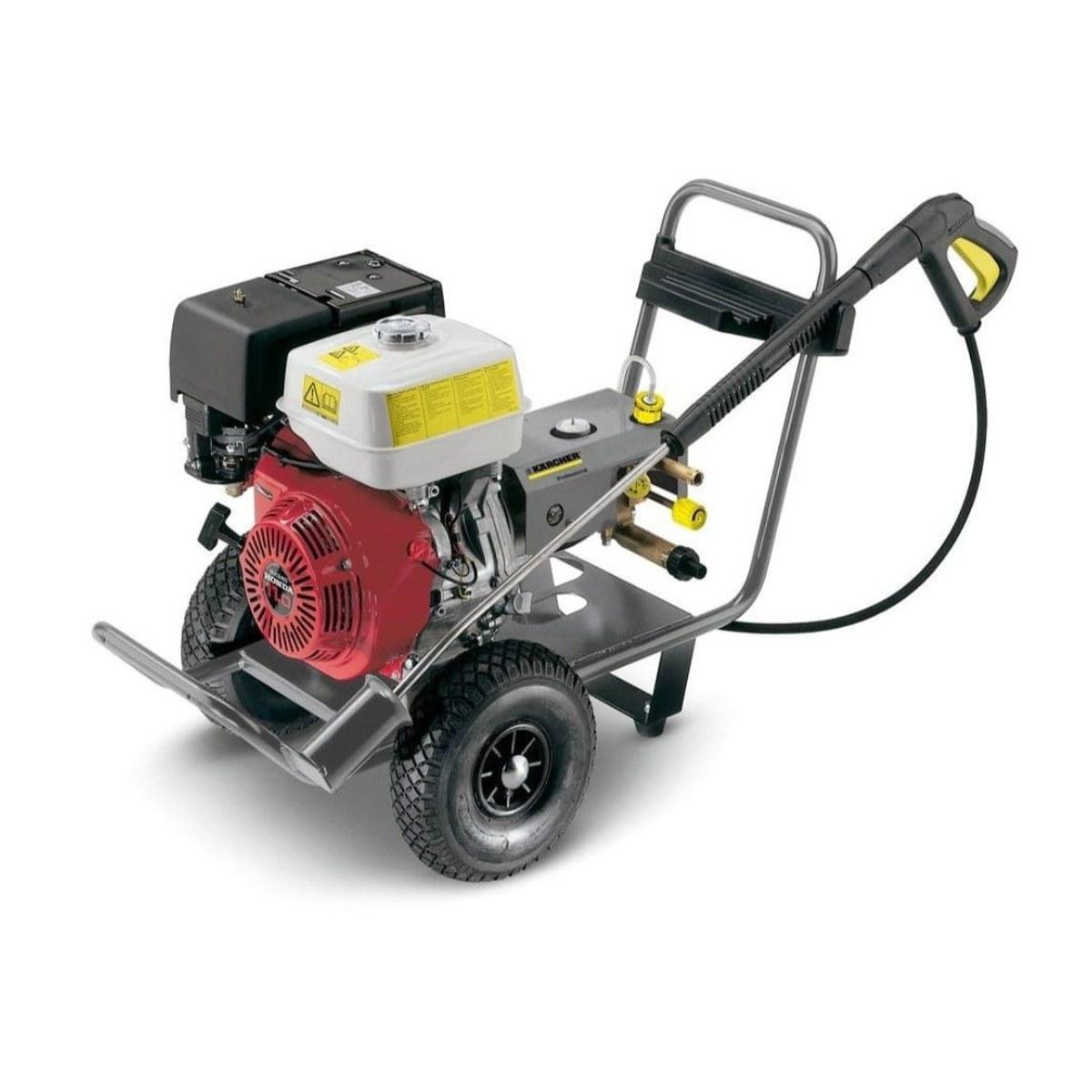
Karcher HD Petrol High Pressure Washer
Karcher professional pump on a Honda petrol engine, on a steel trolley with pneumatic wheels. Cold water, high pressure, no power supply needed.
Honda GC petrol engineHonda Engine Petrol Pressure Washer
Honda GC petrol engine on a high pressure pump and a welded steel frame. Light enough for one person, strong enough for daily car washing and site work.
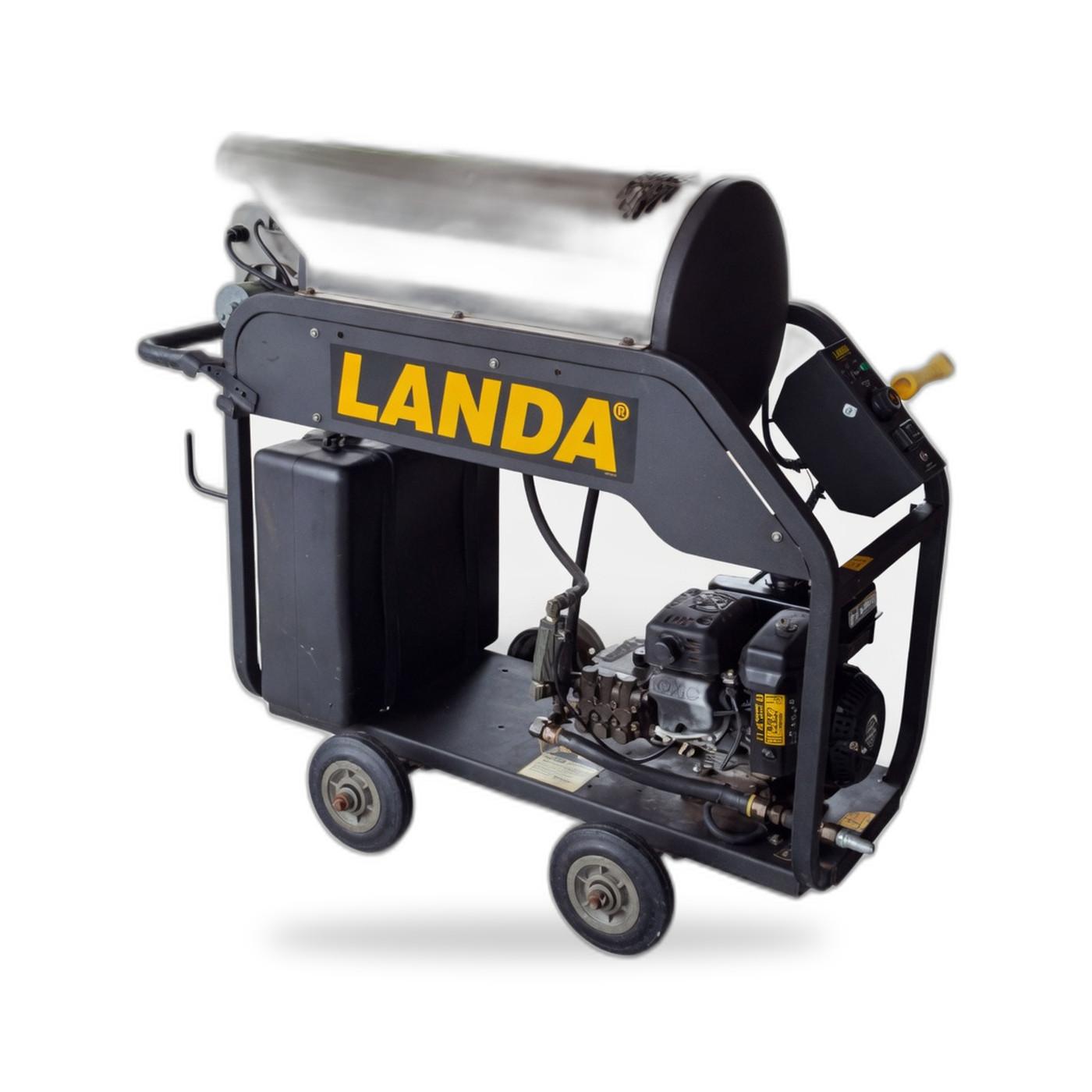 Landa
Landa Hot Water Pressure Washer
Petrol driven, with a fired coil that puts hot water through the lance. Heat is what shifts oil, grease and cured slurry that cold water only moves around.
FAQ
Questions buyers ask us
Are electric pressure washers better than petrol?
For home use on a steady supply, yes: they are quieter, lighter and cheaper, from about PKR 12,000. For commercial use in Pakistan, petrol usually wins because it runs through load-shedding and voltage drops and delivers 10 to 15 litres a minute without a three phase connection.
How long can you continuously run an electric pressure washer?
A home electric washer with a carbon brush motor is rated for about 20 to 30 minutes, then needs to cool. Induction home units manage 45 to 60 minutes. A three phase triplex commercial machine can run a full 8 hour shift with short breaks.
What does a petrol pressure washer cost to run per hour?
A compact washer on a 5.5 hp Honda engine uses roughly 1 litre of petrol an hour, about PKR 270 to 300 at 2026 prices. A 9 to 13 hp engine uses 1.8 to 3 litres, about PKR 500 to 900 an hour, plus oil changes every 50 hours.
What are the downsides of an electric pressure washer?
In Pakistan there are 3: it stops during load-shedding, it overheats when voltage sags to 180 volts, and a single phase unit is limited to about 9 litres a minute. It also needs a socket within 10 metres of the job, which most sites do not have.
Why do pressure washers use Honda engines?
Honda GC and GX engines start reliably in heat and cold, run for 2,000 hours or more with basic care, and their spares are stocked in every machinery market in Pakistan. A pump can be rebuilt; a cheap engine that will not start is the usual reason a petrol washer is abandoned.
Can I run an electric pressure washer on a generator or UPS?
On a generator, yes, if it is sized at roughly 2 to 3 times the motor rating to handle start up current, so 5 kVA for a 2 kW washer. A home UPS and inverter usually cannot handle the starting surge and will trip.